

Listen to this podcast in the app for free: Download for free in the App Store
radio.net
Sleep timer
Save favourites
284 episodes
REFILL | Tomas Philipson on IRA, Inflation, Real Wages, and COVID Policy Tradeoffs (Originally Aired: June 2, 2023)
31/08/2026 | 54 mins.REFILL | Naomi Lopez on Healthcare AI, ACCESS, TEMPO, and the Future of Care (Originally Aired: January 23, 2026)
24/08/2026 | 46 mins.This is a legacy episode recorded in January 2026. At the time of recording, Naomi Lopez was founder of Nexus Policy Consulting and a leading voice in healthcare policy, healthcare AI, and state health reform.
Joe Grogan sits down with Naomi Lopez from Nexus Policy Consulting to recap the first Healthcare AI Policy Summit held in December 2025 in Washington, DC. They discuss big themes shaping healthcare AI, HHS approaches to AI adoption, and what regulatory clarity could look like. The conversation covers new federal initiatives like ACCESS and TEMPO that may reshape chronic disease management for Medicare patients. They unpack HHS Deputy Secretary Jim O'Neill's vision for AI in government, including using large models to improve physician productivity, payment integrity, and care coordination. They dig into ACCESS Medicare payment model and FDA TEMPO initiative, explaining how these pilots test AI tools in real-world chronic disease management for hypertension, diabetes, musculoskeletal pain, and depression. The discussion widens to physician burnout, interoperability, rural care, states and federal preemption, and what tech companies becoming Medicare Part B providers could mean for healthcare innovation.
Key Timestamps
0:00 Intro and why the Healthcare AI Policy Summit matters
2:00 Summit recap: big themes and regulatory pressure points
6:00 Jim O'Neill at HHS: regulatory clarity and adoption inside government
12:00 ACCESS explained: Medicare chronic disease management payment model
18:00 TEMPO explained: FDA's risk-based approach for chronic care tools
24:00 Wearables, remote patient monitoring, and virtual ICU models
30:00 Privacy, de-identification, and re-identification risk
35:00 AI inside HHS and FDA: productivity, payment integrity, care coordination
41:00 Reducing admin burden and physician burnout
47:00 Rural healthcare: scaling diagnostics and access with AI
52:00 Interoperability and data sharing: APIs, friction, and incentives
58:00 State AI laws versus federal preemption
1:04:00 2026 outlook: tech companies as Medicare Part B providers
1:09:00 Wrap-up and what to watch next
Key Topics
Healthcare AI, ACCESS payment model, TEMPO initiative, FDA regulation, Medicare reimbursement, chronic disease management, AI in government, physician productivity, care coordination, wearables, remote patient monitoring, privacy and de-identification, rural healthcare, interoperability, state AI regulation, federal preemption, healthcare innovation, payment integrity
About the Guest (at time of recording, January 2026)
Naomi Lopez is the founder of Nexus Policy Consulting and a leading voice in healthcare policy, healthcare AI, and state health reform. She co-founded a healthcare AI working group and co-hosted the inaugural Healthcare AI Policy Summit in December 2025 in Washington, DC. Her work focuses on how regulation, Medicare and Medicaid policy, and state law shape healthcare innovation, access, and affordability.
Podcast: DC EKG with Joe Grogan
Host: Joe Grogan
Guest: Naomi Lopez
Sponsor: Survivors for Solutions
Executive Producer: John CZ Czwartacki, DC EKG PodcastREFILL | Jackson Hammond on NHE, CMS Reform, and Making Insurance Almost Obsolete (Originally Aired: January 22, 2026)
17/08/2026 | 50 mins.In this "REFILL" episode, Joe Grogan sits down with Jackson Hammond from Paragon Health Institute to unpack what the latest CMS National Health Expenditure data says about where U.S. healthcare is headed. They break down spending trends from $5.2 trillion to projections of $8.6 trillion, explaining what changed, what didn't, and what it means for affordability, Medicare, Medicaid, and long-run fiscal pressure. The conversation connects spending outlook to Jackson's work on CMS Innovation Center reform and debates whether CMMI is bending the cost curve or adding bureaucracy without accountability. Jackson argues we should aim for healthcare so affordable you barely need insurance, exploring how choice and competition could reshape the system.
Key Timestamps
0:55 Jackson's background and how he got into health policy
3:39 Focus areas: Medicare, hospitals, drug pricing, PBMs, and 340B
5:14 What the NHE report is showing
6:14 Healthcare spending trajectory: $5.2T to $8.6T and why it matters
8:00 Why health spending is not really optional
10:11 Where the money goes: payer mix and per-enrollee costs
12:23 Medicaid costs, provider taxes, and state financing tactics
15:58 Medicare spending pressure and fiscal risk
21:06 Misconception: coverage equals care
26:18 Why provider payments keep rising after COVID demand and consolidation
33:01 Rural care, consolidation, and rural emergency hospital models
40:08 Drug pricing: retrospective versus prospective MFN approaches
49:20 2026 outlook and closing thoughts
Key Topics
National Health Expenditure, healthcare spending, CMS reform, CMS Innovation Center, Medicare spending, Medicaid costs, hospital consolidation, rural healthcare, drug pricing, PBMs, 340B program, provider payments, patient-centered care, healthcare affordability, choice and competition, fiscal policy
About the Guest (at time of recording, January 2026)
Jackson Hammond is a Senior Policy Analyst at the Paragon Health Institute focused on health spending, CMS policy, and reforms centered on choice, competition, and patient-centered care. He authors Paragon's Paragon Prognosis analyses and has written extensively on CMS Innovation Center reform and strategies for making healthcare more affordable through competitive market approaches.
Podcast: DC EKG with Joe Grogan
Host: Joe Grogan
Guest: Jackson Hammond
Sponsor: Survivors for Solutions
Executive Producer: John CZ Czwartacki, DC EKG PodcastREFILL | Michael Cannon on STLDI and ACA Coverage: Costs, Choice, and Tradeoffs (Originally Aired: January 27, 2026)
10/08/2026 | 42 mins.This is a legacy episode recorded in January 2026. At the time of recording, Michael Cannon was Director of Health Policy Studies at the Cato Institute, a leading voice on healthcare reform, the Affordable Care Act, and market-based health policy solutions.
Episode Description
Joe Grogan sits down with Michael Cannon from the Cato Institute to discuss short-term, limited-duration insurance (STLDI), also known as "Obamacare-exempt" plans, and why they can be significantly cheaper than ACA exchange coverage. Cannon explains how renewal guarantees work and why allowing more consumer choice can reduce pressure on exchange risk pools. The conversation covers the politics of pre-existing conditions, how ACA rules change insurers' incentives, and why coverage debates often miss the real drivers of cost, access, and quality. They also discuss public trust in healthcare following the Brian Thompson murder and explore how policy choices shape what insurers can and cannot do.
Key Timestamps
0:23 Michael Cannon joins and what STLDI is
2:27 STLDI explained: Obamacare-exempt plans, renewal guarantees, and lower premiums
6:00 ACA history: why STLDI was restricted
7:46 International comparisons and pre-existing conditions incentives
12:10 Why healthcare stays broken: regulation, lobbying, and government-designed systems
16:59 Subsidies and the politics of pre-existing conditions
22:22 Renewal guarantees, employer tax exclusion, and Medicare history
30:37 Public trust after Brian Thompson's murder and Cannon's letter
41:56 Wrap-up and key takeaways
Key Topics
STLDI insurance, short-term limited-duration plans, ACA coverage, renewal guarantees, risk pools, pre-existing conditions, insurance regulation, healthcare costs, consumer choice, affordability, public trust, healthcare policy, market-based reform, junk insurance debate, employer-based coverage, Medicare policy
About the Guest (at time of recording, January 2026)
Michael Cannon is the Director of Health Policy Studies at the Cato Institute and a leading voice on healthcare reform, the Affordable Care Act, health insurance regulation, and market-based health policy solutions. He is a policy expert focused on expanding consumer choice and reducing the regulatory barriers that limit access to affordable coverage options.
Podcast: DC EKG with Joe Grogan
Host: Joe Grogan
Guest: Michael Cannon
Sponsor: Survivors for Solutions
Executive Producer: John CZ Czwartacki, DC EKG PodcastREFILL | Ryan Long on 340B Drug Pricing, Enhanced ACA Tax Credits, and Medicare Part D (Originally Aired: September 24, 2025)
03/08/2026 | 47 mins.Joe Grogan sits down with Ryan Long, healthcare policy expert and senior research fellow at Paragon, to discuss three critical healthcare policy issues facing Congress. First, the Congressional Budget Office's landmark analysis of the 340B drug pricing program, which revealed the program increases federal spending, drives up premiums, and channels most benefits to wealthy hospitals rather than those serving low-income patients. Second, the enhanced premium tax credits set to expire at the end of 2025, which have been plagued by fraud and fraudulent enrollment. Long explains how unscrupulous brokers have exploited the system, enrolling people without their knowledge, with billions in improper payments going to insurance companies. Third, the Inflation Reduction Act's devastating impact on Medicare Part D, including premium increases from thirty to sixty dollars monthly, coinsurance replacing copays, and seniors paying higher out-of-pocket costs despite the legislation's promise to lower drug costs.
Key Timestamps
1:20 Welcome to DC EKG and introduction of Ryan Long
2:15 Congressional Budget Office analysis of 340B program
4:06 Why CBO conducted the 340B study
4:25 How 340B increases federal spending and premiums
4:58 Studies showing 340B drives higher-cost drug utilization
5:30 Will CBO analysis lead to legislative reform efforts
6:15 Program expansion from 90 to 2,600 participating hospitals
8:06 Timeline for 340B reform legislation
10:43 340B program growth from two billion to sixty-six billion annually
11:52 Why insurance companies support limiting 340B
12:20 Enhanced premium tax credits and ACA credits expiring
14:22 Difference between baseline and enhanced ACA credits
16:34 Zero-dollar plans and fraud mechanisms
18:19 Broker fraud and fraudulent enrollment schemes
21:09 How fraudulent brokers exploit free plans and commission structure
22:53 Paragon study showing four times over-enrollment in Florida
25:30 Misleading polling about ACA credits expiring
28:18 Groups pushing misleading messaging on enhanced credits
29:31 Political dynamics and Republican position on credits
33:17 Government shutdown politics and Democrat strategy
36:09 Elevance exiting standalone Medicare Part D plans
38:03 Migration from Part D to Medicare Advantage due to IRA
39:15 How IRA's out-of-pocket cap restructuring increased premiums
40:34 Coinsurance replacing copays and cost shift to seniors
42:20 IRA using fictitious list price to calculate negotiated savings
44:47 Multiple factors causing Medicare Part D premium increases
Key Topics
340B program, Congressional Budget Office, drug pricing, hospital consolidation, enhanced premium tax credits, ACA fraud, fraudulent enrollment, broker fraud, government subsidies, Medicare Part D, out-of-pocket costs, coinsurance, Inflation Reduction Act, pharmaceutical pricing, program integrity
About the Guest (at time of recording, September 2025)
Ryan Long is a Senior Research Fellow at the Paragon Health Institute and affiliated with the USC Schaefer Center for Health Policy and Economics. He is a healthcare policy expert with extensive experience on Capitol Hill, including service as a staffer on the House Energy and Commerce Committee and chief health policy advisor to Speaker Kevin McCarthy. Long specializes in healthcare reform, pharmaceutical pricing policy, Medicare and Medicaid issues, and legislative strategy.
Podcast: DC EKG with Joe Grogan
Host: Joe Grogan
Guest: Ryan Long
Sponsor: Survivors for Solutions
Executive Producer: John CZ Czwartacki, DC EKG Podcast
More Government podcasts
 The DSR NetworkGovernment
 PekingologyGovernment
 Unclassified: NZ Defence ForceDocumentary, Government, History, Society & Culture
 The Coming StormDocumentary, Government, Society & Culture
 FiascoGovernment, History, News, Politics
 The Oath and The OfficeGovernment, News, Politics
 Parliament - Live Stream and Question TimeGovernment
 Inside Briefing with the Institute for GovernmentGovernment, News, Politics
 Strict ScrutinyGovernment, News, Philosophy, Society & Culture
Trending Government podcasts
 Tasman ReportGovernment
 Inside the FBIGovernment
 What's the Story, Old Glory?Government, News, Politics
 WalescastGovernment, News
 Red LineGovernment
 The National Security PodcastEducation, Government, News, News Commentary, Politics
- The Oath and The OfficeGovernment, News, Politics
- PekingologyGovernment
 The Tara Palmeri ShowGovernment, News, Politics
- The Coming StormDocumentary, Government, Society & Culture
 Any Questions? and Any Answers?Government
 MacroaggressionsComedy, Government, News
 Change the StoryBusiness, Entrepreneurship, Government, Non-Profit, Society & Culture
- Unclassified: NZ Defence ForceDocumentary, Government, History, Society & Culture
 Today in ParliamentGovernment
- Inside Briefing with the Institute for GovernmentGovernment, News, Politics
 The InterviewGovernment, News, Politics
 Law and ChaosGovernment, News, Politics
About DC EKG
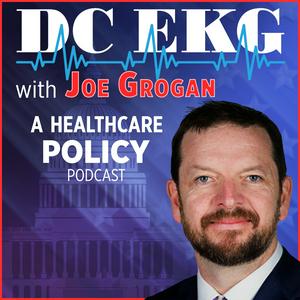
Join former White House policy expert Joe Grogan as he cuts through the complexities of healthcare legislation and its real-world implications. Each episode of DC EKG aims to demystify the policies shaping our healthcare system, uncovering how these changes impact patients, providers, and payers across the country.
Podcast websiteListen to DC EKG, The DSR Network and many other podcasts from around the world with the radio.net app
Get the free radio.net app
- Stations and podcasts to bookmark
- Stream via Wi-Fi or Bluetooth
- Supports Carplay & Android Auto
- Many other app features
Get the free radio.net app
- Stations and podcasts to bookmark
- Stream via Wi-Fi or Bluetooth
- Supports Carplay & Android Auto
- Many other app features

DC EKG
Scan code,
download the app,
start listening.
download the app,
start listening.
 New Zealand