
Listen to this podcast in the app for free: Download for free in the App Store
radio.net
Sleep timer
Save favourites
166 episodes

Karpathy’s AI gap, free Adobe clones, and AI’s effect on persistence
21/10/2026 | 27 mins.What happens to software businesses when AI makes their products easier to recreate? Reid Hoffman and Aria Finger explore what a developer’s effort to rebuild seven Adobe apps with Claude means for software pricing, competitive moats, and intellectual property. They also unpack Andrej Karpathy’s AI capability gap: why everyday users and researchers inside frontier labs have very different views of what AI can do. Then, they examine a randomized study showing that brief AI assistance caused—not just correlated with—reduced persistence after that help was removed. Reid makes the case for AI as a cognitive exoskeleton—and for designing tools that build grit alongside capability.
For more info on the podcast and transcripts of all the episodes, visit https://www.possible.fm/podcast/Why Americans are so worried about AI
14/10/2026 | 28 mins.Only 36% of AI-aware Americans expect AI to mostly help their country, according to a Gallup and Microsoft survey. Reid traces that unease to three forces: fear that the future will be worse than the present (which AI amplifies when prosperity has not reached much of the country), an instinct to protect what Americans have, and doubts about who will share in AI’s gains. With Aria Finger, he makes the case for winning at AI while spreading its prosperity, including through AI and robotics in manufacturing. They also examine HackerRank’s Chakra AI interviewer and why hiring should remain a team decision. Finally, OpenAI’s plan to test visual ads in ChatGPT raises another question: can a free AI assistant earn trust while carrying advertising? Reid calls for a clear separation between ads and answers, enforceable commitments, and third-party audits.
For more info on the podcast and transcripts of all the episodes, visit https://www.possible.fm/podcast/Building safety tools no one can take away with ROOST’s Camille François
07/10/2026 | 1h 24 mins.Protecting people online shouldn’t depend on whether a company keeps its safety tools effective, affordable, and available. ROOST founding president Camille François joins Reid Hoffman and Aria Finger to explain how a nonprofit is turning trust and safety into shared infrastructure. She digs into why social media was a blip in how we build tech, what Discord did after Twitter bought Smyte and shut it down, and how two people running a fandom app caught 19 cases of child exploitation in two weeks. A daycare switching its Alexa wake word to "computer" becomes a lesson in how the next generation should relate to machines. They also examine why policy without tools is ineffective, how a shared safety commons helps startups compete, and what it will take to make safety as invisible as encryption.Who gets to pull the plug on AI?
30/09/2026 | 15 mins.Reid Hoffman sees promise in an AI buildout and wants its financial risks in the open. He and Aria Finger unpack a Financial Times report on up to $300 billion in AI infrastructure guarantees largely absent from the balance sheets of technology companies. They explore California Governor Gavin Newsom’s push for independent lab auditors and an AI kill switch, and discuss what effective federal oversight could look like. Reid explains how these proposals differ from the 2024 bill he opposed and makes the case for an international cyber treaty. A Truth Social poll to rename AI also prompts a debate about why “artificial” sells the technology short.When AI's builders sound the alarm
23/09/2026 | 40 mins.Can America lead in AI while making life better for everyday Americans? Reid Hoffman and Aria Finger weigh in on Dario Amodei’s call to pace the frontier, and Reid makes the case for America’s dual mandate: leading in AI while delivering prosperity for the many. Anthropic researcher Evan Hubinger puts his personal estimate of AI-driven extinction risk above 10%. They unpack that warning alongside Sam Altman’s support for slower development and David Sacks calling Anthropic and OpenAI a cartel. Reid identifies biological threats, cyberattacks, and job disruption as the real risks, makes the case for steering over pausing, and explains why kill switches matter. From data centers that don’t raise local electricity bills to a free AI medical assistant for every American, they explore what rebuilding public trust could require.
Read “AI for All Americans” on Substack: https://reidhoffman.substack.com/p/ai-dual-mandate
More Business podcasts




Trending Business podcasts













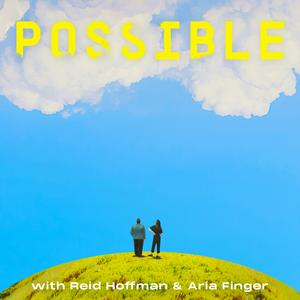
About Possible with Reid Hoffman
What if, in the future, everything breaks humanity's way? Possible is an award-winning, weekly podcast that sketches out the brightest version of the future—and what it will take to get there. Hosts Reid Hoffman and Aria Finger take that question to the people building the answer: founders, scientists, artists, and deep thinkers working across AI, healthcare, education, and geopolitics. The conversations run deep and specific, testing optimism against hard questions rather than trading hot takes. And between guest episodes, Reid riffs on the AI news that matters and what to make of it.
Podcast websiteListen to Possible with Reid Hoffman, Making Cents and many other podcasts from around the world with the radio.net app
Get the free radio.net app
- Stations and podcasts to bookmark
- Stream via Wi-Fi or Bluetooth
- Supports Carplay & Android Auto
- Many other app features
Get the free radio.net app
- Stations and podcasts to bookmark
- Stream via Wi-Fi or Bluetooth
- Supports Carplay & Android Auto
- Many other app features

Possible with Reid Hoffman
Scan code,
download the app,
start listening.
download the app,
start listening.
Possible with Reid Hoffman: Podcasts in Family
 New Zealand
