

Listen to this podcast in the app for free: Download for free in the App Store
radio.net
Sleep timer
Save favourites
94 episodes
Dethrone the Dictaphone
18/08/2026 | 1h 42 mins.A chatty hangout episode on recent events, the class politics of fashion in our post-cultural moment, and an American (...?) Broadway musical from the End of History as performed in Japanese in air-conditioned chambers surrounded by hordes of shrink-wrapped Teslas on reclaimed land developed Tel Aviv–style in the middle of Tokyo Bay. Hosted on Acast. See acast.com/privacy for more information.An Infant ‘West’ meets a Middle-Aged ‘East’ [PREVIEW]: Galland’s retelling of Shams-al-Nahār & Ibn Bakkār (1704–1717)
11/08/2026 | 33 mins.In this final episode of our first series on the 1,001 Nights, we take up Frenchman Antoine Galland’s adaptation, where we see a Europe that has only begun to see its nearest Afro-Asiatic merchant-capitalist great power as a different , “eastern” civilization whose cultural products must be held at arm’s length and ethnographically explained—rather than adopted wholesale without comment, as stories from the very same 1,001 Nights had been in medieval European literature like the Canterbury Tales (1387–1400) or Orlando Furioso (1516–1532). Galland introduces critical details and disparaging attitudes, writes new scenes not found in the Arabic, and sometimes misreads the Arabic quite dramatically. The things he needs to explain to his readers—that druggists can be respectable members of society, that poetry can express emotions vicariously—reinforce for us the low level of development of “Europe” as it begins to step onto the stage of history for the first time (it was not meaningfully continuous with Greco-Roman antiquity but rather borrowed most from the Arab-Islamicate Mediterranean world from whose side it sprang) and as an awkward newcomer rather than an overwhelmingly powerful main character (it would not even begin to dominate the Eurasian economy until after 1800). Finally, here too Galland’s central interest is evident in the bureaucrat-connected merchant rogues and organized criminals who are able to slip through the cracks of this highly developed and regimented society and accumulate capital—the Sons of the Silk Road who were already the main model for the Crusader bourgeoisie. Hosted on Acast. See acast.com/privacy for more information.Oriental Despotism comes w/ Occidental Colonization: Ibn Bakkār & Shams-al-Nahār in the Calcutta Ⅱ Nights (1839–42)
04/08/2026 | 1h 29 mins.In addition to filling in more background knowledge from a scholarly article that I did find on this tale by Jamel Eddine Bencheikh, as well as some musings on the formation of the discipline of Anglophone Japan studies under the influence of Francophone Arabology, we explore this same tale in the nineteenth-century colonial-era British-Indian edition of the now much expanded and more textually baroque version known as Calcutta II. There, we find the first-person narrative interludes removed, or at least refocused away from the process of establishing a secure communication channel between the worker go-betweens, on behalf of the elite patrons. That process also becomes top-down rather than bottom-up, as the negotiation of the connection much more clearly follows an elite commission rather than arising on the initiative of the workers themselves. Meanwhile, textual change has obscured some storytelling choices we saw in the post-1450 version, sometimes strengthening the story but also often leaving loose ends dangling and vestigial inconsistencies that only make sense if we know what the passage used to say. In the way, the text of Calcutta II embodies the growth of oriental despotism or decadence precisely in the time of occidental colonization, both in its form and in its content. Hosted on Acast. See acast.com/privacy for more information.Truth and Testimony, Drugs and Attachment in Bourgeois-Revolutionary Baghdad [PREVIEW]: Re-Orienting Ibn Bakkār and Shams-al-Nahār in the Arabic manuscript of the 1,001 Nights
28/07/2026 | 46 mins.I dust off my Arabic for some weird scenes in Silk Road–era Baghdad: a story of drugs and ego death, deadly secrets and the workers who keep them. The only tragic love story in the Nights, the story of the Persian prince Ibn Bakkār and the courtesan Shams-al-Nahār also features, only in this earliest available Arabic manuscript tradition, a meta-narrative device whereby first-person interviews with certain characters—such as would be collected by a prosecutor as evidence for a trial—are interspersed throughout this story of elite parties, exotic drugs, and forbidden obsessions. Hosted on Acast. See acast.com/privacy for more information.1,001 Nights: A murdered ancestor to European Romance
21/07/2026 | 1h 5 mins.One symptom of the neglect in Anglo-Zionist historiography of Arabic literature and culture—despite its role as the main heir to axial-age Mediterranean and Persian cultures and, as the western representative of the Afro-Asiatic merchant capitalist world system, key progenitor of “the West”—would be the neglect which the 1,001 Nights has suffered in literary scholarship. Everything I can find in English or Japanese is only interested in the impressions it left in the industrial-era European mind as a long-gone Other, but the fact is that we (finally) have a modern edition (by Muhsin Mahdi) and English translation (by Husain Haddawy) of the surviving (15th-c.) Arabic manuscript lineage which attests to the Nights as they were circulating before the rise of Europe—which modern economic history has shown to have occurred only after 1800. Nevertheless, I with my admittedly limited skills as a West-Asianist can find nary a comparative study of this text of the Nights in their prime with later developments and their European adaptations and distortions: only “post-colonial” (really covertly neo-colonial) navel-gazing exercises that reinscribe and eternalize the European gaze rather than casting it aside for the strange, two-hundred-year dream that it was, to look squarely at the genius of Arabic narrative and subjectivity in story that we see in the real roots and first rumblings of bourgeois revolution in West Eurasia. Hosted on Acast. See acast.com/privacy for more information.
More Philosophy podcasts
 ConspiritualityPhilosophy, Religion & Spirituality, Science, Social Sciences, Society & Culture, Spirituality
 The Shawn Ryan ShowPhilosophy, Society & Culture
 Philosophize This!Education, Philosophy, Society & Culture
 Dear Hank & JohnComedy, Education, Improv, Philosophy, Self-Improvement, Society & Culture
 InheritedPhilosophy, Society & Culture
 The Gray Area with Sean IllingNews, Philosophy, Politics, Society & Culture
 everybody has a secretPhilosophy, Society & Culture
 Conversations with ColemanPhilosophy, Society & Culture
Trending Philosophy podcasts

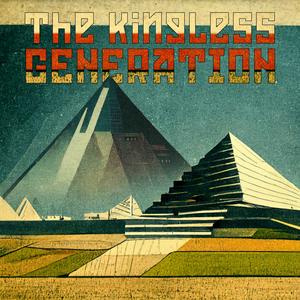
About The Kingless Generation
A podcast on the deep history of class struggle, paleo-parapolitics, and the demonology of capital. Hosted on Acast. See acast.com/privacy for more information.
Podcast websiteListen to The Kingless Generation, Conspirituality and many other podcasts from around the world with the radio.net app
Get the free radio.net app
- Stations and podcasts to bookmark
- Stream via Wi-Fi or Bluetooth
- Supports Carplay & Android Auto
- Many other app features
Get the free radio.net app
- Stations and podcasts to bookmark
- Stream via Wi-Fi or Bluetooth
- Supports Carplay & Android Auto
- Many other app features

The Kingless Generation
Scan code,
download the app,
start listening.
download the app,
start listening.
 New Zealand