

Listen to this podcast in the app for free: Download for free in the App Store
radio.net
Sleep timer
Save favourites
220 episodes
Can you build a farm for an uncertain future? With Simon Wallwork
30/09/2026 | 41 mins.Building a farm for an uncertain future means questioning some of the assumptions that have driven farming for decades.
For Simon Wallwork, a brutally dry season in 2010 was the catalyst for rethinking his farming system. After years of predominantly cropping, he began looking more closely at climate data and using it to inform changes to his agronomic practices and make the jump to bring livestock back into the business.
Since then, Simon's thinking has expanded from adapting to climate change, to actively preparing for what's next. He's been involved in Ag Zero, a farmer-led initiative exploring agriculture's role in the energy transition, while on his own farm he's experimenting with carbon farming, electrification, and on-farm energy hosting.
In this episode, Simon and Sarah explore what happens when farmers start thinking about technology, sustainability, and resilience not as separate issues, but as parts of the same system. For instance, rather than simply replacing a diesel tractor with an electric one, what happens when electrification and autonomy make the constraints of traditional farming systems start to disappear?
They discuss:
Why diversification can be an important part of building farm resilience
The shift from thinking about climate adaptation to agriculture's role in mitigation and the energy transition
How carbon farming can change the economics of marginal land
How autonomy changes the assumptions around machinery size and speed
Simon's farm microgrid and the role of solar and batteries
The potential role of electric tractors, trucks, and drone sprayers
Whether electrification and autonomy could reduce the pressure for farms to continually scale up
What energy independence could look like at the farm and regional level and why community ownership is critical
How sustainability requirements could increasingly influence market access, finance, and insurance
Useful Links:
Webinar: Nature Friendly Farming - Farmers for Climate Action
The Business Case for Electrifying Agriculture, with Cherry Grower Mike Casey
Agricultural autonomy and new ways of working with SwarmFarm Robotics
Have we hit the tipping point for autonomy in ag? With Shane Thomas and Matthew Pryor
Comparing science communication theory with participatory practice: case study of the Australian Climate Champion Program
GRDC
Corrigin Farm Improvement Group
For more information and resources, visit our website.
The information in this post is not investment advice or a recommendation to invest. It is general information only and does not take into account your investment objectives, financial situation or needs. Before making an investment decision you should seek financial advice from a professional financial adviser. Whilst we believe the information is correct, we provide no warranty of accuracy, reliability or completeness.Business model breakdowns: ag equipment dealer Titan Machinery, with Shane Thomas
16/09/2026 | 41 mins.As technology makes equipment more autonomous, precise, and serviceable from anywhere, will dealers become less important? Or will they become an even more valuable technology-enabled partner to farmers?
Today, Shane Thomas (Upstream Ag Insights) joins us to unpack the underlying economics of ag equipment dealers in our latest, Business Model Breakdowns episode of AgTech So What?
As many know, dealerships are where most equipment gets sold, serviced, and supported. But the business model is more complicated than simply selling tractors and parts. And, it’s changing.
We examine dealers largely by breaking down Titan Machinery, the world’s largest CNH dealership, with around $US 2.5 billion in revenue and more than 100 locations across the US, Eastern Europe, and Australia.
The surprising part? The equipment itself isn't where most of their profits come from. While equipment sales make up the majority of dealership revenue, parts, service, and rentals generate the majority of gross margin.
In this episode, Sarah, Matthew and Shane discuss:
How the agricultural equipment dealership business model works.
Why parts and service are so important to dealer profitability.
Whether technology could fundamentally change the role of the dealer.
The role of equipment financing and inventory management.
Why used equipment can create significant balance-sheet risk.
How dealer consolidation changes the economics of the business.
Agtech companies attempting to go direct to farmers.
Whether trust and rapid service will remain powerful advantages for dealers.
Got a business model in ag you’d like for us to break down in a future episode? Let us know!
Useful Links:
Investor Relations - Titan Machinery
Will China’s cheaper tractors disrupt ag equipment? - Tenacious Ventures
CNH
Dealers AGCO Corporation, Fendt Australia, John Deere
Blurring the Line Between Farmer and Ag Retailer - Tenacious Ventures
Tech: SwarmFarm Robotics, Harrington Seed Destructor, Carbon Robotics
7 Powers - The Foundations of Business Strategy, Hamilton Helmer
For more information and resources, visit our website.
The information in this post is not investment advice or a recommendation to invest. It is general information only and does not take into account your investment objectives, financial situation or needs. Before making an investment decision you should seek financial advice from a professional financial adviser. Whilst we believe the information is correct, we provide no warranty of accuracy, reliability or completeness.
Companies: Titan Machinery • Topics: ag-retail, farm-machinery, business-model, agtech-ecosystemAre we thinking about trees on farms all wrong? with Michael Taylor
02/09/2026 | 43 mins.What happens when you stop thinking about trees and agriculture as separate systems?
In this episode, sixth-generation Australian farmer and engineer Michael Taylor explains what decades of planting trees have taught his family about farming, resilience and innovation.
On their New England Tablelands farm, “Taylor’s Run,” the Taylors began planting trees for a practical reason: shelter. But over generations, those trees have become part of a much bigger story about agroforestry, biodiversity, natural capital, and the complex interactions at work across a farming system.
Michael discusses why farming, despite his engineering background, is one of the most complex systems to manage. He shares the lessons that have emerged over decades of tree planting, as well as the mistakes. And the unexpected benefits those experiences have revealed.The conversation also explores what happens when we try to put numbers around nature. Michael discusses how natural capital accounting and data can help demonstrate, in tangible figures, some of the things farmers already see and observe in their landscapes.
Sarah and Michael also discuss:
How trees can influence wind, moisture, ground cover and livestock protection
Why some innovations only reveal their true value over decades
How agroforestry can create value beyond timber
What natural capital accounting can tell us about farm systems
The limits of trying to simplify complex natural systems
Useful Links:
Valuing natural capital on Australian farms — Tenacious Ventures
Shifting from climate measurement to risk mitigation — Tenacious Ventures
Mark Wootton on carbon-neutral farming at Jigsaw Farms — Tenacious Ventures
Natural Capital - Forico
CSIRO Natural Capital Handbook
Bambra Agroforestry Farm — practical Australian agroforestry resources
Responsible Wool Standard (RWS) - Textile Exchange
Australian Farmer of the Year Michael Taylor shows how farming diversity can lead to sustainability - ABC News
For more information and resources, visit our website.
The information in this post is not investment advice or a recommendation to invest. It is general information only and does not take into account your investment objectives, financial situation or needs. Before making an investment decision you should seek financial advice from a professional financial adviser. Whilst we believe the information is correct, we provide no warranty of accuracy, reliability or completeness.
[00:2:00] Farming is a complex system
[00:20:00] Innovation reveals its value over time
[00:24:00] Data can make farmer knowledge visible
Topics: agroforestry, natural-capital, biodiversity, climate-risk, agtech-ecosystemWhat if every plant was a sensor? with Gary Schaefer
19/08/2026 | 33 mins.What if crops could tell you when they were sick, before you could see the symptoms?
Gary Schaefer leads the commercial organization at InnerPlant, a company with a radically different approach to crop monitoring: engineering plants to communicate when they are under stress.
InnerPlant’s technology enables plants to emit a fluorescent signal within hours of infection by specific diseases, potentially giving farmers access to real-time information about what is happening in their crops. Their first commercial product, CropVoice, uses strategically placed “sentinel” plants to provide localized information about fungal disease risk in soybeans.
But like all things in agtech, technology is only part of the story.
In discussion with Dr Madeline Mitchell, Gary shares what InnerPlant has learned about bringing a new category of agtech to market. If plants can tell us what’s happening before we can see it, what else might that change about agriculture?
Gary and Maddie discuss:
What detecting disease before visible symptoms appear changes about crop protection
The shift from maximizing yield to maximizing efficiency
What InnerPlant learned by starting small and working closely with farmers.
What it takes to move from scientific innovation to commercialization.
Why strategic investment can be more valuable than capital alone.
How farmer investors can help shape an agtech company's path to market.
What the future could look like when every plant becomes a sensor.
Useful Links:
Ag Startup InnerPlant Develops New Crop Technology Alerting Farmers of Plant Stress
VCs should still chase agtech Cinderellas - Fast Company
Breaking Barriers in Crop Innovation (3 part series)
For more information and resources, visit our website.
The information in this post is not investment advice or a recommendation to invest. It is general information only and does not take into account your investment objectives, financial situation or needs. Before making an investment decision you should seek financial advice from a professional financial adviser. Whilst we believe the information is correct, we provide no warranty of accuracy, reliability or completeness.
Companies: InnerPlant • Topics: ag-data, ai, crops-horticulture, innovationCan tech make agriculture brands more authentic? with Jim Gall, RB Sellars
05/08/2026 | 43 mins.Agriculture often talks about telling a better story, but Jim Gall, the CEO of RB Sellars argues the real challenge is giving people something worth believing in.
RB Sellars is a workwear brand that’s well-known in regional Australia, largely for its work shirts. In this episode, Sarah speaks with Jim about why the strongest brands don't simply market themselves, rather they’re using technology, data, and transparency to earn trust. From AI-powered customer service and fiber traceability to customer insights and regional investment, Jim shares how innovation can strengthen relationships rather than replace them.
Drawing on his unique career spanning journalism, marketing, farming, and leadership, Jim explains why agriculture's future depends on businesses that understand their customers, invest in their communities, and build stories grounded in truth.
Sarah and Jim discuss:
Why traceability and provenance are becoming strategic advantages for agricultural businesses.
How RB Sellars uses customer data and agricultural insights to decide where to invest.
Why understanding farmers' seasonal needs changes the way products are designed and sold.
The leadership philosophy that encourages innovation through radical candor.
How combining data with local knowledge leads to better commercial decisions.
What agtech founders can learn about building brands that customers genuinely believe in.
Useful Links:
RB Sellars and Woolmark partner to champion Australian Merino wool
New Partnership highlights the appeal of Australian cotton
Putting cotton farmers at the forefront of the cotton industry, with Marzia Lanfranchi
Cotton Australia
The Woolmark Company
For more information and resources, visit our website.
The information in this post is not investment advice or a recommendation to invest. It is general information only and does not take into account your investment objectives, financial situation or needs. Before making an investment decision you should seek financial advice from a professional financial adviser. Whilst we believe the information is correct, we provide no warranty of accuracy, reliability or completeness.
Companies: RB Sellars • Topics: marketing-brands, supply-chain, agtech-ecosystem, people-culture
More Arts podcasts







Trending Arts podcasts








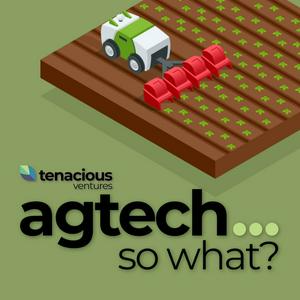
About Agtech - So What?
We tell the stories of innovators at the intersection of agriculture and technology to answer the question: what really is agtech and why should you care?
Podcast websiteListen to Agtech - So What?, The Moth and many other podcasts from around the world with the radio.net app
Get the free radio.net app
- Stations and podcasts to bookmark
- Stream via Wi-Fi or Bluetooth
- Supports Carplay & Android Auto
- Many other app features
Get the free radio.net app
- Stations and podcasts to bookmark
- Stream via Wi-Fi or Bluetooth
- Supports Carplay & Android Auto
- Many other app features

Agtech - So What?
Scan code,
download the app,
start listening.
download the app,
start listening.
Agtech - So What?: Podcasts in Family
 New Zealand