
Listen to this podcast in the app for free: Download for free in the App Store
radio.net
Sleep timer
Save favourites
69 episodes
The Case of Fear Itself
17/11/2026 | 27 mins.Send us Fan Mail
Who taught you what to fear?
In 1983, an accusation at the McMartin Preschool in Manhattan Beach, California, helped launch one of the most notorious criminal investigations in American history.
Hundreds of children were interviewed. Stories emerged about secret tunnels, satanic rituals and terrible crimes committed beneath an ordinary preschool. Families were terrified. A community became convinced something monstrous was happening in its midst.
After years of investigation and prosecution, the case ended without a single conviction.
The fear was real. But the extraordinary allegations were never established in court—and the interviewing methods themselves became part of the story.
In The Case of Fear Itself, RamX and Bones conclude the Fortean Winds Fear Trilogy by investigating the machinery that turns information into fear.
In Part One, The Vanishing Crime Wave, we examined why people can become convinced crime is exploding even as long-term statistics tell a different story.
In Part Two, The Empty Pews, we examined religious decline, claims of revival, and the political incentives surrounding a shrinking but potentially more committed religious base.
Now we go beneath both stories.
Drawing on the neuroscience of Joseph LeDoux, we distinguish automatic bodily defense responses from the conscious experience of fear—and explore how learning, memory and expectation shape what people interpret as dangerous.
Then we examine how those expectations can be influenced at scale.
Research published in the American Economic Review shows that differences in cable-news exposure can measurably affect political attitudes and voting. Research published in Nature demonstrates how people across generations repeatedly become convinced that society's morality is deteriorating, even when the underlying evidence doesn't support the perceived decline.
The problem isn't necessarily that someone invented a danger out of nothing.
Sometimes the underlying event is real. The misleading part is the connection we're taught to make between that event and a much larger story about the world.
And then the investigation returns to Fortean territory.
Why do some UFO witnesses report overwhelming terror while others describe awe, curiosity or calm? What can bodily reactions tell us about an encounter—and what remains interpretation? What separates collective fear from a genuinely unexplained event?
RamX and Bones revisit childhood rumors of the Green Man, the New Jersey drone wave, and the evidence problems that have accompanied UFO investigations for generations.
The final answer isn't a single mastermind secretly controlling everyone's fears.
It's a convergence of human psychology, repeated media narratives, institutional incentives and the stories we learn to associate with danger.
Fear can tell you something happened to you. It cannot, by itself, tell you what caused it.
Three episodes. One question.
Who taught us what to fear—and why?
The Case of Fear Itself concludes the Fortean Winds Fear Trilogy.
These are original research articles, academic discussions and government records supporting the major research threads.
UMKC School of Law — The McMartin Preschool Abuse Trial — background, allegations, interviews and trial outcome.
UCLA — How the McMartin Case Changed Child Abuse Investigations — interviewing practices and the continuing debate over the case.
Joseph LeDoux and Daniel Pine — Using Neuroscience to Understand Fear and Anxiety — distinction between defensive responses and subjective fear.
LeDoux and colleagues — Approaches to Defining and Investigating Fear — competing neuroscientific frameworks and learned fear.
Mastroianni & Gilbert — The Illusion of Moral Decline, Nature — perceptions of moral deterioration across generations.
Martin & Yurukoglu — Bias in Cable News: Persuasion and Polarization, American Economic Review — how differences in news exposure influence political behavior.
Federal Trade Commission — Cambridge Analytica Investigation — deceptive harvesting of Facebook data for voter profiling and targeting.
Support the show
Read more and follow our sources to research paths of your own at Fortean Winds
Our UFO Research Summary.The Case of the Empty Pews
02/11/2026 | 34 mins.Send us Fan Mail
Churches are emptying. Religious affiliation has fallen for decades. A growing share of younger Americans has no religious identity at all.
So why are we suddenly hearing about a Christian revival?
In The Empty Pews, Part Two of Fortean Winds' Fear Trilogy, RamX and Bones investigate the widening gap between religious demographics and the political narratives being built around them.
We begin in London's Soho district, where a group calling itself the King's Army marched through the city's historic LGBTQ neighborhood chanting the name of Jesus. Its leadership insists the movement isn't political. But its activities tell a more complicated story.
From there, we turn to the numbers.
According to Pew Research, the share of American adults identifying as Christian fell from 78% in 2007 to 62% in 2023–24. The long decline may have stabilized, but stabilization is not the same thing as revival.
And the youngest generations remain the least religious.
So where are the revival headlines coming from?
RamX and Bones examine the Barna Group's church-attendance research, the now-withdrawn British Quiet Revival study, and the difference between measuring how frequently existing churchgoers attend and measuring whether more people are becoming religious.
Then the investigation moves from the pews into politics.
We examine the rise of cultural Christianity as a political identity, Steve Bannon's documented attempts to build international nationalist alliances, and the relationships connecting American religious conservatives with political movements in Europe.
But there's another question beneath all of this:
What happens when a religious movement loses members but the people who remain become more committed?
Drawing on the sociology of religious organizations, we explore how a shrinking movement can become more internally cohesive, politically focused and institutionally influential—even while its demographic base contracts.
That brings us back to investigations Fortean Winds has been building for years: the Seven Mountains Mandate, Dominionism, dispensationalism, Christian Zionism, political financing, and the ideological networks surrounding Project 2025.
Our central argument is a working hypothesis, not an established causal finding: declining demographics may be helping drive a political urgency that looks, from the outside, like a religious resurgence.
This episode isn't an attack on Christianity, religious belief, or the people who practice it. It's an investigation into what happens when faith becomes entangled with political identity, institutional survival and the pursuit of power.
Because a movement doesn't necessarily become less influential when its numbers fall.
Sometimes it gets louder.
The Empty Pews continues our three-part investigation into fear.
Part One: The Vanishing Crime Wave
Part Two: The Empty Pews
Part Three: Fear itself—who decides what we're afraid of, and why?
Who taught us what to fear?
Companion Article with sources: https://rememberingwinds.substack.com/p/the-empty-pews-gen-z-isnt-coming?r=61g2dl
Research update: The Bible Society's Quiet Revival report was withdrawn in March 2026 after YouGov identified fraudulent survey responses affecting its findings.
Also, Pew's published figure is 62%, rather than the spoken 63%, and the chart on the thumbnail is a conceptual visual, not a literal statistical plot
How about some source links:
Religious demographics and the revival debate
Pew Research — Religious Landscape Study, 2023–24
Pew — The Decline of Christianity Has Slowed
PRRI — 2024 Census of American Religion
Barna — Young Adults Lead a Resurgence in Church Attendance
YouGov — Investigation Into the Withdrawn Bible Society Study
Church of England — 2024 Attendance Figures
Catholic Bishops' Conference — 2024 Statistics
Religion, identity and political organization
Premier Christianity — King's Army Founder Defends Soho Evangelism
PinkNews — King's Army March in Soho
Rogers Brubaker — The New Language of European Populism
The Brink — Documentary on Steve Bannon
Bloomberg — Bannon Hosts International Populist Leaders
New Statesman — JD Vance's Political Connections in Britain
Sociology and political financing
Laurence Iannaccone — Why Strict Churches Are Strong, American Journal of Sociology
ProPublica — Conservative Partnership Institute, IRS Filings
ProPublica — Heritage Foundation, IRS Filings
ProPublica — American Cornerstone Institute, IRS Filings
Support the show
Read more and follow our sources to research paths of your own at Fortean Winds
Our UFO Research Summary.The Case of the Vanishing Crime Wave
20/10/2026 | 34 mins.Send us Fan Mail
In April 1989, five teenagers were accused of a brutal attack in New York's Central Park. The newspapers had a name for the supposed new phenomenon: wilding. The city had a new kind of danger to fear.
Thirteen years later, DNA evidence and another man's confession overturned the convictions.
The attack was real. The story built around it was wrong.
In the first installment of a new three-part Fortean Winds investigation into fear, RamX and Bones ask a deceptively simple question:
If crime has fallen so dramatically across much of the Western world, why do so many people believe society is becoming more dangerous?
The numbers tell a story that rarely makes the evening news.
Serial killers have declined dramatically since their peak decades. Vehicle theft was transformed by electronic immobilizers. Chicago's once-powerful gangs fragmented into smaller factions. Across the United States, Canada, Australia and the United Kingdom, many traditional forms of crime have fallen from their historic highs.
But crime didn't simply disappear.
Fraud, cybercrime, identity theft and other forms of digital predation have changed the landscape. Some threats became less common. Others found new opportunities.
Then comes the question that changes the investigation:
Who benefits when falling crime is presented as a crime wave?
RamX and Bones examine Gallup polling showing dramatic partisan shifts in perceptions of crime, research into humanity's persistent belief that morality is declining, and an American Economic Review study demonstrating that television news exposure can measurably influence voting behavior.
From the Central Park Five to modern cable news, media ownership, political incentives and the aging electorate, this episode explores how real dangers can become manufactured narratives—and how those narratives can be used to demand power, money and public consent.
This isn't an argument that crime is imaginary. Victims are real. Violence is real. Fraud is real.
It's an investigation into the distance between what is happening and what we're being taught to fear.
The Vanishing Crime Wave is Part One of a three-part series.
Next: Religion. Then: Fear itself.
Who taught us what to fear?
How about some links?
Innocence Project — Central Park Jogger case and the five exonerations
Reason — Trump’s 1989 advertisement and the origins of “wilding”
Northeastern University — Why Are There Fewer Serial Killers?
Chicago Crime Commission — The Gang Book
WTTW — Chicago Gang Fragmentation and Social Media
UK Office for National Statistics — Crime in England and Wales, Year Ending March 2026
Gallup — Crime Seen as Less Serious for Second Straight Year (2025)
Mastroianni & Gilbert — The Illusion of Moral Decline, Nature (2023)
Martin & Yurukoglu — Bias in Cable News: Persuasion and Polarization, American Economic Review (2017)
Alliance for Securing Democracy — National Rally's Russian Bank Loan
Support the show
Read more and follow our sources to research paths of your own at Fortean Winds
Our UFO Research Summary.Does the Unexplained Know It’s Being Watched? | Field Notes
13/10/2026 | 8 mins.Send us Fan Mail
Three cameras lose power at Skinwalker Ranch. A fourth reportedly records no visible perpetrator. Does the phenomenon react when we investigate it?
In this solo Fortean Winds Field Notes episode, RamX follows that question through John Keel’s research, the 1976 Tehran UFO intercept, and Project Hessdalen’s reported laser-response trials.
Then we get into the observer effect, quantum entanglement, plasma, and a possibility worth considering: what if the visible phenomenon is an interface?
Reaction isn’t recognition. The question is what an apparent response tracks—the energy we introduce, or the meaning of what we do.
Tell us your thoughts in the comments. What would distinguish a physical reaction from a meaningful response?
And how about some links?
Skinwalker Ranch — the camera incident
Published retrospective account of the July 19, 1998 surveillance-camera incident discussed in the episode. This is a NIDS-era account, rather than an independently audited analysis of the original footage.
https://www.hunttheskinwalker.com/all-news/chameleo
Skinwalker Ranch — investigative responsiveness and surveillance
Additional discussion of the investigators’ interpretation of apparent evasiveness, equipment interference, and the limitations of surveillance.
https://www.hunttheskinwalker.com/all-news/active-deception
John Keel — “Organized Harassment of Individuals”
Keel’s archive presents material from his 1968 dossier concerning reported interference involving UFO witnesses and researchers. The January archive includes entries discussing hoaxes and conflicting information.
https://www.johnkeel.com/?m=201401
John Keel — Special Investigations File
Additional archived material concerning telephone incidents, alleged impersonation of Air Force officers, and Keel’s assessment of a sighting report.
https://www.johnkeel.com/?p=2845
Tehran UFO intercept — September 19, 1976
NSA-hosted archival file containing a reproduction headed “Verbatim Wire Message,” describing the reported aircraft-system failures and civilian-airliner communications interference. The relevant material begins on the second PDF page. This is a reproduced military message, not the original military form.
https://www.nsa.gov/portals/75/documents/news-features/declassified-documents/ufo/us_gov_iran_case.pdf
Project Hessdalen — 1984 Final Technical Report
Erling Strand’s field-investigation report. Section 3.7 describes the laser trials; Section 4.5 discusses their interpretation; Section 4.7 discusses instrument failures. The reported eight responses occurred across nine trials during two sightings.
https://old.hessdalen.org/reports/hpreport84.shtml
Quantum physics — the 1998 which-way experiment
Dürr, S., Nonn, T., and Rempe, G. “Origin of quantum-mechanical complementarity probed by a ‘which-way’ experiment in an atom interferometer.” Nature 395, 33–37 (1998).
https://doi.org/10.1038/25653
Quantum measurement — the role of an observer
Sokolovski, D. “Quantum Measurements with, and Yet without an Observer.” Entropy 22, 1185 (2020). Additional background on measurement, physical records, and the distinction between an apparatus and conscious observation.
https://pmc.ncbi.nlm.nih.gov/articles/PMC7597356/
Plasma — self-organization and collective behavior
Zhang, C., Huang, C.-K., and Joshi, C. “Self-organization of photoionized plasmas via kinetic instabilities” (2023 preprint). Discusses laboratory plasma structures and collective effects; it does not demonstrate plasma consciousness or establish an explanation for the anomalous cases.
https://arxiv.org/abs/2311.16275
Support the show
Read more and follow our sources to research paths of your own at Fortean Winds
Our UFO Research Summary.David Grusch: Reptilians, Plasmoids & Recovered Craft
06/10/2026 | 41 mins.Send us Fan Mail
David Grusch is making claims that go considerably further than his original UAP testimony.
In his latest appearance with Joe Rogan, the former intelligence officer and UAP whistleblower discusses alleged recovered craft, multiple forms of non-human intelligence, underwater facilities, consciousness-based technology—and a reported encounter involving a seven-foot reptilian being that ended violently.
RamX and Bones work through the interview claim by claim.
Grusch distinguishes between physical and non-physical UAP, speculating that some luminous orbs could be “sentient plasmoids” while others might represent solid craft surrounded by plasma generated through magnetohydrodynamic propulsion. That lands remarkably close to the plasma problem explored in our recent Field Notes episode on Britain's Project Condign.
Then the interview gets stranger.
Grusch describes information concerning several alleged NHI morphologies: human-looking beings, multiple types of Greys, and large reptilian entities. He says recovered biological material has undergone genomic analysis, discusses apparent conflict between different NHI groups, and recounts testimony surrounding a crashed craft whose occupants allegedly survived the impact.
But throughout the episode, Fortean Winds keeps the evidentiary categories separate.
What did Grusch personally witness? What did he see in classified audiovisual material? What was reported to him by firsthand witnesses? And what is simply his own theory?
Those distinctions matter.
The conversation also moves into alleged underwater facilities, the Baltic Sea anomaly, Havana Syndrome, Stargate and remote viewing, and Grusch's theory that some recovered technology may require something closer to a consciousness interface than a conventional control system.
Several of these ideas unexpectedly intersect with subjects we've independently followed for years: Project Condign, John Keel's ultraterrestrial hypothesis, Jacques Vallée, electromagnetic effects, plasma, synchronicity and the recurring possibility that the phenomenon represents a spectrum rather than a single source.
That's corroboration of a pattern.
It isn't proof.
Because after reptilians, plasmoids, recovered bodies and secret programs, the problem remains exactly where it has always been:
Eventually, somebody has to wheel out the evidence.
How about some Links?
Rogan - Grusch Interview
https://www.youtube.com/watch?v=dYPXINFcvmI
Erik Davis
https://www.newsnationnow.com/space/ufo/4-types-aliens-ufo-whistleblower/
Havana Syndrome Fortean Winds
https://forteanwinds.com/2021/12/13/ufos-and-brain-damage-stranger-danger/
https://forteanwinds.com/2023/02/23/havana-syndrome-and-the-ufo-problem/
Support the show
Read more and follow our sources to research paths of your own at Fortean Winds
Our UFO Research Summary.
More Nature podcasts







Trending Nature podcasts







About Fortean Winds
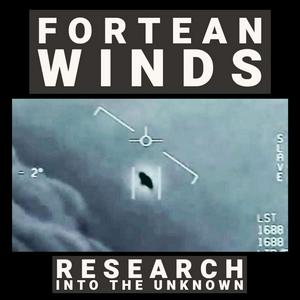
An exploration of the UAP - UFO phenomenon and the associated "high strangeness" which accompanies it from the standpoint of analysts and researchers. Fortean Winds is a collective of data and research professionals who began a project in 2020 to better understand the UFO/UAP phenomenon from the perspective of existing research and evidence. After a few years study and note taking (which you can see at our website https://www.forteanwinds.com) , we're ready to discuss our notes and insights involving the UFO phenomenon.
Podcast websiteListen to Fortean Winds, Big Cat Conversations and many other podcasts from around the world with the radio.net app
Get the free radio.net app
- Stations and podcasts to bookmark
- Stream via Wi-Fi or Bluetooth
- Supports Carplay & Android Auto
- Many other app features

 New Zealand

