
Listen to this podcast in the app for free: Download for free in the App Store
radio.net
Sleep timer
Save favourites
67 episodes
Ep 65 - Real Coaches, Real Problems: Decisions That Protect You – “Every yes is a no to something else”
18/10/2026 | 38 mins.In this episode of Real Coaches, Real Problems, there are no sets, no reps and no force plates. This one is about you as the practitioner. With athletes, we set the criteria before the moment, return-to-play markers, running progressions and traffic-light systems all exist so that the decision protects the athlete when the pressure is on. Yet so many coaches I mentor run themselves the opposite way, they agree a salary on the spot, say yes to extra work while the person asking is standing in front of them, and let the day decide how they feel when they walk through the front door.
First is knowing your number. I explain how to work out your real hourly rate, why you should take facts rather than feelings into any pay conversation, how to negotiate the terms and not just the salary, and why you need to know your walk-away point before you walk in.
Next is setting your criteria before any request lands. Before you say yes, ask three questions: what’s the deliverable, how long will it take, and how much of my role is this? I share a simple script for saying no, and explain how setting expectations early removes the guilt later.
Finally, there’s deciding how your day ends. I cover the difference between replaying and reflecting, a five-step reflection you can use on your way home, and why “what happens if I do nothing until the morning?” is one of the most useful questions you can ask.
They’re all linked. If you don’t know your value, you won’t set boundaries. If you don’t set boundaries, you can’t switch off. Make one of these decisions well and the others get easier.
Want help building a clearer philosophy, sharper programme design or more confidence in the applied setting? Find out more about our mentorship here: https://collaboratesports.com/bespokementorship
Collaborate 360 Performance Workshops: Game Speed with Ruth Waghorn
This episode is about making the right decision at the right time in your career. This workshop applies the same idea to movement. Our first regional workshop is on Wednesday 28th October, 6–9pm, at Hertfordshire Sports Village in Hatfield, led by Ruth Waghorn, Physical Performance Coach at the FA. It isn’t a night of new drills. It’s a coaching approach to game speed, built around the actions and behaviours that decide outcomes in your own sport. Only a few places are left.
Book now: www.collaboratesports.com/workshopsEp 64 - Real Coaches, Real Problems: Gamespeed – "Are they looking to exploit or create space?"
11/10/2026 | 37 mins.In this episode of Real Coaches, Real Problems, it's just me again, unpacking a phrase I see written on session plans all the time: game speed. A coach I've mentored sent through a session labelled "game speed". It included cone drills, some reactive agility work and a small-sided game. When I asked which part was the game speed, he said, "all of it." The drills weren't bad, but none of them had all three things I think game speed needs: a real cue from the sport, the right movement solution, and the right moment to use it.
I start by defining game speed as optimal speed, not maximal speed. Then I work through the three places I see it break down. First is the wrong stimulus: lights, numbers and coach calls that never show up in the match. I share the mistake I made with baseball pitchers, and the hands-behind-the-back defending we used in rugby sevens to give attackers a truer cue to read.
Next is the wrong solution. A smaller winger kept getting caught using the same sidestep as a big, fast centre. Every athlete in a 360-degree sport needs to know whether they're exploiting space or creating it, and slower athletes will live far more in the "create" world.
Finally, there's the right strategy at the wrong time. A netball centre had excellent footwork but was always a fraction late. I cover making timing the focus of feedback instead of effort, building in affordances to buy time, and using failed reps as your best coaching moment. I also explain why letting a 7v7 run is an exposure to chaos, not game speed coaching.
Want help building a clearer philosophy, sharper programme design or more confidence in the applied setting? Find out more about our mentorship here: https://collaboratesports.com/bespokementorship
Collaborate 360 Performance Workshops: Game Speed with Ruth Waghorn
If this episode has you rethinking your sessions, this is the room to be in. Our first regional workshop is on Wednesday 28th October, 6–9pm, at Hertfordshire Sports Village in Hatfield. It's led by Ruth Waghorn, Physical Performance Coach at the FA. It isn't a night of new drills. It's a coaching approach to game speed: you'll identify the actions and behaviours that decide outcomes in your own sport, whether that's football, netball, rugby, tennis or anything else, and build your sessions around them. You learn by doing, in one room with one specialist, close to home.
Places are limited. Book now: www.collaboratesports.com/workshopsEp 63 - Real Coaches, Real Problems: Speed – Stop Trying to Fix Everything.
04/10/2026 | 38 mins.In the first episode of Real Coaches, Real Problems, a new series from Performance Strategies and Stumbles, it's just me, Dan Howells. I spend much of my week mentoring S&C coaches, sports scientists and practitioners in academies, pro clubs and private practice, and the same problems keep coming up across different sports and countries. In this series I share those real stories, kept anonymous, along with what we tried and what actually helped. I'm starting with speed.
First, diagnosing a sprint before you prescribe a drill. A coach I worked with spotted ten faults in a young rugby player and wanted to fix them all at once, but eight cues for eight fixes will fix nothing. I explain how to work out whether the problem is neuromuscular, coordinative, structural or cognitive, and why sticking with one priority for four to five weeks made the difference.
From there I look at plyometric dosing. Good exercises often get prescribed at too low a volume or intensity to change anything, or in the wrong direction for the problem you're trying to solve. I also cover how one coach brought sprinting back after a congested fixture run: using "waterfall" starts to stop athletes racing each other, and calling it a speed "dose" rather than an "exposure" so players hear protection, not risk.
Finally, I share what happened when a new plyometric block was rolled out without getting the rest of the staff on board. The programme was sound, but when niggles appeared it became the obvious thing to blame. Speed work doesn't just live on the track or in the gym. It lives in the relationships around it.
Want help building a clearer philosophy, sharper programme design or more confidence in the applied setting? Find out more about our mentorship here: https://collaboratesports.com/bespokementorship
Collaborate 360 Performance Workshops: now regional
After Collaborate 360 in London, it was clear that one day in one city wasn't enough. So we've launched regional, single-topic workshops built on the same learning model: you learn by doing. There's one specialist coach, one room of practitioners, and it's close enough to home that going deep doesn't cost you a full day of travel.
Our first workshop is on Wednesday 28th October at Hertfordshire Sports Village. The focus is game speed, and it's led by Ruth Waghorn from the FA. It's the perfect next step after this episode. More regions will be announced soon.
Early bird pricing is open now. Book your place: www.collaboratesports.com/workshopsEp 62 - Tom Clark Stumbles - "I tried to own everything."
27/09/2026 | 30 mins.In this episode of Performance Strategies and Stumbles, Tom Clark is back to talk about the stumbles from his career. Last week we covered jet lag and travel fatigue. This week Tom looks at his move into self-employment, the mistakes he made along the way and what they taught him.
We start with why talking about mistakes is uncomfortable, and why it matters anyway. Tom is open about the pressure that comes with working for yourself, especially the pull to say yes to every client and take on more than you can deliver well. He explains how working with experts in other fields improved the service he could offer, and why setting clear expectations with clients from the start saves a lot of problems later.
From there we talk about what practitioners can learn from sports outside their own, and why understanding optimal performance means spending time in lots of different environments. Tom also talks about imposter syndrome. For him it became a reason to keep learning rather than something that held him back.
Across the whole conversation, Tom keeps coming back to investing in yourself. Self-employment is full of learning opportunities, and the time you spend on your own development is what keeps you relevant and pays off over the long term.
To see how Tom's company Phaze helps teams and organisations optimise travel and jet lag performance, visit www.phaze-app.com/
Collaborate 360 Performance Workshops: now regional
After Collaborate 360 in London, it was clear that one day in one city wasn't enough. So we've launched regional, single-topic workshops built on the same learning model: you learn by doing. There's one specialist coach, one room of practitioners, and it's close enough to home that going deep doesn't cost you a full day of travel.
Our first workshop is on Wednesday 28th October at Hertfordshire Sports Village. The focus is game speed, and it's led by Ruth Waghorn from the FA. More regions will be announced soon.
Early bird pricing is open now. Book your place: www.collaboratesports.com/workshopsEp 61 - Tom Clark Strategies - "Sleep and light are the two key variables in performance."
20/09/2026 | 46 mins.In this episode of Performance Strategies and Stumbles, I'm joined by Tom Clark. Tom spent 13 years as a performance coach in motorsport and Formula One, looking after the sleep, training, nutrition and recovery systems that keep a driver's output steady across a season that seems designed to wear them down. He holds a professional doctorate from Liverpool John Moores University focused on jet lag and travel fatigue in elite motorsport, and he has since founded Faze, a jet lag and travel performance platform used across Formula One, the Premier League, the NFL, World Athletics and more.
We start by separating two things that usually get lumped together. Jet lag is a desynchronisation problem: the body clock is out of step with local time, and it shows up as irritability, poor sleep and impaired performance. Travel fatigue is the body's response to the stress of travelling itself, and it can build up even when no time zones are crossed. Treat one as the other and you end up solving the wrong problem.
From there, Tom explains why travelling east is a much tougher physiological ask than travelling west, and covers the two biggest levers coaches actually have: light exposure and sleep pressure. We talk about why flight timing alone can decide whether athletes adjust smoothly or lose days to disrupted sleep, why pre-adjustment is so hard to deliver in a team setting, and how the first night effect can undermine even a well-managed trip.
The thread running through all of it is individualisation. Athletes have different sleep patterns and chronotypes, so a single travel plan for the whole squad will suit some of them and cost others. We finish on the mistakes Tom sees teams make when they treat travel as a logistics problem rather than a performance one.
Tom is back next week to share the stumbles from his career and what you can learn from his mistakes.
Before then, do check out how his company Phaze is supporting teams and organisations to optimise performance in this area: www.phaze-app.com/
Collaborate 360 Performance Workshops: now regional
After Collaborate 360 in London, it was clear that one day in one city wasn't enough. So we've launched regional, single-topic workshops built on the same learning model: you learn by doing. There's one specialist coach, one room of practitioners, and it's close enough to home that going deep doesn't cost you a full day of travel.
Our first workshop is on Wednesday 28th October at Hertfordshire Sports Village. The focus is game speed, and it's led by Ruth Waghorn from the FA. More regions will be announced soon.
Early bird pricing is open now. Book your place: www.collaboratesports.com/workshops
More Sports podcasts








Trending Sports podcasts


























About Performance Strategies & Stumbles
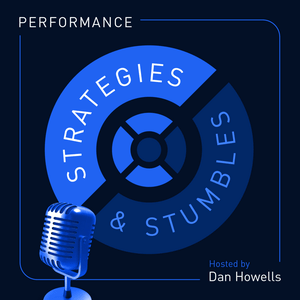
Welcome to ”Performance Strategies and Stumbles,” a podcast where we dissect the dynamic world of strategies in performance sports, as well as practitioner struggles, in two compelling halves!
In our initial segment, we delve into the strategies practitioners employ in performance sports environments, uncovering the HOW and the WHY behind their decisions. This exploration equips our audience with actionable insights, providing a playbook of strategies to implement in their own athletic endeavours.
The second half of our podcast shifts focus to the hurdles and missteps encountered by practitioners throughout their careers. As we delve into the realm of mistakes, our guests candidly share valuable lessons learned from their setbacks. By shedding light on the imperfections in performance, we underscore that success is a journey filled with unexpected twists. Embracing the concept of ”failing forward,” we invite you to join us as we unravel authentic stories behind the ebb and flow of strategy in the ever-evolving world of performance sports!
Host: Dan Howells, Founder of Collaborate Sports
www.collaboratesports.com
email: info@collaboratesports.com
Podcast websiteListen to Performance Strategies & Stumbles, The Dom Harvey Podcast and many other podcasts from around the world with the radio.net app
Get the free radio.net app
- Stations and podcasts to bookmark
- Stream via Wi-Fi or Bluetooth
- Supports Carplay & Android Auto
- Many other app features
Get the free radio.net app
- Stations and podcasts to bookmark
- Stream via Wi-Fi or Bluetooth
- Supports Carplay & Android Auto
- Many other app features

Performance Strategies & Stumbles
Scan code,
download the app,
start listening.
download the app,
start listening.
 New Zealand
