Listen to this podcast in the app for free: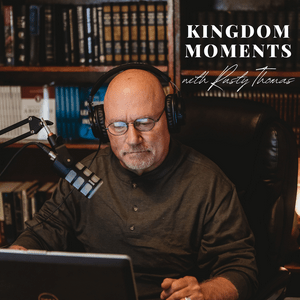 Download for free in the App Store
radio.net
Sleep timer
Save favourites
141 episodes
A World Without Christmas Part 3
15/12/2025
This episode starts with the controversary surrounding Kirk Cameron's teaching on annihilationism as opposed to the orthodox view of eternal conscious torment in hell. Second is the recent attack in Australia and the Religion of Peace striking again. From there, we explore the third part in a series called "A World Without Christmas. The three sources we are examining are “It’s a Wonderful Life, the Chronicles of Narnia, “Always winter and never Christmas, plus, D James Kennedy’s book, “What if Jesus had never been born? The first 3 chapters dealt with our Lord’s impact when it came to the value of human dignity. The last 3 chapters we explored last week covered Christ’s impact upon education, government, and freedom. This episode covers our Lord's impact on science, enterprise, and human sexuality. The word science means "a state of knowing, or having knowledge." It also means to separate one thing from another, to distinguish. Adam was our first known scientist. He named all the animals and brought distinction in the animal kingdom. In fulfillment of the Dominion Mandate, God’s people believed in an orderly, rational, uniformed, creation, which gave rise to scientific inquiry. Several departments of science were founded by Christians. Christian Scientists believed they were “thinking God’s thoughts after Him.” Kennedy points out that pagan cultures did not have a proper worldview to promote the study of science. They often saw nature as chaotic or ruled by capricious gods. Christ's birth impacted the pursuit of enterprise. Christianity dignified honest labor and enterprise by discouraging sloth and laziness. The Protestant work ethic based upon the Dominion Mandate fueled economic growth and lifted societies out of poverty.
A World without Christmas Part 2
08/12/2025
This is part 2 in our Christmas series, “A World without Christmas” or in the case of Narnia, “Always winter, never Christmas.” We are weaving together three different sources to determine what a Christless world would look like today. It's a Wonderful Life, Chronicles of Narnia, and D James Kennedy's book, "What if Jesus had not been born?" This episode covers three areas, education, government, and freedom. Before Christ education was for elites only. The masses were intentionally kept ignorant. They were much easier to control. Christ brought a revolution in education. Without words and language spoken first by God, there would be no creation and no way to know our Creator. Armed with this knowledge the church pursued literacy for men and nations. Christianity helped shape modern representative government. The biblical idea that all people are equal before God undermined the oppressive rule of tyrants. Without Christ, rulers believed themselves to be gods. With Christ, rulers became servants. Without Christ, power is concentrated and centralized. The weak are crushed under the heel of the strong and justice bends to the powerful. Kennedy shows how Christ completely reshaped the world’s concept of freedom. First, Christ came to bring spiritual freedom. This led to political and economic freedom. Christian ethics fueled justness, honesty, and responsibility in civil affairs. Because Christianity introduced the idea of human dignity and personal responsibility, the free-market system came into existence. Individuals were seen as morally responsible that have inherent worth and are accountable for their actions. These ideas came straight from Scripture, not ancient pagan thought or economics. In education, Jesus brings light to vanquish ignorance. In government, He brings justice and in society, He brings freedom. Without Christmas, none of this would have been possible. “Let earth receive her king.”
What if Jesus had not been Born?
26/11/2025
This episode commences a 4 part series that asks the intriguing question, "What if Jesus had not been born? Three sources will be combined to grant some answers. First, the book by the same name. Second, is the holiday classic "It's a Wonderful Life and third is the Chronicles of Narnia where it was always winter, but never Christmas. We know what Bedford Falls became if George Bailey had not been born. What would the world be like if Christ had not been born? It would be like stepping into Narnia under the White Witch’s cruel rule, a land where it is “Always winter, but never Christmas.” Cold. Silent. Indifferent, Jaded, Callous, and Colorless. It would be like stepping into Narnia under the White Witch’s cruel rule, a land where it is “Always winter, but never Christmas.” Cold. Silent. Indifferent, Jaded, Callous, and Colorless. • If Christ had not been born, the dignity of human life and the sacredness of life would remain largely unrecognized by most human souls. • Compassion would be a rare virtue, with no chance of becoming a central virtue in men’s souls. Before Jesus, human life—especially the weak, the elderly, infants, and the unwanted—was cheap. When the true and living God becomes distance to humanity, human life is devalued. After Christ was born, it is no longer the world of Narnia’s Witch. It is not the world of Pottersville anymore. Before Christ, mercy was admired as an idea but rarely practiced as a duty. Christ did not simply command love; He embodied it. His birth was not merely the dawn of salvation—it was the dawn of compassion in a cruel world. Hospitals, orphanages, relief missions—these were not inventions of governments or empires. These flowed from the heart of Jesus and was expressed through His people. His birth was not merely the dawn of salvation—it was the dawn of compassion in a cruel world. Christ did not simply enter history. He transformed it. It is no longer the world of Narnia’s Witch. It is not the world of Pottersville anymore.
Luther’s Main Points of the 95 Thesis
14/11/2025
This episode covers the three main issues that emerged from the Historic Reformation. What was the divine order of authority in the world between God's Word, the Church, and tradition? Who and what is infallible between the church and the Bible? Keeping the traditions of God while discarding the traditions of men that made void God's commandments. When Luther nailed the 96 Thesis to the door of the Wittenberg Church, he was not seeking to split the church. He was desirous to have a healthy debate with church leaders over their treatment of the Bible and the souls entrusted to their care. First of the point of the Thesis is repentance is spiritual gift not a financial transaction. God is the supreme authority not the pope. All human authority delegated by God has limits.. Indulgences cannot redeem the souls of men nor remove the guilt and shame of sin. Indulgences perverts the true Gospel of the Kingdom. The true treasures in the church are not wealth, but the Gospel of God's grace and mercy. Christians should imitate Christ. Believers should serve others and embrace compassion which means suffer with rather than rely on papal pardons. The Church should use its wealth to help the poor, not exploit them. In summary, he taught forgiveness and salvation come from God, not the Pope or the Church. Indulgences are a human invention that exploits believers, especially the poor. The Church needs reform to return to the teachings of Scripture and the message of grace.
Notable Reformers
29/10/2025
This episode covers the Historic Reformation. It lists three notables before Martin Luther. They are John Wycliffe, the Morning Star of the Reformation, William Tyndale, and Jan Hus. They all overserved the condition of the Catholic Church and demanded necessary changes to correct the corruption. They argued that the church should not exploit the poor by selling indulgences but help the poor. The true treasure was the Gospel of the Kingdom, not silver and gold. They all believed the Bible not the Pope was the ultimate authority of God in the earth. They worked to get the Scriptures in the mother tongue to fulfill William Tyndale's godly goal “I will cause a boy that driveth the plow shall know more of the Scripture than thou dost..” Luther's statement at the Diet of Worms, "“Unless I am convinced by the testimony of the Scriptures or by clear reason (for I do not trust either in the pope or in councils alone, since it is well known that they have often erred and contradicted themselves), I am bound by the Scriptures I have quoted and my conscience is captive to the Word of God. I cannot and will not recant anything, since it is neither safe nor right to go against conscience. May God help me. Amen.” Many men, women, children gave their last ounce of devotion to secure God's Word to this present generation. Do we treasure this redemptive history? Do we know it and are we willing to duplicate their faith to secure a future and a hope for subsequent generations yet to come?
More Kids & Family podcasts
 We Don't Have Time For ThisKids & Family, Society & Culture
 Snoop and Sniffy: Dog Detective Stories for KidsKids & Family, Stories for Kids
 Bobby Wonder: Superhero Adventure Stories for KidsFiction, Kids & Family, Stories for Kids
 Circle RoundKids & Family, Stories for Kids
 Australian Birth StoriesKids & Family, Parenting
 Beyond the BumpKids & Family, Parenting
 Greeking Out from National Geographic KidsKids & Family, Stories for Kids
 UntidyHealth & Wellness, Kids & Family, Society & Culture, Mental Health, Parenting, Relationships
 Koala Moon: Kids Bedtime Stories & Sleep Stories for Kids PodcastKids & Family, Stories for Kids
 Lucy Wow: STEM Stories for Kids Who Love InventingFiction, Kids & Family, Education for Kids
Trending Kids & Family podcasts
 Focus on the Family with Jim DalyKids & Family, Society & Culture, Parenting, Relationships
 Story time with Philip and Mommy!Kids & Family, Stories for Kids
 The Corys ConsciousLiving PodcastKids & Family, Stories for Kids
 12 Hour Sound Machines for Sleep (no loops or fades)Health & Wellness, Kids & Family, Education for Kids, Mental Health
 Ready or NotBusiness, Education, Kids & Family, Careers, Parenting
 Family Road Trip Trivia PodcastKids & Family, Education for Kids
 BratBusters Parenting PodcastKids & Family, Parenting
 VeggieTales: Very Veggie Silly StoriesKids & Family, Religion & Spirituality, Stories for Kids
 Welcome to Tinsel Town: A Christmas AdventureFiction, Kids & Family, Comedy Fiction, Stories for Kids
 What If World - Stories for KidsFiction, Kids & Family, Comedy Fiction, Stories for Kids
 Dino DomeKids & Family
 Spoil Your BabyKids & Family, Parenting
 Bedtime Stories for Kids|Good Night Tales|Twilight Tales of SummerEducation, Fiction, Kids & Family, Stories for Kids
 Homeschool HistoryEducation, History, Kids & Family
 The Teen CommandmentsComedy, Kids & Family, Comedy Interviews, Parenting
 Dr Justin Coulson's Happy FamiliesKids & Family, Society & Culture, Parenting, Relationships
 Baby Talk with Tayla Broad & Lana MurphyKids & Family, Parenting
 GrowingKids & Family, Parenting
 Sheriff Labrador: Mystery Adventures on Rainbow Island丨Kid Detective Stories丨Safety RulesEducation, Fiction, Kids & Family, Stories for Kids
 Who Smarted? - Educational Podcast for KidsKids & Family, Education for Kids
 Story Train: Magical Bedtime Stories for KidsFiction, Kids & Family, Stories for Kids
- Bobby Wonder: Superhero Adventure Stories for KidsFiction, Kids & Family, Stories for Kids
 Good Night Stories for Rebel GirlsKids & Family, Stories for Kids
- Circle RoundKids & Family, Stories for Kids
 How Other Dads Dad with Hamish BlakeKids & Family, Parenting
 Deep Sleep SoundsHealth & Wellness, Kids & Family, Alternative Health, Mental Health
 PAW Patrol: Eye-Spy a RescueKids & Family, TV & Film, Stories for Kids
About Kingdom Moments with Rusty Thomas
Kingdom Moments is about meeting the challenges of life with the confidence of God’s Word. Join Rusty Thomas each week as he brings the brilliance of Scripture to every area of life. By following along, you will be built up in your faith and equipped to advance the Gospel of the Kingdom from your very own home, church and community. This show is filled with compelling Biblical truths, real stories and lessons from history. So grab your Bible, open it up and get ready to learn and grow!
Podcast websiteListen to Kingdom Moments with Rusty Thomas, We Don't Have Time For This and many other podcasts from around the world with the radio.net app
Get the free radio.net app
- Stations and podcasts to bookmark
- Stream via Wi-Fi or Bluetooth
- Supports Carplay & Android Auto
- Many other app features
Get the free radio.net app
- Stations and podcasts to bookmark
- Stream via Wi-Fi or Bluetooth
- Supports Carplay & Android Auto
- Many other app features

Kingdom Moments with Rusty Thomas
Scan code,
download the app,
start listening.
download the app,
start listening.
 New Zealand