
Listen to this podcast in the app for free: Download for free in the App Store
radio.net
Sleep timer
Save favourites
23 episodes
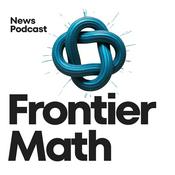
A Periodic Table of Molecular Knots
21/10/2026 | 26 mins.Knots are found throughout our daily lives in curling smoke, matted yarn, braided hair, and tangled earbud cords, while statistical mechanics indicates that a long, agitated string has a 100 percent probability of forming a knot.
In this episode, we explore the periodic table of molecular knots, examining how knots form naturally in about one percent of all known proteins and in tightly packed DNA coils, where they can disrupt cellular functions unless untangled by topoisomerase enzymes.
We examine the mathematical and chemical definition of a true closed-loop knot characterized by a mechanical bond, minimum crossing numbers, and algebraic knot invariants like the Alexander and Jones polynomials.
Finally, we investigate how chemists use directed self-assembly around metal ion scaffolds and analytical techniques like X-ray crystallography and NMR spectroscopy to synthesize and verify increasingly complex structures, from Jean-Pierre Sauvage's 1989 trefoil knot to record-breaking tight molecular knots.The Hidden Math of Coral Reefs
18/10/2026 | 25 mins.This episode explores the hidden mathematical heartbeat of the ocean, where vibrant underwater cities are being defended by an unexpected alliance of physicists and mathematicians.
While coral reefs support a quarter of all marine species and over a billion human livelihoods, they are currently under siege from marine heatwaves, acidification, and invasive predators. The journey takes listeners from the depths of recursive fractal growth and logistic curves to the cutting edge of conservation technology.
You will discover how researchers use "Degree-Heating-Weeks" to forecast mass bleaching, apply the "traveling salesman" puzzle to outsmart crown-of-thorns starfish, and utilize graph theory to reconnect isolated reef "nodes" via larval dispersal.
From 3D-printed terracotta tiles with 95% survivorship rates to the future of quantum-accelerated fluid models and AI-driven digital twins, this exploration reveals how the clarity of numbers is providing a vital lifeline for the ocean's beating heart.The Paradox of Infinite Cloning
12/08/2026 | 11 mins.This episode investigates the mind-bending Banach-Tarski Paradox, a mathematical theorem that suggests you can take a solid ball, cut it into a finite number of pieces, and reassemble them into two identical balls of the same size as the original. Often called the "Pea and the Sun Paradox," this 1924 discovery by Stefan Banach and Alfred Tarski defies our common-sense understanding of volume and matter. You will learn how the "Axiom of Choice" allows mathematicians to create bizarre, infinite scatterings of points that don't have a measurable volume in the traditional sense. The journey explains how infinite sets—like the collection of all whole numbers—behave differently than finite ones, allowing a part to be as "big" as the whole. From the uncountably infinite points of a sphere to the "non-amenable groups" that make such rearrangements possible, this exploration reveals the strange logic of set-theoretic geometry where one plus one doesn't always equal twoThe Hidden Math of Coral Reefs
29/07/2026 | 25 mins.This episode explores the hidden mathematical heartbeat of the ocean, where vibrant underwater cities are being defended by an unexpected alliance of physicists and mathematicians. While coral reefs support a quarter of all marine species and over a billion human livelihoods, they are currently under siege from marine heatwaves, acidification, and invasive predators. The journey takes listeners from the depths of recursive fractal growth and logistic curves to the cutting edge of conservation technology. You will discover how researchers use "Degree-Heating-Weeks" to forecast mass bleaching, apply the "traveling salesman" puzzle to outsmart crown-of-thorns starfish, and utilize graph theory to reconnect isolated reef "nodes" via larval dispersal. From 3D-printed terracotta tiles with 95% survivorship rates to the future of quantum-accelerated fluid models and AI-driven digital twins, this exploration reveals how the clarity of numbers is providing a vital lifeline for the ocean's beating heart.A Periodic Table of Molecular Knots
13/07/2026 | 26 mins.In this episode, we step down into the sub-microscopic world of chemistry to explore the groundbreaking construction of a "Periodic Table of Molecular Knots".
While statistical mechanics dictates that any long, agitated string will eventually tangle with 100% probability, nature relies on knots at the tiniest scales, tying loops into roughly 1% of our proteins and packing knots into the tight coils of our DNA.
We look inside the cell to meet topoisomerases. These specialized biological untanglers cut, pass, and reseal our molecular threads to keep the genetic code from breaking or mutating under stress.
But the real magic begins where fingers and tweezers are entirely useless.
We follow the historic journey of chemists learning to tie individual molecules on purpose.
Moving past the early 1989 Nobel Prize-winning synthesis of a simple three-crossing trefoil knot, modern chemistry has harnessed a brilliant technique called "directed self-assembly", using transition metal ions as charged scaffolding to orchestrate complex molecular weaving.
We map out the mathematics of topological crossing numbers, look at the specialized Python software tools used to verify these structures, and marvel at the 2024 gold-based world record holder for the tightest knot ever tied by human ingenuity.
More Mathematics podcasts
Trending Mathematics podcasts
About Million Dollar Problems of Mathematics
This podcast is about the strangest problems in math. The kind that sound simple, almost silly, until you try to solve them and realize people have been stuck for decades
Podcast websiteListen to Million Dollar Problems of Mathematics, The IDEMS Podcast and many other podcasts from around the world with the radio.net app
Get the free radio.net app
- Stations and podcasts to bookmark
- Stream via Wi-Fi or Bluetooth
- Supports Carplay & Android Auto
- Many other app features
Get the free radio.net app
- Stations and podcasts to bookmark
- Stream via Wi-Fi or Bluetooth
- Supports Carplay & Android Auto
- Many other app features

Million Dollar Problems of Mathematics
Scan code,
download the app,
start listening.
download the app,
start listening.
Million Dollar Problems of Mathematics: Podcasts in Family
 New Zealand