
Listen to this podcast in the app for free: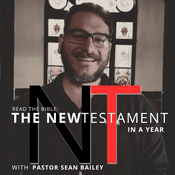 Download for free in the App Store
radio.net
Sleep timer
Save favourites
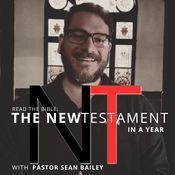
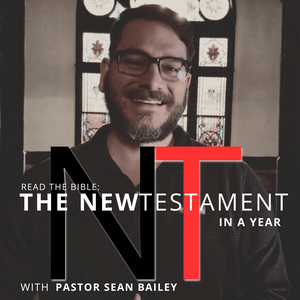
Read the Bible: The New Testament in a Year
Sean Bailey
Latest episode
250 episodes
John 6. Day 211 - Read the Bible: The New Testament in a Year
23/10/2026 | 24 mins.John 6. Day 211 - Read the Bible: The New Testament in a Year
Episode Notes:
Today's Scripture: John 6 (CSB)
Podcast Homepage: The New Testament in a Year
Bible Reading Plan: Navigators Bible Reading Plan
Contact Sean: seanbailey1985@gmail.com
Follow NTIY on Facebook: facebook.com/newtestamentinayear
In Today's Episode
Jesus Feeds the Five Thousand. The Bread of Life. Staying When Others Walk Away.
"I am the bread of life. No one who comes to me will ever be hungry, and no one who believes in me will ever be thirsty again." — John 6:35
John 6 begins with Jesus feeding more than five thousand people from a small amount of bread and fish, then walking across the sea to His disciples. The crowds are amazed by what He can do, but Jesus quickly exposes a deeper problem: many are following Him because they want another meal, not because they understand who He is. Jesus tells them not to work only for food that perishes, but for the food that lasts for eternal life. Then He makes the claim at the center of the chapter: "I am the bread of life." The deepest hunger of the human heart cannot be satisfied by possessions, success, comfort, or even another miracle. Life is found in Christ Himself.
As Jesus continues teaching, His words become difficult for many to accept. Some who had been following Him turn back and no longer walk with Him. Jesus asks the Twelve if they want to leave too, and Peter answers with one of the great confessions of faith: "Lord, to whom will we go? You have the words of eternal life." John 6 forces us to ask why we follow Jesus. Is it mainly for what we hope He will give us, or because we have come to see that He Himself is our greatest treasure? When the teaching is difficult, the circumstances are confusing, and others walk away, there is still nowhere better to go. Jesus alone has the words of eternal life.John 5. Day 210 - Read the Bible: The New Testament in a Year
22/10/2026 | 20 mins.John 5. Day 210 - Read the Bible: The New Testament in a Year
Episode Notes:
Today's Scripture: John 5 (CSB)
Podcast Homepage: The New Testament in a Year
Bible Reading Plan: Navigators Bible Reading Plan
Contact Sean: seanbailey1985@gmail.com
Follow NTIY on Facebook: facebook.com/newtestamentinayear
In Today's Episode
Jesus Heals on the Sabbath. The Son Has Authority. The Scriptures Point to Christ.
"Truly I tell you, anyone who hears my word and believes him who sent me has eternal life and will not come under judgment but has passed from death to life." — John 5:24
John 5 begins with Jesus healing a man who had been unable to walk for thirty-eight years. The healing takes place on the Sabbath, and instead of celebrating the man's restoration, the religious leaders become focused on the fact that Jesus had healed on the wrong day according to their rules. Jesus responds by making an even greater claim about Himself: "My Father is still working, and I am working also." He explains that the Son does what the Father does, gives life, and has authority to judge. Jesus is not simply presenting Himself as another teacher or miracle worker. He is revealing His unique relationship with the Father and calling people to believe in Him for eternal life.
Jesus then points to the witnesses that confirm who He is: John the Baptist, His works, the Father, and the Scriptures themselves. The tragedy is that the religious leaders know the Bible but refuse to come to the One the Bible is pointing toward. Jesus tells them, "You pore over the Scriptures because you think you have eternal life in them, and yet they testify about me." John 5 reminds us that knowing Scripture is meant to lead us to Christ. The goal is not simply to know more about the Bible. It is to know the Savior the Bible reveals, hear His voice, believe His Word, and receive the life only He can give.John 4. Day 209 - Read the Bible: The New Testament in a Year
21/10/2026 | 23 mins.John 4. Day 209 - Read the Bible: The New Testament in a Year
Episode Notes:
Today's Scripture: John 4 (CSB)
Podcast Homepage: The New Testament in a Year
Bible Reading Plan: Navigators Bible Reading Plan
Contact Sean: seanbailey1985@gmail.com
Follow NTIY on Facebook: facebook.com/newtestamentinayear
In Today's Episode
Living Water. Worship in Spirit and Truth. A Savior for the World.
"But whoever drinks from the water that I will give him will never get thirsty again." — John 4:14
John 4 centers on Jesus' conversation with a Samaritan woman at a well. She comes looking for ordinary water, but Jesus offers something far greater: living water that gives eternal life. He knows her story completely and still moves toward her with grace and truth. Their conversation turns to worship, and Jesus explains that true worship is not ultimately about a mountain or a location. The Father is seeking people who will worship in Spirit and in truth. Jesus then reveals Himself to her as the Messiah, and the woman who came to the well carrying shame leaves with a testimony to share.
The chapter then shows the impact of one transformed life. Many Samaritans come to Jesus because of her witness, and after hearing Him themselves, they declare that He truly is "the Savior of the world." John also records Jesus healing an official's son from a distance, showing that His word carries authority even when He is not physically present. John 4 reminds us that Jesus crosses barriers, knows us completely, satisfies what nothing else can satisfy, and invites us into true worship. When we really encounter Christ, we do not just receive living water. We become people who point others to the One who gave it to us.John 3. Day 208 - Read the Bible: The New Testament in a Year
20/10/2026 | 22 mins.John 3. Day 208 - Read the Bible: The New Testament in a Year
Episode Notes:
Today's Scripture: John 3 (CSB)
Podcast Homepage: The New Testament in a Year
Bible Reading Plan: Navigators Bible Reading Plan
Contact Sean: seanbailey1985@gmail.com
Follow NTIY on Facebook: facebook.com/newtestamentinayear
In Today's Episode
You Must Be Born Again. God So Loved the World. He Must Increase.
"For God loved the world in this way: He gave his one and only Son, so that everyone who believes in him will not perish but have eternal life." — John 3:16
John 3 opens with Nicodemus, a respected religious leader, coming to Jesus at night. Nicodemus knows Scripture, understands religion, and recognizes that God is at work through Jesus, but Jesus tells him that something deeper is needed: "Unless someone is born again, he cannot see the kingdom of God." Christianity is not simply becoming more religious or trying harder to improve ourselves. We need new life that only the Spirit of God can give. Jesus then points ahead to the cross, explaining that the Son of Man must be lifted up so that everyone who believes in Him may have eternal life. At the heart of it all is God's love: He did not send His Son to condemn the world, but to save it through Him.
The chapter closes with John the Baptist showing us what faithful discipleship looks like. When people begin leaving John to follow Jesus, he does not become jealous or defensive. He understands his role and says, "He must increase, but I must decrease." That is the posture of every follower of Christ. Our lives are not ultimately about building our own name, gaining attention, or being seen as important. They are about pointing people to Jesus. John 3 reminds us that we need new birth, salvation comes through faith in Christ, and the goal of our lives is to make much of Him.John 2. Day 207 - Read the Bible: The New Testament in a Year
19/10/2026 | 17 mins.John 2. Day 207 - Read the Bible: The New Testament in a Year
Episode Notes:
Today's Scripture: John 2 (CSB)
Podcast Homepage: The New Testament in a Year
Bible Reading Plan: Navigators Bible Reading Plan
Contact Sean: seanbailey1985@gmail.com
Follow NTIY on Facebook: facebook.com/newtestamentinayear
In Today's Episode
Jesus Reveals His Glory. Zeal for His Father's House. The True Temple.
"Jesus did this, the first of his signs, in Cana of Galilee. He revealed his glory, and his disciples believed in him." — John 2:11
John 2 begins with Jesus turning water into wine at a wedding in Cana. John calls this the first of Jesus' signs because the miracle is meant to reveal something about who He is. Jesus does more than solve a practical problem. He reveals His glory and shows that in Him, something new has arrived. The old purification jars are filled and transformed, pointing us toward the greater cleansing and abundant grace Jesus brings. The disciples see the sign, and their faith in Him deepens.
The chapter then moves to the temple, where Jesus drives out those who had turned His Father's house into a marketplace. His actions reveal His authority and His zeal for true worship. When challenged, Jesus points beyond the physical temple to Himself: "Destroy this temple, and I will raise it up in three days." John tells us He was speaking about His body. Jesus is the true meeting place between God and humanity, and His death and resurrection will become the center of everything. John 2 reminds us that Jesus did not come simply to improve religion. He came to reveal God's glory, cleanse what has become corrupted, and bring us into the presence of God through Himself.
More Christianity podcasts





Trending Christianity podcasts














About Read the Bible: The New Testament in a Year
Looking for a simple and meaningful way to read the Bible every day?
Join Pastor Sean Bailey as he leads you through the New Testament in a year, one chapter at a time. Each short daily episode includes the New Testament read aloud and clearly explained, helping you understand Scripture and apply it to everyday life, no matter where you are in your faith journey.
Before each chapter, you will hear a few key look fors to help you know what to listen for as the Scripture is read. After the reading, each episode includes three clear takeaways designed to help you apply God’s Word to your life in practical and meaningful ways.
This daily Bible reading podcast follows a 260 episode plan that aligns with the weekdays of the year, making it easy to build a consistent habit of reading the Bible. Whether you are driving to work, taking a walk, or spending quiet time with God, each episode offers biblical truth, encouragement, and practical insight to help you grow in your relationship with Jesus.
You do not need a seminary degree or hours of free time. If you want to read the Bible, understand the New Testament, and develop a daily rhythm of Scripture and prayer, this podcast is for you.
Podcast websiteListen to Read the Bible: The New Testament in a Year, Conversations with John & Lisa Bevere and many other podcasts from around the world with the radio.net app
Get the free radio.net app
- Stations and podcasts to bookmark
- Stream via Wi-Fi or Bluetooth
- Supports Carplay & Android Auto
- Many other app features
Get the free radio.net app
- Stations and podcasts to bookmark
- Stream via Wi-Fi or Bluetooth
- Supports Carplay & Android Auto
- Many other app features

Read the Bible: The New Testament in a Year
Scan code,
download the app,
start listening.
download the app,
start listening.
 New Zealand
