
Listen to this podcast in the app for free: Download for free in the App Store
radio.net
Sleep timer
Save favourites
42 episodes
The 1986 Divorce Referendum
16/11/2026 | 38 mins.On the 26th June 1986, Ireland went to the polls to vote in the first ever referendum on Divorce.
The referendum was a stark illustration of the moral civil wars that were going on at the time in Ireland. Early opinion polls suggested that Ireland would vote yes to divorce.
However, the campaign was marked by bitter division with claims that divorced women would be left on the scrap heap.
This week on What Were We Like, we explore the history of divorce in Ireland and the 1986 Divorce referendum.
See omnystudio.com/listener for privacy information.The 1913 Lock Out - Part 2
09/11/2026 | 50 mins.Description: The 1913 Lock Out is in full effect and workers are faced with an urgent question: how will they feed their families?
With the emergence of the 'Save The Kiddies' scheme - which saw children temporarily relocated to homes in the UK - and the establishment of large soup kitchens helmed by activists like Constance Markievicz and Rosie Hackett, the Catholic Church takes steps to ensure the religious piety of its members, at all costs.
On this week’s 'What Were We Like', we tell the story of the 1913 Lock Out and the legacy of this mass trade union effort.
See omnystudio.com/listener for privacy information.The 1913 Lock Out - Part 1
02/11/2026 | 46 mins.The 1913 Lock Out dispute was the biggest clash between capital and labour, between employers and trades unions, between rich and poor, ever seen in Dublin city.
It lasted for 5 months, saw pitched battles in the streets of the city between newly unionised workers and police resulting in deaths and many injuries.
The Lock Out saw the emergence of figures like businessman and press baron William Martin Murphy who bitterly opposed the charismatic trade union leader James Larkin.
In 1913, Dublin was regarded as one of the worst slums in Europe, with 20,000 families living in single-room dwellings. Unskilled workers, led by Larkin, went on strike to demand higher wages.
William Martin Murphy, the owner of the Irish Independent, was determined to stop Larkin and gathered other employers to join him in sacking workers who joined Larkin’s union and lock them out.
The Lock Out lasted from August 26th 1913 to January 18th 1914 and brought workers to the brink of starvation. On this week’s What Were We Like, we tell the story of the 1913 Lock Out.
See omnystudio.com/listener for privacy information.Brendan Behan – Dublin's Wild Literary Genius
30/10/2026 | 56 mins.During his short life from 1923 to 1964, Dubliner Brendan Behan achieved both fame and infamy, both at home and abroad, on the back of his writing talents and his very public battle with alcoholism.
Today we want to talk about one of Ireland’s greatest writers Brendan Behan who continues to have a massive influence on Irish culture today.
In November 1946, Behan, aged just 16, arrived in Liverpool with a suitcase of explosives, declaring: ‘My name is Brendan Behan. I came over here to fight for the Irish Workers’ and Small Farmers’ Republic, for a full and free life, for my countrymen, North and South, and for the removal of the baneful influence of British Imperialism from Irish affairs. God save Ireland.’
This set off an extraordinary chain of events that would lead Behan to becoming a global celebrity because of his wit and writings, from The Quare Fellow to the Hostage to The Borstal Boy.
Behan was a heavy drinker and prone to self destructive heavy drinking. A lifelong battle with alcoholism came to an end when Brendan Behan died on the 20 March 1964. However, he left behind an incredible legacy and one was of Dublin’s last great characters.
See omnystudio.com/listener for privacy information.Michael Collins - Part 3
19/10/2026 | 46 mins.On the 22nd of August 1922, Michael Collins was shot dead in Béal Na Bláth, County Cork.
His death at just 31 ensured he would become one of Ireland’s most iconic figures, forever frozen in time.
This week on What Were We Like, we explore the complicated legacy of Michael Collins.
We also look at the significance of the revival of interest of Collins in recent years and the impact Neil Jordan’s film had on his legacy, despite taking some poetic licence.
See omnystudio.com/listener for privacy information.
More History podcasts
Trending History podcasts


About What Were We Like
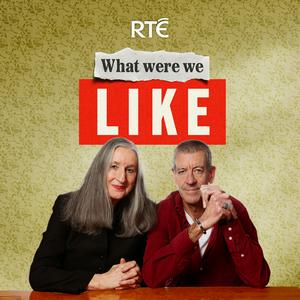
Diarmaid Ferriter and Catriona Crowe bring us on a journey through the hidden histories, humanity and humour of our past.
Podcast websiteListen to What Were We Like, The Rest Is History and many other podcasts from around the world with the radio.net app
Get the free radio.net app
- Stations and podcasts to bookmark
- Stream via Wi-Fi or Bluetooth
- Supports Carplay & Android Auto
- Many other app features

What Were We Like: Podcasts in Family
 New Zealand

