

Listen to this podcast in the app for free: Download for free in the App Store
radio.net
Sleep timer
Save favourites
51 episodes
#45 | "He Doesn't Look Autistic" | 685 Parents On The Words That Stuck
31/07/2026 | 51 mins.Andy put a video up asking one question: which phrase from a professional never left you? His own was a paediatrician who would not answer whether Lydia was autistic, and instead said "we just need to ensure she reaches her potential, whatever that looks like."
Around 685 parents answered. It is the only post we have ever done that got more comments than likes.
So we sorted the lot and read them back. The denial, the low expectations, the gatekeeping, the ones that were meant kindly and landed like a brick, and the small number that got it exactly right. Over half of the worst of it came from a professional or a school. This one is heavy in places and very funny in others, and if you have ever been told your child does not look autistic, you are going to recognise most of it.
Timestamps
00:00 Thomas spells Playbarn on his iPad and reroutes the whole day
02:49 The video Andy posted, and the phrase that never left him
06:26 685 replies, and more comments than likes
07:30 The split: denial, low expectations, cruelty, blame
09:18 Over half of it came from a professional or a school
10:34 "He doesn't look autistic" and what spazzy is actually short for
15:10 The comebacks parents keep ready
15:48 The grandad in the supermarket
18:15 "Your autistic children may never thrive in school"
19:02 Why families actually want a diagnosis
22:35 "She isn't worth the funding" and the iceberg
23:24 "Masking is a skill you should be proud of"
24:38 The tongue tie nobody would treat
25:51 Written off, and proven wrong
32:05 The ones that were meant kindly
34:53 The worst thing anyone said
35:50 The comments about the comments
36:01 What autistic adults asked us to hear
37:38 The professionals who got it right
40:36 A diagnosis doesn't change who your child is
41:10 Hope without a promise
41:25 Eye contact, and who it is really for
45:04 Takiwatanga: in his or her own time
46:01 "So am I. Don't worry. We see each other."
47:20 Lydia's sleep, transitions and the summer holidays
Timecodes are taken from the raw recording and need tightening once the cold open is on the front of the final cut.
Latest episode in the link tree in bio.#44 | Stem Cells & Autism: Hope, Science, or a Very Expensive Gamble?
18/07/2026 | 1h 36 mins.Across the world, parents of autistic children are being offered something that
sounds almost miraculous. Clinics promise better speech, better eye contact,
calmer behaviour, and in some cases claim to repair or reverse autism. The price
runs from £10,000 to £40,000, and often more than once.
Over the last few months we've been approached by clinic after clinic wanting to
come on the show and sell it to you. We said no. Instead we went and read the
studies.
This one isn't about having a go at parents. Every parent looking at this is
acting out of love, and we've both been desperate enough to try anything. But
love doesn't mean a clinic gets to make huge claims without evidence. Stem cell
therapy is a legitimate area of research. It is not currently a proven treatment
for autism, and there's a difference between something being researched and
something being proven.
We also get into the ITV whistleblower, and the GB News piece asking whether
"those people" should have access to children.
Timestamps
00:00 Hope, science, or a very expensive gamble
02:21 We are not attacking parents
10:15 What autism actually is
13:18 What stem cells actually are
15:56 The 2017 Duke study, 25 kids and no placebo
18:47 The 2020 Duke study, and what it found
24:38 Claim: a 95% success rate
29:08 Why you'd swear blind it worked
31:45 Thomas and Lydia progressed. Neither had stem cells
35:37 Claim: it repairs the autistic brain
38:12 Claim: most children improve
40:45 Claim: our treatment is evidence based
43:02 The risks nobody puts in the brochure
48:00 What that money could buy instead
50:45 The influencer taking commission
54:02 Have a word with yourself
66:45 "Have you missed the treatment window?"
72:32 Myths and facts
82:55 The ITV whistleblower
86:50 GB News and "those people"
Latest episode in the link tree in bio.#43 | "Where Will They Be When They're 30?" | Jolanta Lasota, Ambitious about Autism
09/07/2026 | 50 mins.This week Gaz and Andy sit down with Jolanta Lasota, Chief Executive of Ambitious about Autism, at their college in Isleworth. 16 years leading the charity and mum to a 21-year-old autistic son, Jolanta has seen the whole picture, from the early years right through to adulthood and employment.
We talk about why purpose matters more than exams, the young man who is non-speaking and holds down two jobs, the boy who was allowed to come to school in his pyjamas, and naming the grief nobody warns you about. Jolanta describes raising an autistic child as walking through woods with no path and no torch, and says the job is to be the one who carries the light. Honest, hopeful, and one of our favourite conversations yet.
Timestamps
- 00:00 Welcome, and where we are today
- 00:27 [GUEST]'s journey, 16 years at Ambitious about Autism
- 01:07 What's really changed in how we understand autism
- 05:57 The sensory pod that blew us away
- 06:58 The schools, the age groups, and post-19 provision
- 10:36 Why "purpose" matters more than a curriculum
- 12:20 "Walking through woods with no torch": what family life feels like
- 13:27 The non-speaking young man with two jobs
- 15:03 Are employers actually changing?
- 15:49 Policy, the white paper, and autism as a political football
- 20:06 Being the "happy helper", never enemy-ising people
- 22:14 What school looks like at four to seven
- 24:40 Focus on strengths, don't drill them on what they can't do
- 27:09 Gaz's own school story: six D's and learning differently
- 33:03 The weight of GCSEs and "lost leaders"
- 38:02 Don't underestimate them: the iPad "daddy" moment
- 40:28 Parents' guilt, and why it won't always be okay
- 43:47 Grief without a death
- 45:06 What's next for Ambitious about Autism
- 49:13 Thanks and close#42 | "I Wouldn't Pay A Penny To Change Him" | Paul Mullin On Albi, Autism & Being A Dad
26/06/2026 | 44 mins.Paul Mullin has scored goals in front of millions and become a household name through Welcome to Wrexham. But this one is about the part of his life the cameras rarely catch: being dad to Albi, his autistic son.
Gaz and Andy sit down with Paul for an honest, Albi-centric conversation about the regression that stopped his little boy in his tracks, the guilt that kept him up at night, and why he wouldn't change a single thing about his son. Plus the moment Albi found a way to tell him 'you're my best friend' without saying a word.
If you have ever felt like the only dad going through this, this one is for you.
Timestamps
00:00 Welcome Paul Mullin
01:00 The first signs, and Albi after his 12-month jabs
02:00 Regression: like a click of the fingers
04:00 The guilt, and crying himself to sleep
04:30 I wouldn't pay a penny to change him
05:35 Denial, and getting the diagnosis
07:20 Speaking about it on Welcome to Wrexham
08:24 The hope that kills you
11:38 Why 'he'll be fine' doesn't help
13:00 Did he grieve? The problem-solver dad
16:14 Being a footballer dad: time away and routine
19:12 How Albi communicates now
22:15 Holidays: frozen meals, dry ice and the airport
25:40 Coming home: holidays, holidays, holidays
27:50 Razor-sharp awareness: he just knows
29:20 The crafty negotiator: jet skis and boats
33:40 The best friend clip
35:07 Macho on the pitch, in tears at home
35:48 Autism in Racing and giving back
38:26 Nobody ever asks the dad how he is
43:00 Advice to a dad just starting the journey
New episodes of the Autism Dadcast every week.
Real talk, real dads, real autism.
Listen, follow and find everything in our link tree in bio.#41 | How One Wrong Word Can Ruin An Entire Day
19/06/2026 | 1h 2 mins.One missed board and one wrong word at in the morning, and Thomas's whole morning falls apart.
This week Gaz and Andy unpack how much detail autistic kids track, why a single word can rewrite their day, and how much they understand even mid-meltdown.
Plus Lydia becomes swimmer of the week, the new-neighbour conversation every autism parent knows, and an honest, conflicted take on the under-16 social media ban and what it overlooks for autistic teens.Timestamps00:00 Charlie's shop opening and meeting Sophie the BTS superfan02:00 Lydia's swimming breakthrough: swimmer of the week03:40 Thomas's Monday meltdown: how one wrong word derailed the morning06:10 He knew the score: what the meltdown hid09:15 The new neighbour, the fence, and explaining autism again11:05 Attention to detail: the thing they do best14:35 The under-16 social media ban: where we land26:15 What the ban gets wrong about autistic kidsLatest episode and Discord in the link tree in our bio. Merch from Neurospicy & Co at neurospicyandco.uk, 10% off with code DADCAST.
More Kids & Family podcasts
 We Don't Have Time For ThisKids & Family, Society & Culture
 Imagine ThisKids & Family
 Silly Stories for KidsFiction, Kids & Family, Stories for Kids
 Koala Moon: Kids Bedtime Stories & Sleep Stories for Kids PodcastKids & Family, Stories for Kids
 Story PiratesComedy, Education, Kids & Family
 Smash Boom Best: A funny, smart debate show for kids and familyEducation for Kids, Kids & Family
 Dr Justin Coulson's Happy FamiliesKids & Family, Parenting, Relationships, Society & Culture
 Beyond the BumpEducation, Kids & Family, Parenting
 Greeking Out from National Geographic KidsKids & Family, Stories for Kids
 Bobby Wonder: Superhero Adventure Stories for KidsFiction, Kids & Family, Stories for Kids
Trending Kids & Family podcasts
 News TimeKids & Family
 Calling It Out: Real Talk for Real Co-ParentsKids & Family, Parenting, Philosophy, Relationships, Society & Culture
 Bedtime Stories with Netflix Jr.Fiction, Kids & Family, Stories for Kids, TV & Film
 Fairies and Dragons, Ponies and KnightsFiction, Kids & Family, Stories for Kids
- Bobby Wonder: Superhero Adventure Stories for KidsFiction, Kids & Family, Stories for Kids
 Mysteries About True Histories (M.A.T.H.)Education for Kids, Kids & Family
 Story Time With Aussie DadKids & Family
 Dad V Girls After HoursKids & Family, Parenting, Relationships, Society & Culture
 Not As We PlannedKids & Family, Parenting, Relationships, Society & Culture
 Now That We're A FamilyChristianity, Kids & Family, Religion & Spirituality
 Always HereKids & Family, Parenting, Society & Culture
 12 Hour Sound Machines for Sleep (no loops or fades)Education for Kids, Health & Wellness, Kids & Family, Mental Health
 Abide Kids Bedtime StoriesKids & Family, Stories for Kids
 The Big FibArts, Comedy, Education, Education for Kids, Games, Kids & Family, Leisure, Performing Arts
 VeggieTales: Very Veggie Silly StoriesKids & Family, Religion & Spirituality, Stories for Kids
 Rainbow SurfersKids & Family
About Autism Dadcast
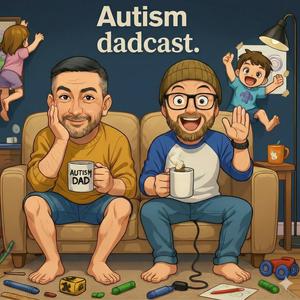
An unfiltered, unflinching, and occasionally inappropriate deep dive into the world of autism parenting-from a dad's perspective.
Podcast websiteListen to Autism Dadcast, We Don't Have Time For This and many other podcasts from around the world with the radio.net app
Get the free radio.net app
- Stations and podcasts to bookmark
- Stream via Wi-Fi or Bluetooth
- Supports Carplay & Android Auto
- Many other app features
Get the free radio.net app
- Stations and podcasts to bookmark
- Stream via Wi-Fi or Bluetooth
- Supports Carplay & Android Auto
- Many other app features

Autism Dadcast
Scan code,
download the app,
start listening.
download the app,
start listening.
 New Zealand