Listen to this podcast in the app for free: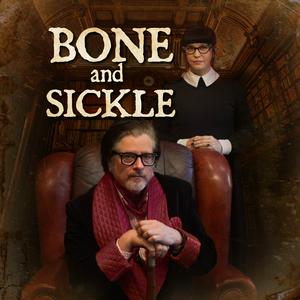 Download for free in the App Store
radio.net
Sleep timer
Save favourites
157 episodes
Christmas is Carnival: Carols and Calendars
18/12/2025 | 27 mins.
Historically, the celebration of Christmas and Carnival could overlap, and there is some reason to believe that customs associated with the former were inherited by the latter. A clue to this calendrical shift is offered by the Christmas song, “Carol of the Bells,” which uses the melody of an old Ukrainian New Year;s carol, one which dates back to the era in which New Year was celebrated in March (hence the springtime imagery of its original Ukrainian lyrics). Ukrainian postcard commemorating the folk song”Shchedryk” source of “Carol of the Bells” After a brief look at the variable date chosen to celebrate the New Year throughout European history, we take some time to rethink our modern understanding of what constitutes the Christmas season. The common notion that the season ends on December 25 or January 1, possibly including the weeks leading up to those dates, in historical understanding, was reversed, with Dec. 25 representing the start of Christmastide, which at the very least ran until Epiphany (Jan. 6) or Candlemas (Feb. 2). The merger of Christmas and Carnival is not only aided by the historically later end date of Christmastide, but also the variable start date for Carnival. A number of regional dates preferred for those festivities are discussed with Germany’s initiation of festivities on November 11 being the earliest. Another reason to suspect that Carnival inherited some of its customs from Carnival is the carnivalesque quality of the Christmas Feast of Fools celebrated anywhere from Dec. 26 to January 6. The wild, and sometimes dangerous revels celebrated on those days (and discussed in Episode 100) were ended by local bishops at roughly the same time that Carnival celebrations in France and Germany emerged, suggesting re-channeling of anarchic impulses and customs. Our discussion then turns to the Roman New Year, the January Kalends, which likely inspired chaotic elements around the Feast of Fools. Of particular interest here are accounts of celebrants dressing in animal hides and horns. a custom that seems to have survived in certain Carnival traditions, including a number discussed in my Carnival book. One of these, the Kurent of Slovenia, who happens to be rather similar to the Austrian Krampus across the country’s northern border. In Western Bulgaria too, another Carnival figure, the Kuker, in western regions also makes use of animal hides and horns (as well as bells). Bulgaria also provides us with an interesting 20th-century case study of the merger of the traditions of Christmas (or “Surva,” the Bulgarian New Year) merging with springtime fertility customs of Carnival, both strands being associated with the Kuker. We wrap up with a brief look at Slavic celebrations of the Christmas cycle as Koliade (various spellings), a name for Christmastide and the customs associated with it, particularly door-to-door “good luck visits” incorporating short plays and songs, kolyadka in Ukrainian, the original of “Carol of the Bells” (Shchedryk/”Bountiful Evening”) being one of these songs “New Year’s Carols” (Kolędnicy noworoczni) from “A Polish Year in Life, Tradition and Song” (1900). The sources for this show are Mr. Ridenour’s books The Krampus and the Old, Dark Christmas and A Season of Madness, Fools, Monsters, and Marvels of the Old-World Carnival.
A Werewolf in Court
25/11/2025 | 21 mins.
In our second short episode for November, we take a close look at a the 1692 trial of Thiess of Kaltenbrunn, a purported werewolf in the town of Jürgensburg, in Livonia, (a Baltic region now divided between Estonia and Latvia). “Old Thiess,” as he was known, described himself as being a particularly exotic form of werewolf — one who served God in Hell. The testimony offered was so curious that we will be presenting the court transcripts verbatim, with nearly all exchanges between witness and judges included. Decide for yourself!
Horror, Fact, Fiction, and a Revelation
22/11/2025 | 19 mins.
This is a special short episode looking at fictional evidence used to bolster horror narratives in literature, film, and broadcast media. We compare the found-footage phenomenon with earlier literary techniques and discuss some famous hoaxes and Halloween pranks, some historical and others closer to home.
Halloween Fortune-Telling Party
30/10/2025 | 37 mins.
This year, in the tradition of Halloween fortune-telling, we have an interactive divination game you can play at home. It comes from aa 19th-century book on cartomancy called, The oracle of human destiny: or, the unerring foreteller of future events, and accurate interpreter of mystical signs and influences; through the medium of common cards. TO PLAY ALONG, you will need an ordinary DECK OF CARS or you could can draw your cards from a VIRTUAL DECK like the one on deck.of.cards. (https://deck.of.cards). You will also need to know the ELEMENTAL GROUP of your ASTROLOGICAL SIGN. They are: FIRE SIGNS: Aries, Leo, Sagittarius EARTH SIGNS: Taurus, Virgo, Capricorn AIR SIGNS: Gemini, Libra, Aquarius. WATER SIGNS: Cancer, Scorpio, Pisces. Fortunes read fall into these categories (in this order): Absent Friends and Relatives Travel Friendship and Enmity Health and Longevity Property Lost Love Wealth and Fortune Success A Potential Spouse Happiness, Misfortune There are 88 fortunes provided, so you’ll have more fun listening with friends who have different astrological signs. Or write down the signs of absent friends and draw cards on their behalf. HAPPY HALLOWEEN!
Mr. Ridenour’s Haunted Basement
27/10/2025
If you’ve been curious regarding Mr. Ridenour’s and Mrs. Karswell’s troubles with anomalous events in the house, this short episode should answer some of your questions as Dr. Bartusch and crew attempt to restore order.
More Arts podcasts
 Big Design AdventureArts, Design
 This Life of Mine with James CordenArts
 ill-advised by Bill NighyArts, Comedy, Music, Books
 Articles of InterestArts, Fashion & Beauty
 99% InvisibleArts, Design
 DishArts, Comedy, Society & Culture, Food
 Table Manners with Jessie and Lennie WareArts, Kids & Family, Music, Food
 Style-ishArts, Fashion & Beauty
 The MothArts, Performing Arts
 Fashion Neurosis with Bella FreudArts, Society & Culture, Fashion & Beauty, Relationships
Trending Arts podcasts
 Podcast – Cory Doctorow's craphound.comArts, Books
 Nymphet AlumniArts
 The Inside Line Podcast - Vital MTBArts
 Camp Half-Pod: A Percy Jackson PodcastArts, Books
 Twenty Thousand HertzArts, Music, Design, Music Commentary
 London Review Bookshop PodcastArts, Books
 Sherlock Holmes Bedtime StoriesArts, Books
 The New Yorker: The Writer's Voice - New Fiction from The New YorkerArts
 Stories in ColourArts, Science, Society & Culture, Visual Arts
 OverdueArts, Comedy, Books
 Fated Mates - Romance Books for Novel PeopleArts, Society & Culture, Books, Documentary
 Comfort Eating with Grace DentArts, Food
 Science FictionArts, Fiction, TV & Film, Books, Science Fiction
 The Everyday Style SchoolArts, Education, Society & Culture, Fashion & Beauty, Personal Journals
 Fashion PeopleArts, Business, Fashion & Beauty
 The Food ProgrammeArts, Food
 Book Talk, etc.Arts, Books
 The Let Them Theory by Mel Robbins, Book Summary, Podcast, EnglishArts, Education, Books, Self-Improvement
 Emma - Jane AustenArts, Fiction, Books
 The Potters CastArts, Business, Careers, Visual Arts
 GastropodArts, History, Science, Food
 The New Yorker: FictionArts, Books
 The Great IndoorsArts, Society & Culture, Design
 Myths and LegendsArts, Fiction, History, Books
 Take Four BooksArts, Books
- Fashion Neurosis with Bella FreudArts, Society & Culture, Fashion & Beauty, Relationships
 Tetragrammaton with Rick RubinArts, Society & Culture, Philosophy
About Bone and Sickle
BONE AND SICKLE explores historical topics related to folklore and horror. With acerbic wit and a scholarly penchant for the grotesque, rogue folklorist Al Ridenour delves into a wide but carefully curated range of topics illustrated by stories from historical texts. Narratives are given dramatic readings by “Mrs. Karswell” (Sarah Chavez) backed by richly produced soundscapes blending original music, sound design and effects. The source books, though real enough, are said to be pulled from an imaginary library on Ridenour’s imaginary estate situated somewhere in the neighborhood of Charles Addams and Edward Gorey. Each episode begins with our hosts briefly discussing goings-on in this world before diving into the topic to be explored. Occasional alternate-format episodes are devoted to readings of classic horror stories or curious texts of antiquarian interest. Ridenour is the author of “The Krampus and the Old, Dark Christmas” (2016) and “A Season of Madness: Fools, Monsters, and Marv
Podcast websiteListen to Bone and Sickle, Big Design Adventure and many other podcasts from around the world with the radio.net app
Get the free radio.net app
- Stations and podcasts to bookmark
- Stream via Wi-Fi or Bluetooth
- Supports Carplay & Android Auto
- Many other app features
Get the free radio.net app
- Stations and podcasts to bookmark
- Stream via Wi-Fi or Bluetooth
- Supports Carplay & Android Auto
- Many other app features

Bone and Sickle
Scan code,
download the app,
start listening.
download the app,
start listening.
 New Zealand