

Listen to this podcast in the app for free: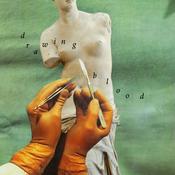 Download for free in the App Store
radio.net
Sleep timer
Save favourites
22 episodes
Update (and Hello!)
19/02/2026 | 1 mins.You've likely noticed that we've been on bit of a hiatus - but we're still committed to the Drawing Blood project and we're hoping to come back with a new season soon!
In the meantime, we're on the lookout for someone to help us outfit the pod with new music as we move forward. If that's you, get in touch with us at drawingbloodpodcast@gmail.com.
Thanks for listening! Keep sharing with your friends and enemies!S3 Ep6: Seeing Voices, Margaret Watts Hughes, and the Science of the Invisible
30/09/2024 | 57 mins.Emma and Christy discover Margaret Watts Hughes's beautiful 'voice figures', a series of images made through the direct action of her voice between 1885 and 1904. In this episode, we discuss the earliest sound recordings, scientific 'instruments' (it's a pun), cat pianos, severed ears, occult science, seaweed scrapbooks, women in STEM, logos and the word of God, visualising the invisible, the Little Mermaid, clairvoyant research, 'thought forms' and the death agonies of pigeons, science and feeling, and why sonic media is always already haunted.
CLICK HERE TO VIEW THE IMAGES WE DISCUSS, as well as complete show notes, references, and suggestions for further reading.
MEDIA DISCUSSED
Margaret Watts Hughes, Impression Figure (c. 1904), courtesy of Cyfarthfa Castle Museum and Art Gallery
Margaret Watts Hughes, Tree Form (before 1904)
Portrait miniature example: Nicholas Hilliard, Queen Elizabeth I(1572)
Anna Atkins, Dictyota Dichotomy (Forkweed) (1848)
Illustration from Margaret Watts Hughes, ‘Visible Sound: Voice-Figures’, Century Magazine (1891)
Margaret Watts Hughes's eidophone
Example of page from an algae or seaweed scrapbook by Eliza A. Jordan (1848)
Georgiana Houghton, Glory Be to God (1864)
‘Phonautography of the human voice at a distance’ (lines of recorded sound generated by Scott de Martinville’s ‘phonautograph’, 1857)
The graphic method: Étienne-Jules Marey's sphygmograph (a predecessor of modern EKG machines, 1881)
Louis Bertrand Castel’s ‘ocular harpsichord’ (1725)
Isaac Newton's colour spectrum and musical scale analogy (1675)
The cat piano (illustration from La Nature, 1883)
The ‘ear phonograph’ of Alexander Graham Bell and Clarence J. Blake (1874), 2018 model by the Science Museum
Jan Van Eyck, detail from Annunciation (c. 1434–36)
Simone Martini and Lippo Memmi, detail from The Annunciation showing raised gold lettering (1333)
Hippolyte Baraduc, two cameraless photographs showing various feelings ('restless desire to have phenomena of the hereafter'; 'mental sadness'), 1894–1913
‘The Music of Gounod’, illustration from Annie Besant and Charles Leadbeater's Thought Forms (1901)
‘Aspiration to Enfold All’, illustration from Annie Besant and Charles Leadbeater's Thought Forms (1901)
‘Radiating Affection’, illustration from Annie Besant and Charles Leadbeater's Thought Forms (1901)
‘The Intention to Know’, illustration from Annie Besant and Charles Leadbeater, Thought Forms (1901)
Illustration from Annie Besant and Charles Leadbeater's Occult Chemistry (1908)
Follow our Twitter @drawingblood_
Follow our Blue Sky @drawingbloodpod.bsky.social
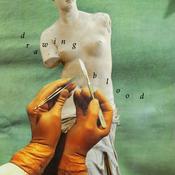
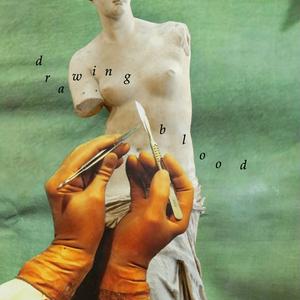
‘Drawing Blood’ cover art © Emma Merkling, image courtesy of the British Association of Plastic, Reconstructive, and Aesthetic Surgeons
All audio content © Emma Merkling and Christy Slobogin
Intro music: ‘There Will Be Blood’ by Kim Petras, © BunHead Records 2019. We’re still trying to get hold of permissions for this song – Kim Petras text us back!!S3 Ep5: David Cronenberg's 'Crimes of the Future', Surgery, and Performance Art
31/08/2024 | 1h 4 mins.Emma and Christy watch David Cronenberg’s 2022 film Crimes of the Future, exploring the themes of this work while also connecting to some of the director’s earlier movies. In this episode, we discuss the fears and the pleasures of the human body and cutting into it; surgery as sex; Cronenbergian body horror; the monstrous as art; being and becoming cyborgs; evolution and pain; technology as prosthesis; the posthuman; contemporary performance art (good and bad); the cosmetic gaze; the body as text; and meaning making.
CLICK HERE TO VIEW THE IMAGES WE DISCUSS, as well as complete show notes, references, and suggestions for further reading.
MEDIA DISCUSSED
David Cronenberg, dir., Crimes of the Future (2022)
First scene with boy playing on beach, cruise ship overturned in water
Saul Tenser in the Orchid Bed
TVs showing ‘BODY IS REALITY’ during Saul and Caprice’s performance
Scuttling, insect-like bureaucrats of the National Organ Registry
Bureaucrat of the National Organ Registry telling Saul that ‘surgery is new sex’
David Cronenberg, dir., Crash (1996)
Saul Tenser in the BreakFaster Chair
Saul Tenser’s facial expression at the end of the film
Gian Lorenzo Bernini, The Ecstasy of Saint Theresa (1652)
David Cronenberg, dir., Videodrome (1983)
The hand-gun in Videodrome
David Cronenberg, dir., The Fly (1986)
Odile (decorative surgery) performance art
Klinek (ear man) performance art
ORLAN, The Reincarnation of Saint Orlan (1990-1993)
Stelarc, Ear on Arm (2007 - )
The Swan reality show (2004)
The autopsy scene
Follow our Twitter @drawingblood_
Follow our Blue Sky @drawingbloodpod.bsky.social
‘Drawing Blood’ cover art © Emma Merkling, image courtesy of the British Association of Plastic, Reconstructive, and Aesthetic Surgeons
All audio content © Emma Merkling and Christy Slobogin
Intro music: ‘There Will Be Blood’ by Kim Petras, © BunHead Records 2019. We’re still trying to get hold of permissions for this song – Kim Petras text us back!!S3 Ep4: Tattoos, 'Deviant' Signs, and Surveilled Skins
31/07/2024 | 54 mins.Emma and Christy present a brief history of tattooing in Europe. We talk tattoos as art history; sailors and soldiers; the archival (in)visibility of tattoos; the ‘Cook myth’, colonial contact, and contagion; syphilitic tattoos and pathologisation; working class bodies; tattoos and material culture; criminal anthropology; pain; the skin ego; danger and deviance; the limits of interpretation and (il)legibility of signs; ‘fugitive’ images; pilgrim tattoos; and art histories from below.
CLICK HERE TO VIEW THE IMAGES WE DISCUSS, as well as complete show notes, references, and suggestions for further reading.
MEDIA DISCUSSED
Human skin with tattoos of two women's heads and a sailor, French (1880–1920), Wellcome Collection / Science Museum
Gustave Caillebotte, Rue de Paris, temps de pluie (1877)
Human skin with tattoo of a mermaid, Polish (late 19th–early 20th century), photographed by Katarzyna Mirczak (2010). For the exact specimen we discuss see Lodder, 'Things of the Sea' (2015), fig. 11.
Photograph showing a man with tattoos and a black eye (late 19th–early 20th century), published in Lombroso, Criminal Man (1911)
Staffordshire cream-ware bowl with inscription 'When this you see,/ remember me / And bear me in your mind / Let all the world,/ say what they will,/ Speak of me as you find', (late 18th century)
Diagram showing Ötzi the Ice Man's tattoos (c. 3230 BCE), from Krutak, 'Therapeutic Tattooing in the Arctic' (2019)
Sydney Parkinson (the artist on Captain Cook's first voyage to New Zealand), portrait of a Maori man with facial tattoos (1769)
Print showing signs signs of syphilis on the site of a tattoo (1889), from 'Notes of Cases on an Outbreak of Syphilis following on Tattooing' (1889)
Wax anatomical venus, Josephinum Museum of the Medical University of Vienna (late 18th century)
Princess of Ukok (Siberia), with tattoos (5th century BCE)
Print of the pilgrim tattoo of Ratge(r) Stubbe (c. 1669), showing Arms of Jerusalem tattoo
Example of material culture with iconography similar to contemporaneous tattoos: Convict love token, 'When this you see, remember me' (c. 1831-1832)
Tattoos by Sutherland Macdonald (late 19th century)
Photograph of incarcerated person known as 'Fromain' (1901), Archives de la préfecture de police, Paris, published in Angel, 'Roses & Daggers' (2015)
Drawing from Lombroso archives of the tattooed body of incarcerated person Francesco Spiteri, with labels describing and categorising his tattoos (1889), Museum of Criminal Anthropology, University of Turin
Dried human skin specimen from the body of 'Fromain' (late 19th century), Wellcome Collection / Science Museum, published in Angel, 'Roses & Daggers' (2015)
CREDITS
Visit our website drawingbloodpod.com
Follow our Twitter @drawingblood_
Follow our Bluesky @drawingbloodpod.bsky.social
‘Drawing Blood’ cover art © Emma Merkling
All audio and content © Emma Merkling and Christy Slobogin
Intro music: ‘There Will Be Blood’ by Kim Petras, © BunHead Records 2019. We’re still trying to get hold of permissions for this song – Kim Petras text us back!!S3 Ep3: Alchemy, Androgyny, and the Paintings of Remedios Varo
28/06/2024 | 1h 3 mins.In this episode, Emma and Christy look at the complex paintings of the Spanish-Mexican Surrealist painter Remedios Varo (1908-1963). During our conversation, we discuss female alchemists, artist’s studio-as-laboratory, science and occultism, the overlapping practices of spiritual and material transformation, Carl Jung and esotericism in psychoanalysis, the Fourth Dimension, ‘objective art’, and alchemical androgyny.
CLICK HERE TO VIEW THE IMAGES WE DISCUSS, as well as complete show notes, references, and suggestions for further reading.
WORKS DISCUSSED
Remedios Varo, Useless Science, or The Alchemist [or, La Mujer Alquimista] (1955)
Example illustration of a Rube Goldberg Machine (1931)
Evelyn De Morgan, The Love Potion (1903)
Remedios Varo, La Llamada (The Call) (1961)
Remedios Varo, Creation of the Birds (1957)
Albrecht Dürer, Saint Jerome in His Study (1514)
Adriaen van Utrecht, Still Life with Parrot, or Allegory of Fire (1636)
David Teniers the Younger, The Alchemist (1650)
Kati Horna, Portrait of Remedios Varo in her Studio (with crystal on easel) (1963)
Remedios Varo, The Juggler (The Magician) (1956)
Remedios Varo, Woman Leaving the Psychoanalyst (Could Be Juliana) (1960)
Marc Chagall, Homage to Apollinaire (1911-1912)
Marcel Duchamp, The Bride Stripped Bare by Her Bachelors, Even (The Large Glass) (1915-1923)
Remedios Varo, Harmony (1956)
Example of an alchemical androgyne from Aurora consurgens (15th century)
Remedios Varo, The Escape (1961)
REFERENCES
Caitlin Haskell and Tere Arcq, Remedios Varo: Science Fictions (New Haven: Yale University Press, 2023)
Sven Dupré, Laboratories of Art: Alchemy and Art Technology from Antiquity to the 18th Century (London: Springer, 2014)
Pamela Smith, ‘Laboratories’, in The Cambridge History of Science, vol. 3: Early Modern Science, ed. by Lorraine Daston and Katharine Park (Cambridge: Cambridge University Press, 2006), 289–305
Mary Anne Atwood, A Suggestive Inquiry into the Hermetic Mystery (Edinburgh: William Tait, 1918 [1850])
Pamela Thurschwell, Literature, Technology and Magical Thinking, 1880–1920 (Cambridge University Press, 2001)
Carl Jung, On the Psychology and Pathology of So-Called Occult Phenomena (1902)
Carl Jung, Psychology and Alchemy (London: Routledge, 1980 [1944])
Linda Dalrymple Henderson, The Fourth Dimension and Non-Euclidean Geometry in Modern Art (Boston: MIT Press, 2018)
Charles Howard Hinton, The Fourth Dimension (London: George Allen, 1912)
George I. Gurdjieff, In Search of Being: The Fourth Way to Consciousness, ed. Stephen A. Grant (Boulder, CO: Shambhala, 2021)
Salomon Trismosin, Splendor Solis (1582)
FURTHER READING
Tere Arcq, ed., Five Keys to the Secret World of Remedios Varo (Mexico City: Artes de México, 2008)
Micah James Goodrich, ‘Trans Animacies and Premodern Alchemies’, in Medieval Mobilities: Gendered Bodies, Spaces, and Movements (London: Springer, 2023)
Emma Merkling, ‘Physics, Psychical Research, and the Self: Evelyn De Morgan’s Spiritualist Portraits’, Art History 46.3 (2023): 458–83
You can read more about Emma’s project on alchemy here!
Mark Morrisson, Modern Alchemy: Occultism and the Emergence of Atomic Theory (Oxford: Oxford University Press, 2007)
Ricardo Ovalle, et al., Remedios Varo: Catálogo Razonado / Catalogue Raisonné (Mexico City: Ediciones Era, 1994)
Lawrence M. Principe, ‘Alchemy I: Introduction,’ in Dictionary of Gnosis & Western Esotericism (London: Brill, 2005), 12-16
Arturo Schwarz, ‘Alchemy, Androgyny and Visual Artists,’ Leonardo 13, no. 1 (Winter 1980), 57-62
Pamela Smith, The Business of Alchemy: Science and Culture in the Holy Roman Empire (Princeton, N.J. : Princeton University Press, 1994)
Remedios Varo, Letters, Dreams, and Other Writings, trans. Margaret Carson (Cambridge, MA: Wakefield Press, 2018)
More Arts podcasts
 ill-advised by Bill NighyArts, Books, Comedy, Music
 The MothArts, Performing Arts
 99% InvisibleArts, Design
 The Food ProgrammeArts, Food
 Fresh AirArts, Books, Society & Culture, TV & Film
 The Magnus ArchivesArts, Drama, Fiction, Performing Arts, Science Fiction
 Table Manners with Jessie and Lennie WareArts, Food, Kids & Family, Music
 THEMOVEArts, Sports
Trending Arts podcasts
 The Lonely PaletteArts, Visual Arts
 一个人睡前听Arts, Books, Health & Wellness, Mental Health, Relationships, Society & Culture
 The EmeraldArts, Religion & Spirituality, Society & Culture
 RISK!Arts, Comedy, Performing Arts, Personal Journals, Society & Culture
 Gay Erotica by Liam WilliamsArts, Books, Fiction, Health & Wellness, Sexuality
 The History of LiteratureArts, Books, History
 Talk ’90s to meArts, History, Music, Society & Culture
 【睡前相声】郭德纲于谦相声合集Arts
 The Shit No One Tells You About WritingArts, Books, Education, Fiction, Tutorials
 Daily Rosary Meditations | Catholic PrayersArts, Christianity, Religion & Spirituality
 Books, Beach, & BeyondArts, Books
 Back Row with Amy OdellArts, Fashion & Beauty, Society & Culture
About Drawing Blood
Welcome to Drawing Blood, the podcast about art, science, and the macabre, hosted by Emma Merkling and Christy Slobogin.
Podcast websiteListen to Drawing Blood, ill-advised by Bill Nighy and many other podcasts from around the world with the radio.net app
Get the free radio.net app
- Stations and podcasts to bookmark
- Stream via Wi-Fi or Bluetooth
- Supports Carplay & Android Auto
- Many other app features
Get the free radio.net app
- Stations and podcasts to bookmark
- Stream via Wi-Fi or Bluetooth
- Supports Carplay & Android Auto
- Many other app features

Drawing Blood
Scan code,
download the app,
start listening.
download the app,
start listening.
 New Zealand