
Listen to this podcast in the app for free: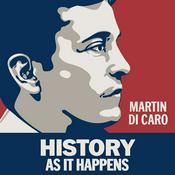 Download for free in the App Store
radio.net
Sleep timer
Save favourites
600 episodes
The Owl of Minerva Flies Again
27/10/2026 | 52 mins.Subscribe now for ad-free listening and all of our bonus content!
The Cold War began about 80 years ago. It ended more than 35 years ago, leading to triumphalist attitudes in the West. Who started it? Who really "won"? Why are we still debating this? Because Cold War history continues to shape our world — and our minds. Our guests are historians Daniel Bessner and Vladislav Zubok.
Bessner teaches history at the University of Washington. He’s the co-host of American Prestige and the co-editor, with Michael Brenes, of Cold War Liberalism: Power in a Time of Emergency.
Vladislav Zubok is an eminent historian of international relations at the London School of Economics and the author of The World of the Cold War, 1945 to 1991.
Go to historyasithappens.com to learn more.
Hosted by Simplecast, an AdsWizz company. See pcm.adswizz.com for information about our collection and use of personal data for advertising.The Israeli Elections (Bonus)
25/10/2026 | 10 mins.Subscribe now to listen to the full 20-minute episode (or preview 10 minutes).
On Tuesday, Oct. 27, Israelis will vote in what some consider the most consequential election in the country's history.
It is the first election since Oct. 7, 2023, the day of the Hamas onslaught in southern Israel, and Benjamin Netanyahu, 77, hopes to remain in power despite having been indicted for war crimes by the ICC. In this episode, Israeli political scientist and leading pollster Dahlia Scheindlin discusses the country's mood and which parties are best positioned to form a new government.
Further reading:
Explained: How can Israelis still vote for Netanyahu? by Dahlia Scheindlin (Haaretz)
Go to historyasithappens.com to learn more.
Hosted by Simplecast, an AdsWizz company. See pcm.adswizz.com for information about our collection and use of personal data for advertising.The Inflation Dragon
23/10/2026 | 46 mins.Subscribe now to skip ads and support the show!
As inflation fuels a cost-of-living crisis, millions of Americans are getting a bitter taste of what past generations dealt with. From the mid-1960s into the Age of Reagan, high inflation (or stagflation) bedeviled economists, frustrated presidents, and shrank the horizons of middle-class Americans. And not just inflation! Policy-makers' responses also caused pain. In this episode, historian Nelson Lichtenstein delves into inflation's historical causes and pokes holes in the conventional wisdom that interest rate adjustments by an independent Federal Reserve are the wisest way to tame inflation.
Nelson Lichtenstein teaches labor and economic history at U.C. Santa Barbara. He's the author of Why Labor Unions Matter (2026).
Go to historyasithappens.com to learn more.
Hosted by Simplecast, an AdsWizz company. See pcm.adswizz.com for information about our collection and use of personal data for advertising.The Worst President? Meet Andrew Johnson
20/10/2026 | 47 mins.Subscribe now to skip ads! Keep the narrative flow going with ad-free listening.
When John Wilkes Booth assassinated Abraham Lincoln in April 1865, the United States would have its third accidental president.
The Southern unionist and Democrat Andrew Johnson of Tennessee at first seemed to be an ally of Republicans in the monumental task of Reconstruction, for he agreed that the Southern states could not come back unless they ratified the Thirteenth Amendment abolishing slavery. But Johnson's presidency quickly spiraled as he bitterly fought Congress over Reconstruction's control and sought to obstruct all efforts at achieving Black equality.
In this episode, historian Jim Oakes tells us what made Andrew Johnson arguably the worst president in U.S. history.
Further listening:
The Worst President? Meet James Buchanan w/ Jim Oakes
Go to historyasithappens.com to learn more.
Hosted by Simplecast, an AdsWizz company. See pcm.adswizz.com for information about our collection and use of personal data for advertising.Inside Trump's Mind (Bonus)
18/10/2026 | 14 mins.Subscribe now to listen to the full 28-minute episode (or preview 14 minutes without a subscription).
If any Washington journalist can take us inside President Donald Trump's mind, it's Edward Luce. The Financial Times columnist and astute observer of American politics has frequently talked to Trump over the phone about the Iran war, the U.S. economy, and much else. Does the president have a plan, or is he winging it? Luce explains Trump's thinking as his second term collapses around him.
Go to historyasithappens.com to learn more.
Hosted by Simplecast, an AdsWizz company. See pcm.adswizz.com for information about our collection and use of personal data for advertising.
More History podcasts

Trending History podcasts










About History As It Happens
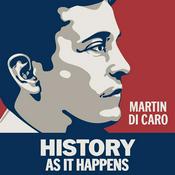
Discover how the past shapes the present with the best historians in the world. Everything happening today comes from something, somewhere. History As It Happens features interviews with today's top scholars and thinkers, interwoven with audio from history's archive.
Subscribe for ad-free episodes, early access, and bonus content. https://historyasithappens.supercast.com/
Podcast websiteListen to History As It Happens, British Scandal and many other podcasts from around the world with the radio.net app
Get the free radio.net app
- Stations and podcasts to bookmark
- Stream via Wi-Fi or Bluetooth
- Supports Carplay & Android Auto
- Many other app features
Get the free radio.net app
- Stations and podcasts to bookmark
- Stream via Wi-Fi or Bluetooth
- Supports Carplay & Android Auto
- Many other app features

History As It Happens
Scan code,
download the app,
start listening.
download the app,
start listening.
 New Zealand
