

Listen to this podcast in the app for free: Download for free in the App Store
radio.net
Sleep timer
Save favourites
16 episodes
No World Order: 4: This Sucker Could Go Down
17/08/2026 | 34 mins.Tristan Redman is joined by Cindy Yu, a columnist at the Times and author of the Substack newsletter Chinese Whispers, and Pierre Haski, a longstanding foreign correspondent and commentator on France Inter radio, to examine a five-year period in which China's confidence grew as the West's certainties came under strain.
They begin with the Beijing Olympics of August 2008, which opened as Russia invaded Georgia, and the global financial crisis that followed within weeks of the closing ceremony, when the collapse of Lehman Brothers triggered the largest bankruptcy in US history and shook confidence in the American economic model.
They also discuss the Arab Spring of 2011, and the Nato-led intervention in Libya that followed a UN resolution to protect civilians, an operation China and Russia came to see as having gone beyond its original mandate.
The episode also covers the crackdown on civil society and the internet that followed inside China, and concludes with Xi Jinping's appointment as General Secretary of the Chinese Communist Party in November 2012.
'How Did We Get Here: No World Order' is a BBC News Long Form Audio production
Presenter: Tristan Redman
Producers: Keiligh Baker and Nik Sindle
Sound engineers: Neil Churchill, Gareth Jones and Mike Regaard
Production co-ordinators: Sophie Hill and Katie Morrison
Editor: Matt Willis
Radio 4 commissioners: Daniel Clarke and Hugh LevinsonNo World Order: 3. Russia goes its own way
10/08/2026 | 34 mins.Tristan Redman is joined by Gabriel Gatehouse, an investigative journalist and former international editor of BBC Newsnight, and Luke Harding, the Guardian's senior international correspondent, to trace the decade in which Russia moved from a brief partnership with the West to open confrontation with it.
They begin in the immediate aftermath of the 11 September 2001 attacks, when Vladimir Putin was among the first world leaders to offer support to the United States, and Russian and American forces cooperated over Afghanistan. They discuss how that cooperation gave way, within two years, to Russian opposition at the United Nations to the US-led invasion of Iraq in 2003, an invasion carried out without Security Council authorisation.
They also discuss the near-fatal poisoning of Ukrainian opposition candidate Viktor Yushchenko during the 2004 presidential election, the murder of Alexander Litvinenko in London in 2006, and Vladimir Putin's speech at the Munich Security Conference in February 2007, in which he rejected the idea of a unipolar, US-led world order.
The episode concludes with Russia's invasion of Georgia in August 2008, an operation carried out on the pretext of protecting Russian citizens and peacekeepers in South Ossetia.
A BBC News Long Form Audio production
Presenter: Tristan Redman
Producers: Keiligh Baker and Nik Sindle
Sound engineers: Neil Churchill, Gareth Jones and Michael Regaard
Production co-ordinators: Sophie Hill and Katie Morrison
Editor: Matt Willis
Radio 4 commissioners: Daniel Clarke and Hugh LevinsonNo World Order: 2. The View from Beijing
03/08/2026 | 32 mins.Tristan Redman is joined by Carrie Gracie, former BBC China editor and a reporter in China throughout the 1990s, and George Magnus, an economist and research associate at the China Centre, Oxford University, and former chief economist at UBS.
Together they examine the decade in which China reshaped its relationship with the international system. They begin with Deng Xiaoping's Southern Tour of 1992, when the then-retired Communist Party leader travelled to China's special economic zones to press the case for economic reform, a trip widely seen as decisive in setting China's course for the following decades.
They discuss the handover of Hong Kong to Chinese sovereignty in 1997, under the "one country, two systems" framework, and the Asian financial crisis of the same year, which left China's capital controls looking vindicated while much of the region required IMF assistance.
The episode also covers the 1999 Nato bombing of the Chinese embassy in Belgrade, and concludes with China's accession to the World Trade Organisation in December 2001, an agreement built on Western assumptions that economic integration would bring political liberalisation, and one whose consequences are still being worked through today.
A BBC News Long Form Audio production
Presenter: Tristan Redman
Producers: Keiligh Baker and Nik Sindle
Sound engineers: Neil Churchill, Gareth Jones and Michael Regaard
Production co-ordinators: Sophie Hill and Katie Morrison
Editor: Matt Willis
Radio 4 commissioners: Daniel Clarke and Hugh LevinsonNo World Order: 1. The Responsibility to Protect
27/07/2026 | 35 mins.Tristan Redman is joined by Lindsey Hilsum, international editor of Channel 4 News, and Allan Little, former BBC correspondent in Moscow and Africa, to look back at the decade after the Cold War in which the question of international intervention was repeatedly tested.
They discuss Nelson Mandela's release in February 1990, the United States' retreat from Somalia after American soldiers were killed in Mogadishu in 1993, and the international community's failure to act during the Rwandan genocide the following year.
They discuss Srebrenica, where UN peacekeepers were present but around 8,000 Muslim men and boys were killed in 1995, and Nato's intervention in Kosovo in 1999, which went ahead without UN Security Council authorisation.
The episode traces how these events fed into debates around the principle that became known as the Responsibility to Protect, and ends on 31st December 1999, as Boris Yeltsin resigns and Vladimir Putin becomes acting president of Russia.
'How Did We Get Here: No World Order' is a BBC News Long Form Audio production
Presenter: Tristan Redman
Producers: Keiligh Baker and Nik Sindle
Sound engineers: Neil Churchill, Gareth Jones and Michael Regaard
Production co-ordinators: Sophie Hill and Katie Morrison
Editor: Matt Willis
Radio 4 commissioners: Daniel Clarke and Hugh LevinsonNo World Order: Trailer
22/07/2026 | 3 mins.At the end of the Cold War, the international system underwritten by American power, liberal democracy and free markets looked to many like the high-water mark of a new world order. Fast forward to 2026, and that certainty looks far less solid.
Tristan Redman is joined by journalists and experts who had ringside seats to the biggest moments since the end of the Cold War. Together, they ask whether this rules-based order is ending, what might replace it, and whether it ever really existed.
From the collapse of communism and the conflicts of the 1990s to the wars in Georgia and Ukraine and the realignment of global power today.
A BBC News Long Form Audio production
Presenter: Tristan Redman
Producers: Keiligh Baker and Nik Sindle
Sound engineers: Neil Churchill, Gareth Jones and Michael Regaard
Production co-ordinators: Sophie Hill and Katie Morrison
Editor: Matt Willis
Radio 4 commissioners: Daniel Clarke and Hugh Levinson
More History podcasts
 Dan Snow's History HitHistory
 WW2 Pod: We Have Ways of Making You TalkEducation, History, Society & Culture
 The Rest Is HistoryHistory
 In Our TimeHistory
 After Dark: Myths, Misdeeds & the ParanormalHistory, Society & Culture, True Crime
 You're Dead to MeComedy, History
 Empire: World HistoryHistory
 The AncientsHistory
 Short History Of...History
Trending History podcasts
 The Oldest Profession PodcastComedy, History
 British History: Royals, Rebels, and RomanticsArts, Books, History, Society & Culture
 The History BureauHistory
 WW1: Not So Quiet On The Western Front!History
 The Team HouseDocumentary, Government, History, Society & Culture
 The Constant: A History of Getting Things WrongArts, Design, History, Natural Sciences, Science
 Quarantine NationDocumentary, History, Society & Culture
 ExpanseDocumentary, History, Society & Culture
 Conspiracy Theories, Cults, & CrimesHistory, True Crime
 Hot HistoryHistory
 Explaining HistoryCourses, Documentary, Education, History, Society & Culture
 Forever AgoEducation for Kids, History, Kids & Family
 The AncientsHistory
 History That Doesn't SuckEducation, History, Society & Culture
 LoreHistory, True Crime
 No One Saw It ComingHistory
 The British History PodcastCourses, Documentary, Education, History, Society & Culture
 History of Aotearoa New ZealandEducation, History
 Instant ClassicsArts, Design, Education, History
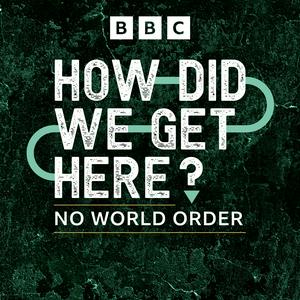
About How Did We Get Here?
The deep back-stories behind the most consequential events in the world right now.
Podcast websiteListen to How Did We Get Here?, Dan Snow's History Hit and many other podcasts from around the world with the radio.net app
Get the free radio.net app
- Stations and podcasts to bookmark
- Stream via Wi-Fi or Bluetooth
- Supports Carplay & Android Auto
- Many other app features
Get the free radio.net app
- Stations and podcasts to bookmark
- Stream via Wi-Fi or Bluetooth
- Supports Carplay & Android Auto
- Many other app features

How Did We Get Here?
Scan code,
download the app,
start listening.
download the app,
start listening.
How Did We Get Here?: Podcasts in Family
 New Zealand