Listen to this podcast in the app for free: Download for free in the App Store
radio.net
Sleep timer
Save favourites
Chief Rabbi Warren Goldstein
Chief Rabbi Warren Goldstein
Latest episode
132 episodes

Personal Agency | Parsha with the Chief - Va'eira
14/1/2026 | 21 mins.Personal agency speaks to the most critical questions a person can ask: how much control do I really have over my own life? Do I see myself as a helpless victim of circumstances, or as an empowered agent capable of shaping who I become and how I live?
The way we answer these questions determines how we approach every challenge, every choice, and every day of our lives.
In this talk on Parshat Va'eira, Chief Rabbi Dr. Warren Goldstein explores the Torah's revolutionary concept of personal agency through one of the most dramatic confrontations in history: the battle of wills between Pharaoh and God.
As the plagues unfold, the Torah reveals a profound truth about free choice. For the first time, Pharaoh's heart is hardened, not by stubbornness, but by God Himself. Why would God take away a person's free will? And what does that teach us about the value, fragility, and responsibility of choice?
Drawing on the Rambam's teachings in Hilchot Teshuvah and a foundational Mishnah in Pirkei Avot (Chapter 3, Mishnah 19), the Chief explains why free will is described not as a right, but as permission granted. God, the ultimate power, steps back and entrusts human beings with the ability to choose, and therefore with accountability for their actions.
While much of life is outside our control, the Torah insists that the moral choices we make remain fully ours. We are not defined by what happens to us, but by how we respond.
Pirkei Avot is not a book of abstract philosophy. It is a guide to personal transformation. Its message is clear: belief in personal agency moves us from passivity to responsibility, from excuses to growth, from resignation to hope.
This is a teaching about freedom, accountability, the power of change, and why true liberation begins not with circumstances, but with choice.
Key Insights
Free will is not automatic, it is permission granted by God.
With freedom comes accountability, responsibility, and moral weight.
Pharaoh's loss of free will reveals how precious choice truly is.
Much of life is beyond our control, but our moral responses are not.
The Torah rejects victimhood and affirms personal agency.
Belief in free will is the foundation of growth, repentance, and change.
True freedom is the belief that a better tomorrow is possible.Taking Responsibility | Parsha with the Chief - Shemot
07/1/2026 | 21 mins.Taking responsibility is one of the most subtle yet powerful forces shaping your life.
Subtle, because it lives in the inner world, often invisible to others. Powerful, because it can change your life.
Responsibility is, by definition, a heavy and demanding burden, but knowing how to harness its power will uplift your relationships, family, work and the trajectory of your personal growth.
In Parshat Shemot, we meet Moshe Rabbeinu at the very beginning of his journey toward leadership. Before he speaks to Pharaoh, before miracles, before authority, Moses repeatedly steps forward when others step back, intervening in injustice, defending the vulnerable, and acting when "there is no one else."
Yet when Hashem calls upon him to lead the Jewish people, Moshe hesitates.
Why would someone who takes responsibility so instinctively resist leadership?
Drawing on Pirkei Avot and the teachings of our Sages, Chief Rabbi Dr. Warren Goldstein explores a profound distinction: the difference between doing a task and carrying the mental load - the inner responsibility for whether something truly succeeds or fails.
Our Sages teach that the first place where there is "no one else" is within ourselves. Responsibility begins internally, long before it becomes visible leadership.
This talk offers a Torah framework for understanding leadership, self-mastery, and the quiet inner work that precedes all meaningful responsibility.
Key Ideas
Responsibility is defined by the mental load, not by visible action
The first place where there is "no one else" is within oneself
Torah leadership flows from the inside out
Moshe's reluctance was humility, not avoidance
Responsibility must be taken leshem shamayimHanukkah: The Fight for Values
17/12/2025 | 25 mins.We are living through turbulent and confusing times. Much of what we see is filtered through politics and headlines. Hanukkah offers a completely different paradigm to make sense of everything.
In this talk, Chief Rabbi Warren Goldstein asks a foundational question: what is Hanukkah really about? The Gemara speaks about the miracle of the oil, but why would our Sages establish a new festival for all generations on that basis alone, especially in light of the many miracles recorded in Jewish history and even in the Beit HaMikdash itself?
Tracing the story of Greek oppression and the spiritual assault on Torah, mitzvot, and Jewish identity, the shiur draws a crucial distinction between Purim and Hanukkah, as explained by the Levush and developed further by the Maharal. Purim was a battle for Jewish physical survival. Hanukkah was a battle for Judaism itself.
Through Pirkei Avot 1:4 and the life of Yossi ben Yoezer, the Chief reveals why Hanukkah begins in the home, why the symbol is light, and why Torah learning is not only information but a worldview that shapes how we see reality. Hanukkah remains a paradigm for every generation facing an attack on Jewish values.
Key Insights
Hanukkah is a paradigm for interpreting turbulent times through a Torah lens.
The miracle of the oil is not the full reason for the festival. It is the symbol of its essence.
Purim was a physical threat to the Jewish people. Hanukkah was a spiritual threat to Judaism.
A spiritual assault on Torah is an existential threat to Jewish existence (Maharal).
The menorah represents the light of Torah values that illuminate life and history.
Pirkei Avot 1:4 and Yossi ben Yoezer offer a blueprint for spiritual resistance that begins in the home.Difficult Relationships | Parsha with the Chief - Vayeishev
11/12/2025 | 23 mins.Difficult relationships and conflict are woven into so many social dynamics - within family, friendship, work community and society - causing tension, distance and pain.
Can these relationships be repaired? Can resentments and divisions be overcome?
In this talk on the Parsha of Vayeishev, Chief Rabbi Dr Warren Goldstein explores the roots of conflict through the story of Yosef and his brothers. Drawing on Pirkei Avot and the classical commentaries, the Chief explains that conflict does not begin with an event. It begins within us: in jealousy, ego, resentment, competitiveness, the desire to be noticed, the need to be right.
Our Sages teach that the path to peace begins with inner work: learning to see others with generosity, patience, and compassion; recognising the image of God in every person; and mastering the emotional impulses that push us toward anger or division. Peace is not avoidance. It is spiritual strength. It is the courage to rise above instinct and choose connection.
Key Insights
Conflict begins inside us, before it ever appears between us.
The story of Yosef and his brothers reveals how jealousy, ego, and resentment distort how we see one another.
Pirkei Avot teaches that peace is built through inner work, not external control.
Seeing the image of God in others changes how we relate, respond, and repair.
Peace requires emotional mastery and the courage to rise above instinct.
The Torah's model of peace begins with responsibility: I must work on me.
Healing relationships begins with the heart, not the argument.Dealing with Fear | Parsha with the Chief: Vayishlach
03/12/2025 | 19 mins.Fear is an intensely powerful and natural human emotion. It takes many forms. Fear of harm or failure or disapproval, fear of loss or rejection.
These fears can be debilitating obstacles to our success and growth, and to fulfilling our potential.
And yet sometimes fear is an entirely appropriate response to real threats. Sometimes it warns and protects us.
Where is the balance? And how do we rise above our fears so that we can truly flourish?
In this talk on Parshat Vayishlach, Chief Rabbi Dr Warren Goldstein explores Yaakov's encounter with Esav as the Torah's model for facing fear with clarity, dignity, and faith.
When the Torah says "Yaakov was very afraid," the danger was real, and so was his fear.
But the Torah uses this moment to reveal a deep truth: there is a way to face fear without being ruled by it.
Yaakov responds with strategy, strength, and faith, and through his example, the Torah shows us the difference between fear that protects us and fear that holds us back.
Our Sages teach that courage is not the absence of fear, but the mastery of it. Prayer becomes the training ground for trust. And the soul - light, strong, and purposeful - has the power to rise above the inertia and hesitation that come from the body.
This is a talk about fear, faith, and the quiet heroism of self-mastery. It is about discovering the courage that is already within us, and learning how to bring it forward.
Key Insights
Fear is natural. The question is how do we face it.
Yaakov's response: gifts, preparing for battle, prayer.
Prayer trains us in trust. Pirkei Avot teaches faith through action.
"Who is brave? One who conquers their inclination" (Pirkei Avot 4:1).
Fear and laziness come from the body; courage comes from the neshama.
"Be brave as a lion" - the Torah's call to spiritual courage (5:23).
The Shulchan Aruch teaches: rise like a lion to serve Hashem. Lead the day.
True bravery is overcoming inappropriate fear through self-mastery.
More Religion & Spirituality podcasts
 PROCLAIM x BIBLEin365Religion & Spirituality, Christianity
 Timothy Keller Sermons Podcast by Gospel in LifeReligion & Spirituality, Christianity
 BibleProjectReligion & Spirituality, Christianity
 The Deep End w/Taylor WelchEducation, Religion & Spirituality, Self-Improvement, Spirituality
 使命門徒Religion & Spirituality, Society & Culture, Christianity
 The Bible with Nicky and Pippa Gumbel ClassicReligion & Spirituality, Christianity
 Tara BrachHealth & Wellness, Religion & Spirituality, Buddhism, Mental Health
 Medium at LargeReligion & Spirituality, Spirituality
 The Mark Driscoll PodcastReligion & Spirituality
 Mike Connell MinistriesReligion & Spirituality, Christianity
Trending Religion & Spirituality podcasts
 The Way Out Is InEducation, Health & Wellness, Religion & Spirituality, Buddhism, Mental Health, Self-Improvement
 Bedtime Bible Stories for AdultsReligion & Spirituality, Christianity
 The Dallas Willard PodcastReligion & Spirituality, Christianity
 2819 ChurchReligion & Spirituality, Christianity
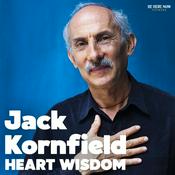 Heart Wisdom with Jack KornfieldReligion & Spirituality, Buddhism
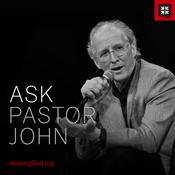 Ask Pastor JohnReligion & Spirituality, Christianity
 Lisa Harper's Back Porch TheologyReligion & Spirituality, Christianity
 Ask NT Wright AnythingHistory, Religion & Spirituality, Christianity
 GodsplainingReligion & Spirituality
 Forbidden Knowledge NewsNews, Religion & Spirituality, Society & Culture, News Commentary, Spirituality
 Al-Anon Family GroupsHealth & Wellness, Religion & Spirituality, Society & Culture, Mental Health, Personal Journals, Spirituality
 The David Ghiyam PodcastReligion & Spirituality, Spirituality
 Vedic WorldviewHealth & Wellness, Religion & Spirituality, Mental Health, Spirituality
 Live Free with Josh HowertonReligion & Spirituality, Christianity
 Jesus People PodcastReligion & Spirituality, Christianity
 followHIMEducation, Religion & Spirituality, Christianity, Courses
 WHOA That's Good PodcastBusiness, Religion & Spirituality, Society & Culture, Christianity
 Next Level Soul Podcast with Alex FerrariHistory, Religion & Spirituality, Spirituality
 Exploring My Strange BibleHealth & Wellness, Religion & Spirituality, Society & Culture, Christianity, Philosophy
 Compelled - Christian Stories & TestimoniesReligion & Spirituality, Society & Culture, Christianity, Personal Journals
- BibleProjectReligion & Spirituality, Christianity
- The Deep End w/Taylor WelchEducation, Religion & Spirituality, Self-Improvement, Spirituality
 Ram Dass Here And NowReligion & Spirituality, Society & Culture, Hinduism
- PROCLAIM x BIBLEin365Religion & Spirituality, Christianity
- Timothy Keller Sermons Podcast by Gospel in LifeReligion & Spirituality, Christianity
About Chief Rabbi Warren Goldstein
Insights, ideas and inspiration mined from the weekly Torah portion and the classic commentaries, and distilled by South African Chief Rabbi Dr. Warren Goldstein. Known as a "spiritual entrepreneur", Rabbi Goldstein has launched and led a number of initiatives that have changed the face not only of his own community, but of world Jewry. In the Language of Tomorrow, he explores the Torah's vision for creating a better society, and an inspired, meaningful life.
Podcast websiteListen to Chief Rabbi Warren Goldstein, PROCLAIM x BIBLEin365 and many other podcasts from around the world with the radio.net app
Get the free radio.net app
- Stations and podcasts to bookmark
- Stream via Wi-Fi or Bluetooth
- Supports Carplay & Android Auto
- Many other app features
Get the free radio.net app
- Stations and podcasts to bookmark
- Stream via Wi-Fi or Bluetooth
- Supports Carplay & Android Auto
- Many other app features

Chief Rabbi Warren Goldstein
Scan code,
download the app,
start listening.
download the app,
start listening.
 New Zealand