

Listen to this podcast in the app for free: Download for free in the App Store
radio.net
Sleep timer
Save favourites
42 episodes
Did Jesus Use Parables to Hide Truth? | Philip Anthony Mitchell on Matthew 13:10–17
22/07/2026 | 35 mins.Jesus explains that he taught in parables lest the crowds would understand him, turn, and be healed (Matt 13:10–17).
Philip Anthony Mitchell joins Kirk E. Miller to answer the question, Did Jesus use parables to conceal the truth?
Get a free Mobile Ed course when you start a free trial: https://www.logos.com/show/witw-what-in-the-word?utm_source=spotify&utm_medium=social&utm_campaign=show-witw
Learn more about the episode:
https://www.logos.com/grow/why-did-jesus-teach-in-parables-matthew-13?utm_source=spotify&utm_medium=social&utm_campaign=show-witw
Outline:
(00:00) Do Parables Hide Truth?
(01:05) Meet Phillip Mitchell
(03:18) Matthew 13 Context
(05:21) Reading the Hard Passage
(07:32) Parables as Judgment
(12:05) Sower as Key Parable
(15:09) Encouragement for Preachers
(17:35) Isaiah 6 Connection
(20:29) Remnant and Hard Hearts
(27:25) Insiders and Kingdom Secrets
(31:37) Preaching Tips and ApplicationAre We Justified by Works? | Mark Jones on James 2:14–26
15/07/2026 | 52 mins.Does James contradict Paul? In this episode of What in the Word?, host Kirk E. Miller sits down with pastor and theologian Mark Jones to tackle James 2:14–26.They explore the apparent tension between Paul's doctrine of justification by faith alone and James’s claim that "justified by works and not by faith alone."Get a free Mobile Ed course when you start a free trial: https://www.logos.com/show/what-in-the-word?utm_source=youtube&utm_medium=social&utm_campaign=show-witwLearn more about the episode: https://www.logos.com/grow/witw-james-2-justification-faith-works?utm_source=youtube&utm_medium=social&utm_campaign=show-witwWhy Couldn’t Jesus Do Miracles? | Veli-Matti Kärkkäinen on Mark 6:1–6
08/07/2026 | 42 mins.Does human unbelief have the power to limit the all-powerful God? In this episode of What in the Word?, Kirk E. Miller sits down with theologian Veli-Matti Kärkkäinen to tackle the startling claim in Mark 6:1–6 that Jesus “could do no mighty work” in his hometown. They explore the relationship between human faith and divine action and raise the practical question: What does this story mean for someone praying for healing that never comes?
Get a free Mobile Ed course when you start a free trial: https://www.logos.com/show/what-in-the-word?utm_source=spotify&utm_medium=social&utm_campaign=show-witw
Learn more about the episode: https://www.logos.com/grow/witw-why-jesus-couldnt-do-miracles? utm_source=spotify&utm_medium=social&utm_campaign=show-witw
Outline:
(00:00) Introduction
(01:12) Veli-Matti Karkkainen
(03:55) The narrative arc
(09:00) The different difficulties
(17:00) Couldn't or wouldn't?
(20:55) The function of miracles
(23:33) Healed by faith?
(28:50) Why Jesus heals
(35:02) When healing doesn't come
(39:31) Advice for teachingIs the New Testament Text Reliable? | Daniel B. Wallace
01/07/2026 | 1h 2 mins.Since we no longer have the original manuscripts, is our text of the New Testament reliable? Given the magnitude of variations among manuscripts, can we reliably reconstruct the original? Premier New Testament text critic Daniel B. Wallace joins Kirk E. Miller on What in the Word? to discuss.
Dan provides an overview of discipline of textual criticism and explains the methods text critics use to determine the original text. The interview discusses the most common misconceptions about the New Testament's reliability and why the sheer number of extant manuscripts actually gives us immense confidence.
Get a free Mobile Ed course when you start a free trial: https://www.logos.com/show/what-in-the-word?utm_source=spotify&utm_medium=social&utm_campaign=show-witw
Learn more about the episode:
https://www.logos.com/grow/witw-new-testament-reliability?utm_source=spotify&utm_medium=social&utm_campaign=show-witw
Outline:
(00:00) Introduction
(01:21) Dan Wallace
(03:52) Defining Reliability
(04:54) Popular Misconceptions
(13:50) An Example Variant
(18:31) Textual Criticism Principles
(19:15) Extant Manuscripts & Variants
(24:32) Final ReflectionsIs It Better to Remain Single? | Danielle Treweek on 1 Corinthians 7
24/06/2026 | 54 mins.Does Paul prefer Christians remain single, despite the rest of the Bible's positive portrayal of marriage? In this episode of What in the Word?, Kirk E. Miller sits down with Dr. Danielle Trewick to walk through numerous difficulties in 1 Corinthians 7.
For instance, does Paul teach that some receive a special Spirit-empowerment to remain single? What is the "present distress"? And what does it mean for married couples to live as though they are not? Trewick seeks to uncover our expose common assumptions about the text to uncover Paul's vision for whole-hearted, Christian devotion, whether single or married.
Get a free Mobile Ed course when you start a free trial: https://www.logos.com/show/what-in-the-word?utm_source=spotify&utm_medium=social&utm_campaign=show-witw
Learn more about the episode:
https://www.logos.com/grow/witw-paul-singleness-1-corinthians-7?utm_source=spotify&utm_medium=social&utm_campaign=show-witw
Outline:
(00:00) Why 1 Corinthians 7
(00:55) Meet Dani Treweek
(04:13) Her Singleness Research
(06:59) Reading Paul’s Words
(07:41) Context and Categories
(11:37) Why It’s Difficult
(17:05) Paul’s Preference Explained
(21:13) Rethinking the Gift
(29:49) Better to Marry
(35:48) Present Distress
(41:52) As If Not Married
(46:45) Preaching Pastoral Wisdom
(50:48) Marriage and Singleness Pair
More Christianity podcasts
 BibleProjectChristianity, Religion & Spirituality
 Practicing the Way with John Mark ComerChristianity, Religion & Spirituality
 Timothy Keller Sermons Podcast by Gospel in LifeChristianity, Religion & Spirituality
 Dial In with Jonny ArdavanisChristianity, Religion, Religion & Spirituality
 Bethel Redding Sermon of the WeekChristianity, Religion & Spirituality
 Unbelievable?Christianity, Religion & Spirituality
 Elim Christian Centre CityChristianity, Religion & Spirituality
 The Bible in a Year (with Fr. Mike Schmitz)Christianity, History, Religion & Spirituality
 Ask NT Wright AnythingChristianity, History, Religion & Spirituality
 The Bryce Crawford PodcastChristianity, Religion & Spirituality
Trending Christianity podcasts
 Catholic Answers LiveChristianity, Religion & Spirituality
 2819 ChurchChristianity, Religion & Spirituality
 The Rosary in a Year (with Fr. Mark-Mary Ames)Christianity, Religion & Spirituality, Spirituality
 The Bible For Normal PeopleChristianity, Religion & Spirituality
 The Living Waters PodcastChristianity, Religion, Religion & Spirituality, Spirituality
 Joyce Meyer Enjoying Everyday Life® TV Audio PodcastChristianity, Religion & Spirituality
 Mike Connell MinistriesChristianity, Religion & Spirituality
 TGC PodcastChristianity, Philosophy, Religion, Religion & Spirituality, Society & Culture
 VOMRadioChristianity, Islam, Religion & Spirituality
 The Word on Fire Show - Catholic Faith and CultureChristianity, Religion & Spirituality
 Bridgetown Audio PodcastChristianity, Religion & Spirituality
 Dominican Sisters Open MicChristianity, Religion & Spirituality
 David Pawson - ’Unlocking the Bible’ PodcastChristianity, Religion & Spirituality
 The Flourishing Life with Andrew StaggsChristianity, Education, Religion & Spirituality, Society & Culture
 Lakepointe Church with Josh HowertonChristianity, Religion & Spirituality
About What in the Word?
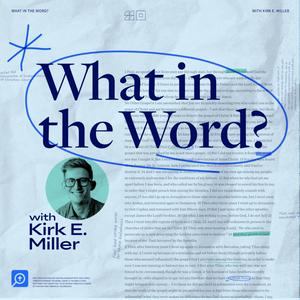
"What in the world does that verse mean?" This show tackles the hardest Bible verses to understand.
Each episode, host Kirk E. Miller interviews an expert guest to discuss a text in the Bible that is known to be challenging to interpret. They do in-depth Bible study and survey scholars' interpretations. By investigating the strangest and hardest Bible verses, What in the Word? gets below the surface to learn their implications for understanding God and living the Christian life.
Subscribe and join us weekly on Spotify, YouTube, and other podcast platforms.
Learn more: https://bit.ly/3DYhMjP
Podcast websiteListen to What in the Word?, BibleProject and many other podcasts from around the world with the radio.net app
Get the free radio.net app
- Stations and podcasts to bookmark
- Stream via Wi-Fi or Bluetooth
- Supports Carplay & Android Auto
- Many other app features
Get the free radio.net app
- Stations and podcasts to bookmark
- Stream via Wi-Fi or Bluetooth
- Supports Carplay & Android Auto
- Many other app features

What in the Word?
Scan code,
download the app,
start listening.
download the app,
start listening.
What in the Word?: Podcasts in Family
 New Zealand