
Listen to this podcast in the app for free: Download for free in the App Store
radio.net
Sleep timer
Save favourites
176 episodes
Writer’s Block Isn’t One Thing: How to Get Unstuck Fast
19/10/2026 | 40 mins.Forcing yourself to "just write every day" can make writer's block worse. Author Sylvia Liu shares the sideways fixes that actually get you unstuck.
Writer's block isn't one problem. It's too many ideas, no ideas, a muddy middle, a deadline that's choking you, or a world that feels too loud to write in. Use the wrong fix and you stay stuck for months. Sylvia is a former environmental attorney turned middle grade and dystopian sci-fi author, and her toolkit covers all of those. Lisa got unstuck on her own manuscript live, mid-recording.
In this episode:
Why "writer's block" is really an umbrella term, and how to tell which kind you have
The list-and-mash-up exercise that sparks story ideas (and the summer camp ghost story with horseshoe crabs)
What to do when the news and the scroll are eating your creative energy
Two plot fixes for pantsers: "stakes and agency" and the midpoint swap
Mind maps, chapter thumbnails with emoji, and reverse outlining
How the Beat Sheet Calculator can help with pacing, and why middle grade word counts keep shrinking
Why walking without your AirPods may beat staring at your laptop
The worst writer's block advice Sylvia has heard
Why a throwaway secondary character may be the answer you already planted
Resources and mentions:
Sylvia Liu's website: enjoyingplanetearth.com
Sylvia's newest book, Now That We Don't Talk, released October 6
KidLit411, a resource website and Facebook community for children's writers and illustrators (co-founded by Sylvia and Elaine Kiley Kearns in 2013)
Beat Sheet Calculator, which maps Save the Cat beats to your word count
TBR Live on Instagram, a weekly 30-minute group quiet-reading session
If you're stuck on chapter three, or stuck in your life, hit play. You may walk away with the one tool that gets you writing again.
More on our blog at writerswithwrinkles.net.
Looking to self publish? Let's chat. Writers With Wrinkles Press now open!
Send us Fan Mail
Ready to turn your manuscript into a published book? Writers With Wrinkles Press handles editing, cover design, formatting, and distribution, and you keep 100% of your royalties. Visit WritersWithWrinklesPress.com and write CONFETTI on your submission to get $500 off your publishing package. Your book. Your moment. Let's make it a celebration.
Support the show
Visit the Website
Find Full Episodes on YouTube!
Writers with Wrinkles Link Tree for socials and more!How a Thriller Writer Wrote a Cozy Mystery in Four Weeks
09/10/2026 | 27 mins.What do you do when the story you can't stop thinking about doesn't fit the genre you're known for? Thriller author Dina Marie (Dina Santorelli) took a ghost, a Salem mansion, and a big risk, and ended up with a paranormal cozy mystery series.
She started with zero readers, and her first draft took four weeks. The cost of not knowing how she did it is another year of sitting on an idea that won't leave you alone. Hit play to hear what she learned, and why one very popular ghost is about to get a lot more page time.
In this episode:
The Salem vacation that was never supposed to be work, and the idea that followed
Why her first plan (a paranormal romance) changed course
The "rules" for how ghosts behave in her world
What starting over with no readers looked like, and why she waited ten months to publish
What readers told her about the character they wanted more of
The perfect "if you like X, you'll like this" comparison
A ghost story swap that went way off topic (in the best way)
Books mentioned:
Going Ghost (Salem Spirits, Book 1)
Ghost Rider (Book 2)
Grateful Ghost (Book 8, released in August)
Find Dina's books: https://www.dinamariebooks.com/
More about this episode and the blog: writerswithwrinkles.net
This is the first Confetti Club, our new segment celebrating authors and their brand-new books. Hit play, follow the show, and grab a little confetti. Then tell us which ghost story of ours creeped you out most.
Send us Fan Mail
Ready to turn your manuscript into a published book? Writers With Wrinkles Press handles editing, cover design, formatting, and distribution, and you keep 100% of your royalties. Visit WritersWithWrinklesPress.com and write CONFETTI on your submission to get $500 off your publishing package. Your book. Your moment. Let's make it a celebration.
Support the show
Visit the Website
Find Full Episodes on YouTube!
Writers with Wrinkles Link Tree for socials and more!Podcast to Book to Press: Our Big Napa Announcement
07/10/2026 | 4 mins.We're back in Napa, where the Writers With Wrinkles podcast was born five years ago, with a new book and a new self-publishing press for writers.
Every self-published author we've talked to says the same thing: it was a lot more complicated than they expected. We spent the last year learning why, and we want your manuscript to get out of the drawer with fewer surprises along the way.
Hit play, then visit writerswithwrinklespress.com to send your questions or book a call with us.
In this episode
Why we're celebrating in Napa, the spot where this podcast was hatched
The book: Write, Revise, Publish: Essential Lessons from the Writers With Wrinkles Podcast, out now wherever you buy books
Meet Writers With Wrinkles Press, and why we built it
The one thing everyone says after they self-publish
How to reach us, and what's next for Season 6
Links and next steps
Writers With Wrinkles Press: writerswithwrinklespress.com (ask questions or book a phone call)
Book: Write, Revise, Publish: Essential Lessons from the Writers With Wrinkles Podcast, available everywhere books are sold
Add the book to your Goodreads shelf.
Send us Fan Mail
Support the show
Visit the Website
Find Full Episodes on YouTube!
Writers with Wrinkles Link Tree for socials and more!Want to Write a Graphic Novel? A First Second Editor Explains
28/09/2026 | 48 mins.Your graphic novel isn't a novel. It's a screenplay, and editors can tell from page one whether you know the difference. First Second Books editor Ivan Taurisano explains how to write and submit a graphic novel script that gets read.
Kids ages 8 to 12 head straight for the graphic novel shelf, and prose writers are trying to follow them there. But Ivan says a submission that misses the format doesn't just earn a "not for me." It can earn a "don't send me your next one." Here's what he wants you to know before you write a single panel.
In this episode:
Why writing a graphic novel is closer to writing a screenplay than a prose novel
Revealing character through dialogue alone (no "she looked wistfully at the ocean")
Why editors talk page count, not word count, and the "70,000-word graphic novel" red flag
What to submit for a script-only project vs. an author and illustrator team: script, pitch, synopsis, and 20–30 sample pages
How much art direction is too much, and the one question to ask before you leave an art note
Why illustrators usually earn more than writers
The biggest mistake Ivan sees: art that doesn't match the audience you're pitching
Why kids who read "slightly above their level" become lifelong readers
Adult graphic novels and First Second's sister imprint, 23rd Street
Ivan's manuscript wishlist:
Middle grade graphic novels about girl friendship that capture how big those fights and bonds feel at 10, 11, and 12
Dragons
Early reader graphic novels for ages 4–7, 64–96 pages, any topic
Stories with fresh magic systems
A joyful, new take on the immigrant journey that shows the excitement, not only the hardship
Ivan's inbox (ivan.taurisano@firstsecondbooks.com) is open to agented and unagented creators, and he gives feedback when he passes.
Books and resources mentioned:
Understanding Comics by Scott McCloud (Ivan's must-read before you write a graphic novel)
The Investigators by John Patrick Green
Dog Man by Dav Pilkey
Pizza and Taco
Narwhal and Jelly
Parachute Kids
Tuck Everlasting (graphic novel adaptation)
Clara and the Devil
How to Catch Santa Claus (How to Catch series)
James and the Giant Peach by Roald Dahl
Hit play, then grab a graphic novel for the age group you want to write for. Follow Writers With Wrinkles so you don't miss our next Ask Beth and Lisa episode, and send us your questions!
Send us Fan Mail
Ready to turn your manuscript into a published book? Writers With Wrinkles Press handles editing, cover design, formatting, and distribution, and you keep 100% of your royalties. Visit WritersWithWrinklesPress.com and write CONFETTI on your submission to get $500 off your publishing package. Your book. Your moment. Let's make it a celebration.
Support the show
Visit the Website
Find Full Episodes on YouTube!
Writers with Wrinkles Link Tree for socials and more!150+ Episodes of Publishing Advice, Now in One Book
21/09/2026 | 26 mins.We just turned 150+ episodes of hard-won publishing wisdom into one book — and it's finally here. Write, Revise, Publish: Essential Lessons from the Writers With Wrinkles Podcast is up for pre-order now, and today Beth and Lisa are pulling back the curtain on why they wrote it, what's inside, and how it can save you from making the same missteps they did.
If you've ever finished a podcast episode thinking "that's such a good tip" — and then completely forgotten it by the next day — this book is the fix. Beth and Lisa gathered the best insight from over five years and 150+ conversations with agents, editors, and authors, organized it by where you are in your process (first draft through published book), and added end-of-chapter worksheets so you can actually use it, not just read it. Plus: they're launching a brand-new segment called the Confetti Club, where debut and new-release authors get the mic to pitch their own books — no interview pressure, just celebration.
In this episode:
The cover reveal for their new book, Write, Revise, Publish: Essential Lessons from the Writers With Wrinkles Podcast
Why they built the book around 150+ episodes of guest wisdom instead of just their own opinions
How the book is organized so there's a spot for you whether you're drafting, revising, querying, or publishing
The personal (and often embarrassing) asides from Beth and Lisa woven into every chapter
End-of-chapter worksheets designed to turn the book into a practical writing tool, not just a read
Introducing the Confetti Club — a new short-form segment spotlighting authors with books releasing within 30 days
Who's lined up for the first three Confetti Club episodes
A teaser for a third big announcement — coming next month
Release date, pre-order details, and (of course) a Taylor Swift tangent
Pre-order Write, Revise, Publish on Amazon now — it releases in ebook and paperback on October 6th. And if you've got a book coming out in the next 30 days, keep an eye out: the Confetti Club wants to celebrate you too.
Hit play, and let's dive in. And if you love the show, a 5-star review on Apple Podcasts takes two minutes and helps us keep ironing out the wrinkles every week.
Send us Fan Mail
Ready to turn your manuscript into a published book? Writers With Wrinkles Press handles editing, cover design, formatting, and distribution, and you keep 100% of your royalties. Visit WritersWithWrinklesPress.com and write CONFETTI on your submission to get $500 off your publishing package. Your book. Your moment. Let's make it a celebration.
Support the show
Visit the Website
Find Full Episodes on YouTube!
Writers with Wrinkles Link Tree for socials and more!
More Arts podcasts




Trending Arts podcasts













About Writers With Wrinkles
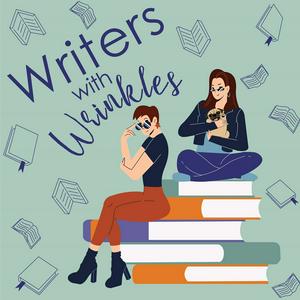
Whether you're an aspiring author, indie publisher, or career writer, Writers with Wrinkles is your essential guide to writing craft, book marketing, and the publishing industry. Hosted by authors Beth McMullen and Lisa Schmid, we iron out the wrinkles of the business — from mastering novel writing and story structure to navigating literary agents, query letters, and KDP self-publishing.Each week, we bring you expert interviews with editors, publishers, and bestselling authors, plus practical advice on building your author platform and marketing your book. Whether you're drafting your first manuscript or preparing for a book launch, we have the guidance you need to thrive in today's competitive publishing landscape.Get the new book: Write. Revise. Publish.: Essential Lessons From the Writers With Wrinkles Podcast — five seasons of insider publishing advice in one place. Available everywhere Oct. 6th.Visit www.WritersWithWrinkles.net for resources. Follow us on YouTube: @writerswithwrinkles
Podcast websiteListen to Writers With Wrinkles, ill-advised by Bill Nighy and many other podcasts from around the world with the radio.net app
Get the free radio.net app
- Stations and podcasts to bookmark
- Stream via Wi-Fi or Bluetooth
- Supports Carplay & Android Auto
- Many other app features
Get the free radio.net app
- Stations and podcasts to bookmark
- Stream via Wi-Fi or Bluetooth
- Supports Carplay & Android Auto
- Many other app features

Writers With Wrinkles
Scan code,
download the app,
start listening.
download the app,
start listening.
 New Zealand
