
Listen to this podcast in the app for free: Download for free in the App Store
radio.net
Sleep timer
Save favourites
93 episodes
AI Can Be Brilliant and Completely Wrong, Here’s Why (Middle School and up)
13/10/2026 | 33 mins.Send us Fan Mail
AI can write poems, answer questions, and sound confident, but does it actually understand what it’s saying? We sit down with Reed Koch, Director of Engineering at KungFu.ai, to unpack what “intelligence” means in machine learning and why computers can be both impressive and hilariously confused at the same time.
Reed shares his unusual path into AI through languages, linguistics, and natural language processing (NLP), then makes big ideas feel simple with stories kids (and adults) can remember. We talk about generative AI and how tools like ChatGPT often work more like “singing the next line” than thinking like a person. Along the way, Reed breaks down key concepts like pre-trained transformers, classification vs generative models, and the difference between supervised learning, unsupervised learning, and reinforcement learning.
We also get practical: where kids can start learning Python, how community groups and camps help you stick with it, and why prompt engineering is becoming a real skill. Reed tells a wild example of an AI system that struggled with “fake apple” reviews and Halloween costumes, then connects it to a bigger point about data quality, bias, and responsible AI design.
If you’re curious about AI for kids, coding for beginners, NLP, and AI safety, hit play, share this with a parent or teacher, and subscribe so you don’t miss the next conversation. What’s one job you wish AI could help with, and what’s one job it should never do alone?
Reed offers practical advice on getting started with AI through resources like Code Academy, Code Combat, kidspython.com, and Black Girls Hack, emphasizing that community-based learning through classes and camps often provides the best support.
Support the show
Hey parents and teachers, if you want to stay on top of the AI news shaping your kids’ world, subscribe to our weekly AI for Kids Weekly newsletter:
https://aiforkidsweekly.beehiiv.com/
Help us become the #1 podcast for AI for Kids, parents, teachers, and families.
Gift or get the ABCs of AI Activity Deck to introduce your kids 5-9 to AI literacy.
Like our content? patreon.com/AiDigiTales
Get or gift the book “AI… Meets… AI”
Social Media & Contact:
Website: www.aidigitales.com
Email: contact@aidigitales.com
Follow Us: Instagram
Books on Amazon or Free AI Worksheets
Listen, rate, and subscribe!
Apple Podcasts
Amazon Music
Spotify
...How a Teen Uses AI to Turn Lyrics Into Songs (Middle School and up)
29/09/2026 | 21 mins.Send us Fan Mail
A teen writes the lyrics, AI builds the sound, and suddenly a song that used to live only in her head can play out loud. That’s the creative shift we dig into with Rachel Schaub, a 17-year-old songwriter who’s using AI music tools to move faster, stay inspired, and keep making pop tracks even without a full band or studio.
We talk through Rachel’s real workflow step by step: how she starts with a song title, drafts her own lyrics, then uses Suno to generate the music and refine the style until it matches what she imagined. She also shares how she uses ChatGPT for song title ideas that feel aligned with the artists she loves while still keeping her work original. Along the way, we play a couple of quick games to pressure-test what should stay human, what can be AI-assisted, and where the line is between a helpful sidekick and letting AI take over.
We also hit the safety and ethics that families need to know, including a clear reminder about minors and AI voice training: if you’re under 18, you can’t use your own voice to train AI, so you’ll need parent involvement or different approaches. Rachel, who lives with autism, talks about confidence, performance, and her best advice for young creators with big ideas: find the one thing that starts your journey, and write ideas down before they disappear.
Check out Rachel and her music:
https://rachelschaub.com/
https://open.spotify.com/artist/5j1ZERBGZ7otAa893wDGdY
https://www.youtube.com/@rachelschaub1
New York to Chicago Song:
https://youtu.be/AMlENtbLviM?is=23DlZYiREn1dhesj
Subscribe, share this with a young creator in your life, and leave a review with your take: where do you want AI to help most in the songwriting process?
Support the show
Hey parents and teachers, if you want to stay on top of the AI news shaping your kids’ world, subscribe to our weekly AI for Kids Weekly newsletter:
https://aiforkidsweekly.beehiiv.com/
Help us become the #1 podcast for AI for Kids, parents, teachers, and families.
Gift or get the ABCs of AI Activity Deck to introduce your kids 5-9 to AI literacy.
Like our content? patreon.com/AiDigiTales
Get or gift the book “AI… Meets… AI”
Social Media & Contact:
Website: www.aidigitales.com
Email: contact@aidigitales.com
Follow Us: Instagram
Books on Amazon or Free AI Worksheets
Listen, rate, and subscribe!
Apple Podcasts
Amazon Music
Spotify
...Brain Before Bot: 5 AI Rules for the New School Year
15/09/2026 | 10 mins.Send us Fan Mail
AI is not coming to school someday. It is already there, tucked into search boxes, video recommendations, study apps, and yes, the chatbots everyone talks about. We’re kicking off the new school year with a clear-eyed look at what that means for kids, parents, and teachers, starting with a surprising stat: 86% of kids ages 9 to 17 have used AI. So the question is not whether students will use artificial intelligence, but how we can use it without handing over our thinking.
We share five practical rules for AI literacy that you can actually remember during homework time: Brain Before Bot (try first, then ask for help), Teacher Before Tool (every class has its own rules), Check The Robot (AI can sound right and still be wrong), Private Means Private (no personal info in AI tools), and People Before Programs (AI is never the right place for bullying, safety concerns, or big feelings). Along the way, we give kid-friendly examples and better ways to prompt AI, like asking for hints, alternate explanations, and quiz practice instead of full answers.
We also play a quick “AI or me” game to test real school scenarios, then we end with a back-to-school AI challenge: find one way technology can help you learn without doing the learning for you. If this helped you, subscribe, share it with a family member or teacher, and leave a review so more kids can build smart and safe AI habits.
Support the show
Hey parents and teachers, if you want to stay on top of the AI news shaping your kids’ world, subscribe to our weekly AI for Kids Weekly newsletter:
https://aiforkidsweekly.beehiiv.com/
Help us become the #1 podcast for AI for Kids, parents, teachers, and families.
Gift or get the ABCs of AI Activity Deck to introduce your kids 5-9 to AI literacy.
Like our content? patreon.com/AiDigiTales
Get or gift the book “AI… Meets… AI”
Social Media & Contact:
Website: www.aidigitales.com
Email: contact@aidigitales.com
Follow Us: Instagram
Books on Amazon or Free AI Worksheets
Listen, rate, and subscribe!
Apple Podcasts
Amazon Music
Spotify
...Your Brain Still Matters + Season 3 Recap and Finale (Kids, parents, & teachers)
23/06/2026 | 25 mins.Send us Fan Mail
AI can feel like magic until you look closer and realize it’s built on choices, data, and a whole lot of guessing. For our Season 3 finale of AI for Kids, we pull together the biggest takeaways from the season and turn them into simple, usable rules kids can remember and grown-ups can support at home, in libraries, and in classrooms. The bottom line stays the same: you don’t have to fear artificial intelligence, but you do have to think, pause, and stay curious.
We talk about what AI literacy for kids really means beyond “typing a good prompt.” It’s the habit of asking better questions: Did this help me learn or just hand me an answer? Does it sound true or do I need to verify it? We also revisit why data literacy matters so much, with everyday examples like checking the weather, budgeting money, and forecasting toward a goal. Those small moments teach kids how to reason with information, which is exactly what they need when they face AI hype, viral screenshots, or content that might be misinformation.
Then we get real about safety and boundaries. We unpack why human-like chatbots and character AI can be unhealthy when kids start treating a word generator like a person, and why “easy” is often a warning sign for sloppy or wrong. We also explore AI toys and hyper-personalization, including how a talking toy that follows one interest can shrink imagination instead of expanding it. For parents and teachers, we share a practical “parent in the loop” mindset: define the goal, choose tools built for kids and stay involved as the tech changes.
If this season helped your family, subscribe, share the show with a friend, and leave a review so more parents, teachers, and caregivers can find it. What’s one AI rule you want kids to remember this summer?
Support the show
Hey parents and teachers, if you want to stay on top of the AI news shaping your kids’ world, subscribe to our weekly AI for Kids Weekly newsletter:
https://aiforkidsweekly.beehiiv.com/
Help us become the #1 podcast for AI for Kids, parents, teachers, and families.
Gift or get the ABCs of AI Activity Deck to introduce your kids 5-9 to AI literacy.
Like our content? patreon.com/AiDigiTales
Get or gift the book “AI… Meets… AI”
Social Media & Contact:
Website: www.aidigitales.com
Email: contact@aidigitales.com
Follow Us: Instagram
Books on Amazon or Free AI Worksheets
Listen, rate, and subscribe!
Apple Podcasts
Amazon Music
Spotify
...Can a Robot Fix Grandma's Pipes? Why Jobs Still Need Human Hands (Kids, parents, & teachers)
09/06/2026 | 32 mins.Send us Fan Mail
AI is getting louder, faster, and more impressive by the week and that can make kids wonder what’s left for humans to do. We wanted to bring a calmer, more real-world answer: the future still needs people who can build, fix, and make things when life breaks in unpredictable ways.
I’m joined by Archie D. Nettles, Jr., creator of Trades to the Rescue and the TradesTopolis universe. He writes kids as the heroes of infrastructure, the ones who solve the problems that actually keep homes and cities working. We talk about what “skilled trades” really means, why plumbers, electricians, HVAC techs, carpenters, and mechanics are often the unsung heroes, and why these careers deserve the same early attention kids give to astronauts and doctors.
Then we get into the AI question everyone asks: can robots really do these jobs? Archie explains why dexterity, tight spaces, and human trust make many trade tasks hard to automate, especially when you need help at 9 p.m. on a Sunday. We also flip the script to show how AI can be a teammate: faster planning, parts lookup, real-time estimates, better customer answers, and safer work with augmented reality that helps visualize what’s behind a wall or how electrical currents flow.
If your kid loves Legos, inventing, fixing toys, cooking, or asking “how does that work,” this is a confidence boost and a roadmap. Subscribe, share with a family who’s thinking about careers, and leave a review so more kids can hear that there’s more than one way to be smart.
Resources:
Follow Torque and Tori's Adventure
Get the book.
Follow on Instagram
Support the show
Hey parents and teachers, if you want to stay on top of the AI news shaping your kids’ world, subscribe to our weekly AI for Kids Weekly newsletter:
https://aiforkidsweekly.beehiiv.com/
Help us become the #1 podcast for AI for Kids, parents, teachers, and families.
Gift or get the ABCs of AI Activity Deck to introduce your kids 5-9 to AI literacy.
Like our content? patreon.com/AiDigiTales
Get or gift the book “AI… Meets… AI”
Social Media & Contact:
Website: www.aidigitales.com
Email: contact@aidigitales.com
Follow Us: Instagram
Books on Amazon or Free AI Worksheets
Listen, rate, and subscribe!
Apple Podcasts
Amazon Music
Spotify
...
More Education for Kids podcasts

Trending Education for Kids podcasts



About AI for Kids
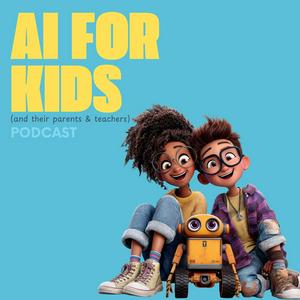
Welcome to AI for Kids, a podcast made for kids, with parents and teachers there to support and guide them, without adding more screen time.This podcast is made for kids ages 4–12 (and curious teens too) and the adults who support them. You’ll hear fun, easy-to-follow conversations with fellow kids and even AI experts. We break down what AI is, how it shows up in everyday life, and how to talk about it at the dinner table or on the drive to school.Whether you’re multitasking, carpooling, or winding down for the night, AI for Kids fits your life. It’s screen-free, engaging, and created to spark curiosity, not replace it.Because kids don’t need more screen time to stay ahead, just better ways to understand the world they’re growing up in.
Podcast websiteListen to AI for Kids, Brains On! Science podcast for kids and many other podcasts from around the world with the radio.net app
Get the free radio.net app
- Stations and podcasts to bookmark
- Stream via Wi-Fi or Bluetooth
- Supports Carplay & Android Auto
- Many other app features
Get the free radio.net app
- Stations and podcasts to bookmark
- Stream via Wi-Fi or Bluetooth
- Supports Carplay & Android Auto
- Many other app features

AI for Kids
Scan code,
download the app,
start listening.
download the app,
start listening.
AI for Kids: Podcasts in Family
 New Zealand
