
Listen to this podcast in the app for free: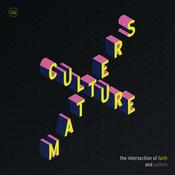 Download for free in the App Store
radio.net
Sleep timer
Save favourites
325 episodes
The Church Part 5: A People of Covenant
30/06/2026 | 48 mins.In the final episode of this series on the church, the conversation shifts from simply attending church to faithfully belonging to the people of God. This episode explores what it means to live as a covenant community—one marked by commitment, discipleship, sacrifice, and love. Rather than approaching church as consumers, believers are called to participate in God's ongoing work through serving, encouraging, forgiving, and bearing one another's burdens.
The discussion also addresses church hurt with honesty and hope, reminding listeners that while the church is imperfect, Christ remains faithful to His bride. Healing often comes not through abandoning the church, but through walking with Jesus and experiencing trustworthy relationships among His people over time.
Ultimately, this episode is an invitation to deeper commitment: to love and be known, to persevere through discomfort, and to trust that God is forming His people into the image of Christ together.
Key Takeaways
Church is not primarily something we attend—it is a people we belong to.
Spiritual maturity grows through participation, not passive consumption.
God often forms us through serving others more than through being served.
Church hurt is real, but healing begins by drawing near to Jesus.
Trust is rebuilt through many faithful interactions over time.
Christian community requires vulnerability, perseverance, and grace.
The church is imperfect today, but Christ is faithfully preparing His bride for glory.
Scriptures Referenced
Ephesians 4 – Equipping the saints for the work of ministry.
Romans 12:15 – Rejoice with those who rejoice; weep with those who weep.
Colossians 1:24 – Filling up what is lacking in Christ's afflictions.
2 Timothy – Faithfulness amid hardship and abandonment.
Hebrews – Endurance and perseverance in the Christian life.
John 21 – Jesus restores Peter after his denial.
John 13 – Loving one another as Christ has loved us.
Matthew 16:18 – Christ will build His church.
Luke 9:23 – Take up your cross daily and follow Him.
Resources Mentioned
No Greater Love — Rebecca McLaughlin
Follow Us!
Instagram
Youtube
--
Editing and support by The Good Podcast Co. If you would like to sponsor this show, email sponsor@thegoodpodcast.co.The Church Part 4: Discipleship
23/06/2026 | 32 mins.Ty and Chelsea continue their miniseries on the church by exploring the topic of discipleship. Building on the previous conversation about the church as a body, they discuss what it means to intentionally help others become more like Jesus and why so many believers feel hesitant to engage in discipleship. The conversation challenges the idea that discipleship is reserved for experts, pastors, or people who have “arrived” spiritually. Instead, discipleship is presented as a natural extension of Christian friendship and faithful obedience to Jesus.
Ty and Chelsea unpack common barriers such as insecurity, perfectionism, and the misconception that discipleship requires having all the answers. They highlight how discipleship often happens in everyday life—through relationships, consistency, humility, repentance, and trust in the work of the Holy Spirit. Making disciples is not about being enough; it’s about faithfully joining God in the work He is already doing.
Key Takeaways
Discipleship is intentionally helping others become more like Jesus.
You do not need to be spiritually perfect before discipling others.
Everyone is already discipling and being discipled by something.
Repentance, humility, and honesty are powerful discipleship tools.
God is ultimately responsible for transforming hearts; our responsibility is faithful obedience.
Making disciples becomes much less intimidating when we remember that God has already gone before us.
Scriptures Referenced
Matthew 28:18–20 (The Great Commission)
Mark 2–6 (Jesus calling and sending His disciples)
1 Corinthians 8:1 (“Knowledge puffs up, but love builds up.”)
1 Corinthians 1:26–31 (God uses what appears weak in the world)
Ephesians 2:10 (Created for good works prepared beforehand)
Thanks to our Sponsors
Cozy Earth
Discover how Cozy Earth turns everyday routines into moments of softness and ease. Head to cozyearth.com and use code CULTURE for an exclusive 20% off.
Follow Us!
Instagram
Youtube
--
Editing and support by The Good Podcast Co. If you would like to sponsor this show, email sponsor@thegoodpodcast.co.The Church Part 3: One Body but Many Parts
16/06/2026 | 44 mins.In part 3 of our Church Series, Adam and Ty explore the biblical vision of the church as one body with many parts. They address a common modern question—"Do I have to go to church to be a Christian?"—and argue that the New Testament treats participation in the people of God as the assumed context of Christian life. Rather than focusing on obligation, they reframe the conversation around why believers would want to belong to a local church.
The discussion highlights how God uses diverse people, gifts, backgrounds, and experiences to form His people into the image of Christ. Adam and Ty contrast the church's embodied, communal nature with today's hyper-individualistic and digital culture, emphasizing that Christian formation happens through relationships, service, mutual encouragement, and shared worship. They also unpack the church's unique relationship to power, noting that greatness in the Kingdom is measured by service rather than status.
Key Takeaways
The New Testament assumes Christians are part of a local community of believers.
Spiritual growth is designed to happen in relationship with other Christians.
The church is more than a sermon and worship service; it is a family.
Every believer has gifts intended to strengthen the body of Christ.
Christian unity is centered on Jesus, not shared preferences or cultural identities.
Biblical leadership is marked by service, humility, and sacrifice.
The church is called to welcome outsiders because all believers were once outsiders welcomed by grace.
Scriptures Referenced
1 Corinthians – The church as one body with many members
Matthew 20:20–28 – Greatness through servanthood
Ephesians 2:10 – Created for good works
Genesis 1–3 – Dominion, community, and the effects of sin
Thanks to our Sponsors
Cozy Earth
Discover how Cozy Earth turns everyday routines into moments of softness and ease. Head to cozyearth.com and use code CULTURE for an exclusive 20% off.
Follow Us!
Instagram
Youtube
--
Editing and support by The Good Podcast Co. If you would like to sponsor this show, email sponsor@thegoodpodcast.co.The Church Part 2: Union with Christ
09/06/2026 | 49 mins.In Part 2 of their conversation on the Church, Chelsea and Tymarcus Ragland explore the foundational Christian doctrine of union with Christ and why it matters for understanding the Church. Building from the previous episode, they discuss how the New Testament assumes believers are connected not only to Christ but also to one another through His body, the Church.
Drawing heavily from Ephesians 1, the conversation highlights the repeated phrase “in Christ” and unpacks the spiritual blessings believers receive through their union with Jesus: redemption, adoption, inheritance, and the promise of future glory. The hosts challenge modern individualism and encourage listeners to see church membership not as a consumer experience but as a covenant community where believers are formed, encouraged, and sanctified together.
The episode also addresses the growing tension between embodied community and digital engagement. While online ministry can serve as a helpful supplement, Chelsea and Tamaris argue that Christianity is inherently incarnational. Just as Christ came physically among His people, believers are called to live in meaningful, embodied relationships with one another.
Ultimately, this conversation is an invitation to move toward the Church—even when it is difficult—trusting that God is at work through ordinary people, faithful communities, and the slow work of spiritual formation.
Key Takeaways
Union with Christ is the foundation of Christian identity.
The Church is God’s chosen means of advancing His kingdom on earth.
Spiritual growth is intended to happen in community, not isolation.
Church participation is about both receiving and contributing.
Embodied presence matters because Christianity is an incarnational faith.
Healthy churches offer a powerful witness in a fragmented culture.
Faithfulness often looks ordinary, slow, and relational.
Resources Mentioned
Books
The Cross of Christ — Recommended for understanding the necessity and significance of Christ’s atoning work.
The Weight of Glory — Referenced regarding the eternal significance of our neighbors and fellow believers.
Previous Culture Matters Episode
Conversation with Ryanne Molinari on worship, congregational singing, and spiritual formation through gathered worship.
Thanks to our Sponsors
Cozy Earth
Discover how Cozy Earth turns everyday routines into moments of softness and ease. Head to cozyearth.com and use code CULTURE for an exclusive 20% off.
Follow Us!
Instagram
Youtube
--
Editing and support by The Good Podcast Co. If you would like to sponsor this show, email sponsor@thegoodpodcast.co.The Church Part 1: The People of God
02/06/2026 | 51 mins.Chelsea and Tymarcus kick off a new mini-series on the church. Today they explore a question that many Christians wrestle with: Do you have to be part of a church to follow Jesus? Rather than approaching the topic as a defense of church attendance, they examine how the New Testament consistently assumes that followers of Jesus are connected to the people of God.
The discussion highlights the church as more than a weekly gathering or building—it is the global, historic, and Spirit-filled community of believers united in Christ. Drawing from Scripture, church history, and personal experience, Chelsea and Tymarcus unpack themes of discipleship, accountability, spiritual formation, church hurt, community, and the beauty of belonging to Christ’s bride.
They also address common objections to church involvement, acknowledging the reality of painful experiences while encouraging listeners not to abandon God’s design for Christian flourishing. The episode closes by looking ahead to future conversations on union with Christ, discipleship, and the mission of the church.
Key Takeaways
The New Testament assumes Christians are connected to the people of God.
Church participation is about more than attendance; it is about belonging.
Spiritual growth requires community, accountability, and discipleship.
Church hurt is real, but unhealthy churches should not redefine God’s design for the church.
The church is imperfect because people are imperfect, yet Christ remains committed to His bride.
Isolation often deprives believers of the very means God uses for encouragement and sanctification.
Gathering with believers is a gift and grace from God.
Scriptures Mentioned
Acts 2:42–47
Romans 8:29–30
Ephesians 4:4–6
Proverbs 27:17 (“Iron sharpens iron”)
1 John 2:19
Thanks to our Sponsors
In A Compelling Faith in a Compromising Culture, pastor and longtime NBA chaplain Mike Tatlock invites believers to cultivate a faith that isn’t loud or trendy—but holy, steady, and unmistakably different.
To learn more about A Compelling Faith in a Compromising Culture, visit moodypublishers.com or find it wherever books are sold.
Cozy Earth
Discover how Cozy Earth turns everyday routines into moments of softness and ease. Head to cozyearth.com and use code CULTURE for an exclusive 20% off.
Follow Us!
Instagram
Youtube
--
Editing and support by The Good Podcast Co. If you would like to sponsor this show, email sponsor@thegoodpodcast.co.
More Christianity podcasts







Trending Christianity podcasts








About Culture Matters
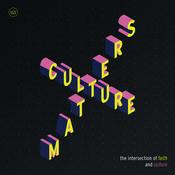
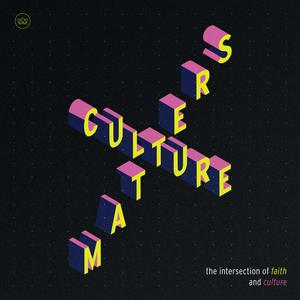
Matters of culture should matter to us—because they matter to God. Hosted by Adam Hawkins, Tymarcus Ragland and Chelsea Conway—the Culture Matters podcast explores the intersection of faith and culture. Looking at everything from politics, art and entertainment to issues such as racial reconciliation and the sanctity of human life, we discuss what it looks like to live faithfully on mission—in the world but not of the world.
Podcast websiteListen to Culture Matters, The Bible in a Year (with Fr. Mike Schmitz) and many other podcasts from around the world with the radio.net app
Get the free radio.net app
- Stations and podcasts to bookmark
- Stream via Wi-Fi or Bluetooth
- Supports Carplay & Android Auto
- Many other app features
Get the free radio.net app
- Stations and podcasts to bookmark
- Stream via Wi-Fi or Bluetooth
- Supports Carplay & Android Auto
- Many other app features

Culture Matters
Scan code,
download the app,
start listening.
download the app,
start listening.
Culture Matters: Podcasts in Family

 New Zealand
