

Listen to this podcast in the app for free: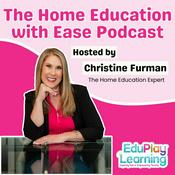 Download for free in the App Store
radio.net
Sleep timer
Save favourites
148 episodes
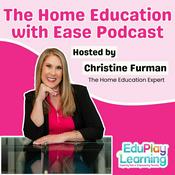
Is Technology Taking Over Childhood? Raising Kids with Healthy Screen Habits with Rebecca Shinsky Ep. 147
19/10/2026 | 47 mins.How much technology is too much for our kids? And how can we help them develop healthy habits in a world where screens are everywhere?
This week on the Home Education with Ease Podcast, I'm joined by children's author and mom of four, Rebecca Shinsky, for a conversation that I think every parent needs to hear!
Rebecca is the author of Techie Tess Takes a Rest and Bucktooth Becky and Her Silly Headed Siblings. Her mission is to help children develop confidence, self-worth, and healthy habits through meaningful stories.
We talked about the growing role technology plays in our children's lives, how screen time can affect family routines, and why it's so important to begin conversations about healthy technology habits while our children are young.
I even shared a personal experience with my own kids when I noticed how differently our morning went after allowing them to start the day watching television.
Rebecca shared how her family approaches delaying smartphones, setting social media boundaries, and creating opportunities for technology-free family time.
We also discussed something I think is SO important: Our kids are watching us!
If we're constantly checking our phones, responding to notifications, or scrolling through social media, what are we teaching our children about technology?
But this conversation isn't about eliminating technology altogether.
It's about helping our children understand that technology is a TOOL, not something that needs to consume their time, attention, or relationships.
From simple screen-free activities and family game nights to teaching digital citizenship and advocating for changes in schools, we shared practical ways families can be more intentional.
Whether your children are toddlers, elementary-aged, or teenagers, I hope this conversation encourages you to look at your family's technology habits and consider how you can create more opportunities for meaningful learning and connection.
Join the Conversation:
Head over to the Home Education with Ease Facebook Group and answer this week's question:
At what age do you think children should have their own smartphone?
Share your answers with the community, ask questions, or DM Christine!
Takeaways:
1. Start conversations about technology early.
Rebecca encourages parents to begin teaching healthy technology habits while children are young. Books, conversations, and everyday experiences can help children understand why boundaries matter.
2. Our children learn from what we model.
It's not just about how much time our kids spend on devices. We also need to consider our own habits. Putting our phones away, being present, and setting healthy boundaries ourselves can reinforce the lessons we're teaching.
3. Technology should be a tool, not the center of childhood.
Technology offers wonderful opportunities for learning, communication, and connection. But children also need time to play, move, explore, develop friendships, and enjoy activities away from screens.
4. Small changes can create meaningful family connections.
Keeping a deck of cards in your bag, playing games after dinner, taking walks, or scheduling technology-free time can provide alternatives to reaching for a device.
5. Be intentional about introducing smartphones and social media.
Rebecca shared how her family delays personal smartphones, discusses screen time regularly, and adjusts boundaries as her children grow. She also discussed how parents worked with her local school district to change its cellphone policies.
Quotes:
Christine Furman:
"I think the biggest factor there is that communication that we have with our children, right?"
Rebecca Shinsky:
"I think the biggest key is probably being deliberate about the choices that you're making"
Christine Furman:
"And again, it's that connection that we have as a family, you know."
Rebecca Shinsky:
"no, my attention's not for sale."
Rebecca Shinsky:
"As a parent, first look at yourself and what you're doing so that you can best model for your children"
Resources & Links:
Connect with Christine:
EduPlay® Learning: https://eduplaylearning.com
Christine Furman: https://christinefurman.com
Home Education with Ease Facebook Group
Connect with Rebecca Shinsky:
Website: https://rebeccashinskyauthor.com
Instagram: @rebeccashinskyauthor
Children's book: Techie Tess Takes a Rest
Children's book: Bucktooth Becky and Her Silly Headed Siblings
Additional resources discussed:
Common Sense Media: https://www.commonsensemedia.org
Wait Until 8th: https://www.waituntil8th.org
Digital Citizenship Week
Screen-free family activities, including card games, board games, outdoor play, and family walks.Are We Expecting Too Much from Our Kids? Education in Germany vs. the U.S. Ep. 146
12/10/2026 | 41 mins.What if some of the things we consider essential to early education aren't actually what our children need most?
What if more play, more movement, more time outdoors, and less academic pressure could make a meaningful difference in how our children learn and grow?
This week on the Home Education with Ease Podcast, I'm joined by Jana, a mom of two, military spouse, and business owner who was born in the Czech Republic, grew up in Germany, and is now raising her children in the United States.
We had such an interesting conversation about the differences between education in Germany and the United States, and I found myself thinking about how much pressure we sometimes place on our kids to meet certain milestones at certain ages.
Jana shared her experiences growing up in Germany, where her early childhood education emphasized play, outdoor exploration, creativity, and storytelling before formal academics began.
We talked about shorter school days, learning to read, the importance of movement, and why we need to recognize that every child develops and learns differently.
But our conversation went beyond education.
We also discussed the challenges of motherhood, maternity leave, finding community, screen time, sleep, attention and focus, and Jana's personal experience advocating for her son after his ADHD diagnosis and discovering concerns about his airway and sleep.
One of the biggest reminders from this conversation?
Our children are individuals. And instead of focusing only on what they should be doing at a certain age, we need to understand what they actually need to thrive.
Whether your children attend traditional school, homeschool, or are just beginning their educational journey, I hope this conversation encourages you to ask questions, embrace meaningful learning experiences, and continue advocating for your children.
Join the Conversation:
Head over to the Home Education with Ease Facebook Group and answer this week's question:
Do you feel like there's more pressure on young kids academically today than when we were growing up?
Share your answers with the community, ask questions, or DM Christine!
Takeaways:
1. Play is an important part of early childhood education.
Jana described how play, outdoor exploration, art, and storytelling were central to her early experiences in Germany. Children can develop foundational skills through meaningful experiences without every activity becoming a formal lesson.
2. Every child develops and learns differently.
Children enter school with different experiences, abilities, and readiness levels. Instead of automatically labeling children as behind, we should focus on understanding their individual needs and providing appropriate support.
3. Movement and outdoor experiences deserve a place in children's daily routines.
From walking to school to spending time outside, Jana shared how movement was incorporated into everyday life. We discussed why children need opportunities to move, explore, and develop independence.
4. Supporting a struggling child often means asking more questions.
Jana shared her family's experience exploring her son's attention, sleep, and breathing concerns. The conversation highlighted the value of professional evaluations, second opinions, and considering a child's overall well-being alongside academic performance.
5. Moms need community and encouragement, too.
Raising children isn't always easy. Having trusted people to talk to, share experiences with, and lean on can make a meaningful difference.
Quotes:
Christine Furman:
"But my approach to it is never forcing it. It's very enjoyable. It's very fun, you know."
Jana:
"They at least have the chance to really fall in love with it, right? With the story time, instead of being already like trained to having to analyze it"
Christine Furman:
"We have to recognize that not all children coming into the school setting are gonna be at the same level."
Jana:
"Don't give up, get second opinions."
Jana:
"Don't ever like feel like you cannot talk to others about your problems and you know, build yourself a little village"
Resources & Links:
Connect with Christine:
EduPlay® Learning — https://eduplaylearning.com
Christine Furman — https://christinefurman.com
Home Education with Ease Facebook Group — Join our community for encouragement, questions, and home education support.
Connect with Jana:
List and Ledger Bookkeeping — Jana's bookkeeping business supporting small-business owners.
Certified QuickBooks ProAdvisor — Jana helps business owners with QuickBooks setup and bookkeeping. listandledger.com/free-quickbooks-guide
contact@listandledger.com
List and Ledger Bookkeeping Facebook
Additional resources mentioned:
Dolly Parton's Imagination Library — https://imaginationlibrary.com
Myofunctional therapy — Refer to Christine's previous podcast conversation with Dr. Leslie.
Your local library — A great resource for reading aloud and meaningful learning experiences.
The health-related discussion reflects personal experiences and questions raised during the interview, not medical advice. ADHD, sleep-disordered breathing, and treatment decisions should be evaluated with qualified healthcare professionals.Do You Really Not Have Enough Time? Reframing the Words Our Kids Hear Ep. 145
05/10/2026 | 31 mins.Have you ever caught yourself saying:
“I don't have enough time.”
“We're too busy.”
“I don't have what I need.”
“I should be doing more.”
I have, and recently, I started realizing just how often those words were coming out of my mouth.
After last week's conversation about shifting our mindset around money, I started thinking about abundance in a completely different way. Maybe I don't have a scarcity mindset around money…but I realized I was carrying one around time.
And our kids are listening.
In Episode 145 of the Home Education with Ease Podcast, I'm sharing what God has been teaching me about time, resources, generosity, and stewardship. And how I'm intentionally changing the words I use around my kids.
We don't need unlimited time, money, curriculum, activities, or resources to give our children a meaningful education or create a meaningful life.
Sometimes we need to stop searching for the next thing and recognize what God has already placed in our hands.
We'll talk about how to reframe scarcity language, why our children are learning from the way we talk about time and resources, how to become better stewards of what we've already been given, and why one simple resource, like a book, can create countless meaningful learning opportunities.
I'm also challenging you this week to notice the words don't, can't, won't, shouldn't, and don't have enough.
When you hear yourself saying them, pause.
What could you say instead?
Maybe you have more than enough to take the next step.
Join the Conversation:
Head over to the Home Education with Ease Facebook Group and answer this week's question:
How often do you catch yourself saying, “I don't have enough time” or “We're too busy”?
Share your answers with the community, ask questions, or DM Christine!
Takeaways:
1. Our kids are listening to the way we talk.
Even when we're not speaking directly to them, they're hearing how we talk about money, time, opportunities, and resources. The language we model can shape how they view their own lives.
2. Abundance doesn't mean pretending there are no limitations.
Budgets, schedules, and limitations are real. An abundance mindset asks, “What can we do with what we have?” rather than automatically focusing on what we lack.
3. Time is a resource, and we can choose how we steward it.
Instead of constantly saying, “I don't have enough time,” we can examine how we're spending the time we've been given and whether our priorities reflect what matters most.
4. You may already have the resources you need to teach your child well.
A bookshelf, board games, the library, everyday experiences, or one great book can become meaningful opportunities for reading, writing, math, science, social studies, and more.
5. Stewardship includes using our gifts well.
God has given each of us different gifts, abilities, time, and resources. Part of living abundantly is recognizing those gifts and intentionally using them to serve our families and others.
Quotes:
Christine Furman:
“Our kids are listening to us all the time.”
Christine Furman:
“He has given me more than enough time.”
Christine Furman:
“What if we just paused?”
Christine Furman:
“I have more than enough that I need to move forward.”
Christine Furman:
“We have to be intentional. We have to pause. And we have to really look internally at the words we're using.”
Resources & Links:
Home Education with Ease Facebook Group — Join the conversation and connect with other families.
EduPlay® Learning — Resources and individualized support to help families make learning fun, meaningful, and personalized.
Your local library — One of the simplest and most valuable resources available for creating meaningful learning experiences.
Books you already own — Try using one book across subjects by incorporating reading comprehension, vocabulary, grammar, writing, math, science, geography, and history.
Individualized Home Education Support with Christine — Reach out if you need help identifying what your child truly needs and creating a learning plan that fits your child and family.From “We Can't Afford That” to “How Can We Make It Work?” Teaching Kids About Money, Abundance & Stewardship with Marta Sauret Greca Ep. 144
28/09/2026 | 40 mins.What did you hear about money growing up?
“Money doesn't grow on trees.”
“We can't afford that.”
“That's too expensive.”
For many of us, the way we think and talk about money didn't start when we became adults. It began years ago with the words, experiences, and financial habits we witnessed as children.
But we don't have to automatically carry all of those same patterns into the next generation.
In this week's episode, Christine sits down in person with her dear friend, financial strategist, entrepreneur, mom of seven, and four-time bestselling author Marta Sauret Greca for an open conversation about money, scarcity, abundance, stewardship, generosity, and the financial lessons we're passing on to our kids.
Marta vulnerably shares her own journey, from experiencing rapid business growth and financial abundance to realizing that having more money didn't automatically mean she was stewarding it well. She shares some of the financial mistakes she's made, what she's learned from them, and how she's rebuilding with greater intention.
Christine and Marta also talk about the importance of looking at what we already have, paying attention to where our money is going, being willing to pause before a purchase, and making financial decisions based on our family's priorities rather than fear or comparison.
Christine shares how she teaches children about money using a simple three-jar system for saving, spending, and giving, and the conversation explores how parents can begin shifting the language they use around money.
Instead of immediately saying:
“We can't afford that.”
What if we paused and said:
“Let's look at our budget.”
“Maybe that's not something we're choosing to spend our money on this month.”
Or:
“That's not in our budget right now. How could we save for it?”
This isn't about pretending that financial limitations don't exist.
It's about helping our children understand that money is a resource, choices have to be made, and we can learn to be thoughtful about what we earn, save, spend, give, and invest.
The conversation also dives into faith, gratitude, generosity, entrepreneurship, family priorities, and Marta's newest collaborative book, Completely Wealthy, releasing October 1.
Most importantly, Christine and Marta remind us that our past financial experiences don't have to determine our family's future.
We get to decide what lessons we want to carry forward, and which patterns we're ready to change.
Join the Conversation:
Head over to the Home Education with Ease Facebook Group and answer this week's question:
Have you ever caught yourself saying, “We can't afford that”? What could you say instead?
Share your answer with the community, ask questions, or DM Christine!
Takeaways:
Our childhood experiences can shape how we think about money as adults. We have an opportunity to examine those patterns and intentionally decide what we want to pass on to our children.
More money doesn't automatically create better financial habits. Marta shares how periods of greater income also taught her the importance of tracking, planning, setting priorities, and being intentional with what she had.
Teach children what to DO with money. Christine's three-jar method introduces children to saving, spending, and giving rather than treating every dollar they receive as money available to spend.
The language we use matters. Instead of making “We can't afford it” the automatic response, we can talk about budgets, priorities, saving, waiting, and deciding whether something is worth spending money on.
Wealth can be about more than money. Throughout the conversation, Christine and Marta connect financial wellness with faith, generosity, family, experiences, gratitude, stewardship, and living intentionally in the present while also planning for the future.
Quotes:
Marta Sauret Greca:
“If you didn't grow up with generational wealth, you get to be the one to believe that you can create it.”
Christine Furman:
“Money is a resource.”
Christine Furman:
“How can we take what we do have and make the right choices with it?”
Marta Sauret Greca:
“It's a relationship. Just like you have a relationship with your spouse or your kids or your friends, and you're nurturing that, that's the same thing with money, because it's a resource from God.”
Marta Sauret Greca:
“I don't know how we could make that work financially right now, but let's aspire to it if that's something that we really wanna do.”
Resources & Links:
Completely Wealthy — Marta's newest collaborative book, releasing October 1, featuring perspectives on the spiritual, mindset, strategy, generosity, planning, real estate, and other aspects of wealth.
The Completely Wealthy Event - Embody Your Wealthiest Self — October 1 from 6–9 PM at The Club at Enterprise. Marta shares the code 25OFF in the episode for $25 off VIP pricing.
Marta Sauret Greca — martasauretgreca.com Financial strategist for families and entrepreneur.
The Global Sisterhood 501c3 — Marta explains that profits associated with the book and event support the organization's charitable work.
Three-Jar Money Method — Teach children to divide money between Save • Spend • Give. Families can also introduce investing as children get older.
Home Education with Ease Facebook Group — Join Christine and the community to continue the conversation about teaching children healthy money habits and moving from scarcity toward abundance.
EduPlay® Learning — Real-life learning opportunities that help children develop confidence, independence, and practical life skills.From Distracted to Focused: Simple Ways to Keep Kids Engaged in Learning Ep. 143
21/09/2026 | 36 mins.Does your child suddenly need a snack, a drink, a bathroom break, or anything else they can think of, the minute it's time to learn? 😂
You're not alone.
Whether you're homeschooling, helping with homework after school, or introducing activities to a toddler, keeping kids focused can sometimes feel like a battle.
But what if the answer isn't asking them to sit still longer?
In this episode, Christine shares practical strategies she's used with her own children, in the classroom, and with the students and families she works with today to make learning more engaging, meaningful, and individualized.
You'll learn how to break longer lessons into manageable chunks, incorporate quick movement breaks, use “first, then” language, give children choices, build lessons around their interests, change the learning environment, and turn academic skills into games and real-life experiences.
Christine also talks about something that's sometimes harder for us as parents and educators: recognizing when it's time to stop.
Pushing through frustration doesn't always result in more learning. Sometimes our kids need us to recognize the signs of mental fatigue, help them experience one more small success, take a break, and return to the skill with a fresh brain.
Most importantly, remember that every child is different.
What worked beautifully for one child may not work for another, and that's okay.
Instead of asking, “Why won't my child focus?” this episode encourages us to get curious and ask:
“What does my child need in order to learn this well?”
Sometimes one small change can make a really big difference.
Join the Conversation:
Head over to the Home Education with Ease Facebook Group and answer this week's questions:
What usually distracts your child most when it's time to learn?
Share your answer with the community, ask questions, or DM Christine!
Takeaways:
Shorter can be better. A 30-minute lesson doesn't necessarily require 30 uninterrupted minutes of sitting. Break learning into smaller chunks and incorporate quick movement or brain breaks.
Give kids appropriate choices. Letting a child choose whether to start with math or reading, or choose the movement they do during a brain break, can give them ownership without changing what needs to be accomplished.
Use what your child already loves. Dogs, dinosaurs, cars, Rubik's Cubes, favorite snacks, sports, or another interest can become tools for practicing academic skills.
Learning can happen anywhere. The kitchen table isn't the only classroom. Read outside, practice math in the car, count at the grocery store, work on the floor, or take learning on a walk.
Know when to take a break. When frustration and mental fatigue are taking over, help your child finish with a small success, take a break, and return with a fresh brain rather than continuing to push until they completely shut down.
Quotes:
Christine Furman:
“Sometimes one small tweak can really make a big difference.”
Christine Furman:
“Every child learns differently.”
Christine Furman:
“Truly learning can happen anywhere.”
Christine Furman:
“How can we take the skill that we want them to learn and turn it into something that is fun and meaningful and individualized for your kids?”
Christine Furman:
“I really want educating our kids to be fun and enjoyable for everyone.”
Resources & Links:
Home Education with Ease Facebook Group — Join the community, share what's working for your child, ask questions, and get additional ideas from Christine.
EduPlay® Learning — Hands-on, meaningful learning designed to make education fun while supporting different learning needs and styles.
EduPlay® Learning Academy — Done-for-you curriculum with activities and materials designed to make learning engaging, meaningful, and individualized.
EduPlay® Learning Membership — Connect with Christine for additional activity ideas, support, and guidance.
Simple Brain Break Supplies — Dice, a jump rope, hula hoop, learning cards, a ball, music, or even a crumpled piece of paper can turn skill practice into movement and play.
Connect with Christine — DM Christine if you're struggling to keep your child engaged and want help brainstorming strategies that fit your child and family.
Connect with Christine:
If this episode resonated with you and you’re wondering what next steps might look like for your family, I’d love to connect. Feel free to reach out and send me a message.
Email: christine@eduplaylearning.com
Facebook: Home Education with Ease Facebook Group
Instagram: @thehomeeducationexpert | @eduplaylearning
YouTube: EduPlay Learning YouTube
You don’t have to do this alone. I’m here to support and encourage you every step of the way.
More Education podcasts





Trending Education podcasts











About The Home Education with Ease Podcast
Let's redefine what it means to educate our kids at home, ditch the stress, embrace the joy of learning, and set your family up for a lifetime of success!
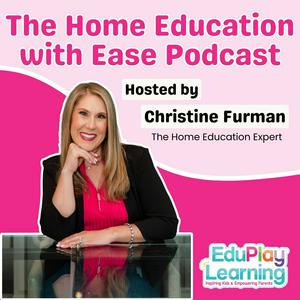
Welcome to The Home Education with Ease Podcast, I’m your host, Christine Furman, a certified Elementary and Special Education teacher, homeschool mom, creator of the EduPlay Learning method and curriculum, Best-Selling Co-Author and founder of EduPlay® Learning and Momspiration412® Worldwide. It’s my mission to help you raise lifelong learners and embrace a holistic approach to education at home.
I believe learning truly happens all the time. From the moment our children are born, we’re shaping their education through meaningful connections, real-world experiences, and a variety of learning methods.
Each week I share practical strategies, hands-on learning activities, and resources to help you meet the unique needs of every learner in your family. Whether you’re a stay-at-home mom, a business owner, or balancing work and homeschool, I would love to help you build a flexible, enriching education for your child and connect you with a community that values education just as much as you do.
Subscribe for more resources on all things Parenting, Homeschool, Holistic health & ways to Make Learning FUN! Leave a Review and Share with a Friend to help grow the Home Education with Ease Mission. It's allowed to be easy and we can help!
Podcast websiteListen to The Home Education with Ease Podcast, How to Be a Better Human and many other podcasts from around the world with the radio.net app
Get the free radio.net app
- Stations and podcasts to bookmark
- Stream via Wi-Fi or Bluetooth
- Supports Carplay & Android Auto
- Many other app features
Get the free radio.net app
- Stations and podcasts to bookmark
- Stream via Wi-Fi or Bluetooth
- Supports Carplay & Android Auto
- Many other app features

The Home Education with Ease Podcast
Scan code,
download the app,
start listening.
download the app,
start listening.
 New Zealand
