
Listen to this podcast in the app for free: Download for free in the App Store
radio.net
Sleep timer
Save favourites
131 episodes
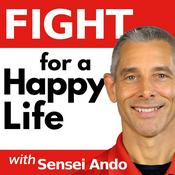
#131: Transformation in the Martial Arts [Podcast]
15/08/2026 | 25 mins.Welcome to Episode #131 of the Fight for a Happy Life podcast, “Transformation in the Martial Arts.”
You’re a good student, right? You’re always searching for new techniques, new exercises, new ideas, and new information. But there’s something you should know—
You might be wasting your time!
That’s right! It took me a long time to figure out that knowledge isn’t power… and neither is action. Real power only comes when you allow knowledge and action to CHANGE you.
The martial arts should offer you more than just a list of fancy moves. At its best, training should offer you a method of personal transformation.
Instead of asking, “What do I want to learn,” start asking, “Who do I want to become?” Answer that and your training might change, too.
Check out the full discussion below and let me know what you think!
You can LISTEN to “Transformation in the Martial Arts,” by hitting PLAY below.
Play the audio podcast below… or download to your device.
Subscribe on iTunes or Stitcher or Spotify.
To WATCH the video version or READ the transcript, scroll down below.
If you’d like to support this show, share the link with a friend or leave a quick review over on iTunes. Thank you!
Oh—and don’t forget to sign up for free email updates so you can get new shows sent to your inbox the minute they’re released.
Thanks for listening! Keep fighting for a happy life!
Transformation in the Martial Arts
Here’s a video of the podcast. If the player doesn’t work, you can click this direct link.
As always, if you’d like to comment (or complain!), feel free to leave a message here or through my Contact Page.
TRANSCRIPT
Working on it! Give me a day! 🙂
The post #131: Transformation in the Martial Arts [Podcast] appeared first on Sensei Ando.#130: 16 Years to Black Belt [Podcast]
05/05/2026 | 21 mins.Welcome to Episode #130 of the Fight for a Happy Life podcast, “16 Years to Black Belt.”
That’s right. It took me 16 years to receive my black belt in Brazilian Jiu Jitsu. That’s a long time getting tapped, smashed, and crushed!
Am I bitter about it taking so long? Not at all! That’s the road I chose to walk.
You see, the truth is I love Brazilian Jiu Jitsu, but it’s never been my main priority. My #1 martial art is Kung Fu San Soo. Everything else I pursue is intended to enhance that. And BJJ has definitely enhanced my Kung Fu!
So, do I recommend that you train in BJJ, too? Yes, I do! I’ve talked about its benefits before in podcast #34: Facing Death and in this video about sparring. But, of course, that’s just my opinion. You do whatever you need to do to be your best.
Still, check out this podcast anyway. Whether you’re a black belt now or on the road to one, the advice I share in this episode will help you, too.
To LISTEN to “16 Years to Black Belt,” just hit play below.
Play the audio podcast below… or download to your device.
Subscribe on iTunes or Stitcher or Spotify.
To WATCH the video version or READ the transcript, scroll down below.
If you’d like to support this show, share the link with a friend or leave a quick review over on iTunes. Thank you!
Oh—and don’t forget to sign up for free email updates so you can get new shows sent to your inbox the minute they’re released.
Thanks for listening! Keep fighting for a happy life!
16 Years to Black Belt
Here’s a video of the podcast. If the player doesn’t work, you can click this direct link.
As always, if you’d like to comment (or complain!), feel free to leave a message here or through my Contact Page.
TRANSCRIPT
Today, on Fight for a Happy Life, “16 Years to Black Belt”.
Howdy, Ando here from Happy Life Martial Arts. Welcome to episode number 130 of Fight for a Happy Life, the show that believes even a little martial arts makes life a whole lot better.
If you watched last episode, you know that my wife works at home, and she requested that I record these things in my car. Well, today, I’m gonna stay inside, but I am gonna try to keep it down.
But if you see a foot enter the frame here, or a frying pan, that would be her. Who knows, maybe you’ll witness a murder today. Although I don’t think she would publish that. Hard to say.
Anyway, today, I want to make an announcement.
I earned my Black Belt in Brazilian Jiu Jitsu.
Yay for me. Or what’s wrong with you? I say that because it took me 16 years to earn that Black Belt.
I received it from Rigan Machado, the living legend at his Beverly Hills Academy. And yeah, it took me 16 years. Normally, in case you don’t know, Brazilian Jiu Jitsu is an art where it could typically take 10 or 11 years. Most of the people I know, it took them about that long.
If you’re a hot shot on the tournament scene, if you’ve had some wrestling or judo in your background, maybe you could do it faster. If you’ve been injured along the way, maybe it takes a little longer.
In my case, sure, I could say that COVID was one of the reasons for slowing me down. The lockdown definitely put a bump in the road.
It’s also true that I moved to Raleigh. But I did join a Jiu Jitsu school when I was in Raleigh. Shout out to Alliance Brazilian Jiu Jitsu in Cary, a fine school if you’re in the area.
So I kept training anyway I could through that downtime. And once things were completely back to normal, I went back at it. Still took 16 years.
So, again, yay for me and what’s wrong with you? The big question is, was it worth it after 16 years? Are you still going to go?
Yes and yes. Absolutely it’s been worth it. And yes, I went right back to class. Just got back a couple hours ago. I got some people, they got me, we’re back in the cycle.
I’ve talked about the benefits of Brazilian Jiu Jitsu before, back in Episode #24. We talked about the facing death and acceptance of death.
I’ve also made a video on how Brazilian Jiu Jitsu actually helped my striking and takedown games, oddly enough. So you might want to check that one out too.
But today I wanted to try to share four new lessons that I haven’t talked about before, which may or may not help you on your journey in the martial arts or outside the martial arts. Starting with number one, what was number one?
Sign up anyway
Let me be clear. I did not want to take Brazilian Jiu Jitsu. Like everyone else, I saw MMA when it debuted in the UFC, and sure, I was impressed.
I saw a skill set that I didn’t really have. I felt the vulnerabilities of being taken to the ground and doing stupid things and getting choked out or my arm broken. But still, I put it off for a long time.
I was training in other arts. We did train on the ground sometimes, so I thought maybe that’s enough. But it really wasn’t.
And over time, I knew it, and that voice in my head kept saying, do Brazilian Jiu Jitsu, do Brazilian Jiu Jitsu. By the time I was 39, that’s when I started to get serious about it. I went to some seminars with some big names.
I had some coworkers who were already into BJJ, and I rolled with them. I flew out to train with my brother even, who was already into this stuff. I also found Stephan Kesting on YouTube. Shout out to Stephan. He has some great videos and online courses.
And for a full year, I immersed myself in Brazilian Jiu Jitsu, without actually having to commit to it. And over that year, I learned a lot, and I definitely picked up some skills, but I couldn’t stop that nagging voice in my head saying, you really should make this official and go study.
That nagging voice also belonged to one of my friends, Sensei Dorene. Shout out to Sensei Dorene, who was training at Rigan Machado’s Academy. And she just kept saying for months, you should just come join, come join, come join.
And eventually I did. Now, at the age of 40, tying on a white belt and being the bottom of the pile, that’s a big shot to the ego. I didn’t have to go there. I was already making a living as a martial arts teacher. But still, I chose that as an elective to start over in something new. And it was great.
No regrets, of course. Even at 40 years old, thankfully, I was already in shape. I had learned a lot of lessons, I could take some bumps and bruises.
So I found that the process wasn’t as bad as I thought. By the age of 50, I started to notice a bit of a difference, though, between the young, strong, aggressive guys and what I was able to do.
And that’s when the misgivings would start to come in, like, how long do you want to keep doing this? Why are you doing this? Certainly, my wife was always that voice in my head, saying, why do you keep driving over there?
Why do you keep coming home limping? What’s the matter with you? What are you trying to achieve? But I answered all those questions. There was value in what I was doing. I was improving, and so I kept going.
And really, the bigger question is, what’s the alternative? Whatever it is you want to do, what’s the choice? To never do it? To never try? To give it up? I don’t think that’s a great choice.
I think life’s too short. And the sooner you get into something, the sooner it’s either going to start improving your life, or the sooner you’ll know that was the wrong choice and to get the heck out of it.
But at least you won’t wonder about it anymore. Sadly, I have many peers who I’ve come up the ranks with in various arts who’ve dropped out, who have given up, and they can blame their kids or their jobs or their time or feeling older or injuries.
The list of excuses is never ending. But the bottom line is they all dropped out. And honestly, I don’t think they made a great choice.
I don’t see that they’ve replaced the value of martial arts with any other activity. I don’t know what they’re sitting on the couch, as far as I can tell. I think they made a bad choice.
And I’m saying it right to their face, not that they’re watching. But don’t let that happen to you.
My advice, whatever it is that you’re curious about, whatever it is that’s nagging you in the back of your head that you must do, or should at least try, sign up. Are you too old? Do you have the money?
Do you have the time? Will people judge you? Sign up anyway.
That’s the advice. Sign up anyway. Be a grinder. Be relentless. Just keep pushing forward and get in there. If you quit, quit.
It’s the easiest thing in the world to do is quit. The hardest thing is just to sign up. So don’t overthink it. Just go sign up. If it helps, the way I think about it nowadays is–
You don’t have to be the best person in the room to be your best, but you do have to be in the room to be your best. So get in the room.
Sign up. And don’t quit.
Lesson number two.
Focus on skills, not belts
In the beginning, when I started BJJ, I didn’t understand the belt system.
I didn’t care. I was literally going because I felt that vacuum of skill that I wanted to fill. The bottom line was I did not want to do stupid things if I hit the ground. Standing up, I thought I was pretty smart.
When I hit the ground, sure, I could scramble and do my best being a savage, but I knew that somewhere in there I was doing stupid things that would get me caught by someone who actually knew what they were doing.
So my goal going in, literally, in my head I was thinking stop the stupid stuff. Don’t get caught doing stupid stuff. If you beat me in a fight fair and square, so be it.
If you kill me fair and square, so be it. But I don’t want to die doing something stupid. Once I got into the class, I kind of noticed that the blue belts were pretty solid. They were pretty solid. They didn’t seem to be doing stupid stuff. They were beating me.
So I put that in my head like, look, if I could just get to blue belt, however long that takes, let me get to blue belt, and then I feel I will have stopped doing stupid stuff. Let that be my marker. Of course, what happens?
I got to my blue belt, and I was still doing stupid stuff and still getting caught. The vacuum was not full at all. I had not filled anything.
So I said, okay, well, I’ll just keep going. Let me just, I don’t know what the end of this is, but let me just keep going. Years pass. I think I’m getting better, but then again, I think I’m not. By the time I’m awarded a purple belt, I’m still doing stupid stuff and getting caught. All right, I’ll just keep going.
Maybe brown belt is the answer. No, no, it wasn’t. Brown belt, stupid stuff, getting caught. And now, a week old, I’ve received my black belt. Am I overdoing stupid stuff? Absolutely not. I just tapped today. I don’t think that ever ends, at least for me. I’ll be stupid forever.
Degrees of stupid, perhaps I’m less stupid, and certainly I’ve learned how to make new stupid mistakes as opposed to the old stupid mistakes. But there’s always something to learn, which is why, if you’re focused on skills, you’ll always have a good time. You’ll always feel that it was worth going to class.
It’s easy to get distracted by belt drama, or title drama. Why did that guy get a belt and not me? I’m better than him. Didn’t you see me beat him? How did that guy just get a belt? He hasn’t been here as long as I have. He doesn’t care as much as I do. That guy’s a jerk.
It’s so easy to get caught up in that kind of thinking, and it ruins the whole experience. So remember why you signed up. You signed up anyway, right? What did you want? You’ve got to keep that in the front of your head at all times so you don’t get pulled into the life’s not fair routine.
Focus on the skills, and I think you’ll always be happy. Let me ask it this way.
Whatever martial art you may be in right now, if there were no belts, if there were no titles, would you still show up to class?
No uniforms, no belts, would you still train? In my opinion, if your answer to that is, maybe not. No, I don’t think I would. Then you should do something else. This martial arts is just not for you. You’re there for the wrong reasons.
That’s judgmental, I know. Hey, if you just want to get out of the house and do your thing, have some fun, you made some friends, you know, please go. I’d rather that you train than you don’t train, honestly.
But at least be honest about why you’re training and what your goals are. Don’t pretend like you want to be a really good teacher someday or you want to be the best you can be at martial arts.
Just say you have a good time hanging out with your friends. Just say you like having a workout that’s a little different than a treadmill. Nothing wrong with that.
Do your thing, of course. But just be honest about it. If you’re not, then I don’t think you’ll ever actually be the best version of you.
If you really think that you’re there for the skills, but you’re not, you’re there for the drama, you’re there for the fun, you’re there for the workout, you’ll never be the best version of you. Because you’re not, your goals don’t match your effort.
So you’re asking the wrong questions, you’re looking at the wrong things. It’ll be a muddled experience. So be honest.
Number three, third lesson.
Go to class anyway
Go to class anyway. Nothing is easy. There have been a lot of ups and downs on this over these 16 years. Okay, some days you love it. I loved it. Some days I hated it. Some days I couldn’t wait to get to class to try something.
Some days I absolutely did not want to go, see that guy again, have to put up with that person again. Sometimes I was hurt. Sometimes I was healthy. Sometimes I had a lot of enthusiasm. Sometimes I was full of defeatism. I’ll never get this. I’m terrible. I’m too old. I’m too slow. I don’t have the time to practice all these things. Sometimes walking in with confidence. Sometimes plagued by insecurity.
I think this is the nature of all learning. I think that’s just the way it goes. It’s a roller coaster. You gain a little. You hit a plateau. You drop a little. You gain a little bit more. You plateau for longer. You drop a little.
It’s just this roller coaster. But you should know by now that that’s it. That’s for everybody. It’s not just you. It’s not personal. The universe isn’t against you. This is the learning process. And the fact that most people start dropping out on the downs, on the injuries, on the defeated feeling days, that’s what makes rewards so much more fulfilling. Because you stuck it out through the dark times, through the times when there was no motivation other than your drive, your routine, your discipline, to just keep going.
That reminds me of that quote from Woody Allen. “80% of success is just showing up.” Just show up. I don’t care what mood you’re in. I don’t care what state you’re in. I don’t care what’s going on in your life. Just show up.
When you hate it, just show up. You’re out of money, you’re out of time. You’re out of enthusiasm. Just show up. When you show up, good things happen. Surprises happen. Breakthroughs happen.
Sitting on the couch, not a lot of breakthroughs there. Not a lot of rewards sitting on the couch. So, go. Go to class anyway. Whatever excuse you have in your head, whatever. Go to class anyway. And be patient with yourself. You have to give this time.
I gave myself 16 years. I didn’t know it was going to take 16 years to get this part, get this far, but it did. And I’m glad I gave myself this time. I’m glad I was patient with myself. I’m glad I didn’t let the dark times kick me out of the game. Go anyway.
I promise. If you keep going, good things happen.
Number three. What are we on? Three? Four? What are we on? Four? I guess there are five, actually I have five. Fourth lesson.
Count your blessings
This one really hit me late in the game. I’m 56. So this last six months to a year, it’s become increasingly clear to me how blessed I am to even pursue this goal in the first place.
You may not have time. I had time. You may not have the money. I had just enough money. You may not have had a teacher. I had a teacher. And the teacher kept the school open and kept showing up. So I had consistency. What a blessing.
I’ve had good health, more important than anything. I’ve had good health. I haven’t been taken up by an injury, knock on wood. I’ve been able to keep showing up and keep trying. I didn’t really think about that in martial arts in teenager, 20s, 30s. You know, as I started getting my 40s, once in a while it occurred to me.
But definitely right now, I’m just feeling more blessed than ever that I’ve had this opportunity to pursue this. I have to presume that you have some blessings too.
If you have the time to be listening to this, presumably you have some time that you can work on yourself as well. You can train a little bit. You can watch a video. You can wrestle around with a pillow on the floor. You can maybe get to a class. Even if it’s once every couple of weeks, that’s better than nothing.
Chip away. Count your blessings. Really be grateful for what you have. And use every bit of it while you can. Life may change. It may change for me.
I may not have the time, the health, or the money, or the opportunity. So I’m just so happy that I stuck with it this far. Whatever you have right now, milk the hell out of it.
Use everything you’ve got. The bottom line is–
There’s probably someone with less than you who’s doing more than you.
That thought haunts me all the time. Someone who’s not as blessed as I am is being far more prolific and productive than I am. So get in there. Use what you got.
Alright, I think this is the fifth lesson. My math is all screwy. This is the fifth lesson. The fifth lesson is–
Write your own adventure
You know, I probably could have gotten the Black Belt faster in Brazilian Jiu Jitsu if I had made it more of a priority. I may have joined a different school where maybe the standards weren’t as high. I could have attended more classes at the school that I do go to, for sure. I could have competed. I could have gotten a tattoo that says “BJJ for life” to show how serious I was.
There are a lot of things I could have done to speed up that timeline. But you know what? For me, BJJ, like I said, has never been my main art. It’s never been my number one priority. It’s always been a supplement to the other arts that I love and the other arts that I’m already training in. So I was happy just to make some time for Brazilian Jiu Jitsu.
So in a way, part time art, part time rank. I’m totally fine with that. Someone said that to me back when I was in Aikido classes. I did Aikido for three years when I was younger. And I felt a little bitter at that time because there were people who had started at the same time I did, went to the same camps.
But they might have gone to a couple more classes than I did on the regular. And the teacher told me, he said, well, part time art, part time rank. Because at the time I was also in Taekwondo, which had my full attention. Aikido was something on the side, my supplement, which I enjoyed very much. But to be fair to the art, I was not 100% in. So same here.
I have no bitterness about it. Fact is I was already a Black Belt. I’ve already got Black Belts in Taekwondo and Shotokan and Kung Fu San Soo. So coming in, that’s why I didn’t care about belts so much in BJJ. I was literally there for the skills that I felt I was lacking.
For me, the Brazilian Jiu Jitsu was an attribute builder. It made me more comfortable with proximity, pressure, breathing under pressure, stress, being able to manage stress, pain of a different kind than just getting hit, but being squeezed and being crushed, being able to solve physical puzzles on the fly.
For me, I treated, and still do treat Brazilian Jiu Jitsu like lifting weights or going for a run. When you go for a run to work on your cardio, that’s not martial arts in and of itself, but it enhances my training in martial arts. I lift weights nowadays, made that part of my life again. And that is not martial arts, but it enhances my ability to train in martial arts.
So I see Brazilian Jiu Jitsu the same way. It is not my A-game. It’s not my first plan in a self-defense situation. But the skills and the qualities that I’ve developed training in Brazilian Jiu Jitsu absolutely have enhanced my self-defense skills. Which is why I would recommend it to anybody in the martial arts.
Point is, I did it my way. Paul Anka, Frank Sinatra, I did it my way. It may have been a slower path. It may have at times been a frustrating path if I let myself get caught up in drama. But the fact is, I never left a class of BJJ unhappy.
I was always glad to make that drive. Even if I was tired, even if I was hurt, even if I was being a baby, I was always happy. So, march to the beat of your own drummer.
Write your own adventure. The real trick here is to play your game. Whatever martial arts means to you, however it fits into your life, whatever skills it’s giving you, that is your story.
No one else is a duplicate of you. So you cannot possibly completely relate to anyone else in that class. Someone else wants to be a champion, they’re going to have a lifestyle that’s suited for that.
Someone else is there to be a teacher someday, that’s going to be their path. Someone else is just trying to get away from their kids a couple of times a week. Let them do that.
You just focus on your adventure. Write your own adventure. Listen to your own drummer.
I say again, the trick is to play your game, not someone else’s. If you’re still alive, you still have goals, you still have some fire in your belly, then get back in that game. Play the game as hard as you can.
Just play your game. That’s not just the secret to winning. That’s the secret to a happy life.
Okay, that’s all for now. I hope that sharing some of these thoughts for my journey will help you on yours. That’s why I record these things, you know.
If you’ve got something to share, hey, maybe you can help me. Please leave me a comment, or shoot me an email over at ando at senseiando.com. I would really appreciate the help.
Until next time, smiles up, my friend. Let that smile be your shield and your sword. Keep fighting for a happy life.
The post #130: 16 Years to Black Belt [Podcast] appeared first on Sensei Ando.#129: Laugh in the Face of Death [Podcast]
05/02/2026 | 21 mins.Welcome to Episode #129 of the Fight for a Happy Life podcast, “Laugh in the Face of Death.”
How do you prepare to face the day? Do you have a morning routine to be at your best?
Whether you rely on exercise, meditation, red light therapy, or coffee, once the day starts, most of us feel our power being sucked away… or given away. The insults and threats of daily life are relentless in their attack on our optimism, good will, and best intentions.
But wait! Isn’t that what training in self-defense is all about? To defend our health, safety, and good vibes? Yes! We must become masters in managing our minds and emotions to maximize our power and optimize our chances at success in every realm.
In this episode, I’ll share three simple actions you can take right now (and keep taking all day) to boost your fighting spirit. I’ll also discuss the advantages of facing threats with a smile and why laughing in the face of death is a smart strategy.
Of course, I’ll be interested in what you have to say, too! If you’ve got a trick to optimizing your attitude and defending your heart, let me know!
To LISTEN to “Laugh in the Face of Death,” just hit play below.
Play the audio podcast below… or download to your device.
Subscribe on iTunes or Stitcher or Spotify.
To WATCH the video version or READ the transcript, scroll down below.
If you’d like to support this show, share the link with a friend or leave a quick review over on iTunes. Thank you!
Oh—and don’t forget to sign up for free email updates so you can get new shows sent to your inbox the minute they’re released.
Thanks for listening! Keep fighting for a happy life!
Laugh in the Face of Death
Here’s a video of the podcast. If the player doesn’t work, you can click this direct link.
As always, if you’d like to comment (or complain!), feel free to leave a message here or through my Contact Page.
TRANSCRIPT
Today on Fight for a Happy Life, Laugh in the Face of Death.
Howdy, Ando here from Happy Life Martial Arts. Welcome to episode number 129 of Fight for a Happy Life, the show that believes even a little martial arts makes life a whole lot better. Let me ask you something…
How are you feeling? Are you feeling 100%? You probably don’t, and you’re probably at the age where you’ve realized you’ll never feel perfect again.
There is no such thing as 100% anymore. Maybe you woke up with a fever today. Maybe you’ve been getting punched in the mouth a lot lately.
Maybe you wanted to record a podcast and your wife can’t stand the sound of your voice droning on and on, so you’ve come out to the car instead.
Whatever your circumstances, please know we must optimize ourselves to get the most out of what we’ve got.
If you want a happy life, achieve your goals, feel fulfilled, we must try to come at it with everything we’ve got if we’re going to have any chance at all at success.
It’s also true in the realm of self-defense that if you’re being attacked, we can’t focus on what we don’t have. We’ve got to make the most of what we do have to survive. Now optimizing sounds fancy, but really how can you optimize yourself?
Let’s make this very simple. First fix your posture. Whatever you’re doing right now.
Can you sit up a little straighter? Can you stand up a little straighter? Can you make yourself a little more aligned and comfortable?
Two, can you take a big deep breath? Just take it. Everyone knows they should, but when was the last time today you took one?
So take a big breath. Number three, add a little smile to your face, even if it’s half your face. Add a little smile.
Find something you can be grateful for, something that makes you feel good, or, heck, if you have to fake it, just fake it. Make a smile.
Now those three little things, if you just sat up, you took a breath, and you added a smile, I’ll bet you felt some percentage of improvement in your state of being. True?
That little boost, it’s fascinating to me how little it takes to head us in the direction toward success instead of failure. Optimizing is not fancy. It doesn’t have to be. So, give yourself that quick little boost, feel a little bit better, and know that you just increased your chances at success and survival.
It makes me think of an interview I saw once with Tom Brady, the NFL quarterback. And the Patriots, I believe, were getting blown out in the first half of the game. They came up for the second half, however, they rallied and came back to win the game.
So, in the post-game interview, the interviewer asked Tom Brady, what was the conversation like during half time? How did you change the plan? What was said?
And Tom Brady said, nothing changed. There was no new game plan drawn. What they needed to do was execute better.
And I thought that was a fantastic concept, which is why I’m sharing it with you. Sometimes we doubt our systems, we doubt the mode, we doubt the information, when really it’s just, we have to be better.
We have to just do the, execute the plan better. You already know the answers. You already know how to get what you want.
You just have to double down on doing it the best you can. This also calls to mind to me the phrase, Laugh in the Face of Death. I don’t think that means you’re crazy.
If death comes, the threat comes. It doesn’t mean you’re happy to see it. I would like to avoid threats whenever possible. However, if you have this choice of facing death, of facing a threat, tense and fearful, and then trying to react from that state of being, or laughing, relaxing, letting go of the stress and the fear, and then being able to face the threat in that state of mind, I think your chances are much better at surviving, don’t you? That’s the idea here.
I think for self-defense, for succeeding at your goals, and for laughing in the grim reaper’s face, we need to just make this a habit, that we optimize ourselves, that we don’t allow ourselves to curl up, tense up, and give up.
The good news is, none of this is very difficult. Our quick little boost at the top here, that’s free, and it’s easy to do, and you can do it anywhere without even drawing in any attention to yourself. Just sit up, take a breath, and smile.
Yet, how often do you do that? How often do you actually polish yourself up a little bit? I don’t think it’s that common.
I think we get caught up in the day’s activities, we get caught up in the dramas, and we just get pulled down that river, and then we’re treading water for most of the day. Doesn’t start off that way. I think we wake up in a very different state.
I think we wake up full. I think we wake up with an opportunity to plug into a routine. Maybe you have, you take a shower, maybe you exercise, maybe you meditate, maybe you pray, maybe you have a cup of coffee, maybe you have a few minutes to yourself, and you tune up, you say, okay, this is me, I’m in my full state right now.
And then life begins. And piece by piece, you get pulled apart. Just as I think it’s crazy at how little things can make you better suited for success, the flip side is true too.
Daily Power Drain
It’s absolutely nuts how quickly you can give your power away or see it taken away. So quickly, you can go from feeling great to feeling lousy. You can go from feeling confident to feeling helpless. You can go from feeling very clever and capable to feeling like you’re an idiot.
I don’t think it takes much to slip down that slope. So we have to be on guard.
We wake up. We create a routine. We feel full. We feel powerful. We feel ready to face the world. Here it comes. Life pains. Just life. Family pains. Friend pains. Stranger pains. Pains from yourself. All of these stimuli now are going to start coming at you.
And each one is like a little punch. Each one landing. Some you can slip. Some hit deep. Some graze you. But you’re in this fight to maintain your optimal state for as long as you can.
What else takes away from your power? Competing. Comparing yourself to other people. That can rob you of your joy and rob you of your feeling of worth. Legacy pains. That’s a whole chapter.
Things that you’ve been holding on to your whole life. Something your family did to you when you were a kid. Something a friend said to you when you were in high school. Something a teacher did to you that wasn’t fair. There are so many things.
Some things that you failed at in the past. Things that you did in the past that you can’t forgive yourself for. All of these things are sitting there in your head, in your bones, in your muscles. But these aren’t the only beliefs that can be holding you back.
In addition to feeling that maybe you’re not that attractive, maybe you’re not that athletic, maybe you’re not that smart, maybe you’ve got the belief that you’re just not that good at mathematics, maybe you believe you don’t have a head for money.
You have all of these beliefs that could be just sitting there chipping away at your capability to do something good for yourself. You may have just an operating system belief that life is supposed to be fair and yet you keep finding that it’s not.
You may have a belief that justice should prevail and that it will prevail and yet you’re flabbergasted when you see bad guys winning and good guys losing every day.
You might have a belief that your pain and your suffering is a personal experience that no one else is going through and therefore you have a belief that you’re alone, that you’re isolated, that there is no one to help you.
All of these beliefs are crippling to your future. How can you succeed? How can you survive if you’re burdening yourself with all of these negative beliefs?
Stop Wallowing
The worst of all, perhaps, I think, the worst possible human tendency, and maybe it’s just me, is giving up even the desire to feel optimal. When you actually allow yourself to wallow, you don’t mind it.
At some point, you’re tired, you’re grumpy, or you’re angry, you’re upset, and you kind of like it. You just want to feed on it. You just want to sit with it for a while, and you give yourself permission to just be grumpy and angry.
And you know you could probably change that state. You know you could go for a walk. You know you could watch something funny on TV. You know you could make yourself a cup of tea. You know you could sing. You know there are things you could do to feel better.
You just don’t want to anymore. I think that is the most dangerous human tendency of all. Our ability to be able to keep moving and thinking positively and finding hope in our next step is paramount to a happy life.
Every moment we spend wallowing is a moment lost. It’s an opportunity opportunity lost. Anyway, you woke up in a full state.
You put yourself in a great state. Now you’re getting punched. You’re getting pieces of you pulled away.
Some of this power you’re giving away. Maybe by two or three in the afternoon, your neck is tighter. Your breathing is shallower. You’re less optimistic. You’re starting to go down the hill of negativity. And by the time you do get to the end of the day, perhaps it’s a relief.
You slide into a couch, you slide into bed, and you’re just happy that it’s over. Tomorrow maybe fight again, but today you’re writing off as a loss.
By the end of the day, you might have a routine as well to try to regain some of what you’ve lost. Maybe now that shower, maybe now some exercise, maybe now the prayers or meditation, maybe now a stiff drink.
We all have different routines, but there’s usually some type of self-medicating that’s going to come in here to try to restore what has been lost. It’s a big job, okay? All of this is a big job to try to stay optimal in a world that is not ideal.
It’s a big job. How do you do it? The way we started. Small adjustments, little things done continuously.
If the threats are coming in non-stop, then our restoration has to be non-stop.
We can’t let it get ahead of us and start tipping the scales so much so that you can’t get it back. All these little things don’t matter anymore. We have to be vigilant. We can’t let the bad stuff accrue.
This is about prevention. The earlier in a fight that you fight back, usually the easier it is to get out of it. As soon as a hand is coming for your throat, that’s the easiest time to knock that hand away.
By the time hands are on your throat and you’re pinned to the ground, it’s more difficult. You have to do more to get out of that situation. Prevention is everything.
During the day, little things that you can do, in addition to sitting up, taking a breath and smiling, come in the form of either external tools or internal tools. External tools, an energy drink, taking supplements.
Maybe you do a cold plunge or a sauna, maybe red light therapy. There’s so many trendy cool things you can do nowadays. Go stare at the sun.
All of that stuff is great, but they’re all not always available. You’re not always able to access all of them, and the results that you’re going to get from any of them are temporary, of course.
So I tend not to rely on external tools to make me happy or to restore my sanity. I do rely more on internal tools because they’re within me. The posture, the breathing, the smiling and focusing.
Being very clear in my head about what I want out of the next moment, out of the next day, the next week, the next month, the next year.
Trying to keep my focus on where I want to go, not on all the things that I don’t want and all the places I don’t want to go. Your brain can only handle so much input at any given time.
So if you’re not feeding it what you want, it’s going to fill itself with things you don’t want. You have to manage your own mind. That is huge.
Also, in the School of Internal Tools, yeah– mantras, war cries, some little saying that you can repeat to yourself to keep you focused on your goals. What do you need to stay in the zone, to be in your beast mode? What do you need? What would you like to hear?
I’ve changed mine so many times over the years depending on what’s going on. But one that’s been very powerful as of late is, I’m still here.
I’m still here.
If you’re still here, then you’re still alive. You’re still functioning. You still have a chance. You can still take action. You can still change things.
So I think that’s a really good one. Particularly when I’m on the ground underneath someone much bigger and they’re pinned down on top of me. I’m pinned down and they’re digging in for a choke or whatever they’re doing.
It’s so easy to not want to be there. It’s so easy to let your mind disappear, to close and just pray it all goes away. But if you can say, yeah, I’m still here. Yeah, I feel you up there trying to get that choke, but I’m still here. I’m gonna make that hard for you. Yeah, I feel you up there trying to crush me. I can’t breathe, but I’m still here.
I find that one to be very, very inspiring. You’re not dead yet. It’s coming, but you’re not dead yet. And while you’re still here, you can still fight.
By the way, about this smiling business, I should go back to that for a second. We talked about wallowing, wallowing in your sorrow as well. Yeah, it’s all well and good to say, put a little smile on your face. Or I would even extend that to put a little smile in your heart. Put a little smile in your belly. You can put a little smile, that sensation of a smile, anywhere you need it.
Particularly if you have a pain in your body. Put a little smile there. If you know, you know.
But what if you really don’t have any reason to smile? You’re just having a terrible day or you’re in a horrible circumstance. I’m going to tell you that you should fake it.
You should absolutely fake it. The longer you wallow, as we already said, the more opportunity is going by. And I would suggest to you that those periods of time when you don’t want to be optimal and you like wallowing, you’re kind of being a spoiled brat. Me too.
When you’re wallowing, please remember that that’s a luxury, that you have the time and the space to wallow. You want to just wrap yourself up in a robe and pout in the corner. That’s because you’re able to do that.
You apparently are, you have a lifestyle that allows you to do that. In an emergency situation, you wouldn’t have that luxury. If a shark is eating you, you can’t say, oh, well that bite really hurts.
I want to just sit with that for a second. Well, too late, you’re being thrashed and eaten. So, please recognize that when you give in to the wallowing, you should minimize that, because it really is an abuse.
It’s a horrible way to treat a gift. You have the gift of time and space where you could do anything you want, and you’re choosing to do nothing but feel sorry for yourself or wallow. What a luxury, what a waste of a luxury. The luxury is the time and the space. You should use that for something better.
Yeah, I’m judging. Yeah, I’m judging myself. And if you see a bit of you and me in that, then you know what I’m saying. So just recognize that if you’re blessed with the time to wallow, that’s the very reason you shouldn’t.
Laugh Before You Feel Happy
Okay, let me wrap up this episode with a quote. In preparing for this episode, a long-time listener, a long-time friend of the show, Ingrid. Hi, Ingrid. She sent me a quote that is just wonderful and worth sharing.
Here’s the quote. This is from 1688, from a philosopher, a writer named– pardon the accent– Jean De la Bruyere. He wrote something called The Characters. And in that work, he wrote,
One should laugh before being happy for fear of dying without having laughed.
That’s everything I’m trying to say here today, folks. Laugh in the face of death. Laugh before you have a reason. Smile, even if you have to fake it. Because, the reward is, you change how you feel. You change how you move, you change how you think, you give yourself the most power you could possibly have. What’s the alternative?
Frowning, being neutral, being detached. I don’t think those states of being will get you as far, in any context. So, smile for no reason.
Laugh before being happy. These are ways that you can optimize yourself for full performance. If you’re tense, you’re going to act tense. You’re going to make decisions from a tense place. If you’re fearful, you’re going to be acting fearfully. You’re going to be making decisions from a place of fear.
That is not going to help you in life, and it’s not going to help you in a fight. But if you follow Jean De la Bruyere’s advice, then I believe we’re optimal. The trick is not to wait for death, to laugh. Make it part of your routine, to laugh because that’s who you are. Smile because that’s who you are. That’s the fight, fight for a happy life.
I’m not saying any of this is easy. I’m not saying there aren’t times when wallowing feels natural. But we have to fight that because smiling is natural too. Laughing at life is natural too. So don’t limit yourself to just the negative naturalisms. Go to the positive naturalisms.
Give yourself a smile, give yourself a laugh. If you can stay optimal before life comes, while life is coming at you, and after life came at you, I think that is perfect. I think that is as perfect as we can be. And whatever we get out of that, certainly not a guarantee of winning, certainly not a guarantee of succeeding or even surviving. But it’s our best chance, and that feels pretty good. That makes me smile all on its own.
So sit up, take a breath, add a little smile, and then focus on what you want. If you do all that, I think you’ve got a good chance of getting it.
Alright, it’s really hot in this car, and I’ve said what I wanted to say.
So thank you from the bottom of my heart for dropping by, and I’ll see you next time. Until then, smiles up, my friend. Let that smile be your shield and your sword.
Keep fighting for a happy life.
The post #129: Laugh in the Face of Death [Podcast] appeared first on Sensei Ando.#128: The Nuts and Bolts of Martial Arts [Podcast]
12/12/2025 | 18 mins.Welcome to Episode #128 of the Fight for a Happy Life podcast, “The Nuts and Bolts of Martial Arts.”
Will your martial arts techniques hold up under pressure… or will your skills break apart and leave you lying in a pool of tears?
Here’s the thing—it’s easy to get the BIG things right in the martial arts, but what about the SMALL things? You know…those little details that actually make or break your success? (Is it possible that you don’t even know some of those small things exist?)
The devil is in the details, my friend.
If you want to be effective on offense or defense, you have to look deeper and deeper into the mechanics of your art. Figuring out how all the nuts and bolts are put together takes time. It also requires asking questions, observing others, practicing, and experimenting.
The good news is that if you keep an open mind and stay curious, you will slowly collect the subtleties and nuances that will lead you to your best chance at success.
Join me for a discussion on how to solidify your martial arts training. To LISTEN to “The Nuts and Bolts of Martial Arts,” just hit play below.
Play the audio podcast below… or download to your device.
Subscribe on iTunes or Stitcher or Spotify.
To WATCH the video version or READ the transcript, scroll down below.
If you’d like to support this show, share the link with a friend or leave a quick review over on iTunes. Thank you!
Oh—and don’t forget to sign up for free email updates so you can get new shows sent to your inbox the minute they’re released.
Thanks for listening! Keep fighting for a happy life!
The Nuts and Bolts of Martial Arts
Here’s a video of the podcast. If the player doesn’t work, you can click this direct link.
As always, if you’d like to comment (or complain!), feel free to leave a message here or through my Contact Page.
TRANSCRIPT
Today on Fight for a Happy Life, The Nuts and Bolts of Martial Arts.
Howdy, Ando here from Happy Life Martial Arts. Welcome to episode number 128 of Fight for a Happy Life, the show that believes even a little martial arts makes life a whole lot better. It’s been a little while, it’s great to see you again.
Today, I want to talk about the nuts and bolts of martial arts, the nuts and bolts of self-defense. And, no, I’m not talking about kicking someone in the nuts and bolts. I’m talking about your training, your techniques, your habits.
Are the components of your training, the assembly of what you do, strong and solid, will they hold up under pressure, offensively, defensively, or will it all break apart?
The reason I want to talk about this is because of an incident that occurred to me a few years ago now. You might notice that in the background of some of my older videos, there’s a big red wall and four black heavy bags hanging up.
Now I will tell you that that project made me very proud of myself. I’m not a mechanical guy, but I figured out how to get those bags put up on that wall, so it was a big deal.
With the help of another Sensei, we drilled those boards into the brick wall. I found some wall mounts. We installed those. I had custom bags made, black leather, specific weight, and they came out great. They looked wonderful. And we hung them up.
Kids of all ages loved hitting them. I loved hitting them. Other teachers loved hitting them. Adult students loved hitting them. It was a big success. That is until a couple of weeks went by.
In the middle of a class, I’ve got some kids running a relay race, and a precious little girl went running down one of the rows, and she kicked the bag, she turns around, she starts leaving, and to my horror, the bag detached and just fell. BOOM!
Thankfully, she was not hit, but I was in shock. Shut down the drill, got the kids away from the bags, finished the class, and then afterward, had to come over and face my failure, grabbed a step stool, and got up and took a look at the mechanism.
Just like most heavy bags, the bag had a carabiner on it, the carabiner attached to a metal ring, the ring was attached to the wall mount with a bolt and a nut. Somehow, the nut had worked its way to the end of the threading and fallen off and let the whole bag go. So I figured, being not a super mechanical guy, Oh, I just didn’t tighten them enough when I first installed them.
So cranked, cranked, cranked as much as I could, made them as tight as I possibly could, and thought, there, done deal, we’re okay now.
Nope, nope. Couple weeks later, the same thing happened. A bag fell off. Again, thankfully, no one got hurt. But this time, I was really upset because I couldn’t figure out the problem. I hate that.
So this time, I figured, well, it’s taken about two weeks for this to happen. This just needs to be a regular maintenance task. When you come in for the day, check the bags and see where the nuts are and tighten them up every day. I guess it’s just a design flaw in the wall mounts. That’s what I thought.
But of course, this was always a stress. If I’m sick or if I was working at a different location, I didn’t want to depend on everybody trying to always check for those things because there’s always something that falls through the cracks. And I didn’t want that to fall on someone and crack their head.
So I happened to mention this problem to my brother, who is more mechanical minded and has some background in construction. And he didn’t think twice. He just said, Oh, you need a spring washer. What? A spring washer or a split lock washer. Different names.
So all it is, it’s just like a regular washer, right? A little flat circle, but it’s got a cut in it and it’s got a little twist. So it looks like the first coil of a spring. Now, when you put that spring washer next to a nut, it pushes the nut and tilts it a little bit. So it creates some friction on the bolt.
So now, when the bag is shaking and the mount is shaking, the nut doesn’t start spinning and moving down the threads. What? It’s that simple? A tiny little piece of metal? It didn’t even cost me a dollar to get four of them. Super cheap, super easy to install.
And would you believe it? We never had that problem again. That simple.
But what a lesson. You hear about how the devil is in the details. And boy, if this wasn’t a great example of that. All the money and time that I spent putting those bags up on that wall, all of the drilling and pounding and all to be undone by just this little omission of a spring washer. Of course, now I know.
Engines and washers and dryers and blenders, all these things that vibrate and shake, have some type of anti-vibration technology in them. So, in case you didn’t know, now you know. But this brings the question back to my martial arts training.
Because I realize how little it takes for your techniques to transform into something very successful or to fail completely.
On the offensive side, you may have a really strong punch, but if the pressure’s a little off, your alignment’s a little off, you can break your wrist when you hit something, right?
If you’re actually fighting with someone, these small adjustments in your footwork or your distance can make your punch completely miss. And of course, it works on the defensive side too.
If somebody grabs you and you can shimmy or wiggle just so, you can get away. If you don’t, you’re getting caught. So these little tiny details, these nuances, the subtlety is really what makes or breaks your technique.
So what about your technique? This is what we’re talking about. How would you judge your technique?
I can tell you that when I work with kids, for instance, they get cocky really fast. They don’t seem to understand nuance in any way. And of course, how could they?
The other day, I was working with a student and he’s been a little behind on earning his next belt. He just hasn’t been putting in the work and it shows. So after class, he was whining a little bit like, why can’t I be signed off?
And I started a couple of little things I needed him to fix. Amongst them, very simple, when he makes a fist, his thumb is sticking out.
And I said, look, you know, you’ve been here almost two years and this is not a secret that, you know, I want you to make a strong fist. I don’t want your thumb sticking out. And right in front of me, he fixed it.
Okay. I said, good. I said, now open your hand, show me another fist. He made a fist. I said, good. Now that’s what I want to see. And he replied, Can I get my belt now? No appreciation for the time to build a habit.
Of course, I said, Well, no. Now you have to come back and show me you can do that on your own, that you’ve done the work to make it automatic. I shouldn’t have to tell you this.
So from a kid’s standpoint, there’s probably a large gap between hearing information, copying the information and actually embodying it, making it part of you. Of course, I hope that’s not part of my training.
I presume there are some blind spots, things that I think I’ve got down, when actually there are some details that I’m probably missing.That’s the addiction to constantly seeking out new teachers and new videos and new practice, because there’s always some new little angle that I haven’t considered before. I presume the same is true for you.
I think most students were all pretty good at the big stuff. You see a teacher throw a punch, a kick, do a takedown, do a submission, and you think, oh, I see what you just did there. And it’s only over time of years of going back to that technique, and it fails, and it fails if you’re honest with yourself, if you have honest training, where you’re forced to finally figure this out and say, how are you making this work, but I can’t?
And I think that’s a wonderful process of these tiny little nuances. Just today, I was working with my own teacher. It was a private lesson. And we spent an hour and a half on the subtleties of gripping cloth and where the pressure in the fist is, and how to weaken it, and how to strengthen it, and what angles are the best for holding something.
And that might sound like absolute geek nerd talk, but if you’re a real martial artist, you understand the importance of that kind of study.
So, on the learning side of things, I hope that you never stop asking questions, you never stop observing other people performing the techniques that you want to perform, and I hope that you never stop experimenting in practice.
Just keep that open mind. Don’t be like a child who sees it once or twice, does it once or twice, then just stops and says, yeah, I got it. It’s rampant.
Adult students, I see that all the time. You show a technique, they do it once or twice, then they sit back and wait for something new to come up. They don’t want to drill it, they don’t want to repeat it.
They just figure, yeah, I know that already, I got it. Fools. Let’s not be one of them.
Now on the defensive side, you might find it interesting that back in the day, when I first started my martial arts training, of course I was quite taken with Bruce Lee, the Tao of Jeet Kune Do, and when I learned that that meant the art of the intercepting fist, I kept thinking about that word of intercepting.
I thought that was interesting, how a technique, a punch might already be coming your way, a choke is already being set in, but that doesn’t mean it’s going to be finished. There’s some wiggle room in there. There’s a gap in time.
There may be a gap in distance or pressure that allows you to reverse it, escape it, which then should become the main point of your study. I don’t want to get punched. I don’t want to get locked up.
So as I kept practicing with that idea in my head that you could intercept a technique, it occurred to me how easy it is to thwart or stop someone from finishing what they want to do. And I knew that for sure, not in a cocky way, but because I knew how hard it was for me to do it.
I saw a hip throw very early on in my training, but in sparring, very hard to find a hip throw. Getting punched and kicked, trying to get close, get grips, get the angle to make that hip throw happen seemed impossible to me.
So it became sort of my confidence, my shield, that if I could just thwart what you need, then there’s no way you can ever get me. So that meant my learning, I didn’t have to be great at throwing punches, I just needed to know how a punch is thrown, what you’re targeting, and then screw up your distance or screw up your angle and take that away from you.
I don’t have to be great at judo throws, I just need to know what grips are you looking for, how close do you need to be, and how do I either break that grip or drop my weight or change my angle to take that throw away from you.
So there was a couple years there where I thought if I ever named my own martial art, I would call it the art of the thwarting fist. Just a variation I guess on the intercepting fist idea, that there was always wiggle room to stop someone from hurting you. I would like to think that’s still true today. I think that strategy works great.
This is kind of old school thinking when I first heard about Brazilian Jiu Jitsu. It wasn’t that you were trying to win or beat the other person. I just needed to stop them from beating me. That was another way to define a victory. I don’t need you to be bloody and unconscious. I just need to be able to go home and not be bloody or unconscious.
So that type of thinking was definitely worth meditating on. Now, I do think there are situations where you need to end things and someone needs to be stopped definitively. I don’t think you can always run out the clock or wait for help. I don’t think that’s a great strategy. I think it should be an option in your training, but it can’t be the only option. You do need to know how to finish a fight.
So that’s the only little extra bit of wisdom on that. So the bottom line here is that the devil is in the details. And whenever you think you know what you’re doing, back up a moment and take another look at it.
Increase the pressure, increase the challenge. If no one person can beat you in sparring, then spar two people. If no two people can spar you successfully, then give them a knife in their hand. Keep increasing the pressure until you figure out where that little nut is slowly shaking off and then you fall apart. It’s better that you find those things out in your training than in the real world.
And speaking of the real world, of course this thinking is going to apply to every part of your life. It’s always amazing to me how the little things make the biggest difference in every part of your life.
You could have the greatest car, but if you’re not checking the air pressure in those tires, your braking is going to be off, your steering is going to be off, your gas mileage is going to be off. It’s a small thing, and yet it’s a huge thing.
The way you treat your spouse or your partner, if you’re unkind, if you’re quick-tempered, if you’re impatient, if you can just stifle those things a little bit, it makes a big difference.
How much time you make to exercise, how much time you make for self-care, how much time you can just add for a little recovery before you work out again, how you eat, when you eat, how much you eat.
Every little thing you do adds up to this big, big result. And I just hope, as you get older, as I get older, we never stop looking for the little things. Especially as we get older and you have maybe less energy or less ambition.
It’s nice to know that little things can still change your trajectory towards success. I know right now in my sparring or my wrestling, I don’t have to be faster and stronger all the time. Bigger guys, younger guys, trying to impose their will on me.
I’m very happy to be in a place now where I know the power of small adjustments, of taking a little breath, of staying calm. All of these little things that when I was younger, I didn’t think made much of a difference. But taken together, a bunch of little things add up to one big thing.
You’re 50 pounds heavier than I am. You’re 20 years younger than I am. But I make better decisions. I can feel more. I’m more sensitive. I’m more creative. I follow up sooner. I don’t freeze up as much.
All of these little things add up to something that can equate to your muscular superiority. If you don’t believe that, I want you to believe that. Because otherwise, your training is going to always be depressing.
If you’re still trying to kick and punch as hard and as high as you did in your 20s, and now you’re in your 50s or 60s, you’ll always be disappointed. Because you’re not working on the skills that can still be developed. If anything, they’re getting worse, right? That’s just nature. I’ve accepted that. I hope you have too.
I’ve accepted the pain in my joints, arthritis. I’ve accepted some limitations and the stiffening up. I still work out, but the way I work out is to focus on the little things that allow me to handle weights a little bit better, that allow me to breathe a little bit smoother, that allow me to see a little bit more.
And I’ve been very happy on that path. So I invite you to follow me or lead me or get alongside of me on that same path. The path of the details, the path of the little things. This is where the spring washer lives. This is where you fill the air in your tires. You wash the dishes right as you use them. You don’t let them pile up.
You make those little investments in the equipment that you need to make your life and your jobs easier. It’s worth it. You’re worth it.
So that’s all I wanted to get off my chest today. I’ll be back with a lot more later. But for now, keep learning, keep moving. Don’t be undone by some small oversight, by some small piece of information that you could have had, but you didn’t get, because you didn’t ask, you didn’t try, you didn’t see it.
There’s so much that you can add to your repertoire. There’s so much that you can still add to your skill set. But only if you’re just humble enough to say, yeah, I don’t know everything.
Yes, there’s so much more room for me to learn. Keep learning, keep moving, and that’s going to make you solid. That’s going to hold up under pressure. And that’s what’s going to lead to a happy life.
Hey, if you’re still here, thanks for hanging out till the end. Let me know what you think down in the comments, or shoot me an email, or hey, we can always get together on Zoom sometime. That’d be cool. Until next time, smiles up, my friend. Let that smile be your shield and your sword.
Keep fighting for a happy life.
The post #128: The Nuts and Bolts of Martial Arts [Podcast] appeared first on Sensei Ando.#127: Survival with Stephan Kesting [Video Podcast]
04/03/2025 | 1h 6 mins.Welcome to Episode #127 of the Fight for a Happy Life podcast, “Survival with Stephan Kesting.”
You might know Stephan Kesting from his impressive work as an online BJJ instructor. You may also remember him from our first interview together back in episode #62. But he’s far more than just an internet hotshot.
Stephan is also a professional firefighter, founder of Grapplearts.com, host of the Strenuous Life podcast, outdoor adventurer, and now—with the publication of Perseverance: Life and Death in the Subarctic—an author.
In this interview, I talk to Stephan about his grueling experience taking a 1,000 mile canoe trip through the great white north… ALONE! Our conversation touches on crucial topics for living a happy life, such as:
Setting priorities
Grit
Organization
Time Management
Solitude
Meditation
Oh—and did I mention that Stephan’s survival tips have also been challenged by family tragedies, a kidney transplant, and a hip replacement? Believe me, the tips shared in this episode are the key components for survival on the mats, online, on a river, or in a fire.
If you’d like to read the full account of Stephan’s solo adventure in the wild, here’s my Amazon affiliate link to buy the book: Perseverance: Life and Death in the Subarctic. Of course, supporting your local bookstores is cool, too!
To LISTEN to “Survival with Stephan Kesting,” just hit play below.
Play the audio podcast below… or download to your device.
Subscribe on iTunes or Stitcher or Spotify.
To WATCH the video version, scroll down below.
If you’d like to support this show, share the link with a friend or leave a quick review over on iTunes. Thank you!
Oh—and don’t forget to sign up for free email updates so you can get new shows sent to your inbox the minute they’re released.
Thanks for listening! Keep fighting for a happy life!
Survival with Stephan Kesting
Here’s a video of the podcast. If the player doesn’t work, you can click this direct link.
As always, if you’d like to comment (or complain!), feel free to leave a message here or through my Contact Page.
The post #127: Survival with Stephan Kesting [Video Podcast] appeared first on Sensei Ando.
More Education podcasts









Trending Education podcasts























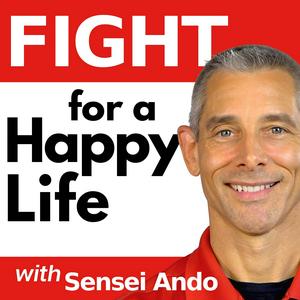
About Fight for a Happy Life with Sensei Ando: Martial Arts for Everyday Life
Martial arts are a powerful path to fitness of the mind, body, and spirit… yet most people never even try a class! Join Ando Mierzwa as he shares ways to apply the wisdom of Karate, Kung Fu, BJJ and other martial arts to everyday life. If you are pursuing success in health, relationships, or business, you will quickly discover how even a little martial arts makes life a whole lot better!
Podcast websiteListen to Fight for a Happy Life with Sensei Ando: Martial Arts for Everyday Life, 6 Minute English and many other podcasts from around the world with the radio.net app
Get the free radio.net app
- Stations and podcasts to bookmark
- Stream via Wi-Fi or Bluetooth
- Supports Carplay & Android Auto
- Many other app features
Get the free radio.net app
- Stations and podcasts to bookmark
- Stream via Wi-Fi or Bluetooth
- Supports Carplay & Android Auto
- Many other app features

Fight for a Happy Life with Sensei Ando: Martial Arts for Everyday Life
Scan code,
download the app,
start listening.
download the app,
start listening.
 New Zealand
