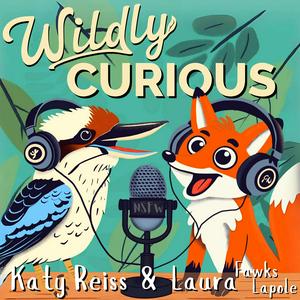
Wildly Curious

Katy Reiss & Laura Fawks Lapole
Wildly Curious
Latest episode

183 episodes

  • Wildly Curious

    Why Is It Called a Chickadee? The Surprising Story Behind Bird Names

    14/04/2026 | 9 mins.
    Send us Fan Mail
    Why do birds have such unusual names?
    In this mini episode of the Bird Name Game series from Wildly Curious, Laura dives into the fascinating origins behind two of the most familiar backyard birds in North America: chickadees and titmice.
    These small, curious songbirds aren’t just cute—they’re also incredibly intelligent and highly vocal, with communication systems that scientists are still studying today.
    Chickadees get their name directly from their famous “chick-a-dee-dee-dee” call—but that sound is more than just noise. It’s a complex communication system where the number of “dees” can signal different levels of danger to other birds. 
    These tiny birds can even increase their brain size seasonally to remember thousands of food caches, making them some of the most impressive memory specialists in the animal world. 
    Titmice, on the other hand, have a name that sounds confusing today—but it actually comes from old English words meaning “small bird.” Over time, language evolved, and “titmase” eventually became “titmouse,” even though it has nothing to do with mice at all. 
    In this episode, we explore:
     How chickadees use sound to communicate danger 
     Why bird calls are different from bird songs 
     The surprising evolution of the word “titmouse” 
     How language, culture, and sound shaped bird names 
     Why some birds are literally named after the noises they make 
    If you love birding, ornithology, backyard birds, or animal communication, this episode reveals how even the smallest birds have big stories behind their names.
    Support the show
    🎉 Support us on Patreon to keep the episodes coming! 🪼🦤🧠 For more laughs, catch us on YouTube!
    Track a real wild animal. Support conservation. Feel slightly cooler than you did five seconds ago. Visit the Fahlo tracking bracelets website to get 20% off tracking bracelets with code WildlyKaty.
  • Wildly Curious

    Cassowary vs Emu: The Surprising Origins of Their Bird Names

    31/03/2026 | 7 mins.
    Send us Fan Mail
    Why are birds named what they’re named?
    In this mini episode of the Bird Name Game series from Wildly Curious, Katy Reiss explores the fascinating naming history behind two giant flightless birds that look like they walked straight out of the dinosaur era: cassowaries and emus.
    Both birds are massive, powerful, and deeply tied to the evolutionary story of modern birds—but their names come from very different linguistic journeys.
    Cassowaries, found in the tropical forests of New Guinea and northern Australia, are famous for their bright blue necks, dagger-like claws, and the mysterious helmet-like casque on their heads. Their name likely comes from Southeast Asian languages describing the bird’s distinctive “horned head.”
    Emus, the shaggy runners of the Australian outback, inherited a name that originally referred to many large flightless birds—including ostriches and cassowaries. Early European explorers often confused these giant birds, and for a time emus were even called “New Holland cassowaries.”
    In this episode we explore:
    Why cassowaries are sometimes called the most dangerous bird in the world
    What the mysterious cassowary casque might be used for
    How early explorers confused emus, ostriches, and cassowaries
    Why the word “emu” once referred to multiple species of giant birds
    How language, exploration, and first impressions shaped bird names
    If you love birding, ornithology, wildlife science, or natural history, the Bird Name Game series reveals how the names of birds tell stories about exploration, language, and the way humans first encountered the natural world.
    Subscribe for more episodes of Wildly Curious, where science, nature, and curiosity collide.
    Support the show
    🎉 Support us on Patreon to keep the episodes coming! 🪼🦤🧠 For more laughs, catch us on YouTube!
    Track a real wild animal. Support conservation. Feel slightly cooler than you did five seconds ago. Visit the Fahlo tracking bracelets website to get 20% off tracking bracelets with code WildlyKaty.
  • Wildly Curious

    Why Is It Called an Albatross? The Surprising History of Bird Names

    17/03/2026 | 10 mins.
    Send us Fan Mail
    Why do birds have the names they do?
    In this episode of Wildly Curious, Katy Reiss kicks off a new mini-series called “Bird Name Game”, exploring the fascinating origins behind bird names. Each episode looks at two birds, their natural history, and the surprising linguistic stories behind what we call them.
    This episode dives into two iconic seabirds: the albatross and the gull.
    The albatross, one of the largest flying birds on Earth, can glide across the ocean for thousands of miles with barely a wingbeat. But its name didn’t start in English. It traveled through Arabic, Portuguese, Spanish, and Latin, changing spelling and even switching which bird it referred to before becoming the name we know today.
    Gulls, on the other hand, have a much simpler origin. Their name likely comes from ancient Celtic and Norse roots that imitate the bird’s loud, wailing call—the same cry that echoes across beaches, harbors, and parking lots everywhere.
    Along the way, we explore:
    How albatrosses travel thousands of miles using ocean winds
    Why many albatross species form lifelong partnerships
    The surprising linguistic journey from “alcatraz” to “albatross”
    Why gulls were named after the sound they make
    How bird names reflect human language, culture, and first impressions
    If you love birding, natural history, ornithology, or wildlife science, this mini-series reveals how the names of birds tell stories about exploration, language, and the people who first encountered them.
    Subscribe for more episodes of Wildly Curious, where science, nature, and curiosity collide.
    Support the show
    🎉 Support us on Patreon to keep the episodes coming! 🪼🦤🧠 For more laughs, catch us on YouTube!
    Track a real wild animal. Support conservation. Feel slightly cooler than you did five seconds ago. Visit the Fahlo tracking bracelets website to get 20% off tracking bracelets with code WildlyKaty.
  • Wildly Curious

    Can Cats Talk? The Science Behind Meows, Purrs, and Human Manipulation

    10/02/2026 | 14 mins.
    Send us Fan Mail
    Subscribe and prepare to realize your cat has been training you this whole time.
    In this Niche Scientists minisode of Wildly Curious, Katy Reiss and Laura Fawks Lapole dive into the fascinating research of Dr. Susanne Schötz, a phonetics professor at Lund University—and the scientist behind some of the most groundbreaking work on cat–human communication.
    Her research explores how cats use meows, purrs, trills, and intonation to communicate with humans, how those sounds change based on emotion and context, and why domestic cats are far more vocal than their wild or feral relatives.
    🐾 Why cats use short, high-pitched meows when happy or requesting
    😾 Why vet-meows sound long, low, and dramatic (as they should)
    🎵 How cats adjust melody and pitch specifically for their humans
    🧠 What “solicitation purring” is—and why it mimics a human baby’s cry
    🗣️ Why every cat–human pair develops its own unique dialect
    The big takeaway? Cats aren’t just making noise. They’re fine-tuning a language to get what they want—and humans are surprisingly good at understanding it, especially if they’ve lived with cats before.
    🎧 This episode is part of our Niche Scientists minisode series—short, weird, and full of research that makes you a better, more informed pet parent.
    Support the show
    🎉 Support us on Patreon to keep the episodes coming! 🪼🦤🧠 For more laughs, catch us on YouTube!
    Track a real wild animal. Support conservation. Feel slightly cooler than you did five seconds ago. Visit the Fahlo tracking bracelets website to get 20% off tracking bracelets with code WildlyKaty.
  • Wildly Curious

    Echinoderms Explained: Sea Stars, Sea Urchins, and the Ocean’s Weirdest Hydraulics

    03/02/2026 | 49 mins.
    Send us Fan Mail
    Subscribe and unleash your inner science goblin. We see you. We respect it.
    In this deep-dive episode of Wildly Curious, Katy Reiss and Laura Fawks Lapole crack open the bizarre, beautiful world of echinoderms—the “spiny-skinned” sea creatures that are hard on the outside, squishy on the inside, and powered by a literal hydraulic system.
    We’re talking sea stars, sea urchins, sand dollars, brittle stars, feather stars, and sea cucumbers—a group that looks like it shouldn’t make sense… until you learn the rules.
    🌊 The water vascular system and how tube feet work like living suction hydraulics 
     ⭐ Why echinoderms don’t have a centralized brain (and why that doesn’t mean “no thoughts”)
     🧬 The wild symmetry twist: larvae start bilateral, then reorganize into radial body plans
     🥒 Sea cucumbers and their most unhinged defense move: evisceration (yes, it’s what it sounds like) 
     🌿 Species spotlight: the sunflower sea star—a major predator of sea urchins that helps keep kelp forests alive 
     ⚠️ And the real-world crisis: sea star wasting syndrome, which caused catastrophic declines, including over 90% loss of sunflower sea stars in much of their range 
    If you’ve ever looked at a sea star and thought “that thing has no business being real,” this episode is your guide to why it does—and why losing them changes entire ecosystems.
    Support the show
    🎉 Support us on Patreon to keep the episodes coming! 🪼🦤🧠 For more laughs, catch us on YouTube!
    Track a real wild animal. Support conservation. Feel slightly cooler than you did five seconds ago. Visit the Fahlo tracking bracelets website to get 20% off tracking bracelets with code WildlyKaty.

More Natural Sciences podcasts

About Wildly Curious

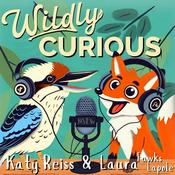
Wildly Curious is a comedy podcast where science, nature, and curiosity collide. Hosted by Katy Reiss and Laura Fawks Lapole, two wildlife experts with a combined 25+ years of conservation education experience, the show dives into wild animal behaviors, unexpected scientific discoveries, and bizarre natural phenomena. With a knack for breaking down complex topics into fun and digestible insights, Katy and Laura make science accessible for all—while still offering fresh perspectives for seasoned science enthusiasts. Each episode blends humor with real-world science, taking listeners on an engaging journey filled with quirky facts and surprising revelations. Whether you're a curious beginner or a lifelong science lover, this podcast offers a perfect mix of laughs, learning, and the unexpected wonders of the natural world.
Podcast website

Listen to Wildly Curious, The Michael Shermer Show and many other podcasts from around the world with the radio.net app

Get the free radio.net app

  • Stations and podcasts to bookmark
  • Stream via Wi-Fi or Bluetooth
  • Supports Carplay & Android Auto
  • Many other app features