
Listen to this podcast in the app for free: Download for free in the App Store
radio.net
Sleep timer
Save favourites
431 episodes
AI and Robots in Healthcare: When Digital AI Meets Physical AI | Paulo Osorio, Deloitte
07/11/2026 | 1h 10 mins.My mum's records didn't follow her. No one was watching. Digital and physical AI could fix both.
After six weeks fighting for my mum Isobel's life at her bedside, I went home to sleep for a few hours. She died while I was gone, alone, unable to press the button for help. Even when I pressed it, help often didn't come. Not because the staff didn't care, but because there weren't enough of them.
In this episode I sit down with Paulo Osorio, Partner, Deloitte Technology and Transformation, who leads Deloitte NZ's work on physical AI and robotics.
Paulo describes technology as one lever with two arms. Digital AI handles information: records, data and decisions. Physical AI does the physical work: moving, assisting and monitoring patients. My mum's story is what happens when both arms fail. Her history didn't follow her from Wellington to Taranaki, and there was no one in the room watching her. We talk about how the two arms need to work together, and why that connection could give New Zealand the healthcare capacity it can't hire its way to.
In this episode
- Digital AI vs physical AI, and why healthcare needs both
- Monitoring, assistance, lifting and moving: the jobs robots can take on in hospitals
- The robots already working in hospitals overseas
- Why New Zealand could become a global proving ground
- Privacy, safety and keeping humans in charge
- Caring for a parent at home, and what it costs a family
This episode is dedicated to my mum, Isobel.
ABOUT PAULO
Paulo is a Partner at Deloitte, focused on Technology & Transformation. He is an experienced leader in large-scale enterprise transformation, helping organisations turn strategy into action, and investment into value. Paulo leads Deloitte New Zealand's Physical AI and Robotics practice, working with organisations to define their ambition and translate exploration and experimentation into practical applications. He is passionate about the societal value Physical AI can create for New Zealand and its potential to improve the accessibility, capacity, and delivery of healthcare services.
Chapters (timed for this podcast version, which opens with Lisa's intro)
00:00 Introduction from Lisa
03:08 Why this episode is for Mum
08:01 Digital AI and physical AI
11:33 Beyond digital: the physical gap
12:56 Waiting, and who is watching
16:42 Connecting the dots
21:28 Robots in hospitals today
26:27 What will it cost?
28:32 New Zealand's advantage
32:23 Old buildings, new machines
36:40 Privacy, trust and keeping people in charge
38:24 Why the time is now
43:59 Where do we start?
47:11 Caring for Mum at home
49:36 A pilot that proves its worth
55:02 Getting off the start line
55:41 A proving ground for the world
1:00:04 Training robots with real hospital data
1:05:17 HealthX and the road ahead
LINKS
Deloitte report, Physical AI: The moment of acceleration:
https://www.deloitte.com/nz/en/services/consulting/perspectives/physical-ai-acceleration.html
Connect with Paulo on LinkedIn: https://www.linkedin.com/in/paulo-osorio-4131202/
Pushing the Limits podcast: https://www.lisatamati.com/ptl-podcast/
Work with Lisa: https://www.lisatamati.com
DNA Blueprint, your full genetic analysis with Lisa: https://www.lisatamati.com/dna/
Re:NRG and Re:juvenate Pro from Aevum Labs: https://aevumlabs.co.nz
My Longevity Stack (free): https://www.lisatamati.com/lisa
Shop: https://shop.lisatamati.com
Instagram: https://www.instagram.com/lisatamati/Methylation Explained: MTHFR, B12, Folate and the Genes Almost Nobody Checks
31/10/2026 | 23 mins.Your blood tests come back "normal", but you don't feel normal.
You wake at 3am with your mind racing, your hands and feet are always cold, the fog won't lift and your energy has gone. In this solo episode I unpack methylation, one of the most important systems in your body and one almost nobody is testing for. In this episode: - What methylation actually does, and why SAMe and homocysteine matter so much -
The gene team behind it: MTHFR, MTR, MTRR, TCN2, FUT2, DHFR, COMT, PEMT, HNMT, CYP1B1, NOS3, CBS and BHMT - Who is most at risk, including medications and lifestyle factors that quietly drain B12 and folate - What high homocysteine means for your bones, heart and blood vessels, brain, mood, hormones and histamine -
Why I don't use folic acid, and what I use instead: methylfolate, folinic acid and the right forms of B12 - The methyl trap, and why folate and B12 always need fixing together -
Why taking SAMe on its own isn't the fix - The supporting cast: riboflavin, B6, choline, TMG and omega-3 -
How to test properly: homocysteine, active B12, folate, MMA and MCV If you're pregnant or planning a pregnancy, don't change your folate on your own.
Get properly assessed first.
Want to know what your own methylation genes are doing?
My DNA Blueprint Package covers methylation, COMT, PEMT, your oestrogen genes and much more, with a personalised plan and a one-on-one consult with me. https://lisatamati.com/dna
Watch the full video on YouTube: search "Lisa Tamati methylation" More episodes: https://www.lisatamati.com/ptl-podcast/
Shop: https://shop.lisatamati.com
This episode is for education only and isn't individual medical advice.Heart Disease Starts at 22: What Your Genes Reveal About Your Arteries
27/10/2026 | 55 mins.heir average age was 22 and 77% had artery disease. What are your genes doing to your heart?
That's what doctors found in 1953 when they examined the hearts of young US soldiers killed in the Korean War. Heart disease doesn't start at 60. It starts decades earlier, quietly.
In this episode I go gene by gene through the heart, artery and blood pressure genes on a DNA test: APOE, LPA, PON1, F5 (factor V Leiden), ACE, FADS1 and FADS2, 9p21, ABCG2 and NOS1. For each one: what the research actually shows, what your result can and can't tell you, and the practical steps that follow. I also cover the blood pressure toolkit, omega-3s and plasmalogens (the work of Dr Dayan Goodenowe), inflammation and immune ageing (Dr Elizabeth Yurth), and why women's heart risk changes at menopause.
Find out what your own genes say with my DNA Blueprint Package: https://lisatamati.com/dna
Available in New Zealand, Australia and the USA.
Chapters
0:00 Heart disease at 22
0:43 Heart disease starts decades early
5:57 What a gene test can and can't tell you about your heart
9:20 APOE: the cholesterol transporter
12:24 LPA: the cholesterol particle you can't diet away
17:04 PON1: your HDL's bodyguard
19:18 F5: your clotting gene
22:19 ACE: blood pressure and saturated fat
25:53 Your blood pressure toolkit
28:37 FADS1 and FADS2: making your own omega-3s
35:43 9p21: the heart disease hotspot
38:47 ABCG2: uric acid
41:54 NOS1: nitric oxide
44:07 Inflammation: the fire in the artery wall
48:28 Women's hearts
50:09 Putting it all together
52:54 The long game
54:00 Your next step
Key research mentioned
Enos et al., JAMA, 1953 (Korean War autopsies)
McGill et al., PDAY, American Journal of Clinical Nutrition, 2000
Fernández-Friera et al., PESA study, Circulation, 2015
Cohen, Hobbs et al., PCSK9, New England Journal of Medicine, 2006
Yusuf et al., INTERHEART, The Lancet, 2004
Khera et al., genetic risk and healthy lifestyle, New England Journal of Medicine, 2016
Bennet et al., APOE and coronary risk, JAMA, 2007
Kamstrup et al., Lp(a), JAMA, 2009; Clarke et al., New England Journal of Medicine, 2009
Bhattacharyya et al., PON1, JAMA, 2008
Bertina et al., factor V Leiden, Nature, 1994; ESTHER study, Circulation, 2007
Schüler et al., ACE rs4343 and saturated fat, Journal of the American Heart Association, 2017
Neal et al., Salt Substitute and Stroke Study, New England Journal of Medicine, 2021
Edwards et al., exercise and blood pressure, British Journal of Sports Medicine, 2023
Lemaitre et al., FADS and omega-3s (CHARGE), PLoS Genetics, 2011
Helgadottir et al. and McPherson et al., 9p21, Science, 2007; Do et al., PLoS Medicine, 2011
Woodward et al., ABCG2 and uric acid, PNAS, 2009
Kapil et al., dietary nitrate and blood pressure, Hypertension, 2015
Ridker et al., CANTOS, New England Journal of Medicine, 2017
Disclosure: I'm a certified Prodrome practitioner and stock Dr Goodenowe's products in my store. I'm also co-founder of Aevum Labs, which makes Re:juvenate Pro (scientific advisor Dr Elizabeth Yurth).
More from me
Watch the full video on YouTube: https://www.youtube.com/watch?v=BrlVQhShH24
Shop: https://shop.lisatamati.com
Instagram: https://www.instagram.com/lisatamati/
Educational content only. Genetics shows tendencies and priorities, not diagnoses.Red Face After One Drink? It's Your Genes (And Why Coffee Keeps You Up)
22/10/2026 | 12 mins.Why can one person drink a flat white at 3pm and sleep soundly, while another lies awake until midnight? Why does one glass of wine turn some people bright red? A lot of it comes down to your genes.
In this solo episode, I break down the caffeine and alcohol genes I look at in my clients' myDNA reports, what your results can and can't tell you, and the simple changes that follow.
In this episode:
- How CYP1A2 shapes how long caffeine hangs around, and why your cut-off time matters
- What the research shows about caffeine, genetics and athletic performance
- ADORA2A, and why some people feel caffeine far more strongly than others
- The ALDH2 variant behind the alcohol flush, and why it matters for more than a red face
- The ripple effects: vitamin B1, REM sleep, APOE, and the unfiltered coffee and cholesterol link
- Why genetics loads the gun, and environment pulls the trigger
Find out what your genes say with my DNA Blueprint Package, available in New Zealand, Australia and the USA:
genetics, DNA test, nutrigenomics, myDNA, caffeine, coffee, alcohol, alcohol flush, red face after drinking, ALDH2, CYP1A2, ADORA2A, APOE, caffeine metabolism, sleep, REM sleep, thiamine, vitamin B1, cholesterol, longevity, personalised health, functional medicine, Lisa Tamati, Pushing the Limits
More on thiamine: my full interview with Elliot Overton
https://www.youtube.com/watch?v=8qwb_XmDqqk
Chapters:
0:00 Same coffee, different genes
0:18 Why blanket health advice fails
1:00 Your caffeine gene: CYP1A2
2:48 Caffeine, sleep and the cut-off
3:27 Caffeine and athletic performance
4:34 ADORA2A: how strongly you feel caffeine
5:35 Alcohol and the ALDH2 gene
7:45 Ripple effects: B1, sleep, APOE and coffee
10:25 Genes load the gun
11:14 Your next step
Educational content only. Genetics shows tendencies and priorities, not diagnoses.The One Test That Never Expires: Why Your DNA Is the Most Important Thing You'll Ever Test
18/09/2026 | 1h 4 mins.I ran 70,000km across the world's toughest deserts to lose weight, and I got heavier, more inflamed and sicker every year. I assumed the problem was discipline. It took one genetic test to show me it never was.
In this solo episode I make the case that your DNA is the single most valuable test you will ever do. Not because it tells you the most, but because it is the only test whose result is still true in fifty years. Your bloods reflect the last few weeks. Your microbiome shifts with every trip and every course of antibiotics. Your hormones move across the month and the decade. Your DNA does not move at all.
I go through all eight areas a comprehensive genetic panel covers, what you actually learn from each one, and why a variant is a tendency rather than a verdict.
IN THIS EPISODE
My own results, and the cascade that explains twenty-five years of getting it wrong
Why genetics is different from every other test you will ever do
Genetics loads the gun, environment pulls the trigger: what that actually means in practice
The single-gene trap, and why the MTHFR obsession has it upside down
Digestion, energy, hormones, stress and cognition, inflammation, athletic performance, DNA repair and detoxification, one at a time
The difference between nutritional dosing and nutrigenomic dosing, and why more vitamin D was not working for me
Why genetics alone is not enough, and what has to sit alongside it
Why it is almost never discipline
THE DNA BLUEPRINT PACKAGE
Practitioner-only genetic testing, ninety-two genes and a hundred and thirteen variants across a report of roughly a hundred and twenty-one pages, read by me alongside a full Cell Blueprint assessment and turned into a complete personal health programme in a ninety-minute one-on-one.
Available throughout New Zealand. Australia coming soon.
https://www.lisatamati.com/dna/
GO DEEPER
Dr Sam Shay on methylation, inflammation and exercise-induced obesity:
https://www.lisatamati.com/podcast--dr-sam-shay_1/
Dr Mansoor Mohammed on how your variants change what you eat and how you train:
https://www.lisatamati.com/podcast-mansoor-mohammed/
Read the long-form article:
https://www.lisatamati.com/blog/
ALSO FROM LISA
Re:juvenate Pro, the foundational immune ageing formula from Aevum Labs:
https://shop.lisatamati.com/pages/rejuvenate
Re:NRG, our next-generation NAD support, is coming. Join the waitlist for first access:
https://shop.lisatamati.com/pages/nad-next-gen-waitlist
Weekly longevity insights, free:
https://www.lisatamati.com/lisa
Questions or feedback: lisa@lisatamati.com
Pushing the Limits is hosted by Lisa Tamati, genetics practitioner, co-founder and Chief Science Officer of Aevum Labs, and former professional ultra-endurance athlete. Author of three books and one audiobook.
More Alternative Health podcasts




Trending Alternative Health podcasts



About Pushing The Limits
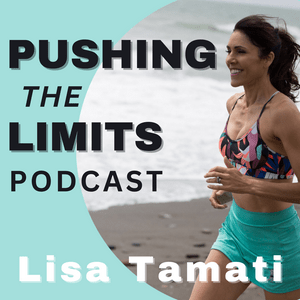
Pushing the limits - the show that gets deep into the psyche of limit pushers from all walks of life. Out the box thinker, elite athlete, successful entrepreneurs, social change innovators, scientists and more.
Cutting to the chase to find out what makes them so successful, how they did it, what their life philosophies are and what gems of wisdom they can impart to us all.
Hosted by Professional Adventure Athlete Lisa Tamati, author, producer, motivational speaker and mindset coach
Podcast websiteListen to Pushing The Limits, I Can't Sleep: Relaxing Facts to Fall Asleep To and many other podcasts from around the world with the radio.net app
Get the free radio.net app
- Stations and podcasts to bookmark
- Stream via Wi-Fi or Bluetooth
- Supports Carplay & Android Auto
- Many other app features

 New Zealand

