
Listen to this podcast in the app for free: Download for free in the App Store
radio.net
Sleep timer
Save favourites
328 episodes
Ghost Science
19/10/2026 | 44 mins.Can a place remember? In this episode, Shawn answers a listener question from his Seoul ghost walk and explains stone tape theory, the idea that ghosts may be imprinted memories rather than the souls of the dead. He applies it to two encounters on the grounds of Gyeonghuigung Palace: a boy in white hanbok who plays around a nearly 400-year-old zelkova tree, and a sudden, unexplained smell of burning hair and flesh that stopped an entire tour group in 2018.
Topics discussed:
What stone tape theory and the electrical impulse wave theory claim
Why cultural explanations don’t tell us what ghosts are
Psychometry in pop culture, from The Dead Zone to Millennium to Chew
Why ghosts that don’t know they’re dead might be the safest kind
EVP, ghost apps, and why Shawn isn’t buying them
The 2018 smell on the Gyeonghuigung grounds and the search for its source
Gyeonghuigung’s fire history and its 19th-century decline
The woman in the Ikseon-dong alley
Timestamps:
00:00 Intro and a question from a ghost walk guest
02:07 What stone tape theory is
03:05 Why culture doesn’t explain ghosts
05:00 Ghosts as imprinted memories, and psychometry
06:26 The Dead Zone, Chew, Millennium, and Key and Peele
09:17 Murder, joy, and memories in the landscape
12:06 The electrical impulse wave theory
14:32 Where the theory breaks down
15:01 EVP and ghost apps
16:20 The zelkova tree at Gyeonghuigung
17:48 New sightings since Shawn’s book
20:07 Ghosts that don’t know they’re dead, han and won
22:34 Bonus story: Gyeonghuigung, 2018
24:00 Palace renovations and the old concrete slab
27:29 The smell
30:24 Ruling out fire, smoke, and wind
32:20 Searching the palace’s fire history
35:15 Gyeonghuigung, Gwanghaegun, and the Mulberry Palace
38:27 Memory or ghost?
39:58 The woman in the Ikseon-dong alley
41:30 Wrap-up, Substack, and ZenKimchi Travel and Food podcast
Mentioned in this episode:
Our earlier episodes “The Problem with Korean Ghosts,” on Gyeonghuigung, and on Gwanghaegun
Shawn’s Substack article “A Lingering Scent of Ghosts” on Welcome to Savage Hollar
ZenKimchi Travel and Food podcast
The Dead Zone, Millennium, Chew, Key and Peele
Folklorist George Gomme
Support the show and get extra content: patreon.com/darksideofseoul
Website and merch: darksideofseoul.com
Contact: info@darksideofseoul.com
Find us on Instagram and Facebook as Dark Side of Seoul.
About the Podcast
The Dark Side of Seoul explores Korea’s hidden history, true crime, folklore, ghost stories, urban legends, disasters, political scandals, and the strange corners of Korean culture that rarely make it into guidebooks. Hosted by long-time Korea residents Joe McPherson and Shawn Morrissey, the show blends historical research, cultural analysis, and firsthand experience to examine the people, events, beliefs, and mysteries that have shaped the Korean peninsula.
Some episodes take deep dives into forgotten historical events, serial killers, political intrigue, and supernatural traditions. Others tackle current events and unusual news stories through our shorter ‘Fun Sized’ episodes, connecting today’s headlines to larger patterns in Korean society.
Whether we’re discussing Joseon-era conspiracies, haunted mountains, cults, disasters, ghost encounters, or modern social issues, our goal is always the same: to explore the darker side of Korea with curiosity, skepticism, and historical context.
Hosted by Simplecast, an AdsWizz company. See pcm.adswizz.com for information about our collection and use of personal data for advertising.Slaves, Bastards, and Bureaucrats | The Fall of Joseon, Part 19 (1801-1803)
11/10/2026 | 40 mins.King Jeongjo is barely in the ground and his entire reform project is already under threat. This episode covers 1801–1803: the regency of Queen Dowager Jeongsun, two significant but fatally incomplete reform measures, and the beginning of the Andong Kim clan’s century-long stranglehold on the Joseon court.
Topics covered:
The political situation Queen Dowager Jeongsun inherited when the eight-year-old King Sunjo took the throne
The emancipation of 66,067 public government slaves in January 1801 — and why private slavery was left entirely untouched
The 1801 law allowing men born out of wedlock to sit the gwageo civil service examination — and the institutional resistance that made the law almost meaningless until 1823
The gwageo’s centuries-long history of elite gatekeeping, legacy admissions, and the growing divide between well-connected city families and rural candidates
The rise of the Andong Kim clan as Joseon’s ultimate power brokers
Sedo jeongchi — government-by-in-law — and how King Sunjo’s marriage to Kim Jo-sun’s daughter handed the Andong Kims the keys to the entire administrative apparatus
The end of Jeongsun’s regency in December 1803, and what it actually changed (not much)
The seeds of the Donghak movement and the rebellions that are coming
Timestamps are not available for this episode.
Resources mentioned:
ZenKimchi Korea Food and Travel Podcast (Joe McPherson)
Welcome to Savage Holler Substack (Shawn Morrissey) — soju article
Connect with The Dark Side of Seoul:
Website: darksideofseoul.com
Email: info@darksideofseoul.com
Available on all major podcast platforms
About the Podcast
The Dark Side of Seoul explores Korea’s hidden history, true crime, folklore, ghost stories, urban legends, disasters, political scandals, and the strange corners of Korean culture that rarely make it into guidebooks. Hosted by long-time Korea residents Joe McPherson and Shawn Morrissey, the show blends historical research, cultural analysis, and firsthand experience to examine the people, events, beliefs, and mysteries that have shaped the Korean peninsula.
Some episodes take deep dives into forgotten historical events, serial killers, political intrigue, and supernatural traditions. Others tackle current events and unusual news stories through our shorter “Fun Sized” episodes, connecting today’s headlines to larger patterns in Korean society.
Whether we’re discussing Joseon-era conspiracies, haunted mountains, cults, disasters, ghost encounters, or modern social issues, our goal is always the same: to explore the darker side of Korea with curiosity, skepticism, and historical context.
Hosted by Simplecast, an AdsWizz company. See pcm.adswizz.com for information about our collection and use of personal data for advertising.The History of Korean Horror
03/10/2026 | 1h 46 mins.Joe and Shawn are joined by Justin Kyle, co-host of the weekly horror film podcast Straight Chilling, for a decade-by-decade guide to Korean horror cinema. Starting from a lost 1924 silent film made under Japanese occupation and running through Na Hong-jin's divisive 2024 creature feature, Justin leads a structured tour of the films, directors, themes, and historical forces that shaped one of world cinema's most distinctive horror traditions.
Guest
Justin Kyle, Straight Chilling Podcast
straightchilling.com
Also writes for koreanfilm.org and Korea Times
Topics discussed
The 1924 silent horror film adaptation of the Tale of Two Sisters, made during Japanese occupation around the same time as Nosferatu and The Cabinet of Dr. Caligari, now a lost film
The Korean Film Archive's YouTube channel and Blu-ray releases for older films, and the ongoing problem of lost or damaged Korean films even from relatively recent decades
Why Korean horror rarely produces slashers, monster films, or vampire stories, and what it produces instead
The femme fatale and the vengeful female ghost as recurring figures in Korean horror, and the argument that these women have genuine narrative agency rather than existing simply as threats to be defeated
The 1960s as the first golden age of Korean horror, and the unusually high cinematographic quality of films from that era
How Park Chung-hee's nationalist cultural policies in the 70s inadvertently created a boom in shaman-themed cinema
The censorship era of the 70s and 80s, what it did to Korean filmmaking, and why the 80s produced so few horror films
The shamanism film tradition in Korean cinema and why claims that it is a new trend are wrong
Whispering Corridors (1998) as the beginning of the second golden age of Korean horror
Why the end of censorship in the mid-to-late 90s unlocked a new era of ambitious Korean filmmaking
The Quiet Family, A Tale of Two Sisters, The Host, and Thirst as the peak of 2000s Korean horror
The debate over whether Park Chan-wook or Bong Joon-ho is the better filmmaker
Train to Busan and the argument about whether it is a great zombie film, a mediocre horror film, or an accessible action film that Koreans don't even classify as horror
The Wailing as the conclusion of the second golden age
Seire (2021) as the best Korean horror film of the current decade, and the Korean folk traditions around birth and death it draws on
Exhuma and what happens when horror films prioritize accessibility over atmosphere
Na Hong-jin's Hope and why it's deeply divisive
The Netflix and K-pop effect on Korean cinema and the argument that chasing international accessibility has drained the daring out of mainstream Korean horror
A Halloween party on October 24, 2026 at Dyson Comics Cafe in Seoul with horror board games, movie trivia, and a Halloween magic show
Korean horror film timeline by decade
Korean Horror Film Timeline by Decade
Silent Era
1924 — Untitled Tale of Two Sisters adaptation — director unknown — lost film
1960s
1960 — The Housemaid (하녀) — Kim Ki-young
1960 — Madam White Snake (백사부인) — Shin Sang-ok
1964 — The Evil Stairs / The Devil's Stairway (마의 계단) — Lee Man-hee
1965 — A Bloodthirsty Killer / Devilish Homicide (살인마) — Yi Yong-min
1967 — Public Cemetery Under the Moon (월하의 공동묘지) — Kwon Cheol-hwi
1967 — Yongary, Monster from the Deep (대괴수 용가리) — Kim Kee-duk
1969 — The Devil and the Beauty (악마와 미녀) — Yi Yong-min
1970s
1970 — Ghosts of Joseon (이조괴담) — Shin Sang-ok
1975 — The Man with Two Faces (공포의 이중인간) — Yi Yong-min
1977 — Io Island / Ieodo (이어도) — Kim Ki-young
1978 — A Woman Chasing a Killer Butterfly (살인나비를 쫓는 여자) — Kim Ki-young
1979 — The Divine Bough (신궁) — Im Kwon-taek
1980s
1981 — Suddenly in the Dark / Suddenly at Midnight (깊은 밤 갑자기) — Go Yeong-nam
1981 — The Hut (피막) — Lee Doo-yong
1981 — A Monstrous Corpse (괴시) — Kang Beom-gu
1982 — Dracula in a Coffin — director unconfirmed
1990s
1995 — 301, 302 (삼공일 삼공이) — Park Chul-su
1997 — The Hole — director unconfirmed
1998 — Whispering Corridors (여고괴담) — Park Ki-hyung
1998 — The Quiet Family (조용한 가족) — Kim Jee-woon
1999 — Memento Mori (여고괴담 두번째 이야기) — Kim Tae-yong and Min Kyu-dong
1999 — The Ring Virus (링) — Kim Dong-bin
1999 — Tell Me Something (텔 미 썸딩) — Chang Yoon-hyun
1990s — Deep Scratch — director unconfirmed
2000s
2001 — Sorum (소름) — Yoon Jong-chan
2003 — A Tale of Two Sisters (장화, 홍련) — Kim Jee-woon
2004 — R-Point (알 포인트) — Kong Su-chang
2006 — The Host (괴물) — Bong Joon-ho
2009 — Thirst (박쥐) — Park Chan-wook
2010s
2010 — I Saw the Devil (악마를 보았다) — Kim Jee-woon
2010 — Bedevilled (김복남 살인사건의 전말) — Jang Cheol-su
2012 — Horror Stories (무서운 이야기) — Min Kyu-dong, Jung Bum-shik, Hong Ji-young, Kim Gok and Kim Sun, Lim Dae-woong
2015 — The Silenced (경성학교: 사라진 소녀들) — Lee Hae-young
2016 — Train to Busan (부산행) — Yeon Sang-ho
2016 — The Wailing (곡성) — Na Hong-jin
2020s
2021 — Seire (세이레) — Park Kang
2022 — The Fifth Thoracic Vertebra — Park Se-young
2024 — Exhuma / Pamyo (파묘) — Jang Jae-hyun
2024 — Hopeu (호프) — Na Hong-jin
Resources mentioned
Straight Chilling Podcast: straightchilling.com
Korean film database: koreanfilm.org
Korean Film Archive YouTube: Korean Classic Film
Korea Times film coverage: search Justin Kyle
Timestamps not available for this episode.
About the podcast
The Dark Side of Seoul explores Korea's hidden history, true crime, folklore, ghost stories, urban legends, disasters, political scandals, and the strange corners of Korean culture that rarely make it into guidebooks. Hosted by long-time Korea residents Joe McPherson and Shawn Morrissey, the show blends historical research, cultural analysis, and firsthand experience to examine the people, events, beliefs, and mysteries that have shaped the Korean peninsula.
Some episodes take deep dives into forgotten historical events, serial killers, political intrigue, and supernatural traditions. Others tackle current events and unusual news stories through our shorter "Fun Sized" episodes, connecting today's headlines to larger patterns in Korean society.
Whether we're discussing Joseon-era conspiracies, haunted mountains, cults, disasters, ghost encounters, or modern social issues, our goal is always the same: to explore the darker side of Korea with curiosity, skepticism, and historical context.
Hosted by Simplecast, an AdsWizz company. See pcm.adswizz.com for information about our collection and use of personal data for advertising.The Problem with Korean Ghosts
13/09/2026 | 39 mins.Why do ghosts conveniently conform to the culture of the people seeing them? Korean folklore gives us the cheonyeo gwishin, Western traditions have their own recognizable specters, and decades of movies have taught us that ghosts should be translucent, vaporous, and obviously dead.
Joe and Shawn question whether any of those images are useful when examining claims of actual ghost encounters. If ghosts represent a genuine phenomenon, Shawn argues, their basic characteristics should remain consistent across cultures. The conversation moves from Korean folklore and Shakespeare to filmmaking, Newfoundland ghost traditions, the concept of han, trauma as an explanation for hauntings, and the surprisingly mundane descriptions that appear in some of the more convincing alleged encounters.
More in Shawn’s newsletter article The Most Haunted Place on Earth!
Topics Discussed
The problem with culturally specific ghosts
Folklore versus alleged paranormal phenomena
Korea's cheonyeo gwishin
Women in white and long-haired ghosts
Similar ghost imagery outside Asia
Why folklore shouldn't be treated as scientific explanation
Shakespeare and ghosts on stage
How theater and cinema shaped the translucent ghost
Alleged ghosts that look completely human
The possibility of encountering a ghost without realizing it
Newfoundland ghost traditions
The Irish and Newfoundland "fetch"
What makes somewhere "the most haunted place on Earth"
Trauma as an explanation for hauntings
Han and Korean ghost folklore
Why claims that han is uniquely Korean create a logical problem
Skepticism and paranormal research
Timestamps
00:00 Introduction
06:00 Defining the problem with ghosts
10:00 Folklore as explanation
11:36 What if ghosts are real?
13:00 Korean ghost imagery
15:00 Fictional ghosts versus alleged encounters
17:30 Ghost imagery across cultures
20:00 The mundane ghost
22:00 Theater, film, and translucent spirits
25:00 Ghosts we may not recognize
27:00 Newfoundland's "fetch" tradition
29:00 The most haunted place on Earth
31:00 Trauma and restless spirits
33:00 Han and Korean ghosts
34:50 Final discussion
36:30 Listener shout-out
Mentioned During the Episode
Cheonyeo gwishin
Hamlet
Watership Down
Newfoundland ghost folklore
St. John's Haunted Hike
The Irish/Newfoundland "fetch"
Han (한)
The Korean Ghost and Mr. Skeptic
Shawn Morrissey's newsletter, Welcome to Savage Haller
The Most Haunted Place on Earth (Depending on Who You Ask)
About The Dark Side of Seoul
The Dark Side of Seoul explores Korea's hidden history, true crime, folklore, ghost stories, urban legends, disasters, political scandals, and the strange corners of Korean culture that rarely make it into guidebooks. Hosted by long-time Korea residents Joe McPherson and Shawn Morrissey, the show blends historical research, cultural analysis, and firsthand experience to examine the people, events, beliefs, and mysteries that have shaped the Korean peninsula.
Hosted by Simplecast, an AdsWizz company. See pcm.adswizz.com for information about our collection and use of personal data for advertising.The Museum That Won't Tell You Its Own Story
03/09/2026 | 34 mins.Joe visited a brand-new free museum in Seoul's Insadong neighborhood built on a six-year archaeological excavation. The dig exposed a layer of the city from the late 1590s, right before the Japanese invasions reduced large parts of Seoul to rubble. The artifacts are fascinating. The signage is a list of measurements. The actual story, that this neighborhood was frozen in the moment before catastrophe, is buried in a set of video interviews near the back that most visitors probably walk past.
Topics discussed:
Shawn's Substack newsletter Welcome to Savage Hollar, a follow-up Korean urban legends book in progress, and a new book about hauntings in Newfoundland
A new Korea concierge service helping travelers book KTX tickets, baseball tickets, and navigate Korean websites built exclusively for Korean IDs and Korean phone numbers
A live music venue in Nagwon called EDLS with a brew pub, live jazz, rock, and experimental music Thursday through Saturday, 10,000 to 15,000 won cover
The Insadong Urban Heritage Exhibition Hall: what it is, what it contains, and why it fails to explain itself
The history of pimgol, Seoul's network of back alleys designed so commoners could work and move around the city without bowing to aristocrats on horseback
The Gongpyeong regulation requiring archaeological digs before any construction in the Insadong-Jongno area, and the cluster of small underground museums it has produced
A clay jar full of metal movable type, some cast in Hangeul, deliberately buried underground, not lost in a fire but hidden intentionally
Bronze hand cannons stockpiled nearby, and what that stockpile suggests about the circumstances
Why the dig focused on the late 1590s layer specifically: almost nothing from that era survives elsewhere in the city
The Japanese invasions of 1592 as the explanation for everything buried, abandoned, or burned in that layer
Joseon-era astronomical instruments and a water clock of significant mechanical complexity found at the site
Why Korean heritage interpretation consistently describes physical dimensions instead of telling the story, and why a brand-new museum opened in 2026 still has this problem
Practical information:
Insadong Urban Heritage Exhibition Hall (인사동 도시유적전시관)
GI Tower basement, Insadong, Jongno-gu, Seoul
Tuesday to Sunday, 9am to 6pm, last admission 5:30pm
Free admission
Resources mentioned:
Shawn's Substack: Welcome to Savage Hall
Korea Concierge: concierge.zenkimchi.com
Dark Side of Seoul tours: darksideofseoul.com
Timestamps not available for this episode.
About the podcast
The Dark Side of Seoul explores Korea's hidden history, true crime, folklore, ghost stories, urban legends, disasters, political scandals, and the strange corners of Korean culture that rarely make it into guidebooks. Hosted by long-time Korea residents Joe McPherson and Shawn Morrissey, the show blends historical research, cultural analysis, and firsthand experience to examine the people, events, beliefs, and mysteries that have shaped the Korean peninsula.
Some episodes take deep dives into forgotten historical events, serial killers, political intrigue, and supernatural traditions. Others tackle current events and unusual news stories through our shorter "Fun Sized" episodes, connecting today's headlines to larger patterns in Korean society.
Whether we're discussing Joseon-era conspiracies, haunted mountains, cults, disasters, ghost encounters, or modern social issues, our goal is always the same: to explore the darker side of Korea with curiosity, skepticism, and historical context.
Hosted by Simplecast, an AdsWizz company. See pcm.adswizz.com for information about our collection and use of personal data for advertising.
More History podcasts




Trending History podcasts









About The Dark Side of Seoul Podcast
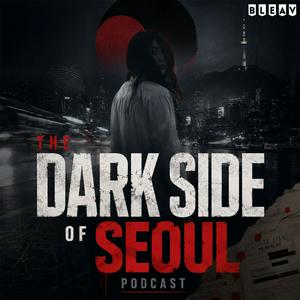
Korean dark history, ghost tales, folklore, serial killers, true crime, and more. You are about to discover why Korea has the spookiest stories and darkest history.Folklorist Shawn and history buff Joe delve into Korea's gruesome stories of massacres, betrayals, and blood. It's like "Game of Thrones" in Asia. We share our passion for Korea and its struggles throughout time. If you enjoy shows like "Kingdom," this is the podcast for you. Even if you know nothing about Korea, its history will become your new addiction.Subscribe, sit back, and enjoy.
Podcast websiteListen to The Dark Side of Seoul Podcast, The Rest Is History and many other podcasts from around the world with the radio.net app
Get the free radio.net app
- Stations and podcasts to bookmark
- Stream via Wi-Fi or Bluetooth
- Supports Carplay & Android Auto
- Many other app features
Get the free radio.net app
- Stations and podcasts to bookmark
- Stream via Wi-Fi or Bluetooth
- Supports Carplay & Android Auto
- Many other app features

The Dark Side of Seoul Podcast
Scan code,
download the app,
start listening.
download the app,
start listening.
The Dark Side of Seoul Podcast: Podcasts in Family
 New Zealand
