

Listen to this podcast in the app for free: Download for free in the App Store
radio.net
Sleep timer
Save favourites
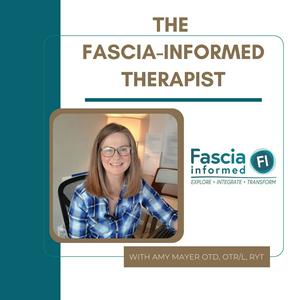
The Fascia-Informed Therapist Podcast; Occupational Therapy, Myofascial Release, Fascial System, Posture, Movement, and More
MayerWellness
Latest episode
91 episodes
EP 91 Thermography and Fascia-Informed Care: What Can Skin Temperature Tell Us?
14/09/2026 | 30 mins.Thermography is increasingly marketed as a painless, noninvasive way to look at what may be happening in the body, but what can it actually tell us?
In this episode, I explore infrared thermography through a fascia-informed lens. Thermography is a type of imaging that maps patterns of heat on the skin’s surface. I share what sparked my curiosity, including the growing availability of thermography services in my community and conversations with people who have used it.
I also discuss an article on myofascial trigger points and persistent neck and shoulder pain. Can differences in skin temperature offer clues about circulation, muscle activity, autonomic nervous system activity, or movement limitations? Could thermal imaging provide useful clinical information when structural imaging does not fully explain a person’s symptoms?
We will explore what thermography measures, what current research suggests about its potential uses, and the important distinction between information that may contribute to clinical reasoning and a test that can make a diagnosis on its own.
This episode is available for CE! CLICK HEREEP 90 An Encore and an Opportunity for You
17/08/2026 | 40 mins.In this episode, I'm replaying one of the most popular topics from EP 78. Most of us can improve on our understanding of stress and how it affects the body. The article by Huston (2022) presents a compelling theory on this topic that involves the fascia.
I'm not just replaying the episode. I'm also sharing a new process that I'm hoping will benefit us both! If you are listening to the podcast, you can now get CE (depending on your educational requirements for licensure).
This is a trial run. If there is interest, I'll create more CE for the past most listened to episodes and for future CE worthy episodes.
This will help me keep the podcast going. If you want to support it, you can go to Fascia-Informed CE Home and purchase the related episode CE (EP 78).
Here is what the process looks like:
Step 1: Listen to the podcast.
Step 2: Read the article and related resources.
Step 3: Reflect on how the content applies to your practice.
Step 4: Take the quiz.
Step 5: Provide feedback.
Step 6: Download and save your certificate and CE resource document.
Thank you!
AmyEP 89 Is Fascia a System? Not everyone thinks so. What do you think?
20/07/2026 | 14 mins.Each discipline operates from different rules and definitions. A system can be defined as "a set of things working together as parts of a mechanism or an interconnecting network; a complex whole". So, is fascia a system? It depends on who you ask. The Fascia Nomenclature Committee, a group of international experts from different backgrounds clearly says yes in their current definitions, but anatomist disagree. Articles that may help you think more about this after you listen in to this episode are below.
FasciaInformed.com
Neumann, P. E., Labib, H., Lhuaire, M., Boaz, N. T., Noel, G. P. J. C., Suárez-Quian, C., Tessema, C., Ward, P. J., Weinhaus, A. J., Anand, M. K., & Detton, A. J. (2026). Fascia, eh. What is it? What is it good for? Clinical Anatomy, 39(2), 262–272. https://doi.org/10.1002/ca.70047
Sharkey, J. (2026). Fascia is not a system: A critical appraisal of terminological drift in anatomical literature. Clinical Anatomy. Advance online publication. https://doi.org/10.1002/ca.70175
Sharkey, J. & Flannigan, M. (2023) Towards a Paramedical Interdisciplinary Definition of Fascia Supporting Practitioners Offering Fascia-Focused Therapies (Part 1). Int J Anat Appl Physiol. 9(1):218-222.
Stecco, C., Adstrum, S., Hedley, G., Schleip, R., & Yucesoy, C. A. (2018). Update on fascial nomenclature [Letter to the editor]. Fascia Science and Clinical Applications, 22(2), 354. https://doi.org/10.1016/j.jbmt.2017.12.015EP 88 Self-Treatment and Chronic Hand Pain (Altahif & Davis, 2026)
15/06/2026 | 38 mins.This episode explores lessons from Altahif and Davis (2026), a survey of hand therapy practitioners on self-management strategies for clients with chronic hand pain. The survey examined what clients were doing on their own before evaluation, what clinicians prescribed during care, and how practitioners perceived client adherence to these strategies.
Although the study does not focus on fascia or even mention it directly, there is a lot we can take from its findings. In this episode, I discuss how a fascia‑informed perspective can complement traditional hand therapy by offering additional ways to support people living with chronic pain and to improve follow‑through with home self‑treatment programs.
Courses mentioned in the study may be found here: Fascia-Informed CE Home
Reference:
Altahif, R., & Davis, C. (2026). Self-management in chronic hand pain: Clinician perspectives from members of the American Society of Hand Therapists. Journal of Hand Therapy. Advance online publication. https://doi.org/10.1016/j.jht.2026.05.007EP 87 OTs Don’t Cut: We Get Curious and Ask Questions
01/06/2026 | 20 mins.In this episode I share a real‑life phone call from a very young potential client who reached out about a tongue‑tie release and frenectomy, expecting a quick surgical solution. Instead of rushing to agree or disagree, I slowed things down, asked targeted questions, and uncovered signs of temporomandibular disorder (TMD) that had never been considered in the process of her search for help. In this episode, I walk you through how I used education to shift her understanding of her symptoms, and why clarifying goals and history matters just as much as any hands‑on technique. You’ll also hear how these kinds of conversations can build relationships with physicians and other providers—not by “selling” OT, but by helping clients land in the right place, with the right services, at the right time through the process of education.
Thanks for listening! - Amy
Check out our two free resources at: Fascia-Informed CE Home
More Alternative Health podcasts
 Feel Better, Live More with Dr Rangan ChatterjeeAlternative Health, Health & Wellness
 High Performance HealthAlternative Health, Business, Health & Wellness, Investing
 Rain Sounds - 10 HoursAlternative Health, Health & Wellness, Nature, Science
 Get Sleepy: stories for sleepAlternative Health, Drama, Fiction, Health & Wellness, Kids & Family, Stories for Kids
 Sleep Magic: Sleep Hypnosis & Meditation for Sleep PodcastAlternative Health, Education, Health & Wellness, Self-Improvement
 The KRUSE ELITE PodcastAlternative Health, Fitness, Health & Wellness
 EXPANDED Podcast by To Be Magnetic™Alternative Health, Education, Health & Wellness, Religion & Spirituality, Self-Improvement, Spirituality
 I Can’t SleepAlternative Health, Health & Wellness, Mental Health, Science
 The Raelan Agle PodcastAlternative Health, Health & Wellness, Medicine
Trending Alternative Health podcasts
About The Fascia-Informed Therapist Podcast; Occupational Therapy, Myofascial Release, Fascial System, Posture, Movement, and More
Welcome to ”The Fascia-Informed Therapist Podcast,” the ultimate resource for Occupational Therapy Practitioners and health professionals seeking to deepen their knowledge of fascia’s pivotal role in the body. Our mission is to empower you with the confidence to integrate the latest fascia science into your traditional or non-traditional practice. Through our expert-led discussions, we offer high-quality, evidence-based insights and practical tools to enhance your therapeutic approach. Join us as we explore the fascinating world of fascia, featuring interviews with therapists who are applying the science of fascia in both traditional and non-traditional settings, thought-provoking case studies, and exclusive continuing education opportunities tailored for the modern healthcare practitioner. Whether you’re an experienced therapist or just starting, our community is designed to support your journey in becoming a more well-rounded and effective, fascia-informed professional. All health and wellness professionals are invited to dive into this rich field of study with us and transform your practice. Let’s unravel the mysteries of fascia together!
Podcast websiteListen to The Fascia-Informed Therapist Podcast; Occupational Therapy, Myofascial Release, Fascial System, Posture, Movement, and More, Feel Better, Live More with Dr Rangan Chatterjee and many other podcasts from around the world with the radio.net app
Get the free radio.net app
- Stations and podcasts to bookmark
- Stream via Wi-Fi or Bluetooth
- Supports Carplay & Android Auto
- Many other app features
Get the free radio.net app
- Stations and podcasts to bookmark
- Stream via Wi-Fi or Bluetooth
- Supports Carplay & Android Auto
- Many other app features

The Fascia-Informed Therapist Podcast; Occupational Therapy, Myofascial Release, Fascial System, Posture, Movement, and More
Scan code,
download the app,
start listening.
download the app,
start listening.
 New Zealand