
Listen to this podcast in the app for free: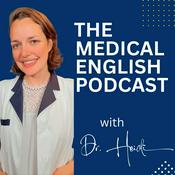 Download for free in the App Store
radio.net
Sleep timer
Save favourites
102 episodes
Explaining Food Poisoning to Patients | Medical English Podcast (S5E18)
18/10/2026 | 6 mins.In this episode of the Medical English Podcast, we do a deep dive into food poisoning — covering causes, red flags, and treatment — with a focus on adapting the same explanation across three very different patient conversations.
You'll learn how to:
Use key vocabulary including "gastroenteritis," "dehydration," "toxin," "incubation period," "stool sample," "cross-contamination," and "oral rehydration"
Explain the difference between infection and toxin-mediated illness, and why some cases hit faster than others
Recognise red-flag symptoms that separate a straightforward case from one needing urgent attention
Discuss why antibiotics aren't always appropriate, particularly with certain E. coli strains
Adapt your explanation for a newly unwell patient, a recovering patient asking about work, and a patient showing red flags
We explore three completely different conversations built around the same illness, and how matching your language to the patient in front of you builds trust at every stage.
This episode is perfect for doctors, nurses, GPs, ED and triage staff, international medical graduates, and healthcare professionals preparing for exams like the OET, who want to sharpen both their clinical English vocabulary and patient communication skills.
Enhance your practical medical English with the Medical English Collection: https://australiabiomed.com/med 🎧 Free transcript & practice quiz for this episode: https://australiabiomed.com/mep-s5e18/
Structured lessons, real-world case dialogues, pronunciation practice, and exam preparation — all designed for healthcare professionals who want to communicate with confidence.
Disclaimer: This podcast is for educational purposes only and does not provide medical advice.Explaining Inflammatory Bowel Disease (IBD) | Medical English Podcast (S5E17)
14/10/2026 | 6 mins.In this episode of the Medical English Podcast, we do a deep dive into inflammatory bowel disease — covering both Crohn's disease and ulcerative colitis — with a focus on adapting the same explanation for very different patients at very different stages of their journey.
You'll learn how to:
Pronounce and use "inflammation," "chronic," "flare," "remission," "endoscopy," "biologics," and "malabsorption" with clinical confidence
Explain the key difference between Crohn's disease and ulcerative colitis in plain terms
Discuss risk factors, including genetics, environment, and immune involvement
Simplify a new diagnosis without dumbing it down for a patient who's never heard of IBD
Shift tone and language for a long-term patient managing a flare versus a patient anxiously awaiting test results
We explore three completely different patient conversations built around the same condition, and how the right vocabulary and tone make each one land the way it should.
This episode is perfect for doctors, nurses, GPs, gastroenterology teams, international medical graduates, and healthcare professionals preparing for exams like the OET, who want to sharpen both their clinical English vocabulary and patient communication skills.
Enhance your practical medical English with the Medical English Collection: https://australiabiomed.com/med 🎧 Free transcript & practice quiz for this episode: https://australiabiomed.com/mep-s5e17/
Structured lessons, real-world case dialogues, pronunciation practice, and exam preparation — all designed for healthcare professionals who want to communicate with confidence.
Disclaimer: This podcast is for educational purposes only and does not provide medical advice.Kidney Stones and Renal Colic | Medical English Podcast (S5E16)
11/10/2026 | 8 mins.In this episode of the Medical English Podcast, we follow a consultation with Daniel, a patient presenting with sudden severe flank pain, as his doctor works through the diagnosis, imaging, and management of a kidney stone.
You'll learn how to:
Use key vocabulary including "renal colic," "hematuria," "ureteric stone," "analgesia," and "CTKUB"
Take a pain history that distinguishes the classic wave-like pattern of renal colic
Explain imaging choices to a patient, including what a CT KUB involves
Discuss when a stone is likely to pass on its own versus requiring further intervention
Advise patients on home care, fluid intake, and red-flag symptoms that need urgent review
We explore a full kidney stone consultation from presentation through to pain management, imaging, and safety-netting, and how clear explanations ease a patient through a genuinely painful experience.
This episode is perfect for doctors, nurses, GPs, ED and urology teams, international medical graduates, and healthcare professionals preparing for exams like the OET, who want to sharpen both their clinical English vocabulary and patient communication skills.
Enhance your practical medical English with the Medical English Collection: https://australiabiomed.com/med 🎧 Free transcript & practice quiz for this episode: https://australiabiomed.com/mep-s5e16/
Structured lessons, real-world case dialogues, pronunciation practice, and exam preparation — all designed for healthcare professionals who want to communicate with confidence.
Disclaimer: This podcast is for educational purposes only and does not provide medical advice.Understanding and Explaining Dehydration | Medical English Podcast (S5E15)
07/10/2026 | 6 mins.In this episode of the Medical English Podcast, we do a deep dive into dehydration — one of the most common presentations in clinical practice — with a focus on explaining causes, symptoms, and treatment in language patients can actually understand.
You'll learn how to:
Pronounce and use "diuretics," "electrolytes," "skin turgor," "orthostatic hypotension," and "oral rehydration solutions" with clinical confidence
Explain why thirst can become an unreliable warning sign as dehydration worsens
Translate technical terms like "reduced skin turgor" into patient-friendly phrasing
Recognise the escalating signs from mild dehydration through to severe, dangerous cases
Practise a real patient role-play covering assessment, explanation, and treatment advice
We explore the clinical context behind dehydration, the essential vocabulary for ward conversations, and how small, deliberate word choices make technical explanations land clearly with patients.
This episode is perfect for doctors, nurses, allied health workers, international medical graduates, and healthcare professionals preparing for exams like the OET, who want to sharpen both their clinical English vocabulary and patient communication skills.
Enhance your practical medical English with the Medical English Collection: https://australiabiomed.com/med 🎧 Free transcript & practice quiz for this episode: https://australiabiomed.com/mep-s5e15/
Structured lessons, real-world case dialogues, pronunciation practice, and exam preparation — all designed for healthcare professionals who want to communicate with confidence.
Disclaimer: This podcast is for educational purposes only and does not provide medical advice.Urticaria (Hives) and Angioedema | Medical English Podcast (S5E14)
04/10/2026 | 9 mins.In this episode of the Medical English Podcast, we follow a consultation with Liam, a young patient who breaks out in itchy hives after a birthday party, and his dad, Tom, as the doctor works through triggers, treatment, and when hives become a medical emergency.
You'll learn how to:
Use key vocabulary including "wheals," "angioedema," "trigger," "antihistamine," and "chronic spontaneous urticaria"
Take a history from both a young patient and a parent to identify a likely trigger
Explain the difference between simple wheals and deeper, more serious swelling
Ask the right screening questions to rule out a severe allergic reaction
Advise families on trigger avoidance and warning signs to watch for at home
We explore a full urticaria consultation from first presentation through to treatment and safety-netting, and how calm, clear communication reassures both patient and parent.
This episode is perfect for doctors, nurses, GPs, paediatric teams, international medical graduates, and healthcare professionals preparing for exams like the OET, who want to sharpen both their clinical English vocabulary and patient communication skills.
Enhance your practical medical English with the Medical English Collection: https://australiabiomed.com/med 🎧 Free transcript & practice quiz for this episode: https://australiabiomed.com/mep-s5e14/
Structured lessons, real-world case dialogues, pronunciation practice, and exam preparation — all designed for healthcare professionals who want to communicate with confidence.
Disclaimer: This podcast is for educational purposes only and does not provide medical advice.
More Education podcasts








Trending Education podcasts
















About The Medical English Podcast
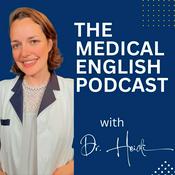
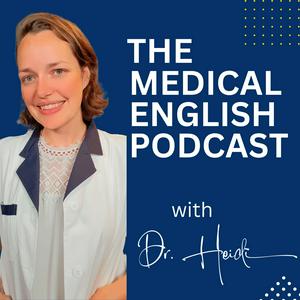
Welcome to The Medical English Podcast, designed to help healthcare professionals sharpen their English language skills. Hosted by Dr. Heidi, this podcast delves into vital medical terminology, common phrases, and specialised language across diverse healthcare settings. From patient consultations to medical conferences, we break down complex jargon, share real-life scenarios, and offer practical tips to elevate your language proficiency. Tune in and elevate your professional communication with The Medical English Podcast!
Podcast websiteListen to The Medical English Podcast, All Ears English Podcast and many other podcasts from around the world with the radio.net app
Get the free radio.net app
- Stations and podcasts to bookmark
- Stream via Wi-Fi or Bluetooth
- Supports Carplay & Android Auto
- Many other app features
Get the free radio.net app
- Stations and podcasts to bookmark
- Stream via Wi-Fi or Bluetooth
- Supports Carplay & Android Auto
- Many other app features

The Medical English Podcast
Scan code,
download the app,
start listening.
download the app,
start listening.
The Medical English Podcast: Podcasts in Family
 New Zealand
