

Listen to this podcast in the app for free: Download for free in the App Store
radio.net
Sleep timer
Save favourites
59 episodes
Portrait Artists of the Year Australia and the Myth of Making Art the Hard Way
25/08/2026 | 17 mins.KerriDixon talks about what she learned from watching Portrait Artists of the Year Australia and why it challenged her assumptions about how “proper” portrait art is made. The episode is a reminder that tools like photos, grids, iPads, tracing, and mixed media are not shortcuts to avoid real art, but practical parts of the creative process.In this episode, Kerry connects portraiture practices to wildlife art, showing how the same principles apply when your subject moves, changes light, or won’t cooperate. She also shares a simple challenge to try one reference three different ways and see which method supports your best work.
Key topics
Kerri explains why she started watching Portrait Artists of the Year Australia and what surprised her most about the artists’ process
The episode challenges the idea that professional portrait artists must work only from life
Kerri discusses how artists use photos to capture a specific moment, expression, or angle before the subject changes
She connects portrait techniques to wildlife art, where taking your own reference photos is often essential
Kerri explains the difference between simply finding a photo and creating a reference by making artistic decisions first
She describes the use of grids, measuring, loose sketches, tracing, and digital overlays as tools for accurate proportions
The episode reframes grids and transfers as scaffolding, not the artwork itself
Kerri highlights how different artists use the same medium, especially pastels, in very different ways
She encourages experimentation with pastel sticks, pastel pencils, broad marks, layering, and mixed media to discover personal style
The main takeaway is that there is no single “proper” way to make art, only the method that helps you create the artwork you want
Choose one reference photo and draw it freehand, with a grid, and with a squiggle grid
Notice which method feels most accurate, most freeing, or most frustrating
Focus on strengthening your foundations before adding detail
Ask whether a tool helps you make the artwork you want rather than whether it is the “proper” method
Experiment with materials and mark-making to discover what naturally shapes your styleAre Muddy Colours a Bad Thing
20/08/2026 | 16 mins.In this episode, Kerri Dixon breaks down muddy colours, why they happen, and why they are not always a problem. She uses practical examples from wildlife and nature art to show how complementary colours, value, and careful observation can make colour mixing feel much simpler. Kerri also gives a clear method for choosing colours without memorizing the whole colour wheel - start with the right colour family, then ask what is wrong with the colour you have and make one small adjustment at a time.
Key topics
Carrie introduces the episode as a response to a student question from Aster about muddy colours and colour mixing
What muddy colour actually means - usually a loss of brightness or intensity, not automatically a bad colour
The difference between a colour becoming muted on purpose and becoming muddy by accident
Why overworking pastels and adding too many colours can fill the tooth of the paper and make colour harder to control
A simple colour wheel refresher covering primary colours, secondary colours, and complementary pairs
Why complementary colours work like a volume control for intensity
How orange and blue, green and red, and purple and yellow can neutralize each other into more natural-looking tones
Why realistic painting depends on observing what is actually there, not what the brain thinks should be there
The importance of value - lightness and darkness - when a colour looks wrong even if the hue seems right
How muted colours help bright focal points stand out in wildlife and nature paintings
Why leaving some colours unblended can create richer texture, especially in fur and feathers
A practical exercise for making deliberate muddy colours and finding those same hues in nature references
Two simple questions to use while painting: what colour family am I in, and what is wrong with the colour I have?Social Media for Artists - Pinterest
11/08/2026 | 19 mins.Pinterest for Artists: Inspiration, Style Clues, and Copyright
Kerri Dixon wraps up her social media for artists series by showing how Pinterest can work as a visual search engine, an inspiration board, and a practical tool for artists who want to refine their taste and support their creative process. She also covers the big copyright caution with Pinterest and explains how artists can use the platform without confusing inspiration with reference or copying.
In this episode, Kerri Dixon shares how she uses Pinterest to collect colour ideas, composition studies, lighting references, and style clues, while also reminding artists that social media should serve the art, not the other way around. If you want a simple, thoughtful way to use Pinterest more intentionally, this episode gives you a clear framework.
Key topics
Pinterest is better understood as a visual search engine than as traditional social media
Artists can use Pinterest like a digital inspiration scrapbook, similar to old magazine tear-outs and folders
Organizing boards by purpose makes ideas easier to find later, such as colour, composition, lighting, wildlife, still life, textures, and studio inspiration
Private boards are useful for planning a specific artwork or collecting mood board material before you start painting
Pinterest images are not copyright free, even if they appear on the platform, so reference use still needs permission and awareness of ownership
Inspiration and reference are not the same thing, and Kerry encourages artists to ask what they like about an image rather than copying it directly
Studying composition on Pinterest can teach artists to notice cropping, negative space, focal points, contrast, and visual balance
Pinterest can help artists explore colour palettes such as rust and teal, coastal tones, autumn palettes, and earthy neutrals
Kerri suggests a style-finding exercise using two boards: one for work you do not like and one for work that feels like you
Pinterest can also help people get discovered if they share finished work, work in progress, sketchbook pages, tutorials, or blog content through their own online spacesSocial Media For Artists - Youtube
28/07/2026 | 10 mins.Why Artists Should Embrace YouTube as a Learning ToolDiscover how YouTube can revolutionize your art practice—not just through tutorials but as a source of inspiration, research, and community. Kerri explores practical strategies for integrating YouTube into your artistic growth and warns of common pitfalls to avoid.
Key Topics
How YouTube removes geographical barriers to art learning and inspiration
The value of learning from multiple artists to find your personal techniques
Using YouTube for quick answers to technical questions (like drawing white fur or photographing art)
Researching art supplies through honest reviews and demonstrations
Creating playlists for organized, targeted learning modules
Understanding wildlife and subjects to enhance realism and believability in art
Balancing passive learning with active creation to improve skills
The three stages of learning: inspiration, education, and practice
The importance of structured courses and workshops for step-by-step guidance
How memberships and online courses support detailed, slowed-down learning
Creative Barn Membership – Online art courses and community supportReflections from Soft Pastel Week
23/07/2026 | 8 mins.This episode explores how artistic growth is about much more than improving technique — it’s also about building confidence, finding a clear learning path, and staying motivated through routine and community support. Kerry reflects on the real “wins” from a week of pastel practice and Soft Pastel Week, sharing how small achievements, encouragement, and playful goals can help artists keep creating, especially after workshops end. The episode also highlights the importance of connection and self-belief in overcoming creative doubt and sustaining long-term progress.
If you'd like to continue your art journey with Kerri, head to
The Creative Barn Membership to learn more.
More Arts podcasts
 Lunchbox EnvyArts, Comedy, Food
 Fresh AirArts, Books, Society & Culture, TV & Film
 The Magnus ArchivesArts, Drama, Fiction, Performing Arts, Science Fiction
 The MothArts, Performing Arts
 99% InvisibleArts, Design
 THEMOVEArts, Sports
 Table Manners with Jessie and Lennie WareArts, Food, Kids & Family, Music
 DishArts, Comedy, Food, Society & Culture
Trending Arts podcasts
 The Lonely PaletteArts, Visual Arts
 Creative ConnectionsArts, Crafts, Leisure, Visual Arts
 一个人睡前听Arts, Books, Health & Wellness, Mental Health, Relationships, Society & Culture
 Conversations with NZ PhotographersArts
 Better off ReadArts, Books
 The EmeraldArts, Religion & Spirituality, Society & Culture
 RISK!Arts, Comedy, Performing Arts, Personal Journals, Society & Culture
 Gay Erotica by Liam WilliamsArts, Books, Fiction, Health & Wellness, Sexuality
 The History of LiteratureArts, Books, History
 Choice Classic Radio Detectives | Old Time RadioArts, Drama, Fiction, Performing Arts
 Creative Pep TalkArts, Business, Design, Education
 Close ReadingsArts, Books, Courses, Education
 Talk ’90s to meArts, History, Music, Society & Culture
 【睡前相声】郭德纲于谦相声合集Arts
 The Shit No One Tells You About WritingArts, Books, Education, Fiction, Tutorials
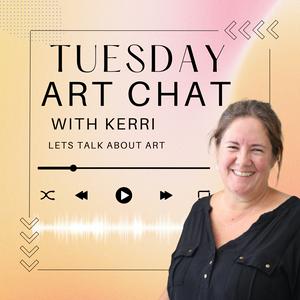
About Tuesday Art Chat with Kerri
Join artist Kerri Dixon each week for a down-to-earth, inspiring chat about all things art—from creative confidence and pastel tips to studio routines, selling your work, and finding inspiration in everyday life. Whether you're a hobby artist or dreaming of going pro, grab a cuppa and tune in for practical advice, real talk, and a supportive creative boost every Tuesday!
Podcast websiteListen to Tuesday Art Chat with Kerri, The Book Club and many other podcasts from around the world with the radio.net app
Get the free radio.net app
- Stations and podcasts to bookmark
- Stream via Wi-Fi or Bluetooth
- Supports Carplay & Android Auto
- Many other app features
Get the free radio.net app
- Stations and podcasts to bookmark
- Stream via Wi-Fi or Bluetooth
- Supports Carplay & Android Auto
- Many other app features

Tuesday Art Chat with Kerri
Scan code,
download the app,
start listening.
download the app,
start listening.
 New Zealand