

Listen to this podcast in the app for free: Download for free in the App Store
radio.net
Sleep timer
Save favourites
172 episodes
Trailer
29/09/2026 | 0 mins.Hannah Fry and Dara Ó Briain return for a new series, and a whole lot of new problems to solve!Frosty Fractals
02/01/2026 | 29 mins.One winter morning, listener Jane opened her curtains to find her car roof covered in breathtaking, fern-like frost so intricate it looked like a William Morris print. But how does something as ordinary as ice create patterns so beautifully complex?
Hannah and Dara explore this crunchy, slippery, delicately patterned branch of chemistry to uncover the rules and mysteries that govern the extra-ordinary world of ice. Why does ice come in so many shapes and sizes? And does all ice form at 0 degrees Celsius? Is every snowflake truly unique? We have questions a plenty for our eager chemists, who, as all good chemists do, have a few demonstrations up their sleeves to help explain.
And we explore nature’s hidden geometry to find why these frost ferns follow the same rules as lightning bolts, river deltas and even human lungs.
You can send your everyday mysteries for the team to investigate to: curiouscases@bbc.co.uk
Contributors
Sarah Hart – Professor Emerita of Mathematics, Birkbeck University of London
Christoph Salzmann – Professor of Physical and Materials Chemistry, UCL
Dr Thomas Whale – Lecturer, Institute for Climate and Atmospheric Science, University of Leeds
Producer: Emily Bird
Executive Producer: Sasha Feachem
A BBC Studios ProductionMining for Gold (GOLD!)
31/12/2025 | 27 mins.From pharaohs' tombs in Ancient Egypt and medieval currency, to priceless royal jewellery and Spandau Ballet songs - gold has been prized for millennia.
But it's only really in the last century or so that we've started uncovering its usefulness in less decorative applications.
Today, gold is used in masses of electricals; it's also revolutionised part of the manufacturing sector by stopping a dangerous reliance on mercury as a catalyst; and it's vital to space missions. Although there are also some more frivolous modern uses for gold, as Hannah and Dara discover. (Gold-leaf in your cocktail, anyone?)
Challenged to find out whether all the world's mined gold would really fit in an Olympic swimming pool, our science-savvy duo discover that this antisocial element might just be the best darn thing on the periodic table...
Contributors:
- Graham Hutchings, Regius Professor of Chemistry at the University of Cardiff
- Frances Wall, Professor of Applied Mineralogy in the Camborne School of Mines at the University of Exeter
- Tim Peake, Astronaut
Producer: Lucy Taylor
Executive Producer: Sasha Feachem
A BBC Studios ProductionPhantom Pain
19/12/2025 | 28 mins.What exactly is 'phantom pain' and how does it work?
Hannah and Dara investigate a medical phenomenon that's been known about for centuries but is often misunderstood; and involves masses of unanswered questions.
The condition 'phantom pain' is when someone gets a sensation of pain that feels like it's coming from a part of their body that's no longer there - so that could be an amputated limb, or perhaps something that has been removed, such as a tooth or an organ. It's thought to be caused by how the brain and body process pain and physical awareness, but there's still debate around what exactly is going on neurologically.
Researchers around the world are looking into the condition; in the meantime, people who experience phantom pain - like today's studio guest Lynn - often have to try out a range of treatments, to find out what combination works best for them. But as the team discover, pain is deeply subjective - and in this case, there is really no 'right answer'...
Contributors:
- Tamar Makin, Professor of Cognitive Neuroscience at the MRC Cognition and Brain Sciences Unit at the University of Cambridge, where she leads the Plasticity Lab;
- Lynn Williams, a qualified therapist and upper limb amputee who volunteered as a subject for one of Tamar’s research programmes;
- Carlos Roldan, Associate Professor in the Department of Pain Medicine at the University of Texas MD Anderson Cancer Center;
- Keren Fisher, a Consultant Clinical Psychologist who’s worked in the NHS for more than four decades; largely in pain management at the Royal National Orthopaedic Hospital.
Producers: Emily Bird & Lucy Taylor
Executive Producer: Alexandra Feachem
A BBC Studios Audio ProductionTortoise Tomfoolery
12/12/2025 | 28 mins.Tortoises have traditionally been the poster child for slowness. These ancient, armoured reptiles are solitary, territorial and all-too-often dismissed as dull.
In fact, tortoises have distinct personalities. They have changeable moods, can learn simple tasks, remember certain useful information for years and even recognise familiar people.
But can they play?
Hot on the trail of tortoise tomfoolery, Hannah and Dara explore the stereotype-smashing studies that show there's far more to these creatures than previously thought; and find out that these complex behaviours might apply not only to the turtle clan, but potentially other reptiles as well...
To submit your question to the Curious Cases team, please email: curiouscases@bbc.co.uk
Contributors:
- Anna Wilkinson, Professor of Animal Cognition at the University of Lincoln
- Unnar Karl Aevarsson, Herpetologist at ZSL London Zoo
- Gordon Burghardt, Distinguished Service Professor in the Departments of Psychology, Ecology and Evolutionary Biology at the University of Tennessee
Producer: Lucy Taylor
Executive Producer: Alexandra Feachem
A BBC Studios Production
More Science podcasts
 Boring History for SleepScience, Social Sciences
 Ologies with Alie WardComedy, Science, Society & Culture
 Making Sense with Sam HarrisNews, Philosophy, Politics, Religion, Religion & Spirituality, Science, Society & Culture
 More or LessMathematics, News, News Commentary, Science, Society & Culture
 Science VsEducation, Health & Wellness, Science
 Science WeeklyScience
 Hidden BrainArts, Performing Arts, Science, Social Sciences
 RadiolabDocumentary, History, Natural Sciences, Science, Society & Culture
 Get BirdingLeisure, Natural Sciences, Nature, Science
 Suspicious Minds: AI and the ApocalypseDocumentary, Health & Wellness, Mental Health, Science, Social Sciences, Society & Culture, Technology
Trending Science podcasts
 Let's Learn Everything!Science
 Skeptics with a KHealth & Wellness, Science, Society & Culture
 Psychiatry & Psychotherapy PodcastHealth & Wellness, Medicine, Science
 Nature PodcastNews, Science, Technology
 What The Duck?!Natural Sciences, Science
 Unexpected ElementsScience
 Something You Should KnowEducation, Health & Wellness, Science, Self-Improvement, Social Sciences
 Mysterious UniversePhilosophy, Religion & Spirituality, Science, Social Sciences, Society & Culture, Spirituality
 Why This Universe?Astronomy, Physics, Science
 NaturebangNature, Science
 The Science Of…Science
 Stanford Psychology PodcastScience, Social Sciences, Society & Culture
 Das Wissen | SWRScience
 The Astrophysics PodcastAstronomy, Science
 Paranormal MysteriesNatural Sciences, Science, Society & Culture
 WEAPONIZED with Jeremy Corbell & George KnappScience, Society & Culture
 Lingthusiasm - A podcast that's enthusiastic about linguisticsScience
 The Psychology PodcastScience, Social Sciences
 LifeworldsLife Sciences, Nature, Philosophy, Science, Society & Culture
 Science FridayEarth Sciences, Life Sciences, Natural Sciences, Science
 The Joy of WhyLife Sciences, Science
About Curious Cases
Hannah Fry and Dara Ó Briain tackle listeners' conundrums with the power of science!
Podcast websiteListen to Curious Cases, Boring History for Sleep and many other podcasts from around the world with the radio.net app
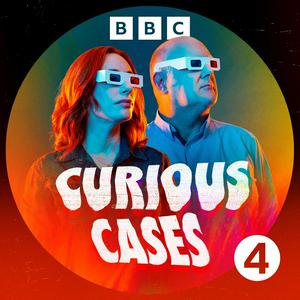
Get the free radio.net app
- Stations and podcasts to bookmark
- Stream via Wi-Fi or Bluetooth
- Supports Carplay & Android Auto
- Many other app features
Get the free radio.net app
- Stations and podcasts to bookmark
- Stream via Wi-Fi or Bluetooth
- Supports Carplay & Android Auto
- Many other app features

Curious Cases
Scan code,
download the app,
start listening.
download the app,
start listening.
Curious Cases: Podcasts in Family
 New Zealand