

Listen to this podcast in the app for free: Download for free in the App Store
radio.net
Sleep timer
Save favourites
547 episodes
We're a work in progress (STTA 383)
07/04/2026 | 2 mins.Something To Think About Series #383
Thought of the day from Venerable Robina CourtinThe mind is the boss not the outside world (STTA 382)
06/04/2026 | 2 mins.Something To Think About Series #382
Thought of the day from Venerable Robina CourtinPractice having happy thoughts (STTA 381)
05/04/2026 | 1 mins.Something To Think About Series #381
Thought of the day from Venerable Robina CourtinAnger doesn't help (STTA 380)
04/04/2026 | 2 mins.Something To Think About Series #380
Thought of the day from Venerable Robina CourtinNow is the time for compassion (STTA 379)
03/04/2026 | 0 mins.Something To Think About Series #379
Thought of the day from Venerable Robina Courtin
More Buddhism podcasts
 Heart Wisdom with Jack KornfieldBuddhism, Religion & Spirituality
 Insight Hour with Joseph GoldsteinBuddhism, Religion & Spirituality, Society & Culture
 หลวงปู่ปราโมทย์ ปาโมชฺโช วัดสวนสันติธรรมBuddhism, Education, Religion & Spirituality
 Stillness Flowing (audiobook)Buddhism, Religion & Spirituality
 Tara BrachBuddhism, Health & Wellness, Mental Health, Religion & Spirituality
 BuddhismBuddhism, Education, Religion & Spirituality
 Secular BuddhismBuddhism, Philosophy, Religion & Spirituality, Society & Culture, Spirituality
 Tricycle TalksBuddhism, Religion & Spirituality
 AudioDharmaBuddhism, Religion & Spirituality
 Practical Wisdom with Dr. Rick HansonBuddhism, Education, Health & Wellness, Mental Health, Religion & Spirituality, Self-Improvement
Trending Buddhism podcasts
About The Workshop is in the Mind
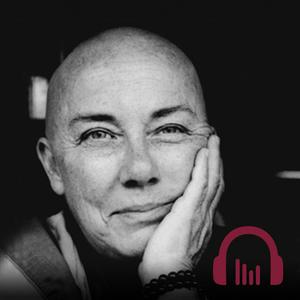
Venerable Robina Courtin weaves a tapestry of modern Buddhist commentary as she illuminates this ancient spiritual path with humor, wit and intensity. This Buddhist program aims to give every listener an opportunity to ponder some of life's deepest questions such as:
"Why do bad and good things happen? Is it karma? How can I overcome insecurity and start to care deeply for other beings? Can I lessen my depression and fears? Is reincarnation real? What is the mind? Exactly what is enlightenment?
A Buddhist nun since the late 1970s, Robina Courtin has worked since then with the Foundation for the Preservation of the Mahayana Tradition, a worldwide network of Tibetan Buddhist activities of Lama Yeshe and Lama Zopa Rinopche. She has served as editorial director of Wisdom Publications, editor of Mandala magazine, and executive director of Liberation Prison Project. Her life, as well as her work with prisoners, has been featured in the documentary films "Chasing Buddha and Key to Freedom".
Podcast websiteListen to The Workshop is in the Mind, Heart Wisdom with Jack Kornfield and many other podcasts from around the world with the radio.net app
Get the free radio.net app
- Stations and podcasts to bookmark
- Stream via Wi-Fi or Bluetooth
- Supports Carplay & Android Auto
- Many other app features
Get the free radio.net app
- Stations and podcasts to bookmark
- Stream via Wi-Fi or Bluetooth
- Supports Carplay & Android Auto
- Many other app features

The Workshop is in the Mind
Scan code,
download the app,
start listening.
download the app,
start listening.
 New Zealand