
Listen to this podcast in the app for free: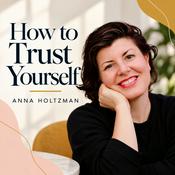 Download for free in the App Store
radio.net
Sleep timer
Save favourites
143 episodes
Ep 143 Who Am I Now? Navigating Transition, Identity & the Space Between with Andrea Nakayama
23/10/2026 | 58 mins.What happens when a role, relationship, career, or version of yourself that once defined you no longer fits — but you don’t yet know what comes next?
In this episode, Anna sits down with Functional Medicine Nutritionist, writer, educator, and entrepreneur Andrea Nakayama for a deeply personal conversation about transition, identity, endings, and the uncertain space between who we were and who we’re becoming.
Andrea’s own life has included profound transitions. After losing her husband to brain cancer while raising their young son, she left a career in book publishing and entered the world of functional nutrition. She later founded the Functional Nutrition Alliance, growing it into a global health education company that trained thousands of practitioners before selling the business and, years later, ultimately leaving the company she had created.
That experience brought Andrea face-to-face with a question many of us encounter in different forms throughout our lives: Who am I without the role that has defined me?
Anna and Andrea explore why transitions can feel so destabilizing, why our culture offers so few rituals for endings, and why the in-between period isn’t necessarily something to rush through. Andrea shares the idea of “provisional states” — the seasons when we’re trying on possible versions of what comes next — and how learning to honor that experimentation can bring more compassion to ourselves and others.
They also talk about motherhood, aging, menopause, discernment, narrative medicine, and what happens when we loosen our grip on the life we thought we were supposed to have and become curious about what might be emerging.
In this episode:
• Why identity can become so intertwined with our work and roles
• The three choices Andrea saw when she realized something no longer fit: fight, swallow, or leave
• Why endings deserve ritual and acknowledgment
• What “provisional states” can teach us about uncertainty
• The difference between looking for a new identity and learning to tolerate not knowing
• Why transition can feel especially intense in midlife
• How aging changes our relationship with striving, fixing, and acceptance
• The role of writing and narrative medicine in making sense of our lives
• Why pausing can help us hear our own voice amid everyone else’s messages
• The difference between grasping for what was and opening to what might be
• Andrea’s experience of letting go as her son moved across the world
• Why discernment has become central to Andrea’s current work
• How remembering what other women have survived can help us trust our own capacity to move through change
Connect with Andrea
Website: https://www.andreanakayama.com
Substack: https://andreanakayama.substack.com
Instagram: @andreanakayama
Connect with Anna
Website: https://www.annaholtzmantherapy.com
Instagram: https://www.instagram.com/anna_holtzman
LinkedIn: https://www.linkedin.com/in/annaholtzman/Ep 142 The Emotional Life of Money with Katy Chen Mazzara
16/10/2026 | 56 mins.What if the biggest obstacles in your financial life aren’t really about numbers?
In this episode of How to Trust Yourself, Anna talks with trauma-informed financial wellness coach Katy Chen Mazzara about the emotional stories, childhood experiences, and nervous-system patterns that shape our relationships with money.
Before becoming a coach, Katy spent more than 15 years as a freelance television producer and development executive, experiencing firsthand the feast-or-famine cycle that is so common in creative careers. Her own desire to understand how to create financial stability eventually led her to study financial planning at UC Berkeley and become certified in trauma-informed somatic coaching.
Today, Katy brings those worlds together, helping creatives, freelancers, and entrepreneurs understand both the practical and emotional sides of money.
Anna and Katy explore why simply knowing what we “should” do financially often isn’t enough to change our behavior. They talk about the money beliefs we absorb in childhood, the cultural mythology of the “starving artist,” and why shame, fear, and self-punishment can actually make financial change harder.
They also explore what it means to feel safe enough to receive more, advocate for yourself, raise your rates, invest, or pursue opportunities—and why releasing attachment doesn’t mean releasing responsibility or effort.
In this episode, Anna and Katy discuss:
• How childhood experiences shape our unconscious beliefs about money
• Why financial problems aren’t always solved by spreadsheets or better information
• The “starving artist” story and the ways it can keep creatives small
• The connection between self-worth, advocacy, and earning
• Why shame and self-punishment can perpetuate financial struggles
• How trauma-informed and somatic work can help shift entrenched money patterns
• The difference between releasing attachment and giving up effort
• Why play, ease, and nervous-system safety can sometimes help us move forward
• Money as part of an interpersonal and energetic exchange
• How greater emotional freedom can ripple into work, relationships, creativity, and finances
• Why it’s never too late to create a different relationship with money
Katy’s work offers a compassionate alternative to the idea that financial change requires being harder on ourselves. Instead, she invites us to become curious about where our beliefs came from, create enough safety to examine them, and begin making more conscious choices about what we want to carry forward.
Connect with Katy Chen Mazzara
Free Mindful Money Mastery Guide: https://www.subscribepage.com/mindfulmoneymastery
Website: https://www.katychenmazzara.com/
Instagram: https://www.instagram.com/katychenmazzara/
Connect with Anna Holtzman
Website: www.annaholtzman.com
Instagram: https://www.instagram.com/anna_holtzman/
LinkedIn: https://www.linkedin.com/in/anna-holtzman/Ep 141 Unlearning Pain, Trusting Your Body & Finding Your Authentic Self with Dr. Howard Schubiner
09/10/2026 | 1hWhat happens when the signals coming from your body feel real, urgent, and convincing — but may not be telling you what you think they are?
In this episode, I welcome Dr. Howard Schubiner back to How to Trust Yourself for a conversation about chronic pain, neuroplastic symptoms, emotional expression, self-trust, and the complicated process of learning how to interpret what our bodies are telling us.
Howard is an internist, Clinical Professor at Michigan State University College of Human Medicine, and a leading voice in the field of mind-body medicine. His work played an important role in my own recovery from chronic migraine, and it has deeply influenced the way I think about the relationship between emotions, the nervous system, and physical symptoms.
Howard joins me to talk about his new book, Unlearn Your Pain: The Science of Recovering from Chronic Pain, Fatigue, Anxiety and Depression, and about how his understanding of chronic symptoms has evolved over more than two decades of working in this field.
We explore what it means to say that pain and other symptoms can be generated by the brain — without suggesting that they are imaginary or “all in your head” — and why understanding neuroplasticity can open up new possibilities for recovery.
But our conversation also goes beyond chronic pain. We talk about the connection between symptoms and authenticity, what can happen when you’ve spent years suppressing anger or avoiding conflict, and why beginning to express yourself more honestly can sometimes initially feel worse rather than better.
We also explore one of the central questions of this podcast: How do you trust yourself when your own brain can sometimes misinterpret danger?
In this conversation, we talk about:
• What neuroplastic or brain-generated symptoms actually are
• Why emotional pain can sometimes show up as physical pain
• How the brain learns and reinforces patterns of pain, fear, anxiety, and other symptoms
• Howard’s evolving understanding of predictive processing and how the brain creates our experience
• The role of Emotion Awareness and Expression Therapy (EAET)
• Why suppressing your authentic self can contribute to physical and emotional symptoms
• The difference between privately processing anger and publicly expressing it
• Why asserting yourself may initially trigger guilt, fear, or even physical symptoms
• How people-pleasing and conflict avoidance can become deeply ingrained nervous-system patterns
• Why repetition and practice can help the brain learn that new ways of responding are safe
• Howard’s own experience with symptoms and health anxiety while launching his new book
• How to distinguish between a symptom that needs medical evaluation and one that may be neuroplastic
• The risks of both over-focusing and under-focusing on bodily sensations
• Why “trust your body” isn’t always as simple as it sounds
• How to cultivate discernment rather than blind trust
• Why getting conflicting opinions can sometimes help you realize there may not be one objectively “right” answer
• The importance of becoming your own advocate
• How trusted relationships and co-regulation can support self-trust
• Why certainty, belief, and flexibility all matter when navigating uncertainty
• The role authenticity can play in healing
• Why humor, connection, and community are such important parts of this work
Connect with Dr. Howard Schubiner
Website: https://www.unlearnyourpain.com/
Book: Unlearn Your Pain: The Science of Recovering from Chronic Pain, Fatigue, Anxiety and Depression
Association for the Treatment of Neuroplastic Symptoms: https://www.symptomatic.me/
TMS Wiki: https://www.tmswiki.org/
Connect with Anna Holtzman
Website: https://www.annaholtzman.com/
Instagram: https://www.instagram.com/anna_holtzman/
LinkedIn: https://www.linkedin.com/in/anna-holtzman/Ep 140 From Trauma-Led Success to True Expansion with Farya Barlas
02/10/2026 | 59 mins.What if the very patterns that helped you become successful are also the patterns limiting how much success, joy, ease, and visibility you can actually hold?
In this episode, Anna talks with Chartered Psychologist Farya Barlas about what Farya calls trauma-led success — the ways that perfectionism, hyper-independence, overworking, people-pleasing, and other survival adaptations can become highly effective strategies for achievement.
These patterns aren’t inherently bad. In fact, they may be part of what helped you build the life or career you have today. But at a certain point, the same strategies that once protected and propelled you can begin to create a ceiling.
Farya shares how she helps high-achieving women move from success fueled by survival into what she calls reparative success: building from desire, capacity, creativity, choice, and a deeper sense of self-trust.
Anna and Farya also explore why healing doesn’t have to mean losing your edge, why discomfort isn’t always a sign that something is wrong, and how nervous-system work can support expansion rather than simply helping us stay comfortable inside familiar patterns.
They discuss money, ambition, visibility, identity, inherited beliefs about success, and the subtle signals that can tell us we’re ready for something more — even when, from the outside, everything appears to be going well.
In this episode, we explore:
• What “trauma-led success” looks like in high achievers
• Why survival strategies are often rewarded professionally
• The fear that healing will make us less ambitious or successful
• The difference between trauma-led success and reparative success
• Why nervous-system regulation isn’t always about avoiding discomfort
• How perfectionism and hyper-independence can become a ceiling
• The difference between authentic visibility and performing visibility
• How childhood and intergenerational beliefs can shape our relationship with money and receiving
• Why people often enter this work through business, leadership, money, or relationship challenges rather than a desire to “heal”
• How Farya helps clients build greater capacity for asking, receiving, earning, and being seen
• Why healing can be the foundation rather than the destination
• The question at the heart of Farya’s work: How good can it get?
About Farya Barlas
Farya Barlas is a Chartered Psychologist with more than 23 years of clinical experience. Her work focuses on helping high-functioning, ambitious women understand and move beyond subconscious survival-based patterns that can limit their capacity for success, visibility, wealth, leadership, and fulfillment.
Drawing from trauma work, nervous-system regulation, psychology, identity work, and decades of clinical experience, Farya helps clients move from simply surviving their success to fully inhabiting it.
She is also the host of the podcast From Trauma to CEO.
Connect with Farya
Website: https://www.faryabarlas.com
Instagram: @faryabarlas.psychologist
Podcast: From Trauma to CEO
Farya also generously offered listeners access to her trauma-led success checklist along with one day of Voxer access to explore what comes up as you work through it. Find the link in the show notes.
Connect with Anna
Website: https://www.annaholtzman.com
Instagram: https://www.instagram.com/anna_holtzman/
LinkedIn: https://www.linkedin.com/in/annaholtzman/Ep 139 How to Honor Your Capacity Without Shrinking Your Life with Nikita Williams
25/09/2026 | 1h 13 mins.What if your capacity isn’t a limitation to overcome, but information you can build around?
In this episode, Anna talks with business strategist and coach Nikita Williams about what it means to create a business — and a life — that works with your actual energy, needs, and rhythms rather than constantly demanding that you override them.
Nikita is the founder of Crafted to Thrive and host of the Business With Chronic Illness podcast. Since 2017, she has helped creatives, holistic practitioners, and entrepreneurs living with chronic illness build sustainable businesses that create consistent revenue without requiring them to constantly do more.
Together, Anna and Nikita explore the shame that can arise around having limited or changing capacity, the pressure to follow one-size-fits-all formulas, and the surprising discomfort that can come with allowing things to become easier.
They also talk about visibility, self-trust, boundaries, nervous system patterns, identity, and why so many entrepreneurs unintentionally recreate the same rigid systems they wanted to escape in the first place.
In this conversation, you’ll hear about:
• Why “increase your capacity” can be such an unhelpful message
• Learning to treat your energy as something to steward rather than exploit
• How chronic illness shaped Nikita’s approach to business
• Why ease can feel uncomfortable, even when it’s exactly what you need
• The vulnerability of being visible and sharing who you really are
• How success can still be unsustainable
• Why boundaries are essential to building freedom
• The difference between having offers and having an actual business model
• How doing less can sometimes create better results
• What it means to trust that your pace is your pace
• Why Nikita believes business is deeply personal
• Building around your values, strengths, health, and real life instead of someone else’s formula
One of the central ideas in this episode is simple but powerful: your pace does not have to match anyone else’s.
As Nikita puts it, “My pace is my pace.”
This conversation is for anyone who has ever wondered whether they’re doing enough, moving fast enough, working hard enough, or somehow falling behind — and wants to experiment with building from a place of attunement instead.
Connect with Nikita Williams
Website: https://thrivewithnikita.com/
Instagram: https://www.instagram.com/thrivewithnikita/
Podcast: Business With Chronic Illness, available wherever you listen to podcasts.
You can also explore Nikita’s free business audit and join her email community, Built to Breathe, through her website.
Connect with Anna Holtzman
Website: www.annaholtzman.com
Instagram: https://www.instagram.com/anna_holtzman/
LinkedIn: https://www.linkedin.com/in/anna-holtzman/
More Education podcasts






Trending Education podcasts



















About How to Trust Yourself with Anna Holtzman
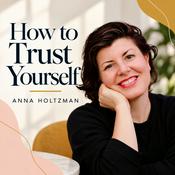
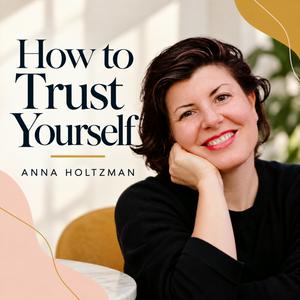
How to Trust Yourself is a podcast about what it takes to build a life that actually feels like your own. Psychotherapist and coach Anna Holtzman explores the roles we inherit, the expectations we absorb, the things we think we should be grateful for, and the wants we’re sometimes afraid to admit even to ourselves. Through personal reflections and conversations with thoughtful guests, Anna explores relationships, family, ambition, money, identity, belonging, pleasure, and learning to trust your own voice.
annaholtzman.com
Instagram: @anna_holtzman
Podcast websiteListen to How to Trust Yourself with Anna Holtzman, 6 Minute English and many other podcasts from around the world with the radio.net app
Get the free radio.net app
- Stations and podcasts to bookmark
- Stream via Wi-Fi or Bluetooth
- Supports Carplay & Android Auto
- Many other app features
Get the free radio.net app
- Stations and podcasts to bookmark
- Stream via Wi-Fi or Bluetooth
- Supports Carplay & Android Auto
- Many other app features

How to Trust Yourself with Anna Holtzman
Scan code,
download the app,
start listening.
download the app,
start listening.
 New Zealand
