

Listen to this podcast in the app for free: Download for free in the App Store
radio.net
Sleep timer
Save favourites
13 episodes
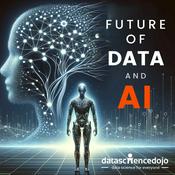
Dan Maloney on Visual AI, Agentic Document Extraction & Building Trust in Enterprise AI | Episode 11
12/08/2026 | 1h 17 mins.OCR has been around for more than 40 years. So why do the world's biggest banks still have thousands of people reading documents by hand? When Dan Maloney became CEO of Landing AI in 2024, as Andrew Ng stepped back from the day-to-day, he was returning to a problem he had first worked on at SAP back in 2001. When he looked closely at it again two decades later, he was struck by how little it had actually moved. Landing AI's mission is to make the world's documents computable. Instead of growing up from OCR and patching its limits with templates and heuristics, Landing AI came at the problem from visual AI, blending purpose-built models, an intelligent router, and agentic reasoning into a single system that reads a document the way a person does. Today that system extracts structured data from the messiest documents enterprises have, the scanned pages, the tables inside tables, the handwritten forms, at accuracy levels they can build on. Before every enterprise had an AI strategy... Before "agentic" became a boardroom word... Before the industry spent a year token maxing... There was a quieter, more stubborn problem: The world's data was trapped in documents, and no one could read it at scale. In this episode of the Future of Data & AI Podcast, Dan Maloney, CEO of Landing AI and a two-decade veteran of enterprise software and AI, joins Raja Iqbal for a grounded conversation about what it actually takes to move visual AI from an impressive demo into production. Dan is candid about where the hype outruns reality, why the model is the smallest part of the equation, and how a company earns the trust of a compliance team, not just an engineering one. What You'll Discover 🔹Why "good enough" accuracy can be as costly as zero accuracy. At billions of documents, a small error rate forces humans back into the loop. Dan explains why the goal is to get so close to 100% that enterprises can stop checking.🔹Why the model is the smallest part of the system. Landing AI blends its own document pre-trained transformers with LLMs only when needed, wrapped in a harness that handles routing, parsing, and extraction. The intelligence is in the system, not the model alone.🔹How Landing AI reads a document the way a person does. Its DPTx models take in layout, tables, figures, signatures, and marginalia, break them down to the block and word level, and hand each piece to the right model downstream.🔹Why document processing is 80% a vision problem. Dan explains how solving the visual complexity first, the columns, the modalities, the spatial structure, turns the rest into a much simpler language problem.🔹How you earn trust from compliance, not just engineering. Visual grounding shows exactly where every answer came from. SaaS, VPC, on-prem, and air-gapped deployments let regulated industries adopt AI without their data ever leaving the building.🔹Why token maxing gave way to a reckoning. Companies loosened the guardrails to see what AI could do, then met the bill. Dan explains what separates spend that changes the game from spend with nothing to show for it.🔹Why you shouldn't boil the ocean. Dan's advice for leaders getting started: pick one core, high-value use case, prove it end to end, and learn the orchestration, retries, and human-in-the-loop decisions that carry over to everything else.🔹Where document intelligence is headed. Dan makes the case that freeing humans from decades of administrative document work is the disruption that unlocks entirely new revenue models and businesses. This Episode Is For 🔹ML and AI engineers building document ingestion and extraction pipelines 🔹Enterprise and data leaders deploying AI in regulated industries 🔹CIOs and CISOs weighing SaaS, VPC, and on-prem trade-offs 🔹Teams trying to measure real ROI on their AI spend 🔹Anyone thinking seriously about visual AI, trust, and scaleMark Cavage on Agentic AI, Sandboxing & Enterprise Security | Ep 10
12/05/2026 | 1hHe helped build the infrastructure that runs the modern internet. First AWS. Then Oracle Cloud Infrastructure. Then Heroku. Then Stripe. Now he's at Docker — and he thinks we're about to need a completely new layer underneath all of it.
When Mark Cavage, President & COO of Docker, joined the company, the question wasn't whether agents were coming. It was whether the infrastructure underneath them was ready.
It wasn't.
Before anyone was talking about agentic workloads in production…Before AI tools started writing, running, and deploying their own code…Before CISOs had a framework for reasoning about autonomous systems…
There was a simple but uncomfortable realization:
Containers were built for immutable, predictable software. Agents want to mutate everything.
In this episode of the Future of Data & AI Podcast, Mark Cavage — President & COO of Docker and one of the founding engineers of Oracle Cloud Infrastructure — joins Raja Iqbal for a candid conversation about what the agentic era actually demands from infrastructure.
Mark has spent over two decades building the systems that power modern cloud. Through Docker, he's now working on the sandbox layer that lets enterprises deploy agents at scale — without handing over control to a system nobody fully understands yet.
This conversation goes beyond the hype.
What You'll Discover:
Why containers alone aren't enough for the agentic era.Containers were built for immutable software. Agents mutate, write, and act — and Mark explains exactly what breaks, and what Docker built to fix it.
What YOLO mode actually means — and why it matters.Agents running without a human in the loop sounds reckless. Mark explains why that's actually the goal, and how the micro VM sandbox makes it safe enough for enterprise.
The 1000x risk surface no one is talking about.Every AI-generated pull request, every "authored by Claude" commit, every autonomously deployed dependency is stacking security debt. Mark breaks down what that means for your CISO.
Trusted MCP servers and Docker Hardened Images.What they are, why they exist, and why supply chain security for AI tools is about to become one of the most important conversations in enterprise tech.
Mark's bets for the next 12 months.CFOs demanding ROI on token spend, the open source project that no one is talking about, and what the future of Agentic AI looks like.
This episode is for:
ML engineers and DevOps teams building with agents
CISOs and security leaders managing a 1000x larger risk surface
Platform and infrastructure leads evaluating MCP servers and supply chain security
CTOs and engineering leaders figuring out what "agentic" actually means for their org
Founders deciding where the next infrastructure layer gets built
This isn't a conversation about demos or roadmaps.
It's about the infrastructure that agents actually need to run safely, reliably, and at scale — and whether the industry is building it fast enough.
If you're deploying agents in production, managing the security conversation, or trying to understand where Docker fits in the agentic stack… this episode is worth your time.
Explore all recordingsJoão Moura on Multi-Agent Systems, Autonomous Workflows & AI Entrepreneurship
05/03/2026 | 1h 16 mins.🎙️ Future of Data and AI Podcast: Episode 09 with João Moura
He just wanted to automate his own work, but it turned into an AI platform that is now used by top enterprises. How?
When João Moura, founder and CEO of CrewAI, started building AI agents; it wasn’t to launch a business, he just wanted to make his job easier. Starting at Clearbit, he built a set of agents to automate content creation to post more on LinkedIn… and ended up generating up to 600 inbound leads a day.
Instead of relying on a single AI tool, João’s multi-agent systems divide big tasks into smaller ones, letting specialized "crew" of agents collaborate to get work done.
That experiment evolved into CrewAI — a platform where teams can manage, deploy, and track crews of AI Agents handling routine workflows, all from a single dashboard. Today, CrewAI is redefining how the world’s largest organizations leverage multi-agent systems, from Oracle to the U.S. Department of Defense.
Before AI agents became the hottest trend in enterprise tech…
Before every company had 50+ use cases mapped out…
Before “autonomous workflows” became a boardroom priority…
There was a simple but uncomfortable realization:
Building agents is easy. Deploying them is hard.
In this episode of the Future of Data & AI Podcast, João Moura — CEO of CrewAI and former Director of AI Engineering at Clearbit — joins us for a deep dive into the real state of agentic AI.
João has spent over 20 years in software engineering and AI leadership, and through CrewAI, he’s working with major enterprises — including government agencies and global corporations — to move AI agents from proof-of-concept to production.
This conversation goes far beyond hype.
Why building agents has zero value — unless they see the light of day.
João explains why most AI projects stall after POCs and what separates experiments from real business impact.
The biggest misconception about agentic AI.
AI agents aren’t magical. They require strong engineering discipline, governance, and architecture — sometimes more software engineering than AI.
From guardrails to trust.
How enterprises handle non-determinism, hallucinations, prompt injection, and MCP security — using layered guardrails, LLM-as-a-judge, role-based access control, and observability.
The real bottleneck isn’t intelligence — it’s deployment.
Models are already good enough. The hard part is compliance, traceability, monitoring, and integrating with existing enterprise systems.
Why simplicity beats over-engineering.
João shares a powerful insight: complexity never disappears — you just choose where to put it. Senior engineers understand this. Many teams don’t.
How enterprises mature with AI.
Organizations typically start with cost savings, move to revenue generation, and eventually unlock innovation they hadn’t imagined before.
Open source vs. enterprise AI.
Why CrewAI chose an open-source-first strategy — and how the business model works when moving from prototyping to production-grade orchestration.
Advice for AI founders.
João speaks candidly about entrepreneurship in the AI era — the hype, the competition, investor psychology, and why this may be a once-in-a-generation opportunity.
This episode is for:
AI engineers building multi-agent systems
CIOs and enterprise leaders deploying autonomous workflows
Founders launching AI startups
Teams struggling to move from POC to production
Anyone thinking seriously about trust, governance, and scale in AI
This isn’t a conversation about shiny demos.
It’s about building AI systems that run reliably, securely, and at scale — in the real world.
If you’re working on multi-agent systems, autonomous workflows, enterprise AI infrastructure, or AI entrepreneurship… this episode will change how you think about shipping AI.Emil Eifrem on Neo4j, Graph Databases, Connected Data & Graph-Native AI
16/01/2026 | 1h 10 mins.🎙️ Future of Data and AI Podcast: Episode 08 with Emil EifremBefore graph databases were everywhere…Before knowledge graphs became essential to AI…Before LLMs, embeddings, and RAG entered the conversation…There was one simple, stubborn idea: data makes more sense when you understand the relationships.In this engaging and insightful episode, Emil Eifrem (Co-Founder & CEO | Neo4j) shares the story behind building Neo4j — the graph database platform that quietly reshaped how the world models and reasons over data. Emil takes us through the early days when graph databases felt risky, misunderstood, and years ahead of the market, and explains why connected data mirrors human thinking better than tables, rows, and columns ever could.What you’ll discover:🔹Why relationships became the foundation of Neo4j — and how treating them as first-class citizens changed everything.🔹How property graph models preserve context, making complex systems easier to reason about and analyze.🔹Unexpected ways graph databases are powering fraud detection, recommendations, cybersecurity, and enterprise knowledge.🔹Why knowledge graphs quietly became essential to modern AI — long before most people noticed.🔹How graphs and LLMs work together to ground AI systems in structure, meaning, and explainability.🔹Insights on building deep infrastructure technology with patience, conviction, and long-term vision.This is more than a conversation about AI, graphs, or databases. It’s a look at how intelligence — human or artificial — depends on connections, context, and understanding.📌 If you’ve ever wondered:- Why AI sometimes feels confident but wrong- How machines can reason instead of just predict- Why some technologies take years before the world catches up…this episode will change how you think about data, AI, and connected systems.🔹A must-listen for: data scientists, AI practitioners, knowledge graph enthusiasts, graph database users, enterprise architects, AI researchers, and anyone curious about how connected data powers modern AI.Prepare to walk away inspired.Keywords: Emil Eifrem, Neo4j, graph databases, knowledge graphs, property graph model, AI reasoning, connected data, enterprise AI, graph analytics, fraud detection AI, AI infrastructure, LLM applications, RAG, embeddings, AI explainability, building data platforms, AI strategy, human-like reasoning, data science insights, graph AI, Neo4j interview, AI podcast, Future of Data and AI PodcastFor more episodes: https://www.youtube.com/playlist?list=PL8eNk_zTBST_jMlmiokwBVfS_BqbAt0z2For highlights, check out: https://www.youtube.com/playlist?list=PL8eNk_zTBST-YYNgPcw3rO9Tvn7fEjR4AVisit our podcast page for more info: https://datasciencedojo.com/podcast/Joshua Starmer on StatQuest, Storytelling, Next-Gen Learning & His Iconic BAMs
05/12/2025 | 50 mins.Before StatQuest became the go-to learning companion for millions of AI and ML practitioners…
Before the “BAM! Double BAM! Triple BAM!” became a teaching tool that many learners adore...
There was just one guy in a genetics lab, trying desperately to explain his data analysis to coworkers so they didn't think he was working magic.
In this deeply personal and inspiring episode, Joshua Starmer (CEO & Founder | StatQuest) shares the real story behind his rise — a journey shaped by strategy, struggle, blunt feedback, and a relentless desire to make complicated ideas simple.
What you’ll discover:
🔹How Josh went from helping colleagues in a genetics lab to becoming a renowned educator, treasuring his first 9 views and 2 subscribers as a big win.
🔹How early feedback Josh received as a kid became a quiet spark — motivating him to improve how he explained things and ultimately shaping the teaching style millions now rely on.
🔹How his method for breaking down complex topics with unique tools like his iconic BAM! help make learning lighter and less intimidating.
🔹His thoughts on AI tutors, avatars, and interactive learning and how ethics, bias, and hallucinations relate to next-gen learning.
This is more than a conversation about statistics, data science, AI, education, or YouTube. It’s the story of a researcher who never imagined starting a learning platform, yet became one of the most trusted teachers in statistics and machine learning—turning frustration into clarity, confusion into curiosity, and small beginnings into a massive global impact.
📌 If you’ve ever struggled with PCA, logistic regression, K-means clustering, neural networks, or any tricky stats and ML concepts… chances are StatQuest made it click. Now, hear from the creator himself about what goes on behind the scenes. Now you’ll finally understand how he made it click.
🔹A must-listen for: AI/ML learners, data scientists, educators, content creators, self-taught enthusiasts, and anyone who’s faced the fear of “I’m not good at explaining things.”Prepare to walk away inspired — and with a renewed belief that clarity is a superpower anyone can learn.
More Technology podcasts






Trending Technology podcasts









About Future of Data and AI
Throughout history, we've chased the extraordinary. Today, the spotlight is on AI—a game-changer, redefining human potential, augmenting our capabilities, and fueling creativity. If you're curious about AI and how it is reshaping the world, you're in the place. Our podcast dives deep into the trends and developments in AI and technology, weaving together the past, present, and future. This podcast explores the profound impact of AI on society, through the lens of the most brilliant and inspiring minds in the industry.
Learn more about us: https://hubs.la/Q02q-dj20
Podcast websiteListen to Future of Data and AI, Dwarkesh Podcast and many other podcasts from around the world with the radio.net app
Get the free radio.net app
- Stations and podcasts to bookmark
- Stream via Wi-Fi or Bluetooth
- Supports Carplay & Android Auto
- Many other app features
Get the free radio.net app
- Stations and podcasts to bookmark
- Stream via Wi-Fi or Bluetooth
- Supports Carplay & Android Auto
- Many other app features

Future of Data and AI
Scan code,
download the app,
start listening.
download the app,
start listening.
 New Zealand