
Listen to this podcast in the app for free: Download for free in the App Store
radio.net
Sleep timer
Save favourites
638 episodes
Why Asking Better Questions Changes Everything With Dr. J.R. Briggs
20/10/2026 | 36 mins.What if one of the most important skills for following Jesus is something we rarely study: asking good questions?
Michael Easley sits down with J.R. Briggs, author of The Art of Asking Better Questions, to explore how our questions shape our relationships, spiritual maturity, and conversations with others.
J.R. explains why thoughtful questions are an expression of hospitality, how “shift responses” can turn conversations back toward ourselves, and why curiosity, wisdom, humility, and courage are essential for asking better questions.
The conversation also moves into a deeper question: What do we ask God when life hurts? J.R. shares a framework for moving from “Why did this happen?” toward asking what God may be forming in us through difficulty.
Most importantly, Michael and J.R. examine the questions of Jesus. Jesus asked more than 300 questions, often using questions to invite people into deeper reflection rather than simply giving them answers.
If you want to become a better listener, deepen your relationships, grow in spiritual maturity, or learn to engage people with greater curiosity and humility, this conversation will give you practical ways to start.
CHAPTERS
00:00 — Why We Should Study Jesus’ Questions
01:44 — Meet J.R. Briggs
03:56 — Living With Your Arrows Pointing Out
05:18 — Stop Asking Lazy Questions
06:48 — Shift Responses vs. Support Responses
08:46 — The Quality of Your Questions
09:59 — Asking Better Questions at Church
13:52 — Questions as Hospitality
15:04 — “Tell Me Your Story”
16:08 — The Connection Between Questions and Listening
17:16 — How Questions Engage the Brain
19:16 — The Questions God Asks
21:43 — Asking Better Questions in Pain
22:51 — From “Why?” to “What Is God Forming?”
25:44 — Does Spiritual Maturity Come With Age?
27:03 — What Do You Need to Unlearn?
30:21 — Wisdom Revealed Through Questions
31:20 — Studying the Questions of Jesus
34:01 — Questions That Keep Working After the Conversation
34:41 — The Art of Asking Better Questions
KEY TOPICS
• Asking better questions
• Jesus’ questions
• Listening well
• Curiosity, wisdom, humility, and courage
• Questions and spiritual maturity
• Faith in seasons of suffering
• Discipleship and community
• Hospitality through conversation
• Learning, unlearning, and relearning
• Loving others by keeping our “arrows pointing out”
Links Mentioned:
The Art of Asking Better Questions by Dr. J.R. Briggs
Dr. Briggs’ website
Watch the highlights and full version of this interview on our Youtube channel.
For more inContext interviews, click here.The Biblical Reason You Need Sleep With Brett McCracken
13/10/2026 | 35 mins.What does sleep have to do with trusting God?
Michael Easley sits down with Brett McCracken, author of The Wisdom of Sleep, to explore why God designed us to sleep, what rest reveals about our dependence on Him, and how our technology-driven culture has changed the way we work and rest.
Sleep reminds us that we are creatures, not the Creator. We cannot always be working, producing, watching, or striving. At some point, we have to stop—and trust that God continues to provide while we rest.
Brett and Michael discuss the biblical wisdom of Psalm 127, the connection between sleep and Sabbath, the impact of phones and screens on rest, the dangers of blurred work-life boundaries, and why receiving sleep can point us toward the gospel of grace.
In a culture marked by anxiety and exhaustion, learning to rest may become a powerful way to live differently.
Key Topics Covered:
- Why God designed us to sleep
- Sleep as a reminder of our limitations
- Psalm 127 and anxious toil
- Rest and trusting God's provision
- Technology and disrupted sleep
- Work, productivity, and boundaries
- Sleep, Sabbath, and God's abundance
- Sleep as a picture of grace
- Becoming a countercultural witness through rest
Chapters:
00:00 — Welcome & The Wisdom of Sleep
02:23 — Why Talk About Sleep?
04:13 — Why Did God Design Us to Sleep?
06:35 — Sleep as a Reminder That We Are Creatures
08:34 — Is Sleep a Spiritual Discipline?
10:18 — Psalm 127 and Trusting God's Provision
11:21 — Why We Resist Rest
13:02 — How Sleep Affects Our Relationships
16:22 — Technology, Work, and Modern Rest
17:19 — How Screens Disrupt Sleep
20:07 — When Work Follows You Home
21:21 — Sleep as the “Chief Nourisher”
23:46 — Sleep, Resurrection, and the Gospel
24:43 — The Grace We Receive in Sleep
27:11 — Learning to Live Within God's Limits
30:04 — Sleep, Sabbath, and God's Abundance
32:21 — Becoming a Rested, Countercultural Witness
34:45 — Closing Thoughts
Links Mentioned:
Brett’s Website
The Wisdom of Sleep by Brett McCrackenHow to Finish Strong in Every Season of Life With Ed Hatch
06/10/2026 | 48 mins.What happens when the role that once defined you suddenly changes?
Michael Easley sits down with Ed Hatch, author of The Caleb Challenge, to discuss 9/11, military service, retirement, suffering, leadership, legacy, and what it means to finish strong.
Ed's experience in the military—including being at the Pentagon on September 11, 2001—forced him to reconsider what mattered most. That experience eventually shaped his understanding of transition and his work helping others navigate major changes in life.
Drawing from the life of Caleb, Ed describes transition as a process of release, refine, and re-enter. The wilderness wasn't wasted time. It was preparation.
Michael and Ed also discuss why retirement should not mean retiring from God's purposes, how suffering shapes us, and why our legacy should focus on equipping others to continue the mission.
Key Topics
-The impact of 9/11
-Military service and transition
-Retirement and purpose
-Caleb's example of perseverance
-Release, refine, and re-enter
-Suffering and spiritual growth
-Leadership and legacy
-Finishing strong
-Living for the line rather than the dot
Chapters
00:00 – Introduction and the 9/11 connection
02:35 – Ed's experience at the Pentagon on 9/11
06:19 – How 9/11 recalibrated what mattered
08:59 – Why Ed wrote The Caleb Challenge
12:43 – Change versus transition
13:45 – Caleb and finding God's purpose
16:08 – Release, refine, and re-enter
18:03 – Purpose beyond retirement
23:09 – Why transitions are difficult
23:59 – Suffering and spiritual transformation
29:58 – Navigating transition with biblical principles
32:55 – Love, live, lead, and leave a legacy
37:45 – Leading worthy and finishing strong
42:16 – Retirement isn't simply another job transfer
45:18 – The wilderness wasn't wasted time
49:08 – Living for the line, not the dot
50:42 – Final thoughts on The Caleb Challenge
Links Mentioned:
The Caleb Challenge by Ed Hatch
Watch the highlights and full version of this interview on our Youtube channel.
For more inContext interviews, click here.The Best Possible Life With Jim Murphy
29/09/2026 | 38 mins.What if the life you’re working so hard to build isn’t actually the life you want?
Jim Murphy, author of The Best Possible Life, joins Michael Easley for a wide-ranging conversation about achievement, suffering, joy, purpose, unconditional love, and what it means to live fully.
Jim draws from his experience as a professional baseball player, coach, and mentor to high-performing athletes and leaders. He explains why achievement can become a substitute for identity, why we cannot always trust our feelings, and why suffering and difficulty can play an important role in developing wisdom, courage, and strength.
Michael and Jim also discuss parenting, retirement, the pressure to perform, being present, gratitude, and the challenge of mastering the ego.
Chapters
00:00 — Why difficulty is necessary for growth
00:37 — Jim Murphy’s story and the road to The Best Possible Life
01:24 — From professional baseball to a crisis of identity
02:54 — The three worlds model
05:32 — Achievement, identity, and the need for love
07:17 — Why success can leave us empty
09:47 — Purpose, sacrificial love, and joy
11:18 — Happiness vs. joy
13:37 — Trusting God when we are uncertain
14:49 — What unconditional love really means
16:33 — Why you can’t always follow your heart
18:03 — Feelings versus truth
19:01 — Parenting, grit, and doing hard things
21:19 — When achievement doesn’t bring happiness
22:28 — The role of suffering in growth
24:12 — The hidden struggles of high achievers
26:16 — Growth through suffering
26:41 — Four daily goals
29:02 — Learning to live in the present
30:10 — Letting go of achievement
32:07 — What people really want
34:54 — Mastering the ego
36:23 — Learning through pain and experience
Key topics covered
• Achievement and identity
• The pursuit of success
• Unconditional love
• Happiness vs. joy
• Sacrificial love
• Suffering and spiritual growth
• Parenting and grit
• Purpose and retirement
• Presence and gratitude
• High performance
• Mastering the ego
• Love, wisdom, and courage
Links Mentioned:
Inner Excellence website
The Best Possible Life by Jim Murphy
The Inner Excellence 90 Day Challenge
Watch the highlights and full version of this interview on our Youtube channel.
For more inContext interviews, click here.How God Uses People to Shape Us With Hanna Seymour
22/09/2026 | 49 mins.How has God used people to shape your faith, calling, and life?
In this special conversation, Hanna Seymour sits down with her father, Michael Easley, to trace the people and moments God used throughout Michael's journey—from his conversion as a teenager to his years in ministry.
Michael shares how C. Ridley Fatnau used John 3:16 to help him understand the gospel, how Danny File challenged him to pursue Scripture, and how Bob Tolson, Ed Bloom, Floyd Sharp, and others became significant voices in his spiritual formation.
Years later, Bob Tolson told Michael that he had prayed for him every day and followed his ministry through the years. That conversation prompted Michael and Hanna to reflect on the “tapestry” God weaves through our lives.
The challenge is simple: take stock. Remember the people God used. Thank them. Encourage someone. And ask where God may be using you.
Chapters
00:00 – A Different Kind of In Context Conversation03:21 – 16-Year-Old Michael Easley03:45 – Coming to Christ05:48 – The Man Who Taught Him John 3:1608:27 – Danny File and the Power of Friendship10:32 – Hearing the Bible Taught Clearly12:35 – From Tradition to Scripture17:48 – Wrestling With Questions of Authority18:34 – Leaving the Catholic Church20:23 – Considering Seminary23:19 – Ed Bloom and Bible Teaching25:24 – Meeting Floyd Sharp27:37 – Floyd Sharp Comes to Christ29:53 – How God Weaves the Tapestry31:47 – Bob Tolson's Unexpected Phone Call32:38 – “I Pray for You Every Day”34:20 – Taking Stock of Your Life35:10 – The Power of Praying for Children and Grandchildren36:56 – Write the Note39:42 – The Ministry of Encouragement42:24 – Where Is God Using You?46:09 – “Christ Loves You”47:31 – Who Do You Need to Thank?
Key Topics
• God's providence• Spiritual formation• The authority of Scripture• Mentorship and discipleship• Encouragement• Prayer• Legacy• Christian influence• Faithfulness in ministry• Gratitude
Watch the highlights and full version of this interview on our Youtube channel.
For more inContext interviews, click here.
More Christianity podcasts




Trending Christianity podcasts









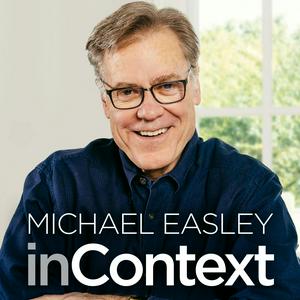
About Michael Easley inContext
Michael Easley inContext is designed to help you form a Biblical worldview through sound Biblical exposition and real-life insights.
Podcast websiteListen to Michael Easley inContext, Outside of Sunday and many other podcasts from around the world with the radio.net app
Get the free radio.net app
- Stations and podcasts to bookmark
- Stream via Wi-Fi or Bluetooth
- Supports Carplay & Android Auto
- Many other app features
Get the free radio.net app
- Stations and podcasts to bookmark
- Stream via Wi-Fi or Bluetooth
- Supports Carplay & Android Auto
- Many other app features

Michael Easley inContext
Scan code,
download the app,
start listening.
download the app,
start listening.
Michael Easley inContext: Podcasts in Family
 New Zealand
