

Listen to this podcast in the app for free: Download for free in the App Store
radio.net
Sleep timer
Save favourites
137 episodes
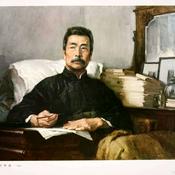
Urban Revolution in Beijing during the Great Leap Forward: An Interview with leading China scholar Fabio Lanza
07/08/2026 | 1h 24 mins.This interview with Dr. Fabio Lanza of the University of Arizona touches on topics related to his new book, Urban Revolution: People’s Communes in Beijing. Topics include the transformation of cities under socialism, women’s liberation, the political economy of socialist society, the Great Leap Forward, and the role of barbers and hairdressers under socialism.
Further reading:
Fabio Lanza, Urban Revolution: People’s Communes in Beijing
Fabio Lanza, The End of Concern: Maoist China, Activism, and Asian Studies
Joel Andreas, Disenfranchised: The Rise and Fall of Industrial Citizenship in China
Mariarosa Dalla Costa, “Women and the Subversion of the Community”
Sigrid Schmalzer, “China's Great Leap Famine: Malthus, Marx, Mao, and Material Scarcity”
Sigrid Schmalzer, Red Revolution, Green Revolution: Scientific Farming in Socialist China
Gail Hershatter, The Gender of Memory: Rural Women and China's Collective Past
Jeremy Brown, City Versus Countryside in Mao's China. Negotiating the Divide
Kimberly Ens Manning, “Making a Great Leap Forward? The Politics of Women’s Liberation in Maoist China”
H-PRC Website (Besides articles and reviews by anglophone scholars, H-PRC also has a section (Revisiting the Revolution) with translations of essays by Chinese scholars on the history of the People’s Republic of China.)
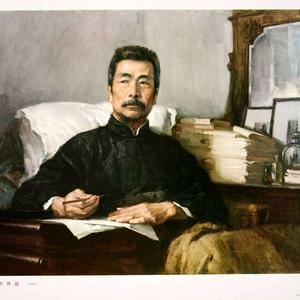
Episode artwork: The cover of Fabio Lanza's new book, Urban Revolution
Subscribe on Substack: peopleshistoryofideas.substack.com
Support the showWinning Over Enemy Troops: Mao’s Leninist Approach to Fomenting Mutiny in the Guomindang (January 1930)
04/04/2026 | 29 mins.When the enemy advances, Mao and Zhu retreat from Fujian into Jiangxi province, drawing the Guomindang’s joint suppression force deep in after them, only to later circle back around and defeat it. In this episode we discuss how Mao conducted propaganda directed at enemy troops in order to win them over to join the Red Army.
Further reading:
Stuart Schram, ed., Mao’s Road to Power, vol. 3: From the Jinggangshan to the Establishment of the Jiangxi Soviets, July 1927-December 1930
Pang Xianzhi and Jin Chongji, Mao Zedong: A Biography, vol. 1: 1893-1949
Bixin Huang, “A Movement Without Vitality: Communist Revolution in Fujian, 1924-1934”
Mao Zedong nianpu, 1893-1937 (毛泽东年谱)
Agnes Smedley, The Great Road: The Life and Times of Chu Teh [Zhu De]
Some names from this episode:
Lin Biao, commander of the first column of the Fourth Red Army
Jin Handing, commander of the joint-suppression force launched against the western Fujian base area
Lo Pinghui, Yunnanese colonel who switched from the Guomindang to the Communists
Episode artwork: photo of Jin Handing
Subscribe on Substack: peopleshistoryofideas.substack.com
Support the showA Single Spark Can Start a Prairie Fire (January 1930) (Part Two)
21/03/2026 | 30 mins.We conclude our close reading of Mao’s January 5, 1930 letter to Lin Biao. In this episode, Mao discusses his method for understanding the possibilities for revolution in China, as well as the particular tactics to be employed by the Red Army. He also conducts a minor self-criticism.
Further reading:
Stuart Schram, ed., Mao’s Road to Power, vol. 3: From the Jinggangshan to the Establishment of the Jiangxi Soviets, July 1927-December 1930
Pang Xianzhi and Jin Chongji, Mao Zedong: A Biography, vol. 1: 1893-1949
Mao Zedong, “A Single Spark Can Start a Prairie Fire”
Some names from this episode:
Lin Biao, commander of the first column of the Fourth Red Army
Lu Diping, general who ruled Hunan from 1928–29 and Jiangxi from 1929-31
Episode artwork:
Envelope from a different letter that Mao wrote to Lin Biao
Subscribe on Substack: peopleshistoryofideas.substack.com
Support the showA Single Spark Can Start a Prairie Fire (January 1930) (Part One)
14/03/2026 | 22 mins.We begin our close reading of Mao’s January 5, 1930 letter to Lin Biao.
Further reading:
Stuart Schram, ed., Mao’s Road to Power, vol. 3: From the Jinggangshan to the Establishment of the Jiangxi Soviets, July 1927-December 1930
Pang Xianzhi and Jin Chongji, Mao Zedong: A Biography, vol. 1: 1893-1949
David Apter and Tony Saich, Revolutionary Discourse in Mao’s Republic
Mao Zedong, “A Single Spark Can Start a Prairie Fire”
Some names from this episode:
Lin Biao, commander of the first column of the Fourth Red Army
Li Lisan, leading Communist
He Long, leader of a soviet in the Hunan-Hubei border region
Li Wenlin, leader of Donggu base area
Fang Zhimin, leader of Northeastern Jiangxi soviet
Episode artwork:
Picture of a prairie fire (in Illinois)
Subscribe on Substack: peopleshistoryofideas.substack.com
Support the showHow Brainwashing was Good and Maoist Propaganda was True: An Interview with leading China scholar Aminda Smith
07/03/2026 | 58 mins.This interview with Dr. Aminda Smith of Michigan State University touches on topics including why good PRC history is left history; thought reform, reeducation through labor, and brainwashing; the veracity of the propaganda produced for a global audience during the Mao years; and the Maoist legacy in China today.
Further reading and watching:
Aminda Smith, Thought Reform and China’s Dangerous Classes
Aminda Smith, “The Maoism of PRC History”
Aminda Smith, “Brainwashing and World Revolution”
Aminda Smith, “The Legacies of 'Brainwashing': Cold War Ideology and Modern Chinese History” (the content of this talk is similar to the paywalled book chapter on brainwashing)
Stephen Andors, China’s Industrial Revolution
Positions Politics website
H-PRC website
Brian DeMare, Land Wars: The Story of China's Agrarian Revolution
Richard Wolin, The Wind From the East: French Intellectuals, the Cultural Revolution, and the Legacy of the 1960s
Philosophy is no Mystery
Mao Zedong, “On Contradiction”
Jonathan Spence, The Search for Modern China
Zheng Yangwen, Ten Lessons in Modern Chinese History
Maurice Meisner, Mao's China and After
Jonathan Spence, The Gate of Heavenly Peace: The Chinese and Their Revolution
Rebecca Karl, Mao Zedong and China in the Twentieth-Century World: A Concise History
Yueran Zhang, “Leninists in a Chinese Factory: Reflections on the Jasic Labour Organising Strategy”
“Seeing through Muddied Waters, Part 1: Jasic, Strikes & Unions”
“New Alliance of Students-Workers in Struggle of Union Formation: The Case of Jasic Conflict”
“Longing for the Cultural Revolution in China Today”
Rae Yang, Spider Eaters: A Memoir
Support the show
More History podcasts
 WW2 Pod: We Have Ways of Making You TalkEducation, History, Society & Culture
 Empire: World HistoryHistory
 You're Dead to MeComedy, History
 ExpanseDocumentary, History, Society & Culture
 Right Answers MostlyHistory, Society & Culture, TV & Film
 The Rest Is ClassifiedHistory
 Short History Of...History
 Dan Snow's History HitHistory
 The Rest Is HistoryHistory
 British ScandalDocumentary, History, Society & Culture
Trending History podcasts
 The C-WordHistory, Society & Culture
 CONFLICTEDHistory, Religion & Spirituality
 AREA52 - DEBRIEFED With Chris RamsayHistory
 Forgotten AustraliaHistory, Society & Culture, True Crime
 Boring History To SleepHistory
 Tudors Dynasty & BeyondHistory
 Irish History PodcastHistory
 The History of EnglandHistory
 The English Heritage PodcastHistory
 The Rabbit Hole DetectivesHistory, Society & Culture
 The AncientsHistory
 ThroughlineDocumentary, History, Society & Culture
 WW2: Both Sides of The WireHistory
 WW1: Not So Quiet On The Western Front!History
 The Pax Romana PodcastHistory
 The History HourHistory, Personal Journals, Society & Culture
 Today In History with The RetrospectorsDocumentary, Film History, History, Society & Culture, TV & Film
About People's History of Ideas Podcast
In this podcast, Matthew Rothwell, author of Transpacific Revolutionaries: The Chinese Revolution in Latin America, explores the global history of ideas related to rebellion and revolution. The main focus of this podcast for the near future will be on the history of the Chinese Revolution, going all the way back to its roots in the initial Chinese reactions to British imperialism during the Opium War of 1839-1842, and then following the development of the revolution and many of the ideas that were products of the revolution through to their transnational diffusion in the late 20th century.
Podcast websiteListen to People's History of Ideas Podcast, WW2 Pod: We Have Ways of Making You Talk and many other podcasts from around the world with the radio.net app
Get the free radio.net app
- Stations and podcasts to bookmark
- Stream via Wi-Fi or Bluetooth
- Supports Carplay & Android Auto
- Many other app features
Get the free radio.net app
- Stations and podcasts to bookmark
- Stream via Wi-Fi or Bluetooth
- Supports Carplay & Android Auto
- Many other app features

People's History of Ideas Podcast
Scan code,
download the app,
start listening.
download the app,
start listening.
 New Zealand