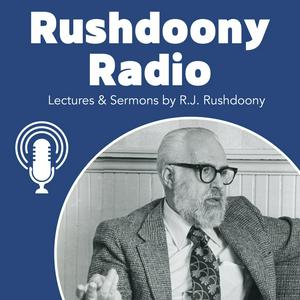
Rushdoony argues the church’s crisis is moral blindness: Christians often treat the unbelieving neighbor as basically good and needing only “Christ added,” but Scripture teaches universal depravity and that, without the church acting as salt, society naturally decays into greater evil and eventually turns on Christians. True community requires something genuinely held in common, yet modern substitutes humanity (“family of man”), race, reason, class, politics, economics, hobbies create only thin connections or deeper division because they refuse to face sin and the need for Christ. He notes modern loneliness: many acquaintances, few real ties; immigrant communities and the family provide limited community, but even these fade unless renewed by Christian faith. Where Christianity revives, the family strengthens and becomes a “trustee family,” rebuilding generational responsibility through education, inheritance planning, and mutual support.
He then grounds community in the biblical covenant: covenant is a treaty of law, and God’s covenant is both law and grace atonement first, then God’s law as the way of life (Deut. 6:20–25). This covenant creates a “community of life” marked by works flowing from living faith; neglecting covenant theology produces antinomianism and irrelevance. He cites historical covenants in early American towns as examples of community built on mutual watchfulness, love, and promoting Christ’s honor. When covenantal community weakens, societies replace it with status “badging” and with the state treating Jesus as mere “fire insurance” instead of Lord so community becomes a tool for control, not shared life in Christ.
Finally, he contrasts Christian community (life) with humanistic community (death). He portrays Enlightenment naturalism as a revolt from Christ to “nature,” culminating in de Sade’s celebration of evil and destruction an emblem of humanism’s will to power and death. In his view, humanism cannot produce brotherhood; it trends toward domination (“a boot stamping on a human face forever”) and the “destroyer” spirit Scripture associates with Satan. By contrast, Christ is repeatedly identified as life (John 1; John 10; John 11; John 14), so only in Christ under His kingship and law can there be lasting community, whether on earth or in eternity."


















 New Zealand