
Listen to this podcast in the app for free: Download for free in the App Store
radio.net
Sleep timer
Save favourites
329 episodes
Opposition
23/10/2026 | 15 mins.Send us Fan Mail
Opposition can do one of two things: it can turn us into smaller, harsher versions of ourselves, or it can uncover what we truly believe about God, power, and love.
In this episode, Melissa and Bishop Wright have a conversation about opposition, drawing from 1 Thessalonians 2:1–8 and Paul's example of proclaiming the Gospel in the face of resistance. What does it mean to stand against injustice without becoming consumed by anger or vengeance? Bishop Wright introduces the idea of a “compassion riot,” a radical response to opposition rooted in love, nonviolence, and the conviction that compassion is stronger than hate. Together, they explore what it means to love our enemies, resist evil without dehumanizing others, and live a faith that goes beyond Sunday worship and shows up in our everyday choices. Listen in for the full conversation.
Read For Faith, the companion devotional.
Support the show
Follow us on IG and FB at Bishop Rob Wright.Steadfast
16/10/2026 | 14 mins.Send us Fan Mail
Steadfast can sound like a personality trait you either have or you don’t, but Paul uses it as a lived description of hope that keeps its seat when life tries to shove you off course.
In this episode, Melissa and Bishop Wright have a conversation about 1 Thessalonians 1:1–10 and what “steadfast” actually looks like in real Christian life: spiritually stable, determined, and resilient, without the fake shine of perfection. They challenge one of the most common stories people tell about their spiritual life: “I fell off the wagon.” Bishop Wright offers a different picture, where faith is more like music, made of notes and rests, sound and silence. Sometimes the moment you think you’re farthest from God is the moment you’re finally honest enough to be helped. That’s where grace shows up, not as a reward for getting it right, but as a steady presence that doesn’t quit. Listen in for the full conversation.
Read For Faith, the companion devotional.
Support the show
Follow us on IG and FB at Bishop Rob Wright.Whatever
09/10/2026 | 15 mins.Send us Fan Mail
“Whatever” is usually the word you use when you’re done listening. In Philippians 4:1-9, Paul flips is the other way. Paul turns “whatever” into a wide-open invitation to grow your moral imagination and to pursue what is honorable, just, pure, pleasing, and commendable. The surprising twist is that those words are not a small box. They are guardrails for a bigger life with God and neighbor.
In this episode, Melissa and Bishop Wright have a conversation about a real tension many of us feel: church can drift into being an institution that shrinks people, which is why “spiritual not religious” resonates. If Jesus is not meant to be domesticated, what would it look like to “give him back to the world” through the way we live, lead, and serve? Listen in for the full conversation.
Read For Faith, the companion devotional.
Support the show
Follow us on IG and FB at Bishop Rob Wright.Blues Starts At Home with Jontavious Willis
02/10/2026 | 22 mins.Send us Fan Mail
The blues gets mislabeled as “music for older folks” until you hear a young artist explain where it really comes from.
In this episode, Bishop Wright has a conversation with Grammy-nominated singer-songwriter Jontavius Willis, a Georgia musician whose sound carries something old, something new, and something deeply personal. From his first performances in church to the way he learned by listening to records, he connects the dots between gospel roots, acoustic guitar grit, and the kind of storytelling that still feels like home. Listen in for the full conversation.
Come hear Jontavious and others at the Talbotton Blues Festival at Historic Zion Church on October 24, 2026. This all-day event will feature many artists, dance classes, sacred harp singing, gospel, harmonica sessions, and cultural talks. Learn more and get your tickets here.
Jontavious Willis is resolved in his mission: to reinvigorate today’s Blues with the spirit of the past. Inspired by a time when the Blues were plentiful and rhythm reigned supreme, Jontavious leverages his unique sound—a synthesis of his Georgia heritage and reverence for traditional Blues—to get the world dancing again. A Grammy-nominated musician and songwriter, Jontavious performs original, toe-tapping tunes in the style of Delta, Piedmont, Texas, and Gospel Blues. Dynamic vocals, technical prowess, and an abundance of Southern charm keep Jontavious sending jolts of vitality through the Blues community. Jontavious was born and raised in rural Georgia, an environment with deep cultural roots that provides the inspiration he has continuously drawn upon to create his unique sound. He spent much of his childhood singing Gospel music at the Mount Pilgrim Baptist Church with his grandfather, which provided him his first setting to perform for an audience. An early phenom, his passion for the Blues was sparked at age 14 when he came across a YouTube video of Muddy Waters playing “Hoochie Coochie Man.” He achieved widespread acclaim when living legend Taj Mahal invited Jontavious to accompany him onstage in 2015, with Taj describing him as his “Wonderboy.” Jontavious was invited to open for Taj Mahal and Keb’ Mo’ during their joint TajMo tour in 2018, giving him an opportunity to present his work on a national stage.
Support the show
Follow us on IG and FB at Bishop Rob Wright.Anchored Part 2
25/09/2026 | 19 mins.Send us Fan Mail
This is part two of a two-part conversation centered on Bishop Wright’s teachings at Clergy Conference 2026: Anchored for the Future.
When everything feels like it’s shaking, the real question is, “What can actually hold me?” In Jeremiah 29:11, we get a glimpse of what holds Jeremiah in a world marked by collapse, displacement, and grief. Hope shows up here as more than comfort.
In this episode, Melissa and Bishop Wright have a conversation about hope as a disciplined, soul-strengthening tension with suffering, rooted in God’s stubborn liveliness and fidelity. They push back on nostalgia, especially the kind that tries to baptize the “good old days” in politics or in church life. Christian hope doesn’t beg for a preferred past to be restored. It throws an anchor forward, toward where Christ has gone and where Christ invites us to follow. That shift changes everything: instead of building a museum faith that only celebrates what God did long ago, we start asking what God is doing now and what our part is in God’s mission today. Listen in for the full conversation.
Read For Faith, the companion devotional.
Support the show
Follow us on IG and FB at Bishop Rob Wright.
More Christianity podcasts





Trending Christianity podcasts












About For People with Bishop Rob Wright
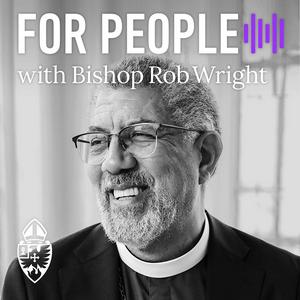
For People is a conversation with Bishop Rob Wright, spiritual leader to the more than 50,000 people in the 117 worshipping communities of the Episcopal Diocese of Atlanta. In this podcast, Bishop Wright meets listeners at the crossroads of faith and life to explore the challenges of an ever-changing world. Listen in to find out how he expands on For Faith, drawing inspiration from the life of Jesus to answer 21st-century questions.
Podcast websiteListen to For People with Bishop Rob Wright, 2819 Church and many other podcasts from around the world with the radio.net app
Get the free radio.net app
- Stations and podcasts to bookmark
- Stream via Wi-Fi or Bluetooth
- Supports Carplay & Android Auto
- Many other app features
Get the free radio.net app
- Stations and podcasts to bookmark
- Stream via Wi-Fi or Bluetooth
- Supports Carplay & Android Auto
- Many other app features

For People with Bishop Rob Wright
Scan code,
download the app,
start listening.
download the app,
start listening.
 New Zealand