

Listen to this podcast in the app for free: Download for free in the App Store
radio.net
Sleep timer
Save favourites
149 episodes
#149 Mike Skinner on FBI HRT K9s: Detection, Deployment & Trusting Your Dog
25/09/2026 | 1h 21 mins.What does it take for a K9 team to move from a tactical entry to an explosive detection search? Former FBI Hostage Rescue Team operator Mike Skinner joins Cameron Ford to discuss the training and dog selection behind that transition—and why the work has to be practiced in the conditions teams may actually face.
Mike shares lessons from HRT deployments, including a Herkimer operation in which his dog repeatedly headed toward an area the team was not yet searching. He and Cameron also discuss detection cues, rewarding at source versus calling a dog back for reward, laser directionals, and what a missed odor at a threshold taught Mike about preparing for the next search.
For handlers and trainers, this conversation comes back to a demanding question: Have you trained the dog for the search you’re about to ask it to do?
STRATOS K9 — EVENT & VENUE DETECTION TEAMS
Premier Explosive Detection & Firearm Detection Dog teams for:• Large-scale events• Conferences & expos• Concerts & festivals• Corporate security & dignitary operations
Our dogs are specialists, not generalists — one mission, one discipline, no cross-training.
👉 Learn more: https://StratosK9.com
📩 For event inquiries: info@stratosk9.com
🐕 CONNECT WITH US ON SOCIALS
Stratos K9Instagram: https://instagram.com/stratosk9
LinkedIn: https://linkedin.com/company/stratosk9
Ford K9Instagram: https://instagram.com/fordk9detection
Facebook: https://facebook.com/FordK9Detection#148 The Silent Professional & Trainer You've Never Heard Of | Shannon Krieger - SOCOM Veteran
11/09/2026 | 2h 6 mins.Shannon Krieger shares 30 years of military and law enforcement dog training experience—from pioneering SOCOM's canine detection programs to developing the "social gorilla" selection philosophy that changed how we choose working dogs. This episode covers real operational stories, the evolution from direct-action assault dogs to advanced detection capabilities, and the training philosophy that made him one of the most respected figures in the detection dog community.
What We Cover:
The incident that started SOCOM's detection dog program (lost explosives overseas, pre-9/11)
SOCOM selection story: left weapon on cliff, nearly quit, General Miller's response
The Lane Kreitzer kitchen incident: witness to direct-action K9 deployment (knife wielding suspect, multiple breaches)
Dog selection is MORE important than training (the #1 mistake handlers make)
From mean killers to "social gorillas" (why we ditched bite suits and started selecting differently)
The proof of concept: 2 dogs to 8 to 20 to 40 dogs in short period
Working with legendary trainers: Steve Stoops, Wendell Eckland, Lane Kreitzer, Brian Mowrie (Secret Service)
"Our motto: take everything, steal it, make it yours" (knowledge gathering philosophy)
Building your tool garage: having every technique available for different problems
Direct action & counter-terrorism as mission-essential (everything else is afterthought)
The hedgerow discovery: no commands, no force, just rewards (revolutionary training approach)
Why you can't forcefeed the same technique to every dog (400 different ways to train)
Be multidimensional, not singular (adaptability over dogma)
When you solve a problem, the dog gets better (the coolest part of training)
Operational lessons applied to law enforcement K9 programs
HSI tactical canine program (wartime experience translated to federal law enforcement)
Why rigid training methods fail (definition of insanity)
From Afghanistan to digital forensics: evolution of Shannon's career
Working with Mike Deal (LAPD) and other legendary handlers
How SOCOM's approach influenced federal law enforcement nationwide
Training all day long without burning out dogs (the chemistry with Stoops)
Civilian trainers bringing police experience into military programs
________________________________________
🧠 TRAIN WITH FORD K9 — ONLINE & IN PERSON
Level up your detection dog training with Ford K9’s full education ecosystem:
🔥 ONLINE COURSES & LECTURES
Odor Pays System, Air Movement, Cognition, Problem Solving & more
👉 https://FordK9.com
🔥 FORD K9 MEMBERSHIP (BEST VALUE)
Members-only seminars, monthly lessons, exclusive Q&As, full video library
👉 https://FordK9.com/memberships
🛡️ STRATOS K9 — EVENT & VENUE DETECTION TEAMS
Premier Explosive Detection & Firearm Detection Dog teams for:
• Large-scale events
• Conferences & expos
• Concerts & festivals
• Corporate security & dignitary operations
Our dogs are specialists, not generalists — one mission, one discipline, no cross-training.
👉 Learn more: https://StratosK9.com
📩 For event inquiries: info@stratosk9.com
🐕 CONNECT WITH US ON SOCIALS
Stratos K9
Instagram: https://instagram.com/stratosk9
LinkedIn: https://linkedin.com/company/stratosk9
Ford K9
Instagram: https://instagram.com/fordk9detection
Facebook: https://facebook.com/FordK9Detection#147 The Best Detection Dog Career Nobody Wants (Ag & Biosecurity) | Jordana Gamble
28/08/2026 | 1h 5 mins.Jordana Gamble (former Canada Border Services Agency handler, Food/Plant/Animal canine handler) reveals the world of biosecurity and agricultural detection dogs—the discipline that gets zero love but produces the most finds. Working at Toronto Pearson Airport and international postal facilities, Jordana discusses the challenges, the rivalry with drug dog handlers, and why this is actually the BEST detection dog career.What We Cover:The path to becoming an ag/biosecurity handler: CBSA selection, 10-week academy, dog pairingDrug dog dropouts make excellent ag dogs (motivation differences: food vs. toys)Postal mode detection: endless boxes, short searches, keeping dogs engaged all dayPassenger mode detection: baggage carousels, fluid environment, longer search timesTraining aids: grocery store meat, smoked products, cured items, real food variationThe generalization nightmare: raw vs. cured vs. smoked meats confuse dogsFalse positives: baked goods with apple filling (legal but dog alerts)Real finds: grass cutters, dried monkeys, Iberian ham, endangered species, live animal smugglingThe rivalry: "Apple Dogs" vs. "Sausage Police" vs. Drug HandlersThreat response: African swine flu prevention, bird flu concerns, economic protectionDaily find rates: 10+ interceptions per day (vs. drug handlers going weeks with nothing)Reading your dog after thousands of finds: knowing fish smell vs. rotten ham vs. pork flossFinal response problems: dogs going active on bags (markers saved training)The "dog brain" override: when smell/frustration overrides trained behaviorWhy postal is physically brutal but rewardingHandler advice: never turn down an ag dog positionCareer satisfaction: dogs see work as playground, not just trainingWhy agricultural detection protects economies and industriesThe hidden importance of biosecurity workJordana worked both postal (conveyor lines, thousands of parcels) and passenger (airport baggage) modes. She shares how target-rich environments accelerate handler development—you get hundreds of finds to learn from, versus drug dogs going weeks without positive reinforcement. She also discusses the competitive dynamic with her drug handler husband, who now wishes he had her find rate.Critical Takeaway: "Detection work is detection work. Whether you're looking for drugs, firearms, currency, or food—it's all the same. Don't be too proud for the ag dog."________________________________________🧠 TRAIN WITH FORD K9 — ONLINE & IN PERSONLevel up your detection dog training with Ford K9’s full education ecosystem:🔥 ONLINE COURSES & LECTURESOdor Pays System, Air Movement, Cognition, Problem Solving & more👉 https://FordK9.com🔥 FORD K9 MEMBERSHIP (BEST VALUE)Members-only seminars, monthly lessons, exclusive Q&As, full video library👉 https://FordK9.com/memberships🔥 IN-PERSON CLASSES — SANTA ROSA, CADetection Handler SchoolDetection Dog Training ClassOdor Pays Workshops👉 Sign up at: https://FordK9.com🛡️ STRATOS K9 — EVENT & VENUE DETECTION TEAMSPremier Explosive Detection & Firearm Detection Dog teams for:• Large-scale events• Conferences & expos• Concerts & festivals• Corporate security & dignitary operationsOur dogs are specialists, not generalists — one mission, one discipline, no cross-training.👉 Learn more: https://StratosK9.com📩 For event inquiries: info@stratosk9.com🐕 CONNECT WITH US ON SOCIALSStratos K9Instagram: https://instagram.com/stratosk9LinkedIn: https://linkedin.com/company/stratosk9Ford K9Instagram: https://instagram.com/fordk9detectionFacebook: https://facebook.com/FordK9Detection#146 Why Certification Standards Are Broken (And Training Records Matter More) | Armin Winkler
27/08/2026 | 2h 16 mins.Armin Winkler (renowned detection dog trainer, international expert) and Cameron Ford break down why current K9 certification standards don't actually validate operational readiness. They discuss why training records matter more than certifications in court, why everyone trains for the test instead of the job, and what real operational readiness actually looks like.
What We Cover:
Certification is department CYA, not a measure of reliability
Detection dogs should have OPERATIONAL standards, not minimum standards
Training records with proper documentation beat certifications in court every time
Why observers/supervisors signing off on training matters more than a piece of paper
Running multiple dogs in same area: nasal secretions and saliva contaminate everything
The "cheat code" dogs use when training mimics certification
How evaluators inadvertently give away test locations through nonverbal communication
Why environmental soundness testing is critical (traffic, noise, distractions)
The difference between ORT (odor recognition test) and operational readiness
Lottery-based scenario testing instead of rote certification patterns
Handler decision-making: the most untested aspect of any certification
Why SEAL Teams didn't certify but had real results
Training for certification vs. training for the street (these are NOT the same)
Real-world deployment: rain, night, roadside traffic stops
Hide placement strategy: hide like a criminal, not in filing cabinets
The handler's job: watch the DOG, not the room ("the nose nose")
The avalanche dog that found both victims but failed certification
Why handlers don't see their dogs during searches (looking for hide locations instead)
Apprehension dog certification problems (false sits, stress on one-day tests)
Free air sniff legality: roadside delays = searches, not free sniffs
International perspectives: Norway military working dogs, customs operations
The problem with "master trainer" guru culture
Supervision and training records as alternative to certification
Scenario-based training in real conditions (using cooperating officers)
Why some agencies (LAPD) use OJT/FTO model instead of certification gates
The risk of certification standards creating liability instead of protection
Armin draws on decades of experience working detection dogs internationally, including military operations, customs, search and rescue, and avalanche response. He challenges the industry's comfort with certification-based standards and advocates for documentation, supervision, and scenario-based operational testing.
Critical Takeaway: "If you're afraid of rewarding the wrong thing during testing, you're not ready to test. You have a bigger problem than that moment."
________________________________________
🧠 TRAIN WITH FORD K9 — ONLINE & IN PERSON
Level up your detection dog training with Ford K9’s full education ecosystem:
🔥 ONLINE COURSES & LECTURES
Odor Pays System, Air Movement, Cognition, Problem Solving & more
👉 https://FordK9.com
🔥 FORD K9 MEMBERSHIP (BEST VALUE)
Members-only seminars, monthly lessons, exclusive Q&As, full video library
👉 https://FordK9.com/memberships
🔥 IN-PERSON CLASSES — SANTA ROSA, CA
Detection Handler School
Detection Dog Training Class
Odor Pays Workshops
👉 Sign up at: https://FordK9.com
🛡️ STRATOS K9 — EVENT & VENUE DETECTION TEAMS
Premier Explosive Detection & Firearm Detection Dog teams for:
• Large-scale events
• Conferences & expos
• Concerts & festivals
• Corporate security & dignitary operations
Our dogs are specialists, not generalists — one mission, one discipline, no cross-training.
👉 Learn more: https://StratosK9.com
📩 For event inquiries: info@stratosk9.com
🐕 CONNECT WITH US ON SOCIALS
Stratos K9
Instagram: https://instagram.com/stratosk9
LinkedIn: https://linkedin.com/company/stratosk9
Ford K9
Instagram: https://instagram.com/fordk9detection
Facebook: https://facebook.com/FordK9Detection#145 Getting Into Canine Detection: Career Pathways for Veterans & Civilians | AK9I
31/07/2026 | 1h 17 mins.Tim Baird (Vice President, AK9I) and James Overton (Operations/Business Development, AK9I) break down exactly how to become a detection dog handler—whether you're a veteran, civilian, or career changer. They discuss training programs, the GI Bill, dog selection, breed trends, and AK9I's school safety operations that have reduced violent incidents by 87% in Virginia schools.
What We Cover:
How to get into canine detection (veteran and civilian pathways)
Using the GI Bill to fund your K9 training (the process is "incredibly easy")
AK9I's nationally accredited trade school program (6, 8, 10, 12-week courses)
Qualifications: 18+ years old, high school diploma (that's it)
Do you need dog experience? No. Do you need military background? No.
What disqualifies personal dogs (environmental soundness is #1)
Dog selection on day one (and why "pretty" doesn't win)
Breed trends: why floppy ears are now in high demand for schools
Post-graduation employment: 80% placement rate for AK9I graduates
Summer gig opportunities: $40-50/hour + travel/hotel paid (FIFA, NFL, events)
Single-purpose vs. dual-purpose dogs: which for your career goals?
School safety operations: explosives, firearms, narcotics detection
Real impact statistics: 47% reduction in narcotics, 87% reduction in violent incidents
Deterrence vs. detection: what schools actually need
Career earnings and lifestyle (yes, you'll spend it all on your dog)
Veterans finding post-military purpose through K9 work
Mixed-background classes: why civilian + military handlers learn best together
Professionalism and social media presence (industry expectations)
How to stand out in a competitive job market
For: Veterans seeking career transitions, civilians career-changing, school administrators, law enforcement, security professionals, anyone asking "how do I become a K9 handler?"
Key Takeaway: You don't need a military or law enforcement background to become a detection dog handler. You need commitment, willingness to relocate/travel, and the right mindset. AK9I has trained hundreds through their nationally accredited program with an 80% post-graduation employment rate.
Tim Baird: Vice President, AK9I; former Auburn University K9 program director; decades of canine detection experience
James Overton: 8 years Army, Operations & Business Development at AK9I; 12+ years in canine detection; school safety program founder; passionate about veteran transition
Cameron Ford: Naval Special Warfare K9 trainer, Ford K9 founder, detection dog consultant
AK9I Background: Founded 2001, originally trained IDD (Improvised Explosive Device) detection dogs for U.S. Marine Corps. Now nationally accredited trade school specializing in civilian and veteran K9 handler training. Operating school safety programs across Virginia school districts.
More Courses podcasts
 The Clinical Problem SolversEducation, Health & Wellness, Medicine, Science
 Talk To Me In KoreanCourses, Education
 IELTSCast | Weekly shadowing exercises for IELTS SpeakingCourses, Education, Language Learning
 Australian Aboriginal HistoryEducation
 On Writing With Brandon Sanderson | Full Writing Lectures (2025)Courses, Education
 EconTalkCourses, Education, Philosophy, Science, Social Sciences, Society & Culture
 Learn Japanese with Masa sensei!Courses, Education
 Modern History Of India Story Part 1Courses, Education
 Platypus Economics with Justin WolfersBusiness, Courses, Education, Science, Social Sciences
 Real English Conversations Podcast | English Fluency For Newcomers And International ProfessionalsCourses, Education, Language Learning
Trending Courses podcasts
 大师语录中文播客 【高质量内容:翟东升大全集、黄奇帆大全集等】Courses, Education
- On Writing With Brandon Sanderson | Full Writing Lectures (2025)Courses, Education
- Learn Japanese with Masa sensei!Courses, Education
 The Canine ParadigmCourses, Education, Kids & Family, Pets & Animals, Tutorials
 SLP NerdcastCourses, Education
 The Scriptures Are RealCourses, Education, Religion & Spirituality
- IELTSCast | Weekly shadowing exercises for IELTS SpeakingCourses, Education, Language Learning
- Real English Conversations Podcast | English Fluency For Newcomers And International ProfessionalsCourses, Education, Language Learning
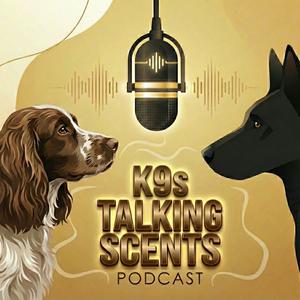
About K9s Talking Scents
This podcast is all about Detection Dogs we talking training, working the dog in the real world, starting a new dog or have an experienced dog, this show is for you. Calling all Detection dogs, Sniffer Dogs, those who compete in Nosework / Scentwork sports. If you work a detection dog that sniffs out bombs, drugs, guns, cell phones, electronic devices or anything else this podcast is for you
Podcast websiteListen to K9s Talking Scents, The Clinical Problem Solvers and many other podcasts from around the world with the radio.net app
Get the free radio.net app
- Stations and podcasts to bookmark
- Stream via Wi-Fi or Bluetooth
- Supports Carplay & Android Auto
- Many other app features
Get the free radio.net app
- Stations and podcasts to bookmark
- Stream via Wi-Fi or Bluetooth
- Supports Carplay & Android Auto
- Many other app features

K9s Talking Scents
Scan code,
download the app,
start listening.
download the app,
start listening.
K9s Talking Scents: Podcasts in Family
 New Zealand