
Listen to this podcast in the app for free: Download for free in the App Store
radio.net
Sleep timer
Save favourites
91 episodes
Jesus vs Empire: What Rome Reveals about America
21/10/2026 | 23 mins.Was Jesus political? Biblical scholar Richard Horsley on what Rome reveals about America today.
In this Faithful Provocations conversation, I talk with Richard A. Horsley, Distinguished Professor Emeritus of Liberal Arts and the Study of Religion at UMass Boston, about his book Jesus and the Powers: Conflict, Covenant, and the Hope of the Poor. We explore covenant theology and apocalyptic hope under empire, what Roman power felt like in Galilee, and why reading crucifixion as imperial punishment changes the cross.
We also connect Rome then to America now — from his work on Jesus and Empire to how Christian language is used today to bless military power and strong leaders, and where he sees the powers most clearly in the US right now. We close with the hope of the poor — what faithfulness can look like for students, pastors, and Christians who feel overwhelmed by empire.
Guest: Richard A. Horsley, author of Jesus and the Powers and Jesus and EmpirePope Leo vs AI: Ilia Delio Says We're Not Ready
14/10/2026 | 27 mins.Does AI need religion? Franciscan scientist-theologian Ilia Delio says yes — and responds to Pope Leo on AI.
Kwok Pui Lan interviews Ilia Delio on ai and religion, evolution, transhumanism, and what Pope Leo gets right — and misses — about safeguarding the human person.
Ilia Delio, OSF, is a Franciscan sister, former Chair at Villanova, Executive Director of the World Institute for Science, Religion, and Culture, and author of 20 books, including Re-enchanting the Earth: Why AI Needs Religion. Trained as a pharmacologist and historical theologian, she places AI inside cosmic history — from Teilhard de Chardin's noosphere to our future as natural-born cyborgs.
We discuss why Christianity must be reconstructed for evolution and complexity, the difference between a transhuman future built for power and a posthuman future built for wholeness, and how ordinary people of faith can stay human and connected in an AI age.
Books by Dr. Ilia Delio: Re-enchanting the Earth: Why AI Needs Religion and The Christian Mutation: Reclaiming the Dynamic God of Jesus.Christian Sexual Ethics in the Age of AI and Dating Apps
07/10/2026 | 23 mins.How can Christian sexual ethics move past shame-based rules? We explore wisdom for navigating the digital age.
Postcolonial theologian Kwok Pui Lan talks with ethicist Kate Ott about the impact of technology on our intimate lives. From the prevalence of dating apps to the challenges posed by virtual reality and deepfakes, many traditional faith communities struggle to provide guidance that fosters wisdom instead of shame.
Kate introduces a values-based alternative rooted in honesty, mutuality, and digital literacy. We discuss why a pleasure-positive perspective is essential for AI ethics and why the physical reality of embodiment still matters when our encounters are mediated by screens.
Kate Ott is Professor of Christian Social Ethics at Garrett-Evangelical Theological Seminary.
Kate Ott's books: Sex, Tech, and Faith: Ethics for a Digital Age; and
Christian Ethics for a Digital SocietyWho Rules China: Faith, Power and Xi's America Visit
01/10/2026 | 22 mins.Who rules China — and who decides what makes power legitimate? Postcolonial theologian Kwok Pui Lan talks with Peng Yin, Assistant Professor of Ethics at Boston University School of Theology, on Chinese political theology after Xi's visit to Washington.
In this interview, we move beyond trade and security headlines from the Xi Jinping Trump meeting to ask a deeper question about US-China relations : how is political power justified? Peng Yin explains what Chinese political theology is, how it differs from American debates on Christian nationalism, and why legitimacy is at its center.
We discuss his work on Thomas Aquinas and early Chinese ethics, natural law from Aquinas to Montesquieu and early modern Chinese reformers, and the church in China. The conversation closes with faith between two empires — for diaspora Christians, students, and all who want to persist in the good.
Peng Yin's research focuses on comparative religious ethics, political theology, and Chinese thought. His recent book is Persisting in the Good: Thomas Aquinas and Early Chinese Ethics.Why We Must Learn to Teach at the Speed of Love
24/09/2026 | 22 mins.Why can't our schools teach us to flourish? Postcolonial theologian Kwok Pui Lan talks with Rev. Dr. Patrick B. Reyes about becoming good ancestors for the next generation.
Rev. Dr. Patrick B. Reyes is a Chicano theologian, writer, and Dean and Executive Vice President at Auburn Theological Seminary. His new book Pedagogy of the Ancestors: Practices for Mentoring and Teaching Future Generations (WJK Books, 2026) asks how we learn to live on ancestor time and at the speed of love. In this conversation, we talk about his journey from gang life to seminary leadership, the purpose gap facing youth of color, how oppressive systems sever us from lineage, and what mentorship, youth ministry, and discipleship look like when they center ancestors, storytelling, and rituals for belonging.
Whether you are a pastor, teacher, mentor, or caregiver, you will leave with one practice you can try this week to help young people flourish — not just achieve.
New book — Pedagogy of the Ancestors
Patrick B. Reyes 's website.
More Christianity podcasts



Trending Christianity podcasts







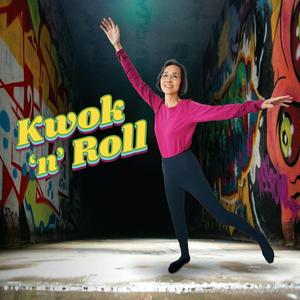
About Kwok ’n’ Roll
What does it mean to be a Christian and a person of faith in today’s challenging world? How can we have meaningful dialogue across racial, cultural, religious, and political differences to address the urgent needs of our time? Join Kwok Pui Lan, a pioneering postcolonial theologian, in her conversation with leading intellectuals, courageous religious leaders, fearless activists, and inspiring artists and roll along.
Podcast websiteListen to Kwok ’n’ Roll, Outside of Sunday and many other podcasts from around the world with the radio.net app
Get the free radio.net app
- Stations and podcasts to bookmark
- Stream via Wi-Fi or Bluetooth
- Supports Carplay & Android Auto
- Many other app features
Get the free radio.net app
- Stations and podcasts to bookmark
- Stream via Wi-Fi or Bluetooth
- Supports Carplay & Android Auto
- Many other app features

Kwok ’n’ Roll
Scan code,
download the app,
start listening.
download the app,
start listening.
 New Zealand
