

Listen to this podcast in the app for free: Download for free in the App Store
radio.net
Sleep timer
Save favourites
38 episodes
Ep 37. Velvety Natural Flock Fibres from Textile Waste with Sara Robertson, Annika Syrjamäki and Sarah Taylor
11/10/2026 | 1h 17 mins.Flocking is one of those techniques we have all touched without knowing its name: the velvety surface on a wallpaper, a piece of packaging, a couture garment or a car dashboard. It is made from tiny fibres, electrostatically charged so they stand upright in an adhesive, and for most of its history those fibres have been nylon, polyester or viscose.
In this episode of No Ordinary Cloth, Mili is joined by Sara Robertson and Sarah Taylor of Sara + Sarah Smart Textile Design, and Annika Syrjämäki of Maison du Flock, the team behind FLOCC, a Scotland-Netherlands collaboration. This work begins on the finishing floor of MYB Textiles, a heritage lace mill in Scotland, where yarn clipped from finished cloth collects in bags beside the machines. FLOCC turns those cotton clippings, and later silk and mixed-fibre waste from Sudbury Silk Mills, into flock fibre that is, in Sara's words, "baby soft".
In this conversation, we discuss
An explanation to the flocking technique and why the usual nylon, polyester and viscose fibres are a microfibre problem
Where FLOCC began: the yarn clippings collected at the side of the machines at MYB Textiles, and why a lace mill's cotton clippings are already short enough to be a good flock fibre
The route from waste to flock
Cotton, silk and mixed-fibre waste and the range of flock fibre that can be produced. Scaling to100m of flocked fabric
The search for a bio- adhesive
Passing testing and standards
The scale catch-22: recyclers need bigger scale, small studios need a kilo or two
What the team learnt at Future Fabrics Expo and Textiles Recycling Expo
What they would tell someone at the start of a similar journey
Resources
FLOCC: contact for samples and pilot production. Instagram: @smarttextiledesign
Maison du Flock: for high-end flocking
MYB Textiles: 126 year old Scottish mill that produces lace
A special thanks to Creative Scotland's Go See Share fund for supporting the FLOCC team attendance at Future Fabrics Expo
Swarovski Foundation: Creatives for our Future grant programme. Closing date 9th November 2026
Connect with Mili: LinkedIn | Instagram | Buy me a coffee
Recommended listening
- Ep 1. Light and Lace with Sara Robertson
- Ep 22. Fight Against Fashion Waste
- Ep 36. Recycling Nylon Waste
If you enjoyed this, please share the episode with a friend or colleague. Subscribe and leave a review, I love to hear your feedback.
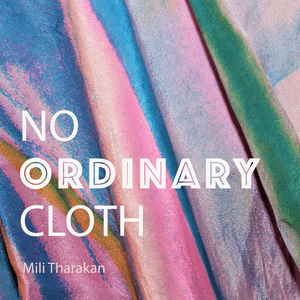
Cover art: Photo by Siora, Photography on Unsplash
Music: Inspired Ambient, Orchestraman🌱 Ep 36. Recycling Nylon, Paper Electronics and Secrets to Scaling a Startup with Luciano Caruso and Chloe So (xFashion District)
07/09/2026 | 1h 25 mins.This is a special episode in partnership with Fashion District London
What actually happens in the years between "the science works" and "we're a real supplier"? In this episode of No Ordinary Cloth, Mili is joined by two founders walking that tightrope right now — mid-crossing, not the polished after-the-fact version of the story.
Luciano Caruso, Chief Commercial Officer of Epoch Biodesign, explains how the company's AI-designed enzymes recycle nylon — including nylon 6.6, the tough, blended, historically unrecyclable material behind everything from yoga pants to tyre cords to under-the-bonnet automotive parts — at room temperature, without the heat, pressure and harsh chemicals of conventional chemical recycling. Fresh off acquiring a 52,000-ton-capacity polymer plant in Spain, he walks through what it actually takes to de-risk a deep-tech material business: technology milestones, then production milestones, then commercial milestones, each one making the next round of investment easier to raise.
Chloe So, co-founder and CEO of Pulpatronics, is solving a much smaller-looking problem with an equally large footprint: the roughly 45 billion RFID tags thrown away every year, each one built around a metal antenna that jams recycling processes. Pulpatronics turns paper itself into that antenna using laser-etched circuits, cutting CO2 emissions by 60% and cost by 30% — and she's candid about what it actually looks like to scale from 50 hand-finished tags a day toward the millions the industry runs on.
In this conversation, we discuss
Why nylon — despite being one of the most useful materials on earth, from apparel to airbags to EV battery trays — is so stubbornly hard to recycle, and how Epoch's AI-designed enzymes "unbake the cake" at room temperature instead of using heat, pressure and harsh chemicals
What's actually inside the RFID tag on every clothing hang tag, why it can't easily be recycled, and how Pulpatronics replaces the metal antenna with a laser-etched paper circuit
The "valley of death" in plain terms: the gap between science that works and a business that's self-sufficient, and the different way each founder is trying to close it — technology, production and commercial milestones for Epoch; first repeat customers and manufacturing scale-up for Pulpatronics
Why Epoch bought a 60-person, 60-year-old polymer plant in Spain rather than building one from scratch, and what "de-risking" actually looks like for a deep-tech material startup
Why big corporates hesitate to invest in or partner with startups even once the technology is proven — and what it actually takes to become a "drop-in" solution, commercially as well as technically
The moment Chloe's team pulled its own R&D engineers onto the factory floor to hand-build a customer's sample order — and what that period of pressure did for the team
Why ecosystem partners — accelerators, university networks, corporate investors like Inditex, Lululemon and H&M Foundation — matter as much as the technology itself
What's kept each founder going, and the advice they'd give other founders
Resources: Epoch Biodesign Pulpatronics
Connect with Mili: LinkedIn | Instagram | Buy me a coffee
Subscribe and leave a review — I love to hear your feedback.
Recommended listening: Ep 20. Ecosystem Partners for Textile Startups (Fashion for Good, Fashion District & Mills Fabrica)
Cover art: Photo by Siora, Photography on Unsplash. Music: Inspired Ambient, OrchestramanEp 35. Weaving out Waste: How WEFFAN is Forming Garments within Fabric with Graysha Audren
05/08/2026 | 1h 12 mins.What if the fashion industry didn’t have to create waste in the first place? In this episode of No Ordinary Cloth, Mili sits down with textile designer and founder of WEFFAN, Graysha Audren, to explore a radically different way of making clothes: garments that are folded, flat‑packed and “baked” straight into the weave on a jacquard loom.
From an olive‑green 3D‑woven shirt on a small table at Future Fabrics Expo to a 3D‑woven tailored suit in Balenciaga stores, Graysha walks us through how WEFFAN’s origami‑inspired 3D weaving technology embeds garment shape directly into the fabric, designs out off‑cut waste, and collapses traditional textile and garment manufacturing into a single, elegant workflow.
Along the way, we talk about the craft behind this innovation, the human journey of building an idea from student “baby trousers” to couture‑level production, and what it might mean for the factories, designers and weavers who shape fashion’s future.
In this conversation, we discuss
How WEFFAN’s 3D weaving process “flat‑packs” garments inside the fabric and releases them into 3D form through a cut‑and‑release step.
Why waste is a design decision, and how embedding garment shape in the weave can remove off‑cuts and reduce yarn use before waste is ever created
The Balenciaga collaboration: what it took to go from experiment to a 3D‑woven tailored suit on the shop floor, and what changed in production lead times and sew time
The new design language of 3D‑woven garments – seamless pockets, pattern‑matched stripes, engineered fabric densities and mono‑material construction that’s easier to recycle.
Bringing together software, jacquard weaving and origami logic to build a plug‑and‑play system that works on existing looms, rather than asking the industry to invest in new hardware
What this technology could mean for on‑demand manufacturing, shorter supply chains and the factories of the future where fabric and garment are made in one step
Graysha’s personal story: from Central Saint Martins and an obsession with textiles to the “baby trouser” that sparked WEFFAN, and why she now sees her youthful naïveté as an advantage in rethinking old systems
Key takeaways
Designing out waste starts at the design stage: when we change the construction logic, we change the amount of fabric and time a garment requires.
3D weaving on existing jacquard looms can be both deeply craft‑based and radically efficient, opening a new aesthetic and technical language for woven garments without discarding the skills and machines we already have.
WEFFAN: Website | Linkedin
Connect with Mili: LinkedIn I Insta I Buy me a coffee
If you enjoyed this, please share the episode with a friend or colleague. Subscribe and leave a review, I would love to hear your feedback.
Recommended listening for 3D garment construction technologies:
Ep 13. 3D Weaving Yarns into Garments and Zero Inventory Circular Fashion with Beth Esponnette
Ep 28. AI Robotics for Fabrics and the Future of Stitcheless Garment Making with Cam Myers
Cover art: Photo by Siora, Photography on Unsplash. Music: Inspired Ambient, OrchestramanEp 34. From Wetlands to Wardrobes: What If Fashion Could Help Heal the Planet? with Julian Ellis-Brown
15/05/2026 | 1h 7 mins.In this episode, we step into very different territory. We leave the factory floor and the chemistry lab behind, pull on our wellies, and head into the wetlands. Our guest is Julian Ellis-Brown, CEO and Co-founder of Ponda — the biomaterials company turning wetland restoration into one of fashion's most exciting new fibres. We explore why wetlands are one of the most carbon-rich and biodiverse ecosystems on earth, why centuries of drainage have turned them from the planet's greatest carbon store into a significant carbon emitter, and how a farming practice called paludiculture is now allowing farmers across the UK and Europe to bring degraded wetlands back to life — while still earning a living from the land.
At the heart of Ponda's work is BioPuff — a plant-based insulation made from the seed fibres of the bulrush, designed to replace the goose down and synthetic polyester fills found in the puffer jackets and winter coats hanging in most of our wardrobes. Down raises animal welfare and traceability concerns, while synthetic fills are fossil-fuel derived — and BioPuff offers a genuinely carbon-negative alternative, traceable from plant to puffer, and landing in jackets on the market this autumn winter. Julian also shares details of Ponda's newly opened crowdfunding round — a rare opportunity to invest directly in a company regenerating real wetlands and reshaping one of fashion's most overlooked material categories.
What We Cover
Why wetlands matter - Wetlands store 550 gigatons of carbon
Paludiculture — the farming model you've never heard of, and why governments across Europe are now backing it with billions
BioPuff — the plant-based insulation made from bulrush, grown on regenerated wetlands, that is set to land in jackets on the market this autumn
The carbon story — how BioPuff achieves a carbon footprint of -42.76 kg of CO2e per kilogram of product, making it genuinely carbon negative
From pilot plant to fashion runways — how Ponda went from a university challenge competition to collaborations with Stella McCartney, Berghaus and Parley for the Oceans
The crowdfunding round — why Ponda is inviting the public to invest in their mission, and how you can get involved
Julian's personal story — the moment curiosity about nature became a company, and what keeps him going
About our guest:
Julian Ellis-Brown is the CEO and Co-founder of Ponda, formerly known as Saltyco. Julian studied Innovation Design Engineering at Imperial College London and the Royal College of Art, where he and his three co-founders began developing what would become BioPuff. Ponda closed a $2.4 million seed round in 2025 and is now commercialising BioPuff for the global fashion market.
Ponda: Website I Insta I BioPuff sample
Crowdfunding round — register your interest
Mili Tharakan: LinkedIn I Insta I Buy me a coffee
Subscribe and leave a review, I love to hear your feedback.
Recommended listening: Ep 29. Cotton, Soil & Solar: Re-imagining the “Quiet King” of Textiles
Cover art: Photo by Siora, Photography on Unsplash
Music: Inspired Ambient, OrchestramanEp 33. Part 3 I Clean Run: Detoxing the Running Jacket I Care, Repair and Recycle with Charlotte Krist, Shay Sethi and Wajahat Hussain
11/05/2026 | 1h 36 mins.We’re used to thinking about sustainability at the point of purchase: what fibres a garment is made from, whether it’s certified or recycled. But the truth is, what we do with a garment after we buy it – how we wash it, whether we repair it, and what happens when it’s finally worn out – is just as important as what it’s made of.
In this final episode of Clean Run, host Mili Tharakan takes our now‑familiar running jacket into the rest of its life. We’ve already rebuilt its fibres and detoxed its chemistry. Now we follow it into washing machines, repair studios and recycling plants to see what it really takes for a jacket to have not just one life, but many.
Guests:
Charlotte Krist, Strategic Business Development, United Repair Centre: building industrial‑scale, brand‑integrated repair services that extend the physical and emotional life of garments, and make “repair is the new cool” a real consumer option, not just a slogan.
Shay Sethi, CEO and Founder, Ambercycle: developing molecular recycling technologies that separate complex fibre blends at the base‑molecule level and regenerate polyester into new, high‑quality yarns – creating a genuine end‑of‑life pathway for garments that are currently landfilled or burned.
Wajahat Hussain, CEO and Fuunder, BIORESTORE: turning a single laundry cycle into a way to resurface worn fabrics, remove pilling and restore colour and hand‑feel, so garments look and feel almost new.
In this episode you’ll learn:
How BIORESTORE’s enzyme‑based treatment can “exfoliate” damaged fibres, remove pilling and revive colour and softness in a single wash, effectively resetting certain signs of wear.
How high‑quality repair, delivered at scale by United Repair Centre, can extend both the physical life and the emotional value of garments, turning damage into part of a garment’s story rather than its end.
How Ambercycle’s molecular regeneration process separates and depolymerises polyester from mixed‑fibre garments to create new, high‑quality feedstock that can replace virgin polyester.
What a realistic circular journey for a running jacket could look like when better care, repair and recycling infrastructures work together – and why design and collection systems are just as critical as breakthrough technology.
Across all three episodes, Clean Run turns an ordinary running jacket into a closed looped narrative – from the moment its fibres are imagined to the moment they are reborn – and invites us to see that, with the right choices, every garment we wear can be part of a story that never really ends.
The Clean Run series is inspired by the Performance Without Toxicity exhibition, curated by The Mills Fabrica in partnership with Goldwin, open until 26th June 2026 at Fabrica X in London. Entry is free.
Clean Run is a three-part series. Part 1 explores fibres and fabric and Part 2 dives into the dyes, coatings, and construction of the running jacket.
Connect with me: LinkedIn I Insta I Buy me a coffee
Cover art: Photo by Siora, Photography on Unsplash
Music: Inspired Ambient, Orchestraman
More Arts podcasts









Trending Arts podcasts










About No Ordinary Cloth: Textile innovations in future materials, manufacturing and sustainability
Textiles matter! It is the most ubiquitous and powerful material we live with - it has the power to fulfil both our senses and our soul. Textile innovations are shaping the future of materials, manufacturing, and the products we use every day, with sustainability and circularity driving a radical revolution.The most important shifts in our industry are happening upstream where researchers, designers, material scientists, entrepreneurs, manufacturers, and innovators are creating the future materials that will define the next generation of textiles. That's what No Ordinary Cloth explores.Host Mili Tharakan, a smart textiles innovator and researcher, unpacks textile material and manufacturing innovations from idea to market adoption, through her conversations with pioneers and global experts radically transforming the textile industry around the world. Through these in-depth conversations, you'll explore emerging textile technology, textile engineering, sustainable textiles, biomaterials, next gen materials, textile manufacturing innovation, circular systems, commercialisation and the future of fashion and technical textiles.If you're interested in textile innovation, future materials, sustainable textiles, fashion, and the people building the future fabric of our world, this show will help you understand where the industry is heading and why it matters.This show brings alive the myriad facets of the complex world of Textiles - a world where there are no ordinary cloths and fabrics have the power to change us and our world.Popular Episode Topics Include: Textile Innovation, Future Materials, Sustainable Textiles, Fashion, Biomaterials, Next Gen Materials, Textile Engineering, Emerging Textile Technology, Smart Textiles, Advanced Textiles, Technical Textiles, Textile R&D, Textile Manufacturing Technology, Future Fabric, Circular Fashion, Textile Recycling, Regenerative Materials, Supply Chain Transparency, Digital Product Passports, Materials Commercialisation, Textile Industry Transformation. Listen and be inspired, find new connections and create extraordinary textiles...Connect with Mili Tharakan: Linkedin I Instagram I WebsiteEmail: mili@militharakan.comYour support means the world to me, if you enjoyed this podcast why not consider buying me a coffeeCreditsCover art: Photo by Siora Photography on UnsplashMusic: Inspired Ambient, Orchestraman
Podcast websiteListen to No Ordinary Cloth: Textile innovations in future materials, manufacturing and sustainability, Table Manners with Jessie and Lennie Ware and many other podcasts from around the world with the radio.net app
Get the free radio.net app
- Stations and podcasts to bookmark
- Stream via Wi-Fi or Bluetooth
- Supports Carplay & Android Auto
- Many other app features
Get the free radio.net app
- Stations and podcasts to bookmark
- Stream via Wi-Fi or Bluetooth
- Supports Carplay & Android Auto
- Many other app features

No Ordinary Cloth: Textile innovations in future materials, manufacturing and sustainability
Scan code,
download the app,
start listening.
download the app,
start listening.
 New Zealand