

Listen to this podcast in the app for free: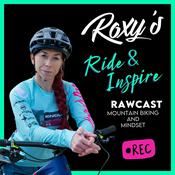 Download for free in the App Store
radio.net
Sleep timer
Save favourites
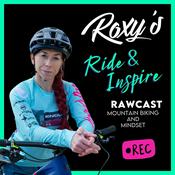
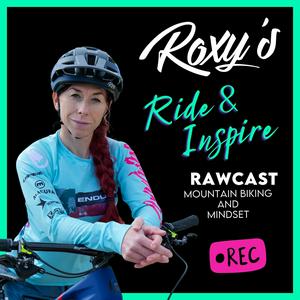
Roxy's Ride & Inspire RAWcast - Mountain Bike & Mindset Podcast
Roxybike
Latest episode
65 episodes
Anxious About Group Rides? Try This Neuroscience-Based “Brain Hack” | Podcast #65
12/09/2026 | 9 mins.Do MTB group rides make you nervous? Maybe you're worried you'll be too slow, hold everyone back, or won't be able to ride all the technical sections. Or you have anxiety about another topic and are looking for a simple, yet effective method to help with it? In this episode of the Ride & Inspire RAWcast, we explore the psychology and neuroscience of reframing — and why it is much more than motivational positive thinking.
I’ll introduce you to research by Alison Wood Brooks showing how changing what you label your emotions as can influence performance without ignoring the emotion. And, most importantly, we’ll translate the science directly to mountain biking and use "ride anxiety" as a practical example.
You'll learn how to reframe common pre-ride thoughts such as:
“What if I’m too slow?”
“What if I’m the slowest rider?”
“What if I can’t ride all the sections?”
“What if I hold everyone back?”
I’ll also introduce the simple Roxybike MAP Method:
Meaning – Adjust – Proceed, which you can use on your next group ride, during MTB practice, or in stressful situations in everyday life. Because stress itself isn't necessarily the enemy. What matters is the meaning your brain gives it.
🎙️ Ride & Inspire RAWcast is completely ad-free. If you'd like to help me keep it that way and support my work, you can join me on Patreon: https://www.patreon.com/c/rideandinspire
Sources:
Brooks, A. W. (2014). “Get excited: Reappraising pre-performance anxiety as excitement.”
Journal of Experimental Psychology: General, 143(3), 1144–1158. PMID: 24364682, DOI: 10.1037/a0035325
Sammy et al. (2017): Arousal reappraisal under pressure, PMID: 28535726
This is particularly relevant to MTB performance, because it specifically examines reappraising physiological arousal under pressure and its relationship with stress responses, attention, confidence and performance.Can’t Focus on MTB Practice? What ADHD Research Teaches Every Rider | Podcast #64
29/08/2026 | 27 mins.Can you happily ride your mountain bike for hours… but lose focus after ten minutes of deliberate skills practice? Or you feel like you're just SO inconsistent with your performance? If you have ADHD — or simply struggle with concentration, inconsistency or getting overwhelmed by too many instructions — the problem may not be your ability to learn. It may be the way you’re practising.
In this episode, I look at what science tells us about ADHD, attention and motor learning — and translate it into practical MTB training for every adult brain, not just neurodivergent brains 🧠
We talk about:
why ADHD does not simply mean “you can't concentrate”
why performance can fluctuate even when you already know a skill
research son how to produce better motor learning in adults with ADHD
does more repetitions do not automatically equal more learning?
how working-memory overload can make MTB coaching cues counterproductive
why making a task harder doesn't necessarily make it a better learning task
how fear, speed, terrain and social pressure increase the effective difficulty of a skill
what makes complex MTB skills easier to learn
how immediate feedback and visible progress can help (and why this does NOT mean you need a coach by your side...!)
why novelty is useful — but constantly changing drills isn't what that means
what research says about aerobic exercise, executive function and motor learning in adults with ADHD
And I give you a very simple practice structure to try:
ONE — FIVE — CHECK
This is the step-by-step DROP TUTORIAL I talk about: https://youtu.be/cf6vSUtNKYY?is=y4ym92qogtoyBOcp&list=PLwfXYMc609PWCk0Gs4BWHsVBNQJYG7Boz&si=rQ16psvciW_ZyQbR
Note: “Neurodivergent” is not a medical diagnosis itself; it’s a broad umbrella term for brains that function in ways that differ from what is considered neurotypical. ADHD is commonly included under that umbrella, along with autism, dyslexia, dyspraxia and some other neurological/developmental differences.
🧠 Want to try this learning approach yourself?
Start with my FREE Balance / Trackstand Course. It breaks balance training into small, safe and manageable steps so you can build control gradually instead of trying to perform the final skill immediately.
👉 Find the free course here.
And if this way of learning works for you, you'll find the same brain-friendly approach throughout my other MTB skills courses — from fundamentals and braking to drops, cornering and advanced skills.
💜 This podcast is completely ad-free
Ride & Inspire is made possible by the lovely riders who support my work on Patreon (BONUS: You also get access to exclusive content). If you enjoy the science-based episodes, videos and educational content I create and would like to help me keep them independent and ad-free, you can support the podcast by becoming a Patron. Thank you to everyone who already does. 💜
Find my Patreon Channel here: https://www.patreon.com/cw/rideandinspire
🔬 Research & Studies Mentioned in This Episode
Want to dive deeper into the science behind this episode? Here are some of the studies I used:
🧠 ADHD, Attention & Reward
Sustained and focused attention deficits in adult ADHD
https://pubmed.ncbi.nlm.nih.gov/17712171/
The impact of financial reward contingencies on cognitive function profiles in adult ADHD
https://pubmed.ncbi.nlm.nih.gov/23840573/
Frustration Modulates Attentional Control and Affective Processing in Adults With ADHD
https://pubmed.ncbi.nlm.nih.gov/42477904/
🧩 Working Memory
Working Memory Training for Adults With ADHD
https://pubmed.ncbi.nlm.nih.gov/28856932/
🚲 ADHD & Motor Learning
The consolidation of a motor skill in young adults with ADHD: Shorter practice can be better
https://pubmed.ncbi.nlm.nih.gov/26826465/
Determining the optimal challenge point for learning motor skills in children with ADHD
https://pubmed.ncbi.nlm.nih.gov/39369556/
🎯 Task Difficulty & Motor Learning
Task difficulty promotes tactical learning but suppresses the positive learning effects of autonomy and cognitive effort
https://pubmed.ncbi.nlm.nih.gov/40203519/
🏃 Exercise, Cognition & ADHD
Acute Effects of Aerobic Exercise on Executive Function and Attention in Adult Patients With ADHD
https://pubmed.ncbi.nlm.nih.gov/30971959/
Acute aerobic exercise at different intensities modulates inhibitory control and cortical excitability in adults with ADHD
https://pubmed.ncbi.nlm.nih.gov/38485649/
Physical exercise as add-on treatment in adults with ADHD – the START study: a randomized controlled trial
https://pubmed.ncbi.nlm.nih.gov/41244864/
Effects of Low, Moderate, and High Intensity Exercise on Functional Impairment and ADHD Symptoms: A Randomized Pilot Study
https://pubmed.ncbi.nlm.nih.gov/42437494/
🧍 Movement & Body Awareness
Physical exercise and body awareness/movement quality in adults with ADHD: Results from the START randomized controlled trial
https://pubmed.ncbi.nlm.nih.gov/41903823/Are You Really a Negative Person? Why Your Brain Thinks So—and How MTB Can Help | Podcast #63
08/08/2026 | 17 mins.You'd like to be more optimistic or positive? Then this episode is for you! Today we explore a fascinating insight from neuroscience: your brain is not a passive observer of reality. It's a prediction machine that constantly looks for evidence to support what it already believes. And you can LEVERAGE this to become more positive, courageous or in fact, almost anything you think you're NOT!
If you've ever caught yourself saying:
👉 "I'm just not confident."
👉 "I'm not athletic."
👉 "I'm too old."
👉 "I'm a negative person."
...this episode is for you.
You'll learn how to influence these labels, why two riders can have completely different experiences on the exact same trail and most importantly, you'll discover how mountain biking can become a powerful tool for changing ingrained patterns. Using examples from the free Trackstand Challenge, I explain how bike skills practice can help train attention, build resilience, strengthen healthier thought patterns, and create evidence that challenges limiting beliefs.
In this episode:
• Why does negative thinking feel so automatic?
• How do self-fulfilling prophecies work?
• How does ad adult brain learn?
• Why is attention one of the most powerful training tools you have?
• What's the difference between a thought and a label?
• How can trackstand practice help rewire your brain?
🎥 This is the video I mention at the beginning of this episode: https://www.youtube.com/watch?v=vHtezlTRuYo&list=PLwfXYMc609PXz3fHAWMt5HLdLUS5_KiQ-&index=2
🎯 Free Trackstand Challenge:
https://roxybike.podia.com/trackstand-challenge-drill-to-skill-with-roxy
☕ Support this ad-free podcast:
https://www.patreon.com/rideandinspire
If you enjoy the podcast, please consider following, rating, and sharing it with a riding friend. It helps us reach more riders and continue creating science-based content that empowers people both on and off the bike.The 3 Brain Exercises Every Mountain Biker Over 40 Should Do | Podcast #62
25/07/2026 | 9 mins.Most mountain bikers think getting better means riding more, training harder, or improving fitness. But what if the biggest limiter after 40 isn't your fitness at all? What if it's your nervous system?
In this episode, we explore three surprisingly simple exercises that neuroscience suggests can help maintain and improve the systems that matter most for mountain biking: balance, vision, and brain function.
You'll learn why many age-related changes are not simply the result of getting older, and why training the systems that support coordination, confidence, and control on the bike matters!
We discuss:
• Why balance is one of the first abilities to decline with age
• How vision affects line choice, timing, and confidence on trails
• The surprising connection between smell, brain health, and decision-making
• Why mountain biking is fundamentally a coordination sport
• How your nervous system influences confidence and fear on the trail
• Simple daily exercises you can start today—without even touching your bike
Whether you're 40 or 70, or simply want to keep riding strong for decades to come, this episode will help you understand why training your brain may be just as important as training your body.
🎯 Free On-Bike Balance Course: https://roxybike.podia.com/trackstand-challenge-drill-to-skill-with-roxy
💪 Build Your Ride Ready Body (6 weeks of follow-along coordination & strength training specifically for mountain bikers over 35): https://roxybike.podia.com/building-basics-introduction-to-strength-coordination
📩 Join the Ride & Inspire Newsletter: https://roxybike.podia.com/sign-me-up
☕ Support the podcast and help keep it independent, value-focused, and ad-free through Patreon or Buy Me a Coffee. 😍Your Brain Is Exhausted. Here's What Finally Helped Mine | Podcast #61
10/07/2026 | 17 mins.Do you ever finish a day feeling mentally exhausted... even though it doesn't feel like you've actually done that much? A few weeks ago, I disappeared for two weeks. No Instagram. No YouTube. No comments, emails, or analytics. Ironically, it wasn't the holiday we'd planned. Berni came down with COVID the day before we left, so instead of traveling, we spent most of our time at home. Looking back, that unexpected change became a gift. In this episode, I read an article that perfectly describes what so many of us are experiencing without realizing it: a brain overloaded by constant notifications, endless information, and the pressure to always stay connected. This isn't an anti-phone or anti-social media episode. Technology allows me to coach mountain bikers all over the world, build an amazing community, and do work I genuinely love. But like any powerful tool, it works best when we're in control of it—not the other way around.
In this episode we talk about:
Why your brain feels exhausted in today's digital world
What constant task-switching is doing to your attention
The surprising benefits of boredom
What these digital sabbaths give me
Small changes that can help you regain focus without giving up technology
If you've ever struggled to concentrate, found yourself reaching for your phone without thinking, or simply felt mentally "fried," I think you'll find something valuable in this episode.
This is the article I read in this episode: Steve Magness: A Digital Survival Guide
I'd love to hear your thoughts after listening. Have you ever taken a digital break? And if not... would you?
More Education podcasts
 How to Be a Better HumanEducation, Self-Improvement
 The Mel Robbins PodcastEducation, Health & Wellness, Mental Health, Relationships, Self-Improvement, Society & Culture
 The Ella EraEducation, Self-Improvement, Society & Culture
 The Rich Roll PodcastEducation, Health & Wellness, Self-Improvement, Society & Culture
 Learning Easy EnglishEducation, Language Learning
 Begin Again with Davina McCallEducation, Health & Wellness, Mental Health, Self-Improvement, Society & Culture
 Keep The ChangeBusiness, Education, Self-Improvement
 Everyday MāoriEducation, Language Learning
 Learning English ConversationsEducation, Language Learning
 6 Minute EnglishEducation, Language Learning
Trending Education podcasts
 The Daily MotivationEducation, Self-Improvement
 School Behaviour Secrets with Simon Currigan and Emma ShackletonCourses, Education, Tutorials
 Knowledge for TeachersEducation
 Confident Business EnglishEducation, Language Learning, Self-Improvement, Tutorials
 Dreaming Spanish Podcast – Chats in Beginner SpanishEducation, Language Learning
 Learning English from the NewsEducation, Language Learning
 The BossticksBusiness, Education
 醍醐WAYBusiness, Careers, Comedy, Education, Health & Wellness, Investing, Language Learning, Management, Marketing, Self-Improvement, Stand-Up Comedy, Tutorials
 Learning English StoriesEducation, Language Learning
 Trauma RewiredEducation, Life Sciences, Science, Self-Improvement
 How Do They Afford That?Business, Education, Investing, Tutorials
 The Pocket with Chris GriffinBusiness, Education, Entrepreneurship, Health & Wellness, Self-Improvement
 The Secret Sessions with Rhonda ByrneEducation, Self-Improvement
 BEING HER with Margarita NazarenkoEducation, Health & Wellness, Relationships, Sexuality, Society & Culture
 Learning English GrammarEducation, Language Learning
 纵横四海Education, Health & Wellness, Mental Health, Relationships, Self-Improvement, Society & Culture
About Roxy's Ride & Inspire RAWcast - Mountain Bike & Mindset Podcast
No-bla-bla Podcast about Mountain Biking, MTB Coaching, Mental Training and Mindset Improvement, hosted by Rafaella "Roxy" Wieschollek, Mountain Bike Skills Coach, Graduate Sports Mental Trainer, Neuromentaltrainer and Psychological Counsellor. Short, but inspiration-dense episodes, raw and real (thus RAWCAST), focusing on debunking mountain bike myths, sharing inspirational ideas, explaining neurological and psychological concepts in simple terms - all with the goal of making mountain biking safer and advancing the global standard of mountain bike instruction. I focus on quality over quantity. New episodes as often as I feel inspired to share.
Podcast websiteListen to Roxy's Ride & Inspire RAWcast - Mountain Bike & Mindset Podcast, How to Be a Better Human and many other podcasts from around the world with the radio.net app
Get the free radio.net app
- Stations and podcasts to bookmark
- Stream via Wi-Fi or Bluetooth
- Supports Carplay & Android Auto
- Many other app features
Get the free radio.net app
- Stations and podcasts to bookmark
- Stream via Wi-Fi or Bluetooth
- Supports Carplay & Android Auto
- Many other app features

Roxy's Ride & Inspire RAWcast - Mountain Bike & Mindset Podcast
Scan code,
download the app,
start listening.
download the app,
start listening.
Roxy's Ride & Inspire RAWcast - Mountain Bike & Mindset Podcast: Podcasts in Family
 New Zealand