
Listen to this podcast in the app for free: Download for free in the App Store
radio.net
Sleep timer
Save favourites
100 episodes
Core Moves and Cues That Land Different
07/10/2026 | 1hIn this episode, Katie Crane takes a deeper look at how we cue the pelvic floor and deep core, and why traditional cues like "lift your pelvic floor" or "do a Kegel" may not be appropriate for everyone.
Rather than treating the pelvic floor as a single muscle that simply needs to be "switched on," Katie explores how it works as part of a much bigger system involving the diaphragm, fascia, breathing, the spine, jaw, tongue, and the way we move against gravity.
She shares practical movement ideas and tactile cues that Pilates teachers can use to help clients develop greater awareness and connection without constantly telling them to "activate" or "switch on" their muscles.
In this episode, Katie explores:
Why pelvic floor function develops alongside rolling, crawling, standing, and walking
How the pelvic floor works together with the deep abdominals and the rest of the body
Why traditional Kegel-style cues aren't necessarily appropriate for everyone
The difference between a pelvic floor that needs strengthening and one that may already be too tight
How stress and tension can influence pelvic floor function
Why it's okay not to know what a client's pelvic floor needs — and when to refer to a pelvic floor specialist
Using the sit bones and pubic bone as tactile feedback
How sitting on a Pilates ball can help clients become more aware of their pelvic floor
Using a rolled towel to create feedback through the pelvis
Connecting pelvic floor movement with the breath
How footwork can be used to explore pelvic floor movement
Why four-point kneeling is such a useful position for reconnecting with the deep core
Using pelvic clocks, tail wags, and spinal movement to create pelvic mobility
Exploring pelvic floor movement during bridges
How the tongue, jaw, and pelvic floor are connected through the fascial system
Using different breathing techniques to regulate the nervous system and reduce unnecessary tension
Why getting out of the chair and spending more time on the floor may benefit pelvic floor health
Key takeaway
Katie encourages Pilates practitioners to move beyond simply telling clients to "switch on their core" or "lift their pelvic floor."
Instead, she explores using imagery, movement, tactile feedback, equipment, breath, bones, and the environment to help clients discover how their bodies work.
The goal isn't always to create more contraction. Sometimes the body needs to learn how to soften, widen, release, and move.
Practical cues from this episode
Katie shares several ways to create pelvic floor awareness without directly cueing muscle contraction:
Using the sit bones
Can you feel your sit bones?
Can you allow them to widen?
Can you bring them closer together?
Using the pelvic bones
Can you bring the pubic bone and tailbone closer together?
Can you allow them to widen apart?
Using movement
Explore pelvic clocks.
Try happy dog, sad dog, and waggy tail movements.
Let the belly hang toward the floor in four-point kneeling, then explore lifting it away.
Using equipment
Sit on a fit ball or Pilates ball.
Use a rolled towel for tactile feedback.
Use the ground or equipment as a source of feedback rather than relying only on verbal cues.
Using breath
Notice what happens to the pelvic floor as you inhale and exhale.
Explore physiological sighs.
Try box breathing.
Experiment with different sounds during the breath.
A different way to think about the pelvic floor
One of the central ideas in this episode is that the pelvic floor isn't working in isolation.
It is part of an integrated system that includes breathing, fascia, the diaphragm, deep spinal muscles, the jaw, tongue, and the way the body responds to gravity and movement.
For Pilates teachers, this creates an opportunity to help clients experience their pelvic floor rather than simply telling them what it should be doing.
Who this episode is for
This episode is particularly useful for:
Pilates teachers and instructors
Movement professionals
Practitioners working with pelvic floor health
Teachers working with pregnant or postpartum clients
Instructors working with older adults
Anyone wanting a deeper understanding of the connection between the pelvic floor, breath, and whole-body movement
Listen to the previous episode
Katie references her previous episode, "Is She Too Tight Down There?", which explores pelvic floor hypotonicity, hypertonicity, the relationship between the pelvic floor and the feet, and the connection between the pelvic floor and a tight jaw.
Final thought
Sometimes the best cue isn't a cue at all.
Instead of telling the body what to do, Katie encourages us to create the conditions where the client can feel, explore, and discover what their body is already doing.
Get out of the chair. Get onto the floor. Move. Breathe. Explore.
And let the body learn.Is she tight down there?
29/09/2026 | 50 mins.In this episode of The Pilates Lounge, Katie Crane takes another look at the pelvic floor and shares how her understanding and teaching have evolved over 20+ years as a Pilates professional.
Katie explores pelvic floor hypertonicity, why constantly cueing people to "lift" or "squeeze" may not be appropriate for everyone, and how the feet, jaw, breathing, diaphragm, fascia, and pelvic floor may be connected.
She also talks about the importance of staying curious as instructors, questioning what we think we know, and remembering that no single cue or approach works for every body.
In this episode, Katie explores:
Why pelvic floor cues don't work the same way for everyone
What a hypertonic pelvic floor is and some signs associated with it
The relationship between the feet and pelvic floor
How trauma and stress can influence pelvic floor tension
The role of fascia and its relationship with movement
The connection between the pelvic floor and diaphragm during breathing
How jaw tension, the tongue, and the pelvic floor may be connected
Why Pilates instructors should observe rather than assume
How curiosity can lead to better cueing and more individualised teaching
Why learning something new doesn't mean you need to apply it to every client
A thought to take into your next session
Every body is different.
Rather than automatically telling every client to "switch on" or "lift" their pelvic floor, take a moment to observe. Look at their breathing, feet, jaw, movement patterns and overall tension.
The goal isn't to find one perfect cue.
It's to become a better observer and give each client what their body needs.
Katie's reminder: Think of everything you learn as another flavour of ice cream — it's another option to explore, not the only flavour you're allowed to have.
Keep learning with Katie
Want more resources for Pilates professionals, movement educators and Pilates lovers?
Subscribe to The Pilates Muse, Katie's Pilates newsletter, where subscribers receive free handouts and resources connected to the topics explored on the podcast.
And if this episode gave you something to think about, share it with another Pilates teacher or movement professional who might benefit from the conversation.Pilates, Trends & Finding Our Way Back to the Work with Carla Mullins
22/09/2026 | 1h 21 mins.In this episode, Katie Crane sits down with Carla Mullins for a wide-ranging conversation about the changing Pilates industry, the rise of reformer fitness, education, professional standards, and what it really means to serve clients well.
They explore what can happen when Pilates becomes commodified and when fast training, scalability, marketing, and trends begin to take priority over depth, experience, and client relationships.
In this episode, Katie and Carla discuss:
The rapid growth of reformer and strength-based Pilates trends
The difference between information and true education
Why experience and embodiment matter when becoming a Pilates teacher
The role of lineage, ethics, and professional standards
Whether short training courses can adequately prepare someone to teach
The importance of knowing your scope of practice and when to refer clients
Why Pilates businesses should remain focused on relationships and trust
The impact of commodifying Pilates and turning it into a scalable product
The difference between strength, aesthetics, function, and health
Why we need to question what we mean when we use words like "strength"
Building a sustainable Pilates profession without losing its integrity
A question worth asking
Instead of simply asking "What is the latest trend?", Katie and Carla encourage Pilates professionals to ask:
What is the intention behind what we are doing?
Are we helping people build a better relationship with their bodies, or are we simply selling them the latest version of fitness?
For Katie and Carla, good teaching comes back to curiosity, education, experience, reflection, trust, and putting the individual client at the centre.
Keep learning with Katie
If this conversation made you stop and think, share this episode with another Pilates teacher or movement professional who might enjoy the discussion.
And don't forget to subscribe to The Pilates Muse for free handouts and resources created for Pilates professionals, movement educators, and Pilates lovers.Going deep with Fran Philip
13/09/2026 | 1h 2 mins.What happens when a Pilates teacher keeps asking, "What else can I learn to help the person in front of me?"
In this episode, Katie sits down with Fran Philip, a movement educator, Pilates teacher, massage therapist and NeuroKinetic Therapy instructor, to explore her fascinating journey from high tech in Sydney to fitness, Pilates, anatomy, dissection and therapeutic movement.
Fran shares how curiosity led her beyond traditional Pilates training and into a deeper understanding of the human body — and why the best teachers never stop learning.
In this episode, they discuss:
Fran's journey from high tech to fitness and eventually Pilates
How working with Tom McCook sparked her curiosity about movement
Why anatomy education and hands-on dissection completely changed how Fran sees the body
What dissection can teach movement professionals that textbooks and 3D anatomy models cannot
How understanding fascia, muscles, nerves and scar tissue changed Fran's approach to teaching
Fran's personal experience with an appendix scar and how it influenced the way she approached movement
NeuroKinetic Therapy (NKT) and how it can help identify dysfunctional movement patterns
The idea of "neuro-repatterning" and finding the body's "golden ticket"
Why movement professionals need a toolkit, rather than relying on one method
How Pilates can be adapted to the individual rather than simply following a predetermined sequence
The difference between Pilates and simply doing exercise on a reformer
The rise of large reformer studios and what this means for the Pilates industry
Why Pilates professionals need to become clearer about what they offer and who they serve
The importance of continuing education beyond simply learning more exercises
Fran's work teaching NeuroKinetic Therapy in Australia and New Zealand
Her return to study remedial massage after moving back to Australia
The future of movement education and how emerging "high-tech" approaches can help people move and feel better as they age
The big takeaway
The more we learn, the more we realise there is still to learn.
Fran's story is a powerful reminder that becoming a better movement professional isn't necessarily about collecting more exercises. It's about becoming more curious, understanding the person in front of you, and continually expanding your ability to assess, adapt and help.
As Fran puts it, once you open the door to learning, you can't really close it again.
Connect with Fran
🌐 Website: franphilip.com
If you're a Pilates teacher or movement professional looking to deepen your understanding of anatomy, movement and the nervous system, this conversation is one to listen to.5 reasons not to open a studio
01/09/2026 | 50 mins.Got your Pilates certification and dreaming of opening your own studio? Before you sign a lease or start buying reformers, Katie shares the realities she wishes she had considered before becoming a studio owner.
In this episode, Katie explores:
The real cost of building and marketing a Pilates studio
Why social media is now essential for small businesses
The shift from being an instructor to becoming a leader
Why your team's problems become your problems
The importance of knowing your numbers
The realities of profitability, stress, and business longevity
Why working for someone else might actually be the better choice for some instructors
What it really takes to build a studio that thrives long term
Opening a studio can be incredibly rewarding—but it's not the easy path to success. If you're considering taking the leap, this episode is your reality check before you do.
Thinking about opening your own Pilates studio—or already wondering what you've gotten yourself into?
Don't try to figure it all out alone. Katie's Thrive Program is designed to help Pilates professionals build a business that doesn't just survive, but actually thrives.
Join the Thrive Program waitlist and get the support, strategy, and guidance you need to build your studio with intention.
And while you're there, subscribe to the Pilates News newsletter for free resources, handouts, and practical insights for Pilates professionals, movement educators, and Pilates lovers.
Your studio can be more than a business. Build it to last.
More Education podcasts







Trending Education podcasts





















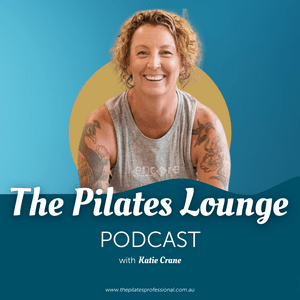
About The Pilates Lounge
Welcome to the Pilates & Movement Journey, a show tailored for Pilates Professionals, movement educators, and enthusiasts. Immerse yourself in transformative content that connects mind, body, and spirit. Explore holistic wellness, gain expert insights, and foster a vibrant community. Ignite your passion for Pilates with engaging discussions, practical tips, and a focus on overall well-being.
Join us on this journey to elevate your spirit and embrace a healthier, more mindful lifestyle.
https://www.thepilatesprofessional.com.au/
Podcast websiteListen to The Pilates Lounge, The Mel Robbins Podcast and many other podcasts from around the world with the radio.net app
Get the free radio.net app
- Stations and podcasts to bookmark
- Stream via Wi-Fi or Bluetooth
- Supports Carplay & Android Auto
- Many other app features
Get the free radio.net app
- Stations and podcasts to bookmark
- Stream via Wi-Fi or Bluetooth
- Supports Carplay & Android Auto
- Many other app features

The Pilates Lounge
Scan code,
download the app,
start listening.
download the app,
start listening.
 New Zealand
