207 episodes
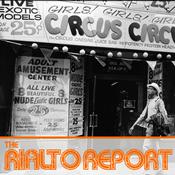
- When I first visited Ray Horsch at his home in Philadelphia to interview him, most of the conversation was about New York in the early 1970s. More specifically, Times Square. The adult movie theaters. The live sex shows. The people who worked in them. The strange, seedy ecosystem that flourished there long before Times Square became the Disney-fied tourist destination we know today.
Ray had been part of that world. And in talking about it, he also talked about himself – about performance, transgression, sex, violence, art, and the persona he had spent years constructing.
Listening now, the question running beneath much of it is one I could never have anticipated when I recorded it: Where did the performance end? And where did Ray begin?
If you know any information that may relate to the ongoing investigation of Ray Horsch or his son Eugene, please contact Detective Joseph Murray, at the Homicide Division of the Philadelphia Police Department, at 215 686 3334.
You can listen to the first part of this series here.
Please note that all unauthorized reproduction or use of the audio in this podcast is strictly prohibited.
This podcast is 35 minutes long.
—————————————————————————————————————————
I first visited Ray at his home outside Philadelphia almost twenty years ago.
It wasn’t the house on West Chew Avenue that has since become the focus of the ongoing murder investigation. At the time, Ray lived in Chalfont, a quiet suburb some thirty miles north of the city. His was a large, comfortable three-bedroom house, with a big yard and an extensive basement.
I’d tracked him down because I’d started documenting the history of the beginnings of the adult film business in the 1960s and ’70s. On the face of it, Ray was a relatively minor figure in that story. He’d directed only one theatrically released adult film of note, back in 1973, The Erotic Memoirs of a Male Chauvinist Pig.
But when I looked for him, in the early days of the internet, he was unusual in that he had his own website. And it was the way he described himself there that caught my attention.
It read: “Alternately an artist, filmmaker, composer, former Sesame Street program maker, writer, porn performer, drug smuggler, political activist, art forger, counterfeiter, pot grower, air show pilot, army deserter, fugitive, sociopath, ex-convict, and all-out villain, Ray Horsch’s life has been as colorful and obsessive as his art.”
I had no idea how much—if any—of that was true at the time. But it certainly made me curious. So I contacted him.
Over the phone, Ray was polite, friendly, and humble, and he invited me down to Philadelphia to spend the day with him and talk about his life.
The first thing you noticed about Ray was how he looked. You couldn’t really notice anything else.
He was in his sixties at the time, with long black straggly hair and an intense, piercing stare. He dressed entirely in black. And to complete the effect, he sometimes wore an eye patch—which, as far as I could tell, served no practical purpose whatsoever. It simply made him look more menacing. For Ray, that was probably reason enough.
Because Ray enjoyed playing the villain.
You’ll hear that repeatedly in these conversations. He wanted to provoke. His appearance did it. His photographs did it. His writing and films did it. Shock wasn’t incidental to his work; it was central to the persona he had constructed around himself.
Ray maintained that all of this was performance—that he was an artist who wanted to challenge and disturb, not simply through the work he produced, but through the character he presented to the world. Privately, though, he insisted that this front was just that: a character. A game. A practical joke that he played on you, and on the world.
At the time, I took him at his word. Today, inevitably, that claim is harder to hear in quite the same way.
And yet the curious thing was that the Ray I encountered in person seemed at odds with the character he had created. He did look frightening. But he wasn’t frightening to talk to. Over the many hours we spent together, he came across as soft-spoken, thoughtful and patient. He was intelligent, articulate and self-aware. And over the years, I was able to verify many of the seemingly tall tales that he told me about his extraordinary past.
Today, however, I find myself thinking less about what Ray told me than about what he may have chosen not to tell me.
And that is one of the uncomfortable aspects about presenting these recordings now.
Knowing Ray does not mean that I know what happened at West Chew Avenue. Spending time with him does not give me any particular insight into the investigation that is continuing today. And I don’t want these conversations to be heard as though they contain some hidden solution waiting to be discovered.
They were interviews with a man talking about his life as he wanted me to understand it.
But I am also very conscious of something else: Ray spent much of his life seeking attention. He created an identity designed to provoke people, disturb them and make himself difficult to ignore. By putting his voice back into the world now, there is a danger that I allow that persona to dominate this story once again.
And it shouldn’t.
Because whatever eventually emerges from the investigation, at its center are real people. Women whose lives matter independently of Ray Horsch. People who are missing or may have been harmed. Families who are still living with uncertainty and waiting for answers. They are not supporting characters in the story of an outrageous man.
That is something I want to remain conscious of throughout this series.
So where these recordings are disturbing, I don’t want to include something simply because it shocks. And where they raise questions that I cannot answer, I don’t want to pretend that I can. What I can do is present the conversations as they happened, with the context we have now, and allow the distance between those two things to remain unresolved.
That first day, though, I knew nothing of what would come later.
*
The post Unknowing Ray Horsch – Episode 2: Performance, Podcast 172 appeared first on The Rialto Report. - Today the Rialto Report re-visits our relationship and the various interviews with Ray Horsch, the subject of a ongoing murder investigation.
This isn’t a normal Rialto Report series: needless to say, much of it is disturbing. If this isn’t for you, we get it. We’ll return to more typical content soon. You won’t have to wait long, we promise.
In the meantime, If you know any information that may relate to the ongoing investigation, please contact Detective Joseph Murray, at the Homicide Division of the Philadelphia Police Department, at (215) 686 3334.
Please note that all unauthorized reproduction or use of the audio in this podcast is strictly prohibited.
This podcast is 32 minutes long.
——————————————————————————————-
Let’s start with the facts.
June 19th, 2026, and a seemingly routine traffic stop in Philadelphia.
U.S. Park Police pulled over a black BMW driven by 44-year-old Eugene Horsch. Inside the car with him was a female passenger. She appeared terrified, and told officers that Eugene was going to hurt her.
The officers searched the vehicle and found two loaded firearms with obscured serial numbers, roughly $8,000 worth of narcotics, and a counterfeit DEA badge featuring Eugene Horsch’s photograph.
The frightened female passenger gave police her ID card that turned out belonged to another woman, Blair Tonzelli, who’s been missing for over three years.
The woman admitted she didn’t know Tonzelli but that she feared Eugene had harmed people. She told police she was afraid of Eugene because he’d bragged about knowing how to use chemicals to dissolve human remains.
Armed with this evidence, Philadelphia Police raided Eugene’s home on West Chew Avenue later that day. They reportedly discovered a second illegal firearm, an FBI badge with Eugene’s picture, and an extensive indoor marijuana-growing operation. They also found five urns filled with cremated remains and a 55-gallon drum directly connected to the basement plumbing.
An expanded joint local and federal law enforcement raid followed. While the initial investigation targeted Eugene Horsch, detectives uncovered a mountain of graphic evidence that traced directly back to his father, Raymond Horsch. This included hard drives containing over 600,000 images and 70,000 videos, which allegedly link several missing women to the house on West Chew Avenue where Raymond and Eugene lived. In late August 2026, investigators revealed that one of the videos allegedly showed Raymond strangling an unidentified woman to death inside the home.
*
I knew Ray Horsch. Or at least, until recently, I would have said that I knew him.
I first contacted him because he directed an obscure, cult adult film, The Erotic Memoirs of a Male Chauvinist Pig, back in 1973. I visited him at his home in Philadelphia. I spent time with him. I spoke with him at length, on and off microphone, I corresponded with him, interviewed him on several occasions over a twenty-year period, and filmed him at his home. And it is extracts from those conversations that I’m sharing here in a short series of podcasts.
Ray Horsch died in 2025 at the age of 82. He was an artist, a photographer, a filmmaker, and a relentless provocateur. Much of his work existed deliberately at the uncomfortable intersection of art and pornography, fantasy and autobiography, lust and violence. Some people admired it. Some found it exploitative or misogynistic. I know I often found it extremely difficult to look at.
None of his work was a secret. What may have been secret is something altogether different and more sinister.
In the summer of 2026, this extraordinary police investigation began unfolding at the Philadelphia house where Ray and his son had lived. The investigation is continuing. An enormous amount remains unknown.
This series is not an attempt to solve that investigation.
And these interviews are not evidence of Ray Horsch’s guilt – or otherwise.
They are something stranger, and perhaps more unsettling.
They are conversations with a man I thought I knew, recorded before I had any idea that allegations like these would one day be made about him.
Listening to them again now is a different, and disturbing, experience.
There is a temptation, when something terrible comes to light about someone we have known, to reconstruct the past so that everything suddenly becomes a clue.
The peculiar comment we didn’t think much about.
The story that now sounds different.
The joke that suddenly seems sinister.
The moment when a follow-up question was left unasked.
Memory becomes contaminated by what we know now. And hindsight can make the unknowable seem as though it should always have been obvious.
I want to resist that temptation.
I don’t want to pretend that I understood things then that I didn’t. I don’t want to turn every sentence Ray spoke into a confession, or every disturbing element of his work into evidence of something that has not been proven.
But neither do I want to pretend that these recordings sound the same to me today as they did when I made them.
They don’t.
And that leaves me with questions that extend beyond Ray Horsch.
How well do we ever really know another person?
When someone tells us who they are, what exactly are we being shown?
A confession?
A performance?
A carefully constructed persona?
Or simply the version of themselves that they have chosen for us to see?
Ray was particularly complicated in this respect. He delighted in obscuring the boundary between fact and invention. He cultivated an extreme persona deliberately designed to offend, and it was often difficult to differentiate between Ray the transgressive performance artist and Ray the man. If indeed there was a difference.
When I met Ray, that ambiguity was part of the fascination of talking to him.
Today however, it feels very different.
But there is another consideration that is far more important.
At the heart of the investigation surrounding Ray’s former home are not stories, photographs, films. or provocative artistic ideas.
There are women. Real women who are unaccounted for.
There are families who have lived for years with absence, uncertainty, and grief, many still waiting for answers.
I’ve been horrified at what the investigation has found – and the continuing revelations that emerge on an almost daily basis. Horrified for the victims and their families. And horrified that anyone could be capable of such depravity. I’ve been in touch with the Philadelphia Police Homicide Unit detectives in order to turn over all materials relating to Ray that may be helpful to their enquiries.
I am conscious that turning this story into entertainment—or treating those women’s lives as scenery in the story of a possibly murderous man—would compound a grave injustice.
I’ve also asked myself whether releasing these interviews gives Ray exactly what he always wanted: another audience, another opportunity to shock, another chance to make himself the center of the story.
Perhaps it does.
But suppressing these conversations would create its own kind of falsehood. They happened. They are part of the historical record. And heard carefully, rather than sensationally, I think they reveal something worth confronting: how partial our understanding of another person can be, even when we believe we know them well.
So I wanted to return to them—not in search of a revelation hidden between the lines, and not to force the past into a story that has yet to be proven.
I wanted to hear the man I knew then through the knowledge I have now, and confront the uncomfortable space between the two.
I thought I knew Ray. Now it feels like I’m unknowing him, undoing the process of knowing him, and replacing it with a new perception.
*
The post Unknowing Ray Horsch – Episode 1: Youth, Podcast 171 appeared first on The Rialto Report. - Over the years, Brandy Alexandre always seemed to have a habit of turning up at unexpected times and in unexpected ways.
For example, she went to work in the adult film industry – after being raised a Mormon. Even more surprising – she was already familiar with sex movies due to a string of inappropriate older boyfriends who’d introduced her to adult theaters: the result was a teenage curiosity for the sex industry and a sizeable crush on John Leslie.
She became unlikely roommates with sex film guru Bill Margold, and, despite his attempts to dissuade her, she took the plunge and became a porn actress.
She became close to John Stagliano – both professionally and romantically – at the beginning of the huge success of his Buttman series and Evil Empire production company. And then, incongruously, she popped up on television on People’s Court, where she sued John for lost earnings.
Shortly after that, she disappeared from the business believing she’d been blacklisted from the industry as a result of the court case. A few years later, in the early days of the internet, she suddenly showed up again, this time involved in online flame wars in Usenet groups. That drama led to her being stalked, harassed, and losing her job – as well as being featured on television news shows.
Now, after two decades of silence, Brandy has re-surfaced, this time on Instagram, where she’s been sharing a remarkable collection of photographs and memories from her adult film years.
I had so many questions, and was keen for her to set the record straight in her own words.
This is Part One of Brandy Alexandre’s story.
This podcast is 47 minutes long.
——————————————————————————————————————
Brandy Alexandre
Brandy and her dad
*
The post Brandy Alexandre – 2000 Days, Part 1: Podcast 169 appeared first on The Rialto Report. The Murder of Kathy Harcourt: England’s First American Adult Film Star – Podcast 102 (reprise)
02/08/2026 | 1h 35 mins.Kathy Harcourt was an English XXX star in America in the early 1980s.
She appeared with Lisa DeLeeuw, Seka, Billy Dee, and Ron Jeremy in adult films and 8mm loops.
She featured in magazines, stripped at the Melody Burlesk, turned up at all the industry parties.
And then she was found dead in Manhattan’s East River amidst rumors of a mob hit.
Over the years, her life and death has been a mystery.
Until today.
After 40 years, the truth about Kathy Harcourt is finally revealed.
This podcast is 96 minutes long.
The music playlist for this episode can be found on Spotify.
___________________________________________________
Kathy Harcourt
One of the great features of the golden age of adult film is the diversity of the performers. You had all shapes and sizes, ages and ethnicities. It seemed that everyone was welcome – as long as they were willing to have sex on film.
The only thing was that they were nearly all American citizens. Sure, you’d expect that – as the X-rated industry in its early days sourced its talent locally. But even so you never really saw anyone with a genuine foreign accent.
Which made an actress like Kathy Harcourt stand out. You see, Kathy was English, and spoke with an accent so English that it was almost comical to hear her talk on screen with performers like Billy Dee or Ron Jeremy.
Kathy was a beautiful, voluptuous actress who appeared in ten or so pornographic feature films around 1980, and a bunch of 8mm loops too. She featured in magazines, stripped in the best clubs, and for a short time turned up at all the industry events and parties. She seemed bubbly and happy and sweet, and everybody spoke highly of her.
And then she was reportedly found dead in mysterious circumstances.
Kathy in Bahrain before she came to America and entered the adult industry
Kathy gets her adult start modeling for men’s magazines
Kathy posing with her friend and short-time boyfriend Ron Jeremy
Kathy with Marilyn Gee
Kathy is schooled by PT in Lips (1981)
Kathy unwinds at the infamous Bernards bar and restaurant in New York
Kathy goes blonde in Australia
*
The post The Murder of Kathy Harcourt: England’s First American Adult Film Star – Podcast 102 (reprise) appeared first on The Rialto Report.
More Arts podcasts
Trending Arts podcasts

About The Rialto Report
Audio, photo, and documentary archives from the golden age of adult film in New York, and beyond. Established 2013.
Podcast websiteListen to The Rialto Report, Jane Austen Bedtime Stories and many other podcasts from around the world with the radio.net app
Get the free radio.net app
- Stations and podcasts to bookmark
- Stream via Wi-Fi or Bluetooth
- Supports Carplay & Android Auto
- Many other app features
Get the free radio.net app
- Stations and podcasts to bookmark
- Stream via Wi-Fi or Bluetooth
- Supports Carplay & Android Auto
- Many other app features


The Rialto Report
Scan code,
download the app,
start listening.
download the app,
start listening.
The Rialto Report: Podcasts in Family


![Podcast [KBS] 작은 서점](https://nz.radio.net/podcast-images/175/kbs-jageun-seojeom-coeweonjeongibnida.jpeg?version=1)