

Listen to this podcast in the app for free: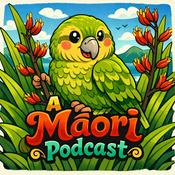 Download for free in the App Store
radio.net
Sleep timer
Save favourites
88 episodes
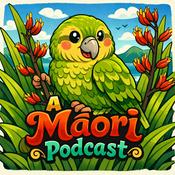
How to improve your spoken reo - Idioms
16/09/2026 | 8 mins.Whakatauki: Kei Hawaiki noa atu ahau e noho atu - I am sitting away off at Hawaiki. (Said by a person to indicate they are far away in thought. [Murdoch Riley, Maori Sayings and Proverbs, 1-17]
Vocab:
Mataahi - food prepared on a spit. [https://www.dictionary.maori.nz/mataahi]
Matainaina - Desire: Taku matainaina atu ki te mea a te tangata ra. - My desire is towards the thing within that person's possesion. [https://www.dictionary.maori.nz/matainaina]
Idioms:
He aha te aha - Waste of time / Nothing came of it. [https://maoridictionary.co.nz/word/1013]
Hei aha atu - Forget about it / Don't worry about it. [https://maoridictionary.co.nz/word/1024]
Ko tāua tāua - Likewise / You and me both. [https://maoridictionary.co.nz/word/3116]
Hangareka ana - What a crack up! [https://maoridictionary.co.nz/word/48206]
Kua puta a Pito - I'm stuffed / I'm full [https://maoridictionary.co.nz/word/11059]
Kia ora ra e te iwi! I have a Patreon where I hope to add some additional value. If you'd like the kaupapa, and you appreciate this mahi, you can give a koha here:
A Maori PodcastHow to express why you are giving thanks
09/09/2026 | 3 mins.Kia ora ra e te iwi! I have a Patreon where I hope to add some additional value. If you'd like the kaupapa, and you appreciate this mahi, you can give a koha here:
A Maori Podcast
Kia ora ki a koutou!
I thought I'd briefly touch on clauses of reason. I source my material this week from Ray Harlows A Maori Reference Grammar.
Whakatauki - To mahi o te tane paraeroa - the work of a warrior
[Maori Sayings and Proverbs, Murdoch Riley, 79-8]
Kupu/Kianga - Koi rarua ai koe! - With koi, indicating a narrow escape. [Te Wiremu, pg. 5]
Wetenga Reo: [A Maori Reference Grammar, Ray Harlow, pg. 223]
"Ka nui nga mihi ki a koe mōu i haere mai ki te tautoko i tenei mahi."
This sentence contains two clause: one expressing appreciation to the hearer, Ka nui nga mihi ki a koe, and the other giving the reason for this appreciation, mōu i haere mai ki te tautoko i tēnei mahi. This second clause, the clause of reason is constructed as described - its subject 'you' is placed first, introduced by the preposition mō.
Te Ngata example: "Ko a mātau mihi ki te komiti marae mo a rātau āwhina." [Te Ngata, search-term: "thanks"]Wharekura - How was it traditionally run?
02/09/2026 | 21 mins.Kia ora ra e te iwi! I have a Patreon where I hope to add some additional value. If you'd like the kaupapa, and you appreciate this mahi, you can give a koha here:
A Maori Podcast
Kia ora!
It's Maori language month! I think it's a good time of the year to dive into some old korero that existed prior to the arrival of tauiwi. These korero were collected and compiled by John White.
I think it's also good practice to keep in mind that most (if not all) writings compiled by tauiwi have likely been curated and edited to push a certain narrative.
Heoi ra, today's korero will be about the Wharekura, and what would happen in a traditional wharekura (per this book.)
Each iwi had there own style, today's reading is about the Kai Tahu wharekura.
If you want to learn more, go directly to Kai Tahu iwi, they are the experts on their own iwi, tikanga, whakapapa and history.
English version
https://archive.org/details/ancienthistoryof01whit/page/n31/mode/1up
Maori version
https://archive.org/details/ancienthistoryof01whit/page/4/mode/1upAho Whakamahuki - Relative Clauses - What is it and how does it work?
26/08/2026 | 7 mins.Kia ora ra e te iwi! I have a Patreon where I hope to add some additional value. If you'd like the kaupapa, and you appreciate this mahi, you can give a koha here:
A Maori Podcast
Kia ora e hoa ma! I wanted to look at relative clauses as I still need to work on gaining a better understanding of them and how they work. Hopefully what I share today is somewhat help. Explaining technical terms is always difficult but it's a good way to improve my speaking ability.
Whakatauki - Haere i muri o te tira parāoa. [Maori Sayings and Proverbs, Murdoch Riley, 26-10]
Wetenga reo: [Ray Harlow, A Maori Reference Grammar, pg. 241]
"Recall that there are some types of predicate in Maori which contain a noun. In particular, nouns occur in the predicate phrases of ownership and location. When such a clause is used as a relative clause, and the position within it to which the head is related is the place name or personal name in the predicate phrase, then a pronoun is used to stand for a person, and the word reira 'there, the previously mentioned place' for a place."
I a ia e moe ana, ka hoki mai nga pea no ratou te whare. - While she was sleeping, the bears whose house it was returned.
Ko wai te iwi nona te whenua? - Who is the tribe to whom the land belongs?
E pai ai te whakaako i te reo, me whakatu ko nga tangata kei a ratou te reo hei kaiako. - To improve the teaching of the language, it is people who have the language who should be appointed as teachers.
Kaore ia i mohio me pewhea e tae atu ai ki te marae kei reira te hui. - He didnt know how to get to the marae where the meeting was.Reo With Kayla: I speak with an aspiring self-taught polyglot - We discuss the importance of friendship in language acquisition & her preparation to spend an entire year without speaking English
19/08/2026 | 54 mins.*Māhauhau - temporary shelter / hostel. (I said the wrong word in this episode. I had called it Māraurau.)
Kia ora e te iwi!
I had the privilege of speaking with my friend Kayla.
We speak on our shared interest in language acquisition, the importance of speaking and having friends to speak with regularly, her language routines, how she went about learning Spanish, and her preparation to go an entire year without speaking English. Kayla also shares her love of Te Reo Maori by helping others learn our treasured language.
https://www.reowithkayla.com/
Ko te reo kia rere!
Mauri ora!
More Education podcasts
 The Mel Robbins PodcastEducation, Health & Wellness, Mental Health, Relationships, Self-Improvement, Society & Culture
 The Ella EraEducation, Self-Improvement, Society & Culture
 6 Minute EnglishEducation, Language Learning
 Keep The ChangeBusiness, Education, Self-Improvement
 Begin Again with Davina McCallEducation, Health & Wellness, Mental Health, Self-Improvement, Society & Culture
 How to Be a Better HumanEducation, Self-Improvement
 Everyday MāoriEducation, Language Learning
 Learning Easy EnglishEducation, Language Learning
 The Jefferson Fisher PodcastEducation, Relationships, Self-Improvement, Society & Culture
 The Rich Roll PodcastEducation, Health & Wellness, Self-Improvement, Society & Culture
Trending Education podcasts
 The Daily MotivationEducation, Self-Improvement
 School Behaviour Secrets with Simon Currigan and Emma ShackletonCourses, Education, Tutorials
 Knowledge for TeachersEducation
 Confident Business EnglishEducation, Language Learning, Self-Improvement, Tutorials
 Dreaming Spanish Podcast – Chats in Beginner SpanishEducation, Language Learning
 Learning English from the NewsEducation, Language Learning
 The BossticksBusiness, Education
 醍醐WAYBusiness, Careers, Comedy, Education, Health & Wellness, Investing, Language Learning, Management, Marketing, Self-Improvement, Stand-Up Comedy, Tutorials
 Learning English StoriesEducation, Language Learning
 Trauma RewiredEducation, Life Sciences, Science, Self-Improvement
 How Do They Afford That?Business, Education, Investing, Tutorials
 The Secret Sessions with Rhonda ByrneEducation, Self-Improvement
 The Pocket with Chris GriffinBusiness, Education, Entrepreneurship, Health & Wellness, Self-Improvement
 BEING HER with Margarita NazarenkoEducation, Health & Wellness, Relationships, Sexuality, Society & Culture
 纵横四海Education, Health & Wellness, Mental Health, Relationships, Self-Improvement, Society & Culture
 Learning English GrammarEducation, Language Learning
About A Maori Podcast
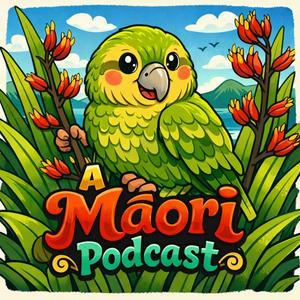
Kia ora! Welcome to this podcast! As per the title, it's a Maori podcast and I am Maori. I try to keep the podcast completely in Te Reo, this is mainly because I want to improve my own language skills, and the best way to do it is to completely speak the language. I share my insights into learning and improving my reo Maori skills especially as someone that doesn't reside back in the homeland. Hoi ano, nahaku noa, I hope that you enjoy this mahi, and I'm proud to be Maori and to share our language. Ko te reo kia rere!If you live abroad and need a place to hang out, I finally found a great hangout spot filled with Maori speakers here.Discord - Reo MaoriI also have a Patreon where I hope to add some additional value. You can find me here:https://patreon.com/amaoripodcastI am planning to start a regularly online space to korero. Details are here:https://www.patreon.com/posts/korero-space-for-153338068
Podcast websiteListen to A Maori Podcast, The Mel Robbins Podcast and many other podcasts from around the world with the radio.net app
Get the free radio.net app
- Stations and podcasts to bookmark
- Stream via Wi-Fi or Bluetooth
- Supports Carplay & Android Auto
- Many other app features
Get the free radio.net app
- Stations and podcasts to bookmark
- Stream via Wi-Fi or Bluetooth
- Supports Carplay & Android Auto
- Many other app features

A Maori Podcast
Scan code,
download the app,
start listening.
download the app,
start listening.
 New Zealand