PodcastsEducationDiverse Thinking Different Learning

Diverse Thinking Different Learning

Dr. Karen Wilson
Diverse Thinking Different Learning
Latest episode

257 episodes

  • Diverse Thinking Different Learning

    Ep. 256: How to Help Neurodivergent Teens and Young Adults Navigate Dating with Dr. Elina Veytsman

    17/03/2026 | 41 mins.
    We are so happy to have Dr. Elina Veytsman join us for this episode of the show! Dr. Elina Veytsman is a licensed psychologist and the Director of Training at the UCLA PEERS® Clinic, where she leads groups for neurodivergent youth and their caregivers while also training interns, postdocs, and professionals. She earned her Psychology degrees at UCLA and UC Riverside, researching developmental disabilities and transition experiences for youth and parents, and completed her doctoral internship providing therapy, parent training, and diagnostic assessment services. Since joining the UCLA PEERS® Clinic in 2014, she has delivered the PEERS® program in multiple settings and also provides individualized PEERS services through a private practice in Los Angeles.

    Dr. Elina Veytsman joins us to discuss how we help neurodivergent teens and young adults explore dating in ways that are both safe and authentic to who they are. We unpack the importance of supporting relationship development for neurodivergent youth without removing their agency or individuality, and we start off by unpacking a common misconception - that autistic or neurodivergent youth are not interested in romantic relationships. In reality, many deeply want connection but may not have been given clear, explicit guidance about the social patterns that others often learn more informally.
    Our conversation in this episode explores how dating skills are teachable rather than innate, and Dr. Veytsman explains that social skills such as reciprocal conversation, recognizing romantic interest, understanding boundaries, and processing rejection can be broken into concrete, observable steps. Much of the work that she discusses is grounded in research and sociological observation, with more than 75 scientific papers supporting PEERS® programming. This episode of the podcast also touches upon how social cognition, perspective-taking, and communication differences can affect dating experiences.
    Safety and vulnerability are also major themes that we talk about, and we discuss risks such as online exploitation, misreading friendliness as romantic interest, and the challenge of recognizing subtle social cues. Dr. Veytsman highlights that vulnerability often comes from inexperience rather than neurodivergence itself and that education about red flags, consent, and online behavior can be very protective!
    Our discussion also highlights the strengths-based philosophy behind PEERS®. Rather than changing identity or forcing conformity, the program focuses on expanding communication tools, building confidence, and supporting young people as they pursue relationships that feel meaningful to them. If you are a parent, clinician, or someone interested in how neurodivergent youth can approach dating with confidence and safety, then this episode is not one that you will want to miss!

    Show Notes:

    [2:44] - Dr. Veytsman explains how romantic skills often begin in adolescence, starting with friendship and learning conversation, boundaries, and recognizing shared interests.
    [5:24] - Dating challenges could include one-sided conversations, so the program first teaches reciprocal communication before introducing relationship-specific skills.
    [7:10] - Dr. Veytsman discusses how limited peer learning and social cue misunderstanding can increase vulnerability to online exploitation.
    [10:23] - Hear how perspective-taking and social cognition can be strengthened like a muscle with structured practice of social thinking and empathy skills.
    [12:20] - Early training in communication, risk awareness, and perception helps build meaningful relationships by improving social understanding and behavior awareness.
    [13:42] - Vulnerability often arises from limited experience; explicit education helps youth recognize manipulation, red flags, and online safety risks.
    [16:41] - The PEERS® program is a strengths-based, neurodiversity-respecting, and skill-building dating / social development program for neurodivergent youth!
    [17:11] - Preparation, coaching, and education help autistic youth build healthy relationships via learning consent, rejection, safety, and partner recognition.
    [19:21] - We learn that approximately 70% of participants involve parents learning to coach social skills while respecting individuals' goals.
    [22:52] - Hear how the program truly promotes neurodiversity, teaches social tools for connection, and encourages personal choice rather than masking.
    [25:16] - Dating education covers rejection, boundaries, consent, and flirting as observable, research-grounded behaviors.
    [27:59] - We further learn how flirting and interest are taught via low-risk signals such as eye contact, smiles, and reciprocal conversation exchanges.
    [30:44] - Hear why online profiles should present clear, positive, authentic information and use profile-specific messages to initiate meaningful contact.
    [33:13] - Caregivers can help reinforce skills with praise-based feedback, homework practice, and shared interest activities.
    [36:57] - Evidence shows that PEERS® improves dating behavior, confidence, social participation, and relationship skill use across research studies!
    [40:08] - How can Dr. Veytsman be contacted?

    Links and Related Resources:
    More Podcast Episodes

    Episode 43: Building Social Competence and Enhancing Social Skills with Dr. Elizabeth Laugeson

    Jane and Terry Semel Institute for Neuroscience and Human Behavior - UCLA PEERS® Clinic

     
    Connect with Dr. Elina Veytsman:
    Center for Pediatric Neuropsychology

    Email: [email protected]

     
    Join Our Community:
    Substack
  • Diverse Thinking Different Learning

    Ep. 255: How to Talk to Siblings About Neurodiversity with Liz Angoff, Ph.D.

    03/03/2026 | 36 mins.
    Join us for this episode of Diverse Thinking, Different Learning as we welcome Liz Angoff Ph.D. to the podcast. Dr. Angoff is a Licensed Educational Psychologist and Diplomate in School Neuropsychology who offers assessment and consultation services for children and families in the Bay Area, California. She wrote the Brain Building Books series and Our Brains, which help neurodivergent children better understand, appreciate, and advocate for their unique minds. Learn more about Dr. Liz and her work at her Explaining Brains website.
    Throughout our conversation, we talk about how when one child in a family is identified as neurodivergent, the focus understandably shifts to evaluations, therapies, and advocacy, but what about the sibling who is watching it all unfold, quietly forming their own explanations about meltdowns, extra appointments, and uneven attention? We discuss why children are natural "meaning makers" and what can happen when adults leave gaps in the story. Dr. Angoff explains her approach to sharing diagnoses - starting with asking the neurodivergent child for permission before telling a sibling.
    Dr. Angoff also walks us through how to translate assessment results into language that kids can actually use, including her "highways and construction projects" metaphor for strengths and challenges. Hear how this shared framework reduces blame, increases empathy, and helps siblings see both themselves and each other more clearly. We also address the real questions siblings ask: Why does my brother get more attention than I do? Is this my fault? Does that mean I have it too?
    Dr. Angoff offers some practical scripts for validating those feelings while reinforcing a powerful message: attention may shift, but love is absolutely not divided. The conversation also covers privacy and how to treat a diagnosis as the child's story to share, as well as how to equip siblings with the language to explain differences to friends without making them responsible for managing everything.
    Perhaps most importantly, this episode of the show really reframes these talks as an ongoing process rather than a one-time thing. As children grow, their questions change, and so should the conversation.  If you're raising neurodivergent kids and want every child in your family to feel informed, valued, and included, this discussion with Dr. Liz Angoff will surely give you the language, perspective, and practical tools to start!

    Show Notes:

    [2:40] - Dr. Angoff talks about how inviting kids into diagnostic conversations naturally raises questions about siblings.
    [3:00] - Without clear explanations, siblings often invent their own stories regarding what's happening.
    [3:43] - Early conversations can help reshape harmful narratives and prevent siblings from forming inaccurate roles.
    [6:00] - Dr. Angoff reflects on how families work best when kids own their story and guide what others learn.
    [9:36] - Dr. Angoff asserts that concrete, age-appropriate examples can help siblings grasp complicated diagnoses.
    [10:54] - Dr. Angoff discusses how using shared brain metaphors leads to empathy and mutual understanding between siblings.
    [13:08] - Highlighting strengths and "construction projects" can help siblings respond with empathy.
    [16:04] - Dr. Angoff explains how shared brain language reduces blame while ensuring that every child's needs matter.
    [19:04] - Dr. Angoff explains how openness and reassurance can help siblings feel valued despite unequal attention.
    [22:03] - Even when attention shifts, love remains constant and intentional!
    [23:23] - Dr. Angoff asserts that honest conversations can help prevent siblings from believing that they matter less.
    [25:30] - Families protect diagnostic privacy while equipping siblings to respond confidently!
    [28:54] - Descriptive explanations of behaviors can help siblings understand and support each other!
    [29:19] - Dr. Angoff believes that siblings should share responsibility for advocacy while also seeking adult help when overwhelmed.
    [30:58] - Conversations around diagnosis should happen gradually, focusing on practical and present needs.
    [33:04] - Hear how stories, visuals, and resources can help families explain neurodiversity in accessible ways.
    [34:00] - Dr. Angoff believes that empowering language around neurodivergence helps support positive family narratives and understanding.
     
    Links and Related Resources:
    More Podcast Episodes

    Episode 137: Helping Kids Understand Their Amazing Brains with Dr. Liz Angoff

     
    Connect with Dr. Angoff:
    Explaining Brains

    Dr. Angoff's Books

     
    Join Our Community:
    Substack

  • Diverse Thinking Different Learning

    Ep. 254: Why Handwriting Is So Hard for Neurodivergent Kids (and Why Practice Isn't the Answer) with Leslie Catlett

    17/02/2026 | 21 mins.
    Please join us in welcoming Leslie Catlett, MS, OTR/L to the podcast! Leslie is the founder of The Penmanship Lab, where she helps children develop confident, functional handwriting skills that support real learning. As a pediatric occupational therapist and mom of two, she approaches handwriting challenges by looking beyond neatness to understand the deeper factors affecting each child. Leslie specializes in working with children with ADHD, dysgraphia, dyslexia, and autism, creating individualized, engaging strategies that make writing more accessible and meaningful. She holds a Master's degree in Occupational Therapy from the University of Wisconsin–Madison and is deeply committed to inclusive, strengths-based learning environments.
    In our conversation, we discuss the complexity of handwriting and why it's so often misunderstood, with Leslie explaining that handwriting isn't just a fine motor task but a full-body, brain-heavy activity that involves posture, attention, memory, sensory processing, and emotional regulation all at the same time. For neurodivergent learners, including children with ADHD, dysgraphia, dyslexia, or autism, handwriting can be truly exhausting, frustrating, and even overwhelming, and it's rarely a matter of laziness or lack of effort.
    We discuss the misconceptions that slow progress signals a lack of motivation or that kids will simply "grow out of it," and why traditional practice alone often makes matters even worse. Leslie highlights how occupational therapy addresses handwriting differently by building foundational skills first, from posture and core strength to visual motor coordination and sensory regulation, before layering on handwriting itself. Progress isn't just about neater writing; it shows up first as reduced frustration, more confidence, and increased endurance.
    In our conversation, we also talk about practical ways parents and educators can support handwriting and fine motor development at home, with Leslie highlighting the importance of short, successful practice sessions, movement breaks, and incorporating skills into play via crafts, cooking, outdoor activities, or even Lego building. Leslie also discusses when it's time to seek professional help, pointing out that handwriting struggles often impact self-esteem, school performance, and emotional regulation.
    We explore the purpose behind the Penmanship Lab itself, with Leslie having created it to provide one-on-one support for children who aren't getting enough guidance in school and to help parents feel empowered rather than guilty when their child struggles. She shares how addressing handwriting early can support not only academic success but also everyday independence, from buttoning shirts to tying shoes. Our conversation offers a practical guide for anyone wanting to understand, support, and celebrate children's unique learning needs!

    Show Notes:

    [2:30] - Handwriting is complex - requiring motor, sensory, attention, memory, and endurance skills simultaneously.
    [5:19] - Hear how dysgraphia stems from neurological differences, so practice alone doesn't improve handwriting without foundational support.
    [8:42] - Leslie discusses how handwriting engages the brain differently than typing, often improving confidence and emotional regulation first.
    [10:56] - Leslie explains how short, playful activities and motor work strengthen handwriting skills and maintain student engagement.
    [13:19] - Hear how early intervention can help prevent frustration.
    [16:16] - Short, daily handwriting practice improves skills, confidence, and behavior without causing parental blame.
    [18:32] - Leslie reveals how The Penmanship Lab fills gaps schools leave, providing one-on-one handwriting support for literacy development.
    [20:10] - Daily self-care tasks rely on fine motor skills, linking handwriting to broader functional independence.
     
    Links and Related Resources:
    Episode 39: Why Fine Motor Skills Matter with Jennifer Morgan

    Episode 219: Understanding Dysgraphia: Signs, Strategies, and Support for Struggling Writers

     
    Connect with Leslie:
    The Penmanship Lab's Website

    Email: [email protected]
  • Diverse Thinking Different Learning

    Ep. 253: When Motivation Disappears: How to Help Tweens and Teens Reconnect with Dr. Ellen Braaten

    03/02/2026 | 27 mins.
    I am so happy to welcome Dr. Ellen Braaten back for her third time on the show! In case you missed those episodes and/or need a refresher, Dr. Ellen Braaten is the founding director of the Learning and Emotional Assessment Program at Massachusetts General Hospital and an associate professor at Harvard Medical School. She is a prolific researcher and author whose work focuses on ADHD, learning disorders, child psychopathology, processing speed, intelligence, and children's motivation, including bestselling books for parents and professionals. Deeply committed to public education, she frequently speaks on child mental health topics and contributes to both local and national media.
    In our conversation, we talk about why unmotivated kids rarely fit neatly into a single category, with Dr. Braaten explaining that children may struggle with motivation for a variety of reasons, such as cognitive overload, emotional fatigue, repeated failure, or even a lack of clear identity. She also explains why framing these challenges as brain-based skills, rather than personal failings, can help change the way parents and clinicians respond. We also discuss the narrowing of opportunities in schools today, why kids need space to discover their own strengths beyond academics and athletics, and how uncomfortable emotions such as shame, anxiety, or regret can silently block motivation.
    Dr. Braaten's workbook is designed not just for children but for the adults supporting them, and she shares how parents, teachers, and therapists can use its activities to spark meaningful conversations, assess where a child gets stuck, and offer guidance without shame. It's about collaboration, not enforcement, and about helping kids take ownership of their growth while navigating setbacks safely.
    This episode of the show will surely resonate with anyone supporting tweens and teens, whether you're a parent, educator, or clinician, and offers strategies to help young people (and even adults) rediscover what matters to them, reclaim their motivation, and move forward with confidence!

    Show Notes:
    [2:09] - Hear how Dr. Ellen Braaten realized poor motivation affects everyone, especially during stressful, sleep-deprived times.
    [5:40] - Motivation consists of initiation, persistence, and desire, and can be treated as a learnable skill.
    [7:56] - Dr. Braaten discusses how kids today struggle to find identity due to overwhelming choices and early specialization pressures.
    [9:52] - Dr. Braaten argues that strengths extend beyond academics and sports, yet schools rarely provide opportunities to explore diverse talents.
    [11:51] - Hear how setbacks, injuries, or missed guidance can lead to regret.
    [13:44] - Breaking motivation into initiation, intensity, and persistence can help kids, parents, and clinicians clarify obstacles.
    [16:28] - Dr. Braaten points out how even small changes, like better sleep, improve motivation.
    [18:04] - Parents should balance support and independence, empowering children while preventing guilt or overwhelming hovering.
    [21:18] - Anxiety and post-pandemic habits have reduced face-to-face engagement, creating cycles that undermine motivation.
    [23:04] - Dr. Braaten's workbook is best used with adults as guides, sparking conversations about identity and priorities.
    [26:05] - Hear how to contact Dr. Braaten.


    Links and Related Resources:
    Episode 61: Slow Processing Speed with Dr. Ellen Braaten

    Episode 107: How to Motivate Kids Who Couldn't Care Less with Dr. Ellen Braaten

    Dr. Ellen Braaten & Hillary Bush - The Motivation Mindset Workbook: Helping Teens and Tweens Discover What They Love to Do

     
    Connect with Dr. Ellen Braaten:
    Dr. Ellen Braaten's Website
  • Diverse Thinking Different Learning

    Ep. 252: How to Make the School System Work for Your Child with Stacey Shubitz

    20/01/2026 | 39 mins.
    We are joined in this episode by Stacey Shubitz, K-6 literacy consultant, a former elementary school teacher, and the co-founder of the Two Writing Teachers blog and podcast. Her forthcoming book, Make the School System Work for Your Child with Disabilities: Empowering Kids for the Future, empowers parents to navigate the special education system.
    In this episode, we talk openly about what it really takes to support a child with learning challenges in today's school system. Drawing from decades of experience on both sides of the table, Stacey shares why she wrote Make the School System Work for Your Child with Disabilities and what she wishes someone had told her when she was first trying to make sense of evaluations, IEP meetings, and endless paperwork.
    Our conversation centers on some of the practical mindset shifts that can help change everything for families, with Stacey explaining why leading with a child's strengths and not just their needs is so important for confidence and motivation. She also addresses disability language head-on, discussing why it is that naming disability isn't limiting but instead opens doors to services, legal protections, and access that families often don't realize they're entitled to.
    Throughout the episode, we highlight how knowledge of data, timelines, rights, and documentation can shift the power dynamic and help parents advocate more effectively. We offer some concrete guidance on when to push for evaluations, why waiting too long can do a lot of harm, and how to ask for progress data without feeling confrontational. Stacey also shares what makes IEP meetings feel collaborative instead of adversarial, from simple preparation strategies to small human touches that ease tension. Communication comes up again and again: how approaching teachers with curiosity, clarity, and respect can lead to better outcomes for kids!
    Stacey also speaks candidly about burnout, emotional exhaustion, and why joy isn't optional but protective. This conversation offers reassurance, realism, and a clear-eyed look at how parents can show up informed, empowered, and grounded while advocating for their children.

    Show Notes:

    [2:32] - Hear how Stacey's experiences with IEPs inspired her to help other parents.
    [4:04] - Stacey describes leading with strengths, not just challenges or disabilities.
    [6:03] - Highlighting positives alongside challenges helps children see themselves as capable.
    [9:42] - Stacey argues that children should know their rights and services so that they can advocate for themselves.
    [12:49] - It's so important for parents to monitor progress, request data, and push for evaluations when their child isn't advancing.
    [14:58] - Stacey adds that it's also essential to advocate firmly and request evaluations when interventions aren't producing results.
    [16:20] - Preparing for meetings with clarity, human touches, and understanding who's present can help make discussions more productive.
    [19:44] - Coming to meetings prepared with documents in advance helps balance power and supports advocacy.
    [23:04] - Stacey discusses how reviewing IEPs in advance can help ensure more effective teacher interactions.
    [25:00] - Approaching teachers with curiosity and gathering accurate information helps promote calm, productive conversations around school.
    [28:18] - Stacey gives an example of how being open about personal struggles allows teachers to provide better support for children.
    [30:33] - Stacey asserts that assuming positive intentions about teachers helps lead to collaboration and avoids unnecessary conflict.
    [32:07] - Stacey wishes that she had known sooner how important it is to read the procedural safeguards book to understand parental rights and timelines.
    [34:12] - Stacey expresses that she has learned that intentionally curating joy and connection can help prevent burnout.
    [37:05] - Joy is a legitimate form of intervention.


    Links and Related Resources:
    Stacey Shubitz - Make the School System Work for Your Child with Disabilities: Empowering Kids for the Future

    Episode 164: 5 Keys to Productive IEPs with April Rehrig

    Episode 238: Dismantling DEI and the Department of Education: How Changes Impact Your Child with Vickie Brett & Amanda Selogie

    Episode 246: Accommodations, Modifications, or Remediation? How to Know What Your Child Really Needs with Amy Cushner

     
    Connect with Stacey Shubitz:
    Stacey's Website

    Email: [email protected]

    Stacey's Substack

    Two Writing Teachers Website

More Education podcasts

About Diverse Thinking Different Learning

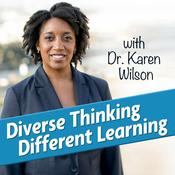
Diverse Thinking · Different Learning is hosted by pediatric neuropsychologist and mom of two, Dr. Karen Wilson. Each week, Dr. Wilson shares expert insights, science-based strategies, and conversations with leading specialists to help parents and educators better understand ADHD, dyslexia, autism, executive functioning challenges, learning differences, and youth mental health. Through engaging interviews and practical guidance, the podcast translates research into real-world tools that empower adults to support neurodivergent children, struggling learners, and students with learning and thinking differences. Trusted by families and professionals alike, Diverse Thinking · Different Learning is a go-to resource for reliable information and actionable strategies to help children learn, grow, and thrive. Explore episodes and resources at https://diversethinkingpodcast.com/
Podcast website

Listen to Diverse Thinking Different Learning, Everyday Māori and many other podcasts from around the world with the radio.net app

Get the free radio.net app

  • Stations and podcasts to bookmark

  • Stream via Wi-Fi or Bluetooth
  • Supports Carplay & Android Auto
  • Many other app features