
Listen to this podcast in the app for free: Download for free in the App Store
radio.net
Sleep timer
Save favourites
210 episodes
The OT definition that every therapist should hear again
20/10/2026 | 35 mins.Got something to say to this podcast? Send a voicemail, and you might hear yourself on the next episode!
In this episode of OT Conversations, we go back to one of the older, richer definitions of occupational therapy: OT as the art and science of directing a person’s participation in selected tasks.
It sounds old-fashioned at first, but hidden inside that definition is almost everything we still fight to explain today: activity as treatment, participation as therapy, performance as more than movement, and occupation as the route back to self, health, role, and life.
This is a reflective episode on what OT really does — not just helping people complete tasks, but helping people restore, reinforce, enhance, adapt, and master life again.
#OTConversations #OccupationalTherapy #OTDefinition #ArtAndScienceOfOT #SelectedTasks #TherapeuticOccupation #MeaningfulActivity #ParticipationMatters #ActivityAsTherapy #OTTheory #OTPractice #Rehabilitation #FunctionAndParticipation #OccupationBasedPractice #RIOTStyleOTWhen OT abandoned the definition of the profession to a slogan
13/10/2026 | 27 mins.Got something to say to this podcast? Send a voicemail, and you might hear yourself on the next episode!
In this episode of OT Conversations, we go straight into the definition of occupational therapy — the old one, the new one, and the uncomfortable question in between: have we made OT easier to explain but harder to defend?
The current global definition talks about health, wellbeing, participation, and meaningful occupation. It is clean, modern, inclusive, and public-friendly. But does it actually tell people what occupational therapists do?
Hao revisits the older AOTA definition — the one that called OT “the art and science” of directing participation in selected tasks to restore, reinforce, and enhance performance — and asks whether we have lost something vital: the performance language, the therapeutic mechanism, the adaptation spine, and the professional boundary that once made OT distinct.
This is not just a theory episode. This is about scope, identity, encroachment, and why occupational therapy must not forget that occupation is not just something we support — it is something we use therapeutically.
#OTConversations #OccupationalTherapy #OTIdentity #OTScope #OccupationAsTherapy #ArtAndScienceOfOT #TherapeuticUseOfOccupation #MeaningfulOccupation #OccupationalPerformance #ParticipationIsNotEnough #ActivityAnalysis #Adaptation #Rehabilitation #ScopeOfPractice #ProfessionalIdentity #AHPLeadership #RCOT #WFOT #AOTA #WillardAndSpackman #RIOTStyle #AnythingYouDoMattersMuscle Contraction: The Tiny Tug-of-War That Moves the Body
06/10/2026 | 43 mins.Got something to say to this podcast? Send a voicemail, and you might hear yourself on the next episode!
Every movement starts with a signal.
In this episode, we unpack how muscles contract — from nerve impulse to acetylcholine, calcium, ATP, actin, myosin, and the sliding filament theory. More importantly, we ask what this means clinically: why weakness is not just weakness, and why movement only matters when the person can use it for real function.
Hashtags
#MuscleContraction #SlidingFilamentTheory #ActinAndMyosin #CalciumAndATP #NeuromuscularJunction #MovementScience #OccupationalTherapy #NeuroRehab #Rehabilitation #ClinicalReasoning #AnatomyAndPhysiology #FunctionalMovement #TherapyEducation #OTConversations #RIOTStyleLet us explore neuro plasticity
29/09/2026 | 38 mins.Got something to say to this podcast? Send a voicemail, and you might hear yourself on the next episode!
What really is neuroplasticity? In this episode of OT Conversations, we unpack the different theories behind how the nervous system changes, learns, adapts, compensates, and sometimes even reinforces the wrong patterns. From Hebbian theory and use-dependent plasticity to motor learning, maladaptive plasticity, enriched environments, and meaningful occupation, this is a grounded talk on what these ideas actually mean in rehabilitation. Less textbook fog, more clinical sense. If you work in therapy, neuro rehab, stroke, or simply want to understand how change happens in the nervous system, this one is for you.
#OTConversations #Neuroplasticity #Rehabilitation #OccupationalTherapy #NeuroRehab #StrokeRehab #MotorLearning #HebbianTheory #UseDependentPlasticity #LearnedNonUse #MaladaptivePlasticity #CorticalReorganisation #SystemsTheory #ClinicalReasoning #TherapyEducation #RehabScience #NeuroscienceForTherapists #MeaningfulOccupation #RecoveryAndAdaptation #OTEducationReflexes: first talk for the worthy ones
22/09/2026 | 50 mins.Got something to say to this podcast? Send a voicemail, and you might hear yourself on the next episode!
What are reflexes, really?
In this episode, I break reflexes down in a practical and usable way — from normal and primitive reflexes to pathological and postural reactions, and why they matter in stroke, critical care, rehab, and everyday clinical practice.
If you have ever looked at a patient and thought, why is the body doing that, this episode is for you.
More Education podcasts


Trending Education podcasts










About OT conversations
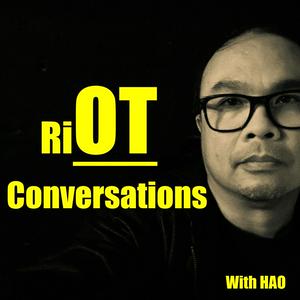
This is a UK-based Occupational Therapy podcast expressing personal clinical experiences, views, and aspirations for occupational therapy practice in the UK. It is aimed to help OT students and clinicians navigate their way through their clinical practice involving occupational therapy. When it gets controversial, it is Rant Involving Occupational Therapy. When I talk about foundation OT knowledge, it is Relevant Information about OT. When I celebrate amazing people I encounter, It's Rollicking Individuals of OT. If I 'yap' about anything I fancy, then, it is Random Information about Ordinary things. Whatever the theme, this OT conversation is a RIOT Conversation. Enjoy - HAODisclaimer: Topics discussed are personal opinions and do not represent any professional body or Trust/Health organization.
Podcast websiteListen to OT conversations, The Mel Robbins Podcast and many other podcasts from around the world with the radio.net app
Get the free radio.net app
- Stations and podcasts to bookmark
- Stream via Wi-Fi or Bluetooth
- Supports Carplay & Android Auto
- Many other app features
Get the free radio.net app
- Stations and podcasts to bookmark
- Stream via Wi-Fi or Bluetooth
- Supports Carplay & Android Auto
- Many other app features

OT conversations
Scan code,
download the app,
start listening.
download the app,
start listening.
OT conversations: Podcasts in Family
 New Zealand
