
Listen to this podcast in the app for free: Download for free in the App Store
radio.net
Sleep timer
Save favourites
65 episodes
The Cycle of Abuse & Battered Woman Syndrome with Dr. Lenore Walker
23/10/2026 | 32 mins.Welcome back to Perfect Prey.
In this episode, I’m honored to speak with Dr. Lenore E. Walker, a pioneering psychologist known for her work on Battered Woman Syndrome and the cycle of abuse.
With more than 50 years of experience in this field, Dr. Walker shares her journey into domestic abuse research and discusses why survivors and protective mothers continue to face blame instead of support.
We explore the cycle of abuse, coercive control, the challenges of protecting children exposed to domestic violence, and why leaving an abusive relationship can be so difficult. Dr. Walker also explains how abusive behavior can be reinforced when it gets a person what they want, while moments of affection can keep survivors hoping things will change.
Together, we discuss the importance of recognizing patterns of abuse, supporting survivors without judgment, and building communities where people feel safe asking for help.
WHAT WE COVER- Dr. Walker’s journey into domestic abuse research
- Battered Woman Syndrome and the cycle of abuse
- Why survivors and protective mothers are often blamed
- How coercive control can maintain power in abusive relationships
- Why loving moments can make leaving more difficult
- The challenges of protecting children exposed to domestic violence
- Why leaving can be the most dangerous time in an abusive relationship
- How to support survivors without judgment or pressure
- The importance of friendship, compassion, and community support
WHY LISTENUnderstanding abuse requires us to look beyond individual incidents and recognize the patterns that keep people trapped. Dr. Walker’s work reminds us that survivors need support, not blame, and that every person’s circumstances are different.
We can help by listening without judgment, respecting each survivor’s decisions, and creating communities where people know they are not alone.
ABOUT DR. LENORE E. WALKERDr. Lenore E. Walker is a psychologist known for her pioneering work on Battered Woman Syndrome and the cycle of abuse. Her research has contributed to the understanding of domestic violence and the experiences of survivors. She is also a fiction author.
CONNECT WITH DR. LENORE E. WALKERWebsite: https://www.drlenoreewalker.com/
YouTube:https://www.youtube.com/@drlenorewalker
Instagram:https://www.instagram.com/drlenorewalker/Books: https://www.drlenoreewalker.com/books/
Linktree: https://linktr.ee/lenoreewalker?utm_source=linktree_profile_share<sid=0cc31578-5bf0-4d04-8769-cca059ac561c
CONNECT WITH DR. CHRISTINE COCCHIOLALinktree: https://linktr.ee/dr.cocchiola_coercivecontrol?utm_source=linktree_profile_share<sid=406386c4-7be3-4e6d-b570-6da04bda212e
TEDx Talk — “It is ALL Coercive Control”:https://youtu.be/gp2qByKOue4?si=U0Csy-kPrRmrB950
BOOKS BY DR. CHRISTINE COCCHIOLAEvery Moment of Every Day
FRAMED: Women in the Family Court Underworld
If this conversation resonates with you, please subscribe, share the episode, and leave a review. Thank you for helping us continue these important conversations.
#PerfectPrey #LenoreWalker #BatteredWomanSyndrome #CycleOfAbuse #CoerciveControl #DomesticViolenceHigh-Conflict Personalities, Coercive Control & Family Court with Esther Rosenfeld
09/10/2026 | 33 mins.What happens when family court becomes another arena for ongoing conflict and abuse? And how can survivors distinguish coercive control from what the legal system may label as high-conflict behavior?
In this episode of Perfect Prey, Dr. Christine Cocchiola is joined by Esther Rosenfeld, family law attorney, divorce coach, and author of Transformative Divorce: From Broken to Blessed. Drawing on nearly 20 years of family law experience, Esther shares insights from her research into high-conflict personalities and the challenges they create within family court.
Together, they explore how litigation can fuel ongoing conflict, how financial resources and power can influence legal battles, and why survivors' trauma responses may be misunderstood. They also discuss the impact of custody disputes on children, the importance of secure attachment, and why stepping away from the fight can sometimes be a path toward greater peace.
What We Cover
High-conflict personalities and family court dynamics
How coercive control can be mistaken for mutual conflict
The role of money, power, and prolonged litigation
Why trauma responses may be misunderstood by legal professionals
Manipulation, entitlement, and harmful personality traits
Custody disputes and the importance of protecting children's attachment
Knowing when to step away from litigation
Radical self-care, healing, and life beyond divorce
Why This Conversation Matters
For survivors, protective parents, attorneys, clinicians, and advocates, understanding the dynamics of coercive control is essential. This conversation explores how abuse can be overlooked when harmful behavior is framed as ordinary conflict, and why children's well-being must remain central to difficult family court decisions.
Dr. Christine and Esther also reflect on the emotional exhaustion of prolonged legal battles and the possibility of finding peace, personal growth, and transformation beyond the courtroom.
About Esther Rosenfeld
Esther Rosenfeld, is a family law attorney experienced in divorce, child custody, timeshare, relocation, property settlement, and support matters. She co-authored Confronting the Challenge of High Conflict Personality in Family Court, an article examining the challenges high-conflict personalities can present within the legal system.
Esther is also developing her divorce coaching practice and is the author of Transformative Divorce: From Broken to Blessed.
Connect with Esther
📧 Family Law: esther@rosenfeldfamilylaw.com
📸 Instagram: https://www.instagram.com/thetransformative_divorce/
📘 Book: Transformative Divorce: From Broken to Blessed
Connect with Dr. Christine Cocchiola
🌐 Official Website:
https://www.coercivecontrolconsulting.com/
🩵 Protective Parenting Program:
https://www.coercivecontrolconsulting.com/services/for-parents/
▶️ YouTube:
https://www.youtube.com/@DrCocchiola-coercivecontrol/videos
📱 TikTok:
https://www.tiktok.com/@dr.c_coercivecontrol
📸 Instagram:
https://www.instagram.com/dr.cocchiola_coercivecontrol/
🎤 TEDx — “It Is ALL Coercive Control”:
https://www.youtube.com/watch?v=gp2qByKOue4&t=24s
📚 Books:
FRAMED: Women in the Family Court Underworld
https://url-shortener.me/c/FramedBook
Every Moment of Every Day
https://url-shortener.me/c/EveryMomentOfEveryDay
If this episode resonated with you, please like, subscribe, and share it with someone who needs to hear this conversation. Together, we can continue raising awareness about coercive control and supporting survivors and protective parents.
— Dr. Christine Cocchiola and Esther RosenfeldReunification Camps, Coercive Control & Family Court with Kitty Mayo
25/09/2026 | 47 mins.In this episode of Perfect Prey, Dr. Christine is joined by Kitty Mayo, child advocate and founder of Georgia Protective Parents, for an important conversation about reunification camps, family court, coercive control, and the experiences of protective parents.
Kitty shares her family’s experience with the family court system and how her children were ordered into a reunification program following allegations of abuse. She describes what happened during that process and why she believes these programs can be deeply harmful to children and families.
Kitty also discusses her advocacy work with Georgia Protective Parents, a nonprofit focused on child safety and legislation affecting children and protective parents. The organization works across political lines and advocates for legislation it believes protects children.
Together, Dr. Christine and Kitty explore what reunification programs can look like in practice, the importance of attachment, the use of isolation and coercion, and the lack of transparency and regulation that Kitty says exists within some of these programs.
What We Cover
• Kitty’s family court experience
• Reunification camps and “repair” therapy
• The impact of separation on children and attachment
• Allegations of abuse and retaliation
• Isolation, intimidation, and coercion
• The experiences of protective parents
• The lack of transparency and regulation surrounding some programs
• The financial costs associated with reunification programs
• Ethan’s Law and efforts to strengthen protections for children
• Grassroots advocacy and contacting legislators
• The importance of speaking up and creating systemic change
Why This Conversation Matters
For protective parents and survivors navigating family court, understanding how reunification programs operate and how children experience these interventions can be incredibly important.
Kitty’s story also highlights how advocacy can move beyond individual cases. Through Georgia Protective Parents, she is working with other advocates to raise awareness, support child-safety legislation, and encourage protective parents to use their voices.
As Dr. Christine and Kitty discuss throughout the episode, advocacy does not always mean being publicly visible. Sometimes it can be as simple as writing an email, contacting a representative, or sharing your story.
About Kitty Mayo
Kitty Mayo is a child advocate and founder of Georgia Protective Parents, a nonprofit organization advocating for legislation and policies focused on child safety. The organization works with both mothers and fathers and describes itself as bipartisan, with a focus on supporting legislation based on its impact on children rather than political party.
Connect with Georgia Protective Parents
Georgia Protective Parents:
Instagram & Facebook: Search Georgia Protective Parents
Connect with Dr. Christine Cocchiola
Protective Parenting Program:
Protective Parenting Program
Website:
Coercive Control Consulting
YouTube:
Dr. Christine Cocchiola on YouTube
TikTok:
Dr. Christine Cocchiola on TikTok
Instagram:
Dr. Christine Cocchiola on Instagram
TEDx:
Dr. Christine Cocchiola’s TEDx Talk
Books:
FRAMED: Women in the Family Court Underworld
Every Moment of Every Day
If this episode resonated with you, please share it with someone who needs to hear this conversation.
— Dr. Christine Cocchiola & Kitty Mayo 🩵When Family Court Fails to Protect Children with Hope Hooton
11/09/2026 | 30 mins.In this episode of Perfect Prey, Dr. Christine is joined by Hope Hooton, child safety advocate and mother, for a deeply important conversation about coercive control, domestic violence, family court, and the urgent need to prioritize child safety.
Hope shares the heartbreaking story of her children, Alec and Lydia, and the devastating circumstances surrounding their deaths. She discusses the coercive control, domestic violence, and mental health concerns involved, as well as the warning signs and risk factors that she believes were not adequately recognized by the systems responsible for protecting her children.
The conversation also explores how temporary custody decisions can have life-altering consequences when courts fail to fully examine allegations of domestic violence and coercive control. Hope explains what happened in her case and how her experience has shaped the advocacy work she does today.
Rather than allowing her grief to be the end of Alec and Lydia’s story, Hope has turned it into a mission to help protect other children and families. She discusses the Alec and Lydia Act, her work with other protective and bereaved mothers, and the changes she believes are necessary to make child safety a true priority in family court.
What We Cover
• Hope’s story and the loss of Alec and Lydia
• Coercive control and domestic violence
• Warning signs and lethality risks in custody cases
• The role of mental illness, psychosis, and perpetrator behavior
• Family court failures and temporary custody orders
• Why protective parents’ concerns can be minimized
• The importance of recognizing patterns rather than isolated incidents
• The Alec and Lydia Act and its focus on child safety
• Hope’s advocacy and work alongside other mothers
• Turning grief into meaningful systemic change
Why This Conversation Matters
Child safety should always be at the center of custody decisions. Hope’s experience raises important questions about how family courts assess risk, how coercive control is recognized, and what happens when serious concerns raised by protective parents are dismissed or minimized.
This conversation is for survivors, protective parents, advocates, attorneys, clinicians, and anyone working toward safer outcomes for children navigating family court.
About Hope Hooton
Hope Hooton is a child safety advocate and mother dedicated to protecting children and advocating for family court reform. Following the deaths of her children, Alec and Lydia, Hope has devoted herself to educating others, supporting fellow mothers, and working toward legislation that strengthens protections for children and holds systems accountable.
Connect with Hope Hooton
📖 Book: Hope Hooton’s Book on Amazon
🎙️ Podcast — Voices Against Filicide: Listen on Apple Podcasts
🌐 Linktree: Hope Hooton’s Linktree
▶️ YouTube: Hope Hooton on YouTube
📸 Instagram: Hope Hooton on Instagram
📘 Facebook: Hope Hooton on Facebook
🎵 TikTok: Hope Hooton on TikTok
Connect with Dr. Christine Cocchiola
Protective Parenting Program: Protective Parenting Program
Website: Coercive Control Consulting
YouTube: Dr. Christine Cocchiola on YouTube
TikTok: Dr. Christine Cocchiola on TikTok
Instagram: Dr. Christine Cocchiola on Instagram
TEDx: Dr. Christine Cocchiola’s TEDx Talk
Books: FRAMED: Women in the Family Court Underworld | Every Moment of Every Day
If this episode resonated with you, please share it with someone who needs to hear this conversation.
— Dr. Christine Cocchiola & Hope Hooton 🩵When Coercive Control Doesn’t End After Separation with Jess Hill
28/08/2026 | 53 mins.In this episode of Perfect Prey, I’m joined by award-winning journalist and author Jess Hill for an important conversation about coercive control, domestic abuse, victim-survivors, children, and post-separation abuse.
We explore what coercive control looks like, why it can be difficult to recognize, and how perpetrators maintain power through psychological, emotional, financial, and other forms of abuse. We also discuss how abuse can continue after separation through stalking, harassment, legal systems, and family court.
Jess and I examine the impact on children, the importance of recognizing coercive control when assessing risk, and her work toward criminalizing coercive control in Australia—while emphasizing that legal reform is only one part of creating meaningful change for victim-survivors.
What we cover
• What coercive control actually is—and why it is often misunderstood
• How coercive control can be difficult to recognize while you are experiencing it
• The psychological and emotional impact of living under coercive control
• Why leaving an abusive relationship does not necessarily mean the abuse ends
• Post-separation abuse, stalking, harassment, and continued control
• How children experience and are affected by coercive control
• The ways children can become part of an abusive dynamic
• Family court and the challenges faced by victim-survivors navigating legal systems
• Why understanding patterns of behavior matters when assessing risk
• The importance of listening to victim-survivors and taking coercive control seriously
• Jess’s work toward criminalizing coercive control in Australia
• Law reform, prevention, and creating meaningful systemic change
Why listen
Coercive control is often misunderstood because it does not always look like what people expect abuse to look like. There may be no single incident that explains what is happening. Instead, control can develop through patterns of behavior that gradually restrict a person’s autonomy, freedom, relationships, and sense of self.
This conversation is also about what happens after a victim-survivor leaves. Separation can become another stage of control, particularly when perpetrators use legal systems, children, stalking, or other mechanisms to maintain power.
For survivors, protective parents, clinicians, attorneys, advocates, researchers, and anyone trying to better understand coercive control, this episode offers an important conversation about recognizing patterns, understanding risk, and creating systems that better protect victims and children.
Guest bio
Jess Hill is an award-winning Australian journalist and author focused on domestic abuse, coercive control, and gender-based violence. She is the author of See What You Made Me Do, a groundbreaking examination of domestic abuse and coercive control. Through her journalism, research, and advocacy, Jess has helped shape conversations around domestic violence, prevention, and law reform in Australia.
Connect with Jess Hill:
Instagram: @jessicahelenhill
Website: www.jesshill.com.au
Book: See What You Made Me Do available on Amazon
Podcast: www.vwt.org.au/thetrap
Connect with Dr. Christine:
Protective Parenting Program: Protective Parenting Program
Official site: www.coercivecontrolconsulting.com
YouTube: www.
TikTok: @dr.c_coercivecontrol
Instagram: www.youtube.com/@DrCocchiola-coercivecontrol
TEDxTalk: https://youtu.be/gp2qByKOue4?si=jJpjpRewxHD9JdYg
Books:
FRAMED: Women in the Family Court Underworld
Every Moment of Every Day
Available on Amazon.
If this episode resonated with you, please share it with someone who needs to hear it, subscribe for more trauma-informed conversations, and consider leaving a review. Your support helps other survivors and protective parents find information, validation, and community.
— Dr. Christine Cocchiola & guest Jess Hill
More Education podcasts










Trending Education podcasts




















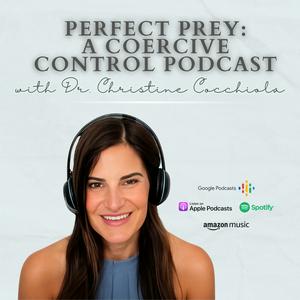
About Perfect Prey: A Coercive Control Podcast
Dr. Christine Marie Cocchiola, DSW, LCSW is a Coercive Control Educator, Researcher, & Survivor. She has been an advocate since the age of 19, passionate about protecting children from abuse. Yet, even as a therapist, she didn't see the signs in her own relationship. How do we, as protective parents, support our children harmed by the coercive controller (aka Narcissistic Abuser)? Dr. Cocchiola's expertise provides the framework for supporting protective parents as they navigate parenting children harmed by the coercive controller. Protective parents can show their children a path to freedom.
Podcast websiteListen to Perfect Prey: A Coercive Control Podcast, Learning Easy English and many other podcasts from around the world with the radio.net app
Get the free radio.net app
- Stations and podcasts to bookmark
- Stream via Wi-Fi or Bluetooth
- Supports Carplay & Android Auto
- Many other app features
Get the free radio.net app
- Stations and podcasts to bookmark
- Stream via Wi-Fi or Bluetooth
- Supports Carplay & Android Auto
- Many other app features

Perfect Prey: A Coercive Control Podcast
Scan code,
download the app,
start listening.
download the app,
start listening.
 New Zealand
