
Listen to this podcast in the app for free: Download for free in the App Store
radio.net
Sleep timer
Save favourites
3716 episodes

Witi Ihimaera Smiler: Acclaimed New Zealand writer on his writing career, journey to writing his first novel in te reo
17/10/2026 | 14 mins.Witi Ihimaera Smiler has published over forty written works, including novels, memoir, non-fiction, and short stories, and he's not slowing down.
This year alone he's already released three books – ‘Te Kaikaukau | The Swimmer’, ‘The Star Path of the Whales: A Return to the Realm of The Whale Rider’, and ‘Ariā and the Monster Island’, the third children’s book in the Astromancer series.
He broke new ground as the country's first Māori novelist and has inspired generations of writers to find and tell their own stories, shaped by Māori culture and identity.
Ihimaera Smiler is appearing at the Nelson Arts Festival later this month, and joined Jack Tame to chat about his journey as an author and his work towards achieving his dream of writing a novel in te reo.
LISTEN ABOVE
See omnystudio.com/listener for privacy information.Chris Schulz: Fontaines D.C. - Dopamine Chamber
17/10/2026 | 6 mins.Fontaines D.C. has released their newest album.
'Dopamine Chamber' follows on from 'Romance', continuing the alternative rock sound the band created in the 2024 album.
Its garnered positive reviews since its release yesterday, and so Chris Schulz joined Jack Tame to share his thoughts.
LISTEN ABOVE
See omnystudio.com/listener for privacy information.Ruud Kleinpaste: A Phoenix Palm PSA
17/10/2026 | 4 mins.Phoenix Palm Trees are fairly common in New Zealand, but what isn't commonly known is how dangerous they are.
After hearing about Jack's experience with the trees, Ruud Kleinpaste decided to break down some of the problems with them and give a few tips around getting rid of them.
LISTEN ABOVE
See omnystudio.com/listener for privacy information.Catherine Raynes: Partita and Victorious
17/10/2026 | 4 mins.Partita by Barbara Kingsolver
Livia Cable has made her peace with her marriage and modest livelihood in the farm country where she grew up, until a shocking phone call from an old lover shakes her to the core. Decades earlier, this man knew her as Livia Bohusz, a music conservatory student estranged from her home and family, uncertain of anything except her passion for music and promise as an extraordinary pianist. His request, now, to see her again stirs up ghosts she’s kept at bay for a lifetime.
Shifting between past and present, Livia’s decision to meet or reject the reunion means confronting step by step, in memories framed as musical dances, the experiences of childhood loss, abandonment, self-immolating passion, and perilous attachment to a man who broke her belief in love and ruptured the course of her life.
Victorious by V.E. Schwab
The ExtraOrdinary of Merit City, a secret group of individuals gifted with a power connected to their manner of near-death experience, have been keeping a low profile, avoiding the ever-watchful eye of EON in the wake of the showdown with Marcella, Eli, and Serena.
But when EON - and its relationship to the ExtraOrdinaries - begins to change under the leadership of a new director with a terrifying agenda, the time for hiding is over. The path to the truth of what happened to EON leads Victor, Sydney, Mitch and the rest into the enemy's lair at EON headquarters, where they encounter unexpected allies, shocking new abilities, and the ultimate confrontation.
Against all the years, the betrayals, and the odds-the arch rivals and their allies will meet for a final time, on a chess board laid out by a rival they didn't expect.
LISTEN ABOVE
See omnystudio.com/listener for privacy information.Mike Yardley: A luxurious stay at Holme Station Homestead
17/10/2026 | 8 mins."Purring through the tucks and folds of South Canterbury’s crinkled hinterland, the sense of anticipation was rising. Just west of Timaru, with the vast arc of the Hunters Hills backdropping the painterly landscape, my destination was Holme Station Homestead, set back from the Pareora River in Southburn. If you share my hankering for a grand historic escape, swathed in scenic seclusion, this is quite the address. Fresh from a monumental tip-to-toe restoration, the homestead has only been hosting guests since May – but the secret is spilling out to the world. Welcome to South Canterbury’s first and only luxury lodge. It’s the evocative sense of history that is a proud and constant refrain, caressing every aspect of an indelible stay here. History endures at Holme Station Homestead. It is a living, breathing link to our past, thoughtfully woven through to the present and fit-for-purpose for future generations."
Read MIke's full article here.
LISTEN ABOVE
See omnystudio.com/listener for privacy information.
More News podcasts









Trending News podcasts











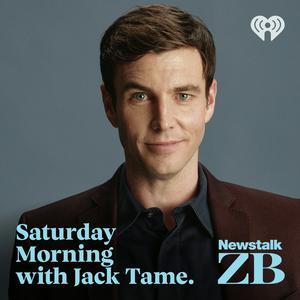
About Saturday Morning with Jack Tame
Jack Tame’s crisp perspective, style and enthusiasm makes for refreshing and entertaining Saturday morning radio on Newstalk ZB.News, sport, books, music, gardens and celebrities – what better way to spend your Saturdays?
Podcast websiteListen to Saturday Morning with Jack Tame, Global News Podcast and many other podcasts from around the world with the radio.net app
Get the free radio.net app
- Stations and podcasts to bookmark
- Stream via Wi-Fi or Bluetooth
- Supports Carplay & Android Auto
- Many other app features
Get the free radio.net app
- Stations and podcasts to bookmark
- Stream via Wi-Fi or Bluetooth
- Supports Carplay & Android Auto
- Many other app features

Saturday Morning with Jack Tame
Scan code,
download the app,
start listening.
download the app,
start listening.
Saturday Morning with Jack Tame: Podcasts in Family

 New Zealand
