

Listen to this podcast in the app for free: Download for free in the App Store
radio.net
Sleep timer
Save favourites
Spiritual Sexual Shamanic Podcast
International School of Temple Arts
Latest episode
74 episodes
Leadership, Energy, and the Shamanic Path: Juan Es Alzate
01/10/2026 | 1h 18 mins.Born in Medellín, Colombia, and raised in Chicago listening to hip hop, ISTA facilitator Juan Es Alzate never imagined he would become a shaman. In his early adult years, he ran a successful club-night promotions company, immersed in a scene that didn’t seem to require traversing subtle worlds in the way that only shamans can. Or so he thought.
A first awakening through Reiki, followed by a dramatic second encounter with the plant medicine ayahuasca, sparked Juan Es’s discovery of his gifts as a healer. He found that he could clearly hear his inner guidance and finely attune to the needs of others. These were powerful moments—strikes of lightning, as he describes them—but they marked only the beginning of his training.
What he has discovered in the decades since, and what he shares with us in this episode, is an approach to leadership grounded in the energetic and environmental awareness he has developed along his path. For Juan Es, leadership is very different from “being the boss.” It requires a wider vision, an orientation towards synergy, and a willingness to take responsibility for the change you want to see in the world.
Any leader might align with these values. Bringing a shamanic perspective to them, however, means learning to trust your capacity to perceive and engage with subtle energy. That can require a leap of faith—and, for Juan Es, one place to begin is by turning inward and working with the seemingly unsolvable problems within yourself.
Juan Es speaks about his own journey from nightlife promoter to healer, shaman and facilitator, and about the importance of following the path that genuinely calls you. It may look very different from the paths others are taking. But, as his story suggests, much of our difficulty can arise when we ignore or resist that calling.
Find out more about Juan Es:
https://www.luminoushealer.com/
@juan.es.alzate
And find out more about ISTA:
https://ista.life/
@ista.community
Support the showYou're going to die: get intimate with death
29/08/2026 | 1h 7 mins.What happens when we stop treating death as life’s great failure? In this conversation, Atilla Çidam explores what he calls an intimacy with death: a willingness to encounter aging, loss, heartbreak and impermanence rather than organizing our lives around their avoidance. His provocative idea of the “ecstasy of decay” asks whether the marks of time on the body might be approached with curiosity, tenderness and even celebration.
The conversation moves through three kinds of death: the death of the body, the death of what we love, and the death of identity. Attila argues that facing impermanence can change how we love, loosening the impulse to grasp, manage and control the people around us. Rather than making life less precious, the knowledge that everything passes can make our participation in it more immediate and wholehearted.
From tantric charnel-ground practices to contemporary transformational work, Simon Marvell and Atilla consider what it means to build the capacity to stay present with experiences we would rather escape. Their discussion ultimately expands beyond the personal: what might our communities, politics and economies look like if they were not built around a fear of death? For Attila, intimacy with death is fundamentally life-affirming: an invitation to recognise impermanence and commit more fully to being alive.
About Atilla Çidam
Atilla is an ISTA facilitator with a PhD in psychology whose earlier career involved designing programs with governments, the World Bank and UNICEF. He left that career to study dance, movement, Tantra and shamanism, shifting his work toward an integration of mind, body, emotion, soul and spirit. He is a co-founder of Dance Meets Tantra and Emergency Brotherhood, and his current work explores intimacy, transformation, embodiment and our relationship with death.
In this episode
Attila introduces three domains of intimacy with death: the impermanence of the body, the inevitable loss of what and whom we love, and the dissolution of the identities to which we cling.
He describes an “Ecstasy of Decay” practice in which participants show one another where time has changed their bodies and are invited to admire and bless those signs of aging rather than reject them.
Attila distinguishes pain from suffering, proposing that suffering emerges when we try to avoid painful realities rather than allowing ourselves to experience them.
Discussing transformational spaces, he argues that participants should be empowered to choose their own “burn rate”: deciding how deeply and intensely they enter an initiatory process rather than having that intensity dictated by a facilitator.
Speaking one day after the death of a close friend, Attila describes allowing grief, celebration, despair and gratitude to coexist, and how the loss strengthened his commitment to the life and work he feels called to.
Support the showJapan's Forgotten Sacred Sexual Rituals
13/08/2026 | 1h 17 mins.Imagine if sexuality wasn’t separate from spirituality, but woven into the sacred landscape itself?
In this episode, Simon speaks with ISTA faculty member Aya Kamānakai about her journey to reconnect with the ancient sexual and spiritual traditions of Japan. Born in Japan but raised largely abroad, Aya describes how returning to facilitate ISTA trainings in her homeland opened an unexpected path back to her ancestry. She rediscovered a culture in which sexuality, spirituality, nature, and ritual have long been intertwined.
Their conversation traverses Shinto animism, erotic shunga art, sacred phallic and vulvic shrines, sexual festivals, kami, ritual rope, queer and transgender expression, and Japanese understandings of sexuality as life force. Aya shares about traditions that remain alive today, from shrines dedicated to sexual deities to festivals where enormous phallic omikoshi are carried through the streets.
Aya and Simon also explore what happens when cultures become disconnected from these traditions. They consider the effects of religious suppression, Westernisation and modernity, and ask what it might mean to recover ancestral knowledge without romanticising or bypassing the more difficult parts of our histories.
Perhaps we’re living through a time of increased cultural remembering, Aya suggests. She invites you to become curious about your own ancestry, the land beneath your feet, and the forms of embodied and animist knowledge that may still exist beneath the surface of contemporary life.
Support the showThe Art of Repair: healing ruptures and deepening intimacy with Dr. Hazel-Grace Yates
21/07/2026 | 1h 4 mins.What if conflict wasn't something to dread, but a doorway to deeper intimacy?
In this rich conversation, Usha Rose sits down with Dr. Hazel-Grace Yates, intimacy and relationship coach, somatic practitioner, and creator of The REPAIR Process™.
With a PhD in Human Sexuality and over two decades of facilitation experience, Dr. Hazel-Grace blends nervous system regulation, kink-aware communication, and embodied practice to help people move from reactivity and shutdown into courageous, heart-open repair.
At the core of their work is a simple teaching: conflict is not a failure of intimacy, it is the initiation into it. Dr. Hazel-Grace walks us through why slowing down before any difficult conversation is essential, how to resource your nervous system, and why it's valuable to acknowledge any power dynamics present before entering the repair conversation. From empathy and permission all the way to restoring integrity, this is a framework for finding your way back to trust and connection after any rupture, big or small.
Whether you're healing a deep breach of trust in your most intimate relationship or wanting to feel less activated when you run into someone in the world, this episode offers a compassionate, embodied map for finding your way back to each other, and to yourself.
Find Dr. Hazel-Grace at drhazelgrace.com
Or on Instagram: @drhazelgrace
Support the showCreating from Eros with Arion Light
30/06/2026 | 55 mins.In this episode, our host Luis Pinto speaks to Arion Light about how to create your life, relations, and livelihood from your Eros.
Arion's insights come from a lifetime of coaching clients and soul-searching. Most importantly, consistently letting go of any rigid identity and connecting with something deeper, what he calls our "Essence."
He speaks about how he discovered his greatest Love through his wife's passing from cancer. He was left to raise their 2-year old without her, an experience which cracked him open to feel just how precious our life-force really is. He now calls this Love his "Boss."
The conversation also explores:
how YOU can get embodied references to transform your reality, and actual stories from his clients and friends.
how he created the Embodied Business Institute and helps conscious entrepreneurs–or "Wisdom Business owners" as he calls them–build businesses from the ground up from the vibrating pulse in their core.
Tune in for this alive transmission, especially if you've been searching for practical ways to live your life aligned to your true purpose.
To get in touch with Arion, you can visit his website: www.arionlight.com
or Facebook page: https://www.facebook.com/arion.light
Support the show
More Religion & Spirituality podcasts
 Ask NT Wright AnythingChristianity, History, Religion & Spirituality
 Live Free with Josh HowertonChristianity, Religion & Spirituality
 The Bryce Crawford PodcastChristianity, Religion & Spirituality
 The John Bevere PodcastChristianity, Religion & Spirituality
 The Bible in a Year (with Fr. Mike Schmitz)Christianity, History, Religion & Spirituality
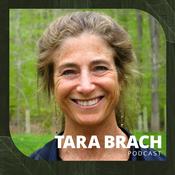 Tara BrachBuddhism, Health & Wellness, Mental Health, Religion & Spirituality
 BibleProjectChristianity, Religion & Spirituality
 The Bible RecapChristianity, Religion & Spirituality
 Next Level Soul Podcast with Alex FerrariHistory, Religion & Spirituality, Spirituality
 The Deep End w/Taylor WelchEducation, Religion & Spirituality, Self-Improvement, Spirituality
Trending Religion & Spirituality podcasts
 Heaven Meets EarthChristianity, Religion & Spirituality
 Sunday Sanctuary with Petra BagustChristianity, Religion & Spirituality
 Dominican Sisters Open MicChristianity, Religion & Spirituality
 KingdomcityReligion & Spirituality
 Mature Me w/ Rich Wilkerson Jr.Christianity, Religion & Spirituality, Society & Culture
 Life-Study of Exodus with Witness LeeChristianity, Religion & Spirituality
 The ConfessionalsChristianity, Personal Journals, Religion & Spirituality, Society & Culture
 Grace to You: Pulpit PodcastBuddhism, Christianity, Religion & Spirituality
 Mishary Rashid AlafasyHistory, Islam, Religion & Spirituality, Spirituality
 Daily Radio Program with Charles Stanley - In Touch MinistriesChristianity, Religion & Spirituality
 Learning How to See with Brian McLarenChristianity, Religion & Spirituality
 Privilege of PrayerChristianity, Religion & Spirituality
 The Sean McDowell ShowChristianity, Religion & Spirituality
 Daily Radio Program for Chuck MisslerReligion & Spirituality
About Spiritual Sexual Shamanic Podcast
Welcome to the Spiritual Sexual Shamanic Podcast. Exploring sacred sexuality, activating Life Force, and empowered transformation, these intimate conversations take you 'under the sheets' with Faculty from ISTA, the International School of Temple Arts.
Podcast websiteListen to Spiritual Sexual Shamanic Podcast, Ask NT Wright Anything and many other podcasts from around the world with the radio.net app
Get the free radio.net app
- Stations and podcasts to bookmark
- Stream via Wi-Fi or Bluetooth
- Supports Carplay & Android Auto
- Many other app features
Get the free radio.net app
- Stations and podcasts to bookmark
- Stream via Wi-Fi or Bluetooth
- Supports Carplay & Android Auto
- Many other app features

Spiritual Sexual Shamanic Podcast
Scan code,
download the app,
start listening.
download the app,
start listening.
 New Zealand