

Listen to this podcast in the app for free: Download for free in the App Store
radio.net
Sleep timer
Save favourites
18 episodes
"I Want My Life Back": OCD, Reassurance Traps & the Treatment That's Changing Lives with Clinical Psychologist Ben Sedley #17
02/09/2026 | 1h 1 mins.Welcome back to The WHOLEistic Psychology Podcast 🤍
Dr Ben Sedley is a clinical psychologist in Wellington, New Zealand, with over 20 years of experience using Acceptance and Commitment Therapy (ACT) across primary care and community mental health in both New Zealand and London. He's the co-founder of ACT Wellington, the author of three books (Stuff That Sucks, Stuff That's Loud, and the brand new Holding the Heavy Stuff), and one of the clinicians who brought the Bergen four-day OCD treatment to New Zealand. I have done SO much of my own learning from Ben over the years (if I could do therapy the way Ben does it when I grow up, I'd be thrilled!), so getting to sit down and talk OCD with him was an absolute privilege.
OCD is one of the most misunderstood and most treatable conditions there is, and Ben has a gift for explaining exactly how it tricks incredible people into shrinking their lives, and how treatment helps them take those lives back. This episode is warm, honest, deeply human, and frankly I can't wait for you to listen to it!
In this episode, we explore:
✨ Ben's wonderfully unplanned road into psychology, ACT, and co-writing an OCD book with Lisa Coyne after one brave conversation at a conference
✨ The misconceptions that frustrate us both about OCD
✨ Why the media picture of OCD (handwashing and ordering) keeps people undiagnosed for years, when OCD can centre on harm, relationships, sexuality, morality, and a thousand other themes
✨ Why OCD latches onto the things you care most about
✨ The robber metaphor: how OCD has you doing exactly the right thing with faulty information
✨ Why reassurance backfires, including the glass-of-water thought experiment and why "brains don't do stats" when we're anxious
✨ Wholehearted ERP: how exposure and response prevention has evolved from "sit with the fear until it fades" to approaching life as if it isn't dangerous, in the name of what matters to you
✨ What to say instead of reassurance when someone you love has OCD
✨ The Bergen four-day treatment: what it involves, why the group element matters so much, the results Ben has witnessed in Singapore and now New Zealand, and how to register your interest
✨ Holding the Heavy Stuff, Ben's new book for adults: lots of validation, not many words, and pictures on purpose
✨ A gentle note from me: this conversation talks openly about intrusive thoughts, including harm, contamination, relationship and sexuality themes. Ben and I discuss these clinically and with a lot of care, but if OCD is part of your story, please be kind to yourself as you listen, and come back to it whenever you feel ready.
To see more of the wonderful Ben and his work:
ACT Wellington
Stuff That Sucks, Stuff That's Loud (with Lisa Coyne), and Holding the Heavy Stuff — available through your local bookshop (any NZ bookshop can order them through Hachette), and hopefully your local library
Mentioned in this episode:
Open Closed Doors and the Bergen four-day treatment — register your interest at ocdhope.org (Ben's message: please fill in the expression of interest even if cost is a barrier, because those numbers help the charity advocate for publicly funded groups)
Exposure — the TVNZ documentary following the first New Zealand rounds of the Bergen four-day treatment
Fixate New Zealand — the Facebook support group for people and families living with OCD, facilitated by OCD New Zealand (ocd.org.nz)
Lisa Coyne, Ben's co-author on Stuff That's Loud
Companion episode: Understanding OCD with Sophia Dawson #15
Want even more WHOLEistic Psychology? Here's where to find more support and resources:
Website & Client Enquiries: wholeisticpsychology.com
Join the Newsletter: wholeisticpsychology.com/thewholeedit-signup
Blog: wholeisticpsychology.com/blogNo Longer Over the Counter Because They Work: Micronutrients, Mental Health & the Fight to Be Heard with Professor Julia Rucklidge #16
05/08/2026 | 1h 13 mins.Welcome back to The WHOLEistic Psychology Podcast 🤍
I've been waiting to record this one for a very long time. Professor Julia Rucklidge is the Director of Te Puna Toiora, the Mental Health and Nutrition Research Lab at the University of Canterbury, a clinical psychologist, a researcher of more than 30 years, co-author of The Better Brain, and my PhD supervisor. Getting to learn from her is one of the great privileges of my career, and getting to sit down and have this conversation properly was absolutely amazing!
Julia trained in a programme that taught her nutrition had nothing to do with the brain. She followed the science anyway (which I find INSANELY admirable!). Two decades later, the Daily Essential Nutrients (DEN), the micronutrient formula that she uses in her research, has been pulled from sale here in New Zealand. There was no safety finding. Supplements in New Zealand legally can't treat anything, so evidence is what turns a supplement into an unapproved medicine. Julia has met more than 30 politicians about it, and continues to advocate for it's sale in NZ to support all the families that have found profound benefit from it's use. She also went to her own GP, was declined, told to eat better, and prescribed 60 tramadol in the same appointment. This episode is honest, infuriating, and deeply human, and frankly I can't wait for you to listen to it!
In this episode, we explore:
✨ How a clinical psychologist who was trained to believe nutrition had nothing to do with the brain ended up running the trials that changed her mind, and the supervisor who took a punt on her
✨ What Julia found in her first New Zealand trial on micronutrients and adult ADHD, and why participants talked less about concentration and more about feeling calmer, more regulated and more resilient
✨ The Christchurch earthquake study: what happened when some people happened to be taking micronutrients before the September quake and some didn't, and what that tells us about being well nourished before life gets hard
✨ NutriMum, the randomised controlled trial on micronutrients and depression during pregnancy, the birth and early infant outcomes, and Julia's own careful caveat about what these findings do and don't say about antidepressants
✨ Why Daily Essential Nutrients was taken off sale in New Zealand, and the regulatory logic that means a supplement showing therapeutic benefit stops being allowed to be a supplement
✨ The GP appointment: declined vitamins and minerals on the grounds she isn't unwell enough, then prescribed an opioid in the same consultation, and why Julia refuses to blame her GP for a system built around sick care rather than health care
✨ Why St John's Wort can only say it "supports mood" while an ultra-processed snack bar carries a five-star health rating, and what that does to our ability to make informed choices
✨ Soil, monocrops and what our food ate: why eating well may not deliver what it once did, and the reasons Julia gives for why some people may need more than a healthy diet alone
✨ The case against chasing single nutrients: what the pathway from tryptophan to serotonin actually requires, why "normal" blood results are normal relative to a population and not to you, and Julia's very generous message to anyone who loves their magnesium
✨ What Julia hopes she'll have achieved when she looks back on her whole career, in one sentence I haven't been able to stop thinking about
✨ Andddd a little note from me: this conversation covers depression during pregnancy, antidepressant prescribing, and suicidal ideation as it appears in the research. Julia is clear throughout that depression in pregnancy is serious and deserves treatment, and that nothing in her work suggests antidepressants are unsafe. Please don't make any changes to prescribed medication based on a podcast. That's a conversation for you and your prescriber. Be kind to yourself as you listen, and come back to it whenever you feel ready.
To see more of the wonderful Julia and her work:
Te Puna Toiora, the Mental Health and Nutrition Research Lab, University of Canterbury
The Better Brain, by Professor Julia Rucklidge and Dr Bonnie Kaplan
Julia on Facebook
And follow her on Instagram!
Mentioned in this episode:
The Better Brain, Julia Rucklidge and Bonnie Kaplan, including the chapter on soil health and why the peach isn't your grandmother's peach
Dr Bonnie Kaplan, Julia's PhD supervisor at the University of Calgary and her long-time collaborator
The NutriMum trial, on micronutrients and depression during pregnancy
The Christchurch earthquake micronutrient studies
The Dietary Supplement Regulations 1985 and the Medicines Act, and why supplements in New Zealand are regulated as food
Want even more WHOLEistic Psychology? Here's where to find more support and resources:
Website & Client Enquiries: wholeisticpsychology.com
Join the Newsletter: wholeisticpsychology.com/thewholeedit-signup
Blog: wholeisticpsychology.com/blogUnderstanding OCD: Intrusive Thoughts, Compulsions & the Misconceptions That Keep People Silent with Sophia Dawson #15
20/07/2026 | 30 mins.Welcome back to The WHOLEistic Psychology Podcast 🤍
I'm flying solo this week for an episode I've wanted to record for a long time. I've worked with clients with OCD for a number of years, and I've seen firsthand how earth-shattering and debilitating this disorder can be. It's also the focus of my PhD research, which is now in the data analysis phase, and while the literature has taught me a lot, nothing compares to sitting with well over 50+ people in the recruitment stage of my research and hearing their experience of OCD firsthand, as well as working with OCD for many years in the therapy room.
In this episode, I walk you through what OCD actually is: the intrusive thoughts, images, doubts and urges that feel so completely misaligned with who you are, and the compulsions that promise relief but feed the cycle. I share some of the lesser-known ways OCD can show up, from relationship OCD to harm OCD to some of the most stigmatised and underrecognised forms, and why OCD so often grabs onto the very things that matter most to you.
We also need to talk about "I'm so OCD." It's said lightly, and never maliciously, but for the many people carrying graphic intrusive thoughts and secret rituals in silence, it can be deeply invalidating. There's a reason the time between the onset of OCD symptoms and diagnosis can be up to 17 years, and shame sits right at the heart of it.
Whether you're navigating OCD yourself, love somebody who is, or simply want to understand this misunderstood disorder better, this episode is honest, warm, and deeply human. I’ve created this episode with everyone in mind, and if you think that someone in your life may benefit from learning more about OCD - this is the podcast for them.
In this episode, I explore:
✨ What OCD actually is: the two elements of obsessions and compulsions, and why intrusive thoughts feel so alien to who you are
✨ Why compulsions bring short-term relief but make the thoughts more pervasive, urgent and frequent over time, like feeding a monster that only grows
✨ Why 99% of us have intrusive thoughts, and the meaning-making that separates OCD from a passing ‘weird’ thought
✨ The different faces of OCD: relationship OCD, paedophile OCD, contamination OCD, harm OCD, and sexual orientation OCD
✨ How OCD targets what you love and value most, and demands a certainty it can never actually deliver
✨ The shame that keeps people silent, and why diagnosis can take up to 17 years from symptom onset
✨ How OCD differs from health anxiety, and where the two can look almost identical (a wonderful listener question from my socials!)
✨ How to support a loved one with OCD: gradually reducing reassurance, externalising OCD, and teaming up against it together
✨ Why exposure and response prevention (ERP) is the gold-standard psychological treatment for OCD, and why the right support changes everything
✨ A gentle note from me: this episode discusses intrusive thoughts across a range of OCD themes, including harm and other confronting thought content. Please be kind to yourself as you listen, and come back to it whenever you feel ready.
If you heard yourself in this episode, you are not alone. OCD is treatable with the right practitioner, and there are so many people out there to support you. If you're in New Zealand and would like support, my team and I would love to hear from you via the link below.
Want even more WHOLEistic Psychology? Here's where to find more support and resources:
Website & Client Enquiries: wholeisticpsychology.com
Join the Newsletter: wholeisticpsychology.com/thewholeedit-signup
Blog: wholeisticpsychology.com/blogCoco Pops, Up & Go and the Great Food Pyramid Con: What We’ve Got Wrong with Prof Grant Schofield #14
24/06/2026 | 1h 39 mins.Welcome back to The WHOLEistic Psychology Podcast 🤍
This one is a real treat for me, because my guest today is one of my fabulous PhD supervisors, Professor Grant Schofield. Grant is one of New Zealand's best-known public health scientists, a researcher, and the co-founder and Chief Science Officer of PREKURE. He's also the author of five best-selling books, with his newest, Choose Your Hard, just out in the world.
Grant has spent his career asking the unpopular questions about how we eat, how we move, and what we've been told is "healthy", and then following the actual evidence wherever it leads. In this conversation we pull apart the food system most of us grew up inside: the food pyramid, the Health Star Rating, and the food rules that shaped a generation, and we look honestly at what all of that has done to our metabolic health and our minds.
Buckle up, because we cover a whole lot of ground - from the food pyramid to psychiatric medication, and from AI robots and metabolic psychiatry. We get into the science, but we also stay human.
It's a warm, honest, occasionally cheeky conversation with one of the people who has shaped how I think about food and the brain, and I can't wait for you to hear it.
In this episode, we explore:
✨ How the food pyramid came to be, who it really served, and why the advice so many of us grew up with was built on shaky ground
✨ The Health Star Rating decoded: how a chocolate drink, a Up & Go or a bowl of Coco Pops can score so well, and what the rating system genuinely can't see
✨ What "ultra-processed food" actually means, and why the level of processing may matter as much as the nutrients on the label
✨ The link between how we eat and how we feel, and what the research is showing us about food, metabolic health, and conditions like depression and anxiety
✨ The emerging world of metabolic psychiatry, including the early research on ketogenic approaches for serious mental illness, and how to hold that evidence honestly
✨ Where Grant thinks medicine gets it wrong on informed consent, SSRIs, and treating the body and mind as separate systems
✨ What Grant would change first if he had full power over the food environment tomorrow, and where he sees AI fitting into how we understand our food
✨ The heart of Choose Your Hard: why every path has a hard, and how choosing the right one changes everything
✨ A grounded, compassionate way to think about food and your mind that doesn't tip into fear, restriction, or shame
✨ A gentle note from me: we touch on mental health, antidepressants, and psychiatric treatment in this episode. Nothing here is medical advice, and it's never a reason to stop or change any medication on your own. Please take what's useful, leave what isn't, and be kind to yourself as you listen.
To see more of the wonderful Grant:
🤍 Website: profgrantschofield.com
🤍 PREKURE: prekure.com
🤍 Choose Your Hard — available now wherever you buy your books
🤍 Listen to Grant's own podcast, Prevention is Cure
✨And as mentioned, you can listen to my own conversation on ACT over on Grant's Prevention is Cure podcast
Mentioned in this episode:
✨ Choose Your Hard by Prof Grant Schofield ✨ The SMILES trial (dietary intervention for depression) ✨ The work of Prof Julia Rucklidge on nutrition and mental health ✨ Dr Matthew Phillips' research on metabolic and ketogenic therapies ✨ Metabolic Mind and the Baszucki Group ✨ The Robert F. Kennedy Jr. revised food guidance ✨ The Misogi Challenge ✨ My own conversation on ACT over on Grant's Prevention is Cure podcast
Want even more WHOLEistic Psychology? Here's where to find more support and resources:
🤍 Website & Client Enquiries: wholeisticpsychology.com 🤍 Join the Newsletter (The WHOLE Edit): wholeisticpsychology.com/thewholeedit-signup 🤍 Blog: wholeisticpsychology.com/blogMyth-Busting the Wellness Trends with Steph Pearson #13
17/06/2026 | 55 mins.Welcome back to The WHOLEistic Psychology Podcast 🤍
I’m back with one of my favourite people to talk all things nutrition with, my fab friend and colleague Steph Pearson. The wellness space is LOUD right now. Every other week social media decides whether protein, soy, fasting or ashwagandha is the thing that’s going to fix us or finish us off. So, Steph and I asked our communities what they actually wanted us to settle, and we sat down to myth-bust our way through your questions.
Steph is a Nutritionist and Naturopath, and someone I trust deeply, professionally and personally. She works with women in the thick of perimenopause, stress, hormonal shifts and complicated relationships with food, and she has a rare gift for making the evidence feel human and doable rather than overwhelming.
We move through protein and protein powders, the truth about soy, ashwagandha, collagen and creatine, coffee timing, fasting and training to your cycle, sauna and cold exposure, and the questions that don’t usually get said out loud. The thread running through all of it: there’s no one-size-fits-all, and test, don’t guess.
This one is warm, honest and very real. It’s also Part One, because you sent us so many questions we couldn’t fit them all in, so we’ll be back to finish the list.
In this episode, we explore:
✨ The protein hype — who actually needs a protein powder, and how to know whether you’re getting enough without tracking forever
✨ Soy on trial — the difference between processed soy and whole-food soy, and where Steph genuinely sees it help
✨ Ashwagandha, and why “test, don’t guess” matters before you add it to your coffee (including who is better off steering clear)
✨ Collagen — what the evidence does and doesn’t support, and the nutrients Steph would reach for first
✨ Coffee timing, and learning to read your own body’s signs instead of someone else’s rules
✨ Fasting and training to your cycle, and why piling more stress onto an already-stressed body isn’t the answer
✨ Creatine, one of the most researched supplements going, and how to actually take it
✨ The psychology underneath the food — where stress is really coming from, the mental load, and meeting all of this with compassion rather than self-criticism
✨ Sauna vs cold exposure for women, and the question nobody says out loud: low libido with two kids under five, will it ever come back?
✨ A gentle note from me: we talk openly about food, bodies, fasting and eating behaviour in this episode. If your relationship with food or your body feels tender right now, please be kind to yourself as you listen, and come back to it whenever you feel ready. If you’re struggling, reaching out for support is a brave and worthwhile thing to do.
To see more of the wonderful Steph Pearson and her work, you can find her here:
Instagram: @stephpearson.naturopath
Mentioned in this episode:
• Dr Mindy Pelz — referenced on training and fasting to your menstrual cycle
• Two Raw Sisters — the recipe app I love for quick, whole-food snacks
• Creatine monohydrate — the form Steph discusses
• My conversation with Francesca Lyon on cortisol, stress and the nervous system #7
More Education podcasts
 The Mel Robbins PodcastEducation, Health & Wellness, Mental Health, Relationships, Self-Improvement, Society & Culture
 The Ella EraEducation, Self-Improvement, Society & Culture
 6 Minute EnglishEducation, Language Learning
 Keep The ChangeBusiness, Education, Self-Improvement
 Begin Again with Davina McCallEducation, Health & Wellness, Mental Health, Self-Improvement, Society & Culture
 How to Be a Better HumanEducation, Self-Improvement
 Everyday MāoriEducation, Language Learning
 Learning Easy EnglishEducation, Language Learning
 The Jefferson Fisher PodcastEducation, Relationships, Self-Improvement, Society & Culture
 The Rich Roll PodcastEducation, Health & Wellness, Self-Improvement, Society & Culture
Trending Education podcasts
 The Daily MotivationEducation, Self-Improvement
 School Behaviour Secrets with Simon Currigan and Emma ShackletonCourses, Education, Tutorials
 Knowledge for TeachersEducation
 Confident Business EnglishEducation, Language Learning, Self-Improvement, Tutorials
 Dreaming Spanish Podcast – Chats in Beginner SpanishEducation, Language Learning
 Learning English from the NewsEducation, Language Learning
 The BossticksBusiness, Education
 醍醐WAYBusiness, Careers, Comedy, Education, Health & Wellness, Investing, Language Learning, Management, Marketing, Self-Improvement, Stand-Up Comedy, Tutorials
 Learning English StoriesEducation, Language Learning
 Trauma RewiredEducation, Life Sciences, Science, Self-Improvement
 How Do They Afford That?Business, Education, Investing, Tutorials
 The Pocket with Chris GriffinBusiness, Education, Entrepreneurship, Health & Wellness, Self-Improvement
 The Secret Sessions with Rhonda ByrneEducation, Self-Improvement
 BEING HER with Margarita NazarenkoEducation, Health & Wellness, Relationships, Sexuality, Society & Culture
 Learning English GrammarEducation, Language Learning
 纵横四海Education, Health & Wellness, Mental Health, Relationships, Self-Improvement, Society & Culture
About The WHOLEistic Psychology Podcast
The WHOLEistic Psychology Podcast explores the powerful connection between mind and body, blending nutritional psychology, psychological tools and inspiring conversations with health experts. Join Senior Psychologist Sophia Dawson to discover how nourishing your body can transform your mental health and help you live a more balanced, fulfilling life.
Podcast websiteListen to The WHOLEistic Psychology Podcast, The Mel Robbins Podcast and many other podcasts from around the world with the radio.net app
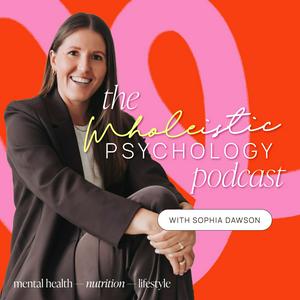
Get the free radio.net app
- Stations and podcasts to bookmark
- Stream via Wi-Fi or Bluetooth
- Supports Carplay & Android Auto
- Many other app features
Get the free radio.net app
- Stations and podcasts to bookmark
- Stream via Wi-Fi or Bluetooth
- Supports Carplay & Android Auto
- Many other app features

The WHOLEistic Psychology Podcast
Scan code,
download the app,
start listening.
download the app,
start listening.
 New Zealand