

Listen to this podcast in the app for free: Download for free in the App Store
radio.net
Sleep timer
Save favourites
58 episodes
Episode 58 - Ida’s Coffee Journey: From Barista to Business Owner
11/09/2026 | 1h 36 mins.In this episode, I talk with Ida, the founder of Tøllefsenhjørnet in Tromsø, about her journey from working in some of Norway’s pioneering coffee shops to opening her own coffee shop and natural wine bar.
Ida shares stories from her years at Tim Wendelboe, where she eventually became wholesale manager, and how her experience in specialty coffee shaped the way she approached her own business.
We discuss her decision to return to Tromsø, reconnect with her family roots, and revive the building where her great-grandfather and grandfather once ran Tøllefsen Kolonial. Starting the business came with significant financial and personal challenges, from renovating the space on a tight budget to surviving the difficult first year.
Ida talks about the changes that helped turn the business around, including longer opening hours, introducing simple food options, and her homemade pumpkin spice latte syrup. We also discuss the realities of running a coffee shop in Norway, where high labor costs make profitability particularly challenging.
Despite the challenges, Ida has built a strong team and a welcoming place where coffee, wine, and community come together.
Music by my uncle, Jens Wendelboe.Episode 57 - Finca El Suelo: A Year Under the Biofilia Project
16/08/2026 | 36 mins.In this episode, I sit down with Yurany, the farm manager at Finca El Suelo in Colombia, and the daughter of Elias and Bellanid at Finca Tamana.
We reflect on a year of farming under the Biofilia Project and discuss the challenges and progress of managing the farm using 100% biological techniques, without synthetic fertilisers, pesticides and fungicides .
The year brought extreme drought and intense sunlight, highlighting the importance of shade trees for protecting coffee plants and soil.
We also discuss the difficulties of establishing new Sudan Rumé coffee trees and the use of biological inputs such as compost, biochar, and soil drenches to improve soil health and plant resilience.
Despite the challenges, the coffee quality has been very encouraging. Around 120+ samples from Finca Tamana and Finca el Suelo were cupped, ranging between 84 and 88 points, with clean, fruity, juicy and sweet profiles.
Looking ahead, we discuss the importance of establishing shade before planting new coffee, as well as the farm’s new partnership with a new exporter named A Coffee Family, to improve milling, quality control, and shipping to Norway.
Music by my uncle Jens Wendelboe.Episode 56: Evolution, Genetics, and the Future of Coffee – A Conversation with Professor Andreas Tribsch.
05/06/2026 | 1hIn this episode, Tim speaks with Andreas Tribsch, a Professor of Botany at the University of Salzburg. Andreas brings a unique perspective as both an expert in plant evolution and a partner in an Austrian coffee shop, offering insights into the coffee plant from a biological and systematic viewpoint.
We dive deep into the history of coffee, discussing how Coffea Arabica evolved as a coffee species in the highlands of Ethiopia roughly 350,000 - 600,000 years ago. Andreas explains the genetic complexity of Arabica, being the only tetraploid species in the coffee family, and how its narrow genetic base makes it both unique and vulnerable compared to other domesticated crops.
Our conversation also covers the potential impacts of climate change on wild coffee populations, and the biological importance of diversification on coffee estates to ensure long-term resilience.
Music by my uncle Jens Wendelboe.Episode 55: Ranked No. 2 in the World – Exceeding Guest Expectations with Stephanie Dawn Holm
21/05/2026 | 54 mins.In this episode, I return to our Oslo studio to welcome back a very special guest: Stephanie, our Espresso Bar Manager, who has been an essential part of Tim Wendelboe for 15 years. As the person responsible for training our baristas and overseeing the daily operations of the espressobar, Stephanie is the heartbeat of our retail experience.
We discuss the impact of being ranked 2nd in the world on the 2026 "The Worlds 100 Best Coffee Shops" list, a recognition that has brought a surge of tourists and high expectations to our 50-square-meter space. Stephanie explains her philosophy on hospitality. While she always strives to make every coffee an exceptional one, her main goal is to make every guest feel seen and comfortable, as if they are entering her "living room".
Looking ahead, Stephanie and I discuss the challenge of maintaining our quality while managing long lines and trying to live up to our guests expectations.
For us, success isn't about opening more locations, it is about perfecting the one we have and ensuring that every cup remains a true reflection of the farm it came from.
Music by my uncle Jens Wendelboe.Episode 54 - The Future of Honduran Coffee: The Biofilia Transition - A conversation with Benjamin Paz
28/04/2026 | 15 mins.In this episode, I am back in Santa Bárbara, Honduras, to sit down with Benjamín Paz. Benjamín is a key collaborator in our Biofilia Project, an initiative focused on improving coffee production through biological techniques that restore the natural balance of the environment.
We discuss Benjamín’s decision to transition his entire farm to the Biofilia system, moving away from the traditional reliance on synthetic NPK fertilizers and fungicides. This shift was inspired by the need for long-term sustainability and the success of similar regenerative practices seen in other world-class farms.
Benjamín shares the early results of this transition, noting that while some sun-exposed varieties have struggled with coffee leaf rust, others like Parainema and Geisha have shown incredible resilience and immediate improvements in cup quality. We emphasize that this is a holistic process requiring a "mental shift" and the reintroduction of shade trees to protect the plants and soil.
Looking ahead, the goal is to replicate these results across more farms in the region. Benjamín is planning to host workshops for other producers to demonstrate how reducing chemical dependency can lower production costs and secure the future of Honduran coffee.
Music by my uncle Jens Wendelboe.
More Arts podcasts




Trending Arts podcasts
 The Food ChainArts, Food, Society & Culture
 Design Principles PodArts, Design, Home & Garden, Leisure, Visual Arts
 The Splendid Table: Conversations & Recipes For Curious Cooks & EatersArts, Food
 Eater's DigestArts, Business, Food, News, News Commentary
 HomingArts, Design, Personal Journals, Society & Culture
 Book Riot - The PodcastArts, Books, News, News Commentary, TV & Film
 The Waterstones PodcastArts, Books
 MrCreepyPasta's StorytimeArts, Fiction
 Things Bakers Know: The King Arthur Baking PodcastArts, Food, Hobbies, Leisure
 The Deeply Graphic Designcast - DGDCArts, Design
 The Magnificent Others with Billy CorganArts, Music, Music Interviews, Performing Arts
 Case Closed! (old time radio)Arts, Performing Arts
 SpookedArts, Leisure, Performing Arts, Society & Culture
About Tim Wendelboe Podcast
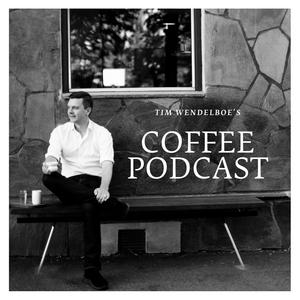
A podcast by award winning roaster and 2004 World Barista Champion, Tim Wendelboe
Podcast websiteListen to Tim Wendelboe Podcast, The New Society | culture from the New Statesman and many other podcasts from around the world with the radio.net app
Get the free radio.net app
- Stations and podcasts to bookmark
- Stream via Wi-Fi or Bluetooth
- Supports Carplay & Android Auto
- Many other app features
Get the free radio.net app
- Stations and podcasts to bookmark
- Stream via Wi-Fi or Bluetooth
- Supports Carplay & Android Auto
- Many other app features

Tim Wendelboe Podcast
Scan code,
download the app,
start listening.
download the app,
start listening.
Tim Wendelboe Podcast: Podcasts in Family
 New Zealand